• Skip to main content
  • Skip to primary sidebar
  • Skip to footer

Mosaic MennonitesMosaic Mennonites

Missional - Intercultural - Formational

  • Home
  • About Us
    • Our History
    • Vision & Mission
    • Staff
    • Boards and Committees
    • Church & Ministry Directory
    • Mennonite Links
  • Media
    • Articles
    • Newsletters
    • Video
    • Audio
    • Bulletin Announcements
  • Resources
    • Conference Documents
    • Missional
    • Intercultural
    • Formational
    • Stewardship
    • Church Safety
    • Leaders’ Resources
    • Request a Speaker
    • Pastoral Openings
    • Job Openings
  • Give
  • Events
    • Delegate Assembly
    • Youth Event
    • Conference Calendar
  • Mosaic Institute
  • Vibrant Mosaic
  • Contact Us
  • 繁體中文 (Traditional Chinese)
  • English
  • Việt Nam (Vietnamese)
  • Español (Spanish)
  • Indonesia (Indonesian)
  • Kreol ayisyen (Creole)

Blog

Great (Pastoral) Expectations

August 6, 2020 by Conference Office

by Randy Heacock, Leadership Minister
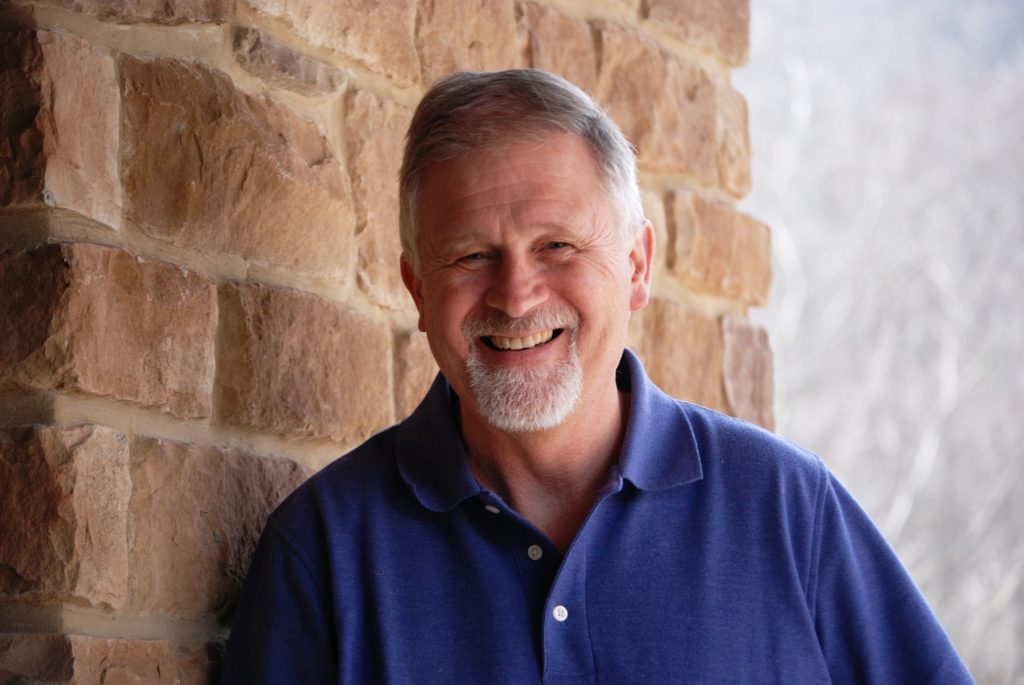
Over the past few years, I worked with several congregations as they looked for a new pastor.  I appreciate the opportunity to learn the joys and challenges of a search process with congregations.  I have also had interesting discussions with potential pastors regarding their expectations in a new setting. While we want good sermons, we desire a person who is relatable, the right age, properly educated, and, of course, experienced.

While looking for the right pastor, many questions arise. What do we actually want a pastor to do?  What do we hope pastors accomplish?  Who is it that influences such conversations?    

How we answer these questions, might lead to more questions. How might our pastoral job descriptions and memos of understanding increase the chance for our congregations to become healthy?  Is it possible that a different focus could empower congregations to reach out to others more effectively?  Could greater clarity enable a given pastor to make best use of his/her gifts?  

I encourage congregational leaders and pastors to give these questions more intentional time and energy.  It seems some of our congregational patterns need attention.  

The following are three areas that may benefit both congregations and pastors to develop greater clarity and focus.  

  1. Do we hire pastors to do the work of the church or do we hire pastors to lead and equip individuals to carry out the ministry of the church?  This may seem simple, but many churches hire a pastor believing the pastor is responsible for caring, outreach, growth, spiritual nurture, and more. 

Clarity on this will help determine how we expect a pastor to spend her time. It will also raise expectations for congregational participants. Such clarity will encourage pastors to develop the varied gifts of people God has given a particular congregation. 

  1. Accountability is a crucial area where clarity is needed.  A number of years ago a friend declared, “Seminaries train pastors to be lazy.” Though I strongly disagreed with his opinion, pastors need to be responsible and welcoming of accountability.  Too often, however, I see boards and elders try to work at this by micro-managing the pastor. 

Three keys areas that can create accountability are task completion, accessibility, and
responsiveness.  

Does the pastor get his work done in a timely and thoughtful way? Is the pastor
approachable, both with her time and her spirit of openness to the concerns of
others?  Does a pastor thoughtfully respond to situations and conflict or just react/ignore?    

  1. Finally, are the patterns of communication open and clear so as to develop trust that empowers both pastor and laity?  Well-developed trust can provide freedom and the space to risk. Too often, however, hidden agendas sabotage the development of a trusting relationship. If a pastor feels the freedom to try something different, creativity can lead to spirit-led movement.  At the same time, honest feedback can help a pastor learn and understand context and impact.  

I am certainly grateful for a congregation that has shaped me and contributed to my growth in this way.  Pastors and churches need to find healthy patterns of communication and not just wait for an evaluation or assume silence is golden.

There are many wonderful congregations and potential pastors looking to lead. May we do our work to clarify expectations so we can better serve together!
Filed Under: Articles, Blog Tagged With: formational, Randy Heacock

Conference Related Ministries (CRM) Profile: Mennonite Historians of Eastern Pennsylvania

August 4, 2020 by Conference Office

by Mennonite Heritage Center staff

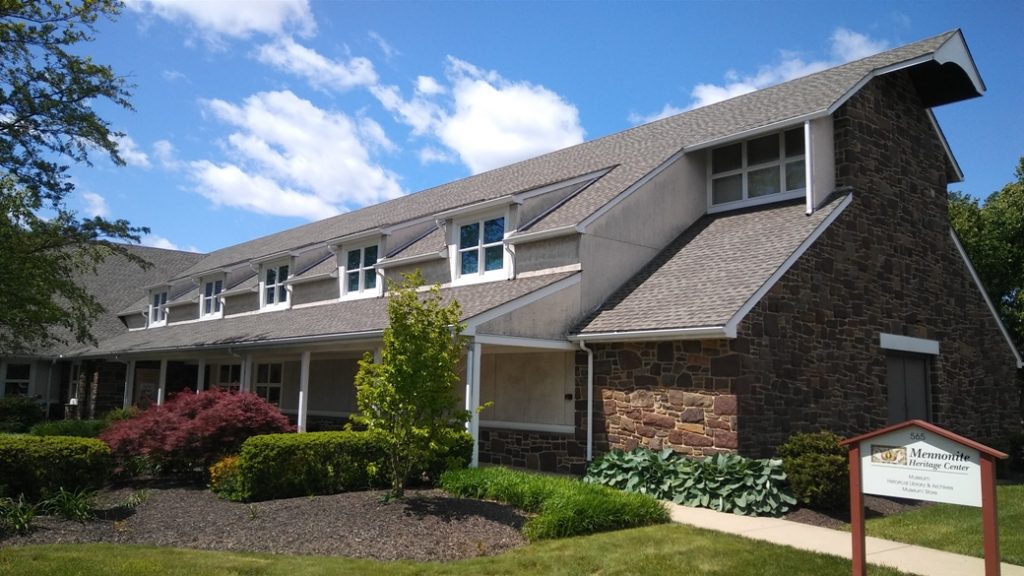
The Mennonite Heritage Center in Harleysville, PA collects, preserves, and shares the Anabaptist/Mennonite story and welcomes visitors to learn and contribute to their collection. Photo credit: Forrest Moyer

The Mennonite Heritage Center (MHC), is a nonprofit museum and historical library located at 565 Yoder Road, Harleysville, PA. It is home to the Mennonite Historians of Eastern Pennsylvania (MHEP) that were founded in 1974. Our mission is: To educate, inspire and witness to the church and community by collecting, preserving and sharing the Anabaptist/Mennonite story.

The MHC keeps the records of the Mennonite communities in Eastern PA who began immigrating from Europe in 1683. For centuries, these primarily Pennsylvania German congregations lived quiet lives, separated from other communities, maintaining their own schools until the mid-19th century, and speaking the Pennsylvania German dialect until the mid-20th century.     

The MHC historical library has volumes relating to Mennonite and local history, faith, and life and an archive that includes rare books, manuscripts, and other printed materials. Manuscript collections vary from farming records to personal diaries and photographs. Many of the local congregations and Mosaic Mennonite Conference have chosen us to preserve their records.   We invite people to use the library to do genealogical research. 

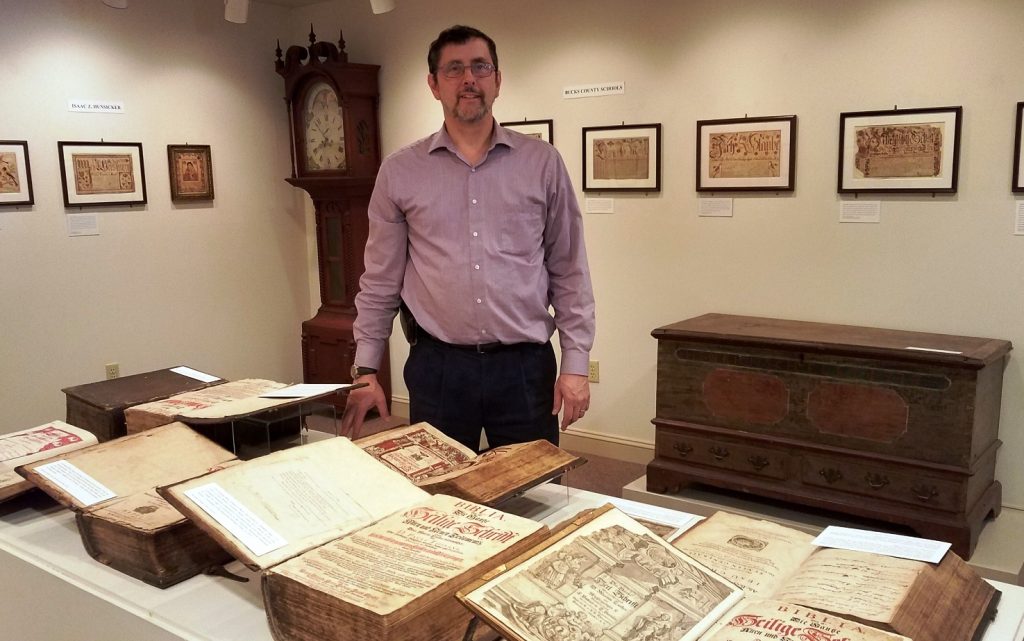
One of the most significant museum collections is the fraktur collection.  Fraktur is a kind of colorful illuminated manuscript. It is called fraktur because of the broken or fractured style of German lettering.  The artifact collection also includes quilts, coverlets, samplers, clothing, furniture, farm implements, housewares and musical instruments.  

Collections Manager Joel Alderfer stands with a display of early Bibles in the Mennonite Heritage Center in Harleysville, PA. Photo provided by MHC.

Because of the pandemic, we were closed from March 12 until July 1 and have been featuring posts on our website (mhep.org), our Facebook page, and the Pa Dutch at Home Companion blog, a joint project of the MHC and the Goschenhoppen Historians Schwenkfelder Library & Heritage Center.

In a more typical year, the MHC features exhibits and programs on Anabaptist and local history topics. Saturday workshop participants enjoy learning traditional crafts such as basket weaving, paper marbling, and fraktur drawing. The Whack & Roll Croquet Tournament that usually happens in spring, is now scheduled for Saturday, August 29 and is a fun competition with teams from area nonprofit organizations vying for cash prizes. 

The annual Apple Butter Frolic, our fall harvest festival, will not be held this year but we are working on an event which will include pick-up sales of delicious traditional foods. The MHC will be sharing a portion of the proceeds from this revised October event with the Conference Shalom Fund to be used for food insecurity needs. Watch for information about this fall food celebration!    

Our board and staff are thinking about our role as a place for Mennonites and the broader community to learn about the Mennonite heritage.  We want to become more reflective of the growing diversity of the local Mennonite community today. We especially encourage people and congregations of color to visit the Mennonite Heritage Center, and contribute your family and faith stories to our collections, exhibits, and programming. Items can also be submitted for the archives digitally. We welcome volunteers to host in the museum and help with events and projects such as installing exhibits or archival sorting.  You can also support the MHC with an annual membership. Memberships begin at $55/$45 annually and members receive our quarterly publication and discounts on workshops/purchases. Please contact us at 215-256-3020 or info@mhep.org for information on volunteering or becoming a member.

Filed Under: Articles, Blog Tagged With: Conference Related Ministries, CRM, Mennonite Heritage Center, Mennonite Historians of Eastern PA

Being Together by Staying Apart

July 30, 2020 by Conference Office

by Mackenzie Miller

(The following profile is part of a larger project, working to highlight diverse voices within the conference during this unprecedented time of COVID-19.)

Ashley Moyer, dressed in PPE due to COVID-19, is a nurse in Philadelphia. Ashley attends Franconia Mennonite Church

As a nurse at Fox Chase Cancer Center in Philadelphia, Ashley Moyer (Franconia congregation) is witnessing COVID-19 firsthand.

“It’s taking a toll on all of us,” Moyer said. “Our world has been flipped upside down.”

When the pandemic arrived in early spring, Moyer had recently graduated with her nursing practitioner license and was looking to transition away from her job at the cancer center, but the virus changed the health of her community as well as the job market.

Moyer now finds herself heading into work three to four days a week, splitting her time between the cancer center and the nearby Jeanes Hospital, where she crosses the connecting bridge and enters a COVID-19 positive environment, treating patients in need of care.

“We don’t know if what we’re doing is actually helping,” Moyer said, in regard to medical treatment.

But Moyer’s role as a nurse has expanded during this time, as family members of patients are limited in their visiting hours. Some choose not to take the risk of coming into the hospital at all.

“Taking care of these patients is emotional because you are the only person they see in a day,” Moyer said. “We are that person’s only support.”

Sixteen years as a nurse and Moyer has never witnessed anything like this, both inside and outside of the hospital. When she isn’t at work, she spends time with her three-year-old daughter at her parent’s home, where they have chosen to quarantine together.

“We are not the population that’s been hit hardest,” Moyer said. “But I really feel strongly that we need to be apart right now.”

Though Moyer has remained an active member of Franconia Mennonite Church, she continues to encourage those around her to stay at home. 

“From a medical standpoint we’re no better off than we were 12 weeks ago,” she said.

“I really just try and protect as many people as I can,” she said. “Especially for Mennonites, it [community] is family and closeness and making meals for others. But that’s not the answer right now.”

Moyer continues to try and find balance in her life during this time by spending time outdoors and with her daughter. She anticipates an end that will bring a return to normalcy.

When asked what message she continues to share with those around her, influenced by her close interaction with COVID-19, Moyer said, “being together by staying apart.”

Filed Under: Articles, Blog Tagged With: Ashley Moyer, coronavirus, Franconia Mennonite Church, Mackenzie Miller

Conference Nominating Committee Formed

July 28, 2020 by Conference Office

The new Nominating Committee for Mosaic Mennonite Conference is fully formed and has been meeting virtually this spring and early summer. The members of this group are:

  • Angela Moyer, Assistant Moderator, and chair of the Nominating Committee (Ripple)
  • Janet Panning, Chair of Ministerial Committee (Plains)
  • Beny Krisbianto, Chair of Intercultural Committee (Nations Worship)
  • Marco Güete, member at large (Covenant Mennonite Fellowship)
  • Lisa Stenger, member at large (Deep Run West)
  • Mary Nitzsche, Associate Executive Minister, ex-officio non-voting member (Perkasie)

The Nominating Committee is responsible for vetting and discerning potential new Conference Board members and Committee members. This includes ensuring that the Conference Board and Committees are balanced in terms of the gender, racial, cultural, geographic, and historic diversity of the Conference, reflect the diverse giftings represented in the Conference, and exhibit a high level of intercultural capacity.

Filed Under: Articles, Blog

Let’s Just Save Some

July 28, 2020 by Conference Office

by Emily Ralph Servant, Leadership Minister

My toddlers copy everything I do.  If I splash water on my daughter’s head, pick flowers, or spit food onto my plate, so do they.

They don’t know that I’m trying to get sand out of their hair, removing dead blooms, or spitting out spoiled food.  They just do what Mommy does!  And they should—it’s an important part of child development.

Even as adults we continue taking our cues from the people around us, some of us more than others. The threshold model of collective behavior suggests that people with high thresholds will change their behavior if they see a lot of other people doing something, even if they think it’s wrong, while people with low thresholds will do what they want, regardless of what others are doing.

The Apostle Paul seems to encourage Jesus-followers to be low-threshold people: don’t give in to the peer pressure of the world but stand strong and let your mind and behavior be shaped by God’s way of living (Romans 12:2).  Do the right thing, no matter what anyone else is doing.

At the same time, in 1 Corinthians Paul also seems to encourage Jesus-followers to be a force of change in society by using peer pressure itself.  Knowing that many people will look to see what everyone else is doing, Paul reminded the early Church to be a good example for those around them: yes, you are free, Paul declares, but use your freedom wisely (9:10); don’t just think about yourself but think about others (10:24).

Since I know my toddlers are watching, sometimes I need to modify my behavior.  I shouldn’t drag a chair into the kitchen to get things off the top shelf while they’re in the room.  I shouldn’t climb over the deck railing to pick something off the ground.  I have every right to do those things and I don’t modify my behavior because I’m smarter or better than them.  I do it because I know I influence them, and I love them too much to risk their safety for my rights.

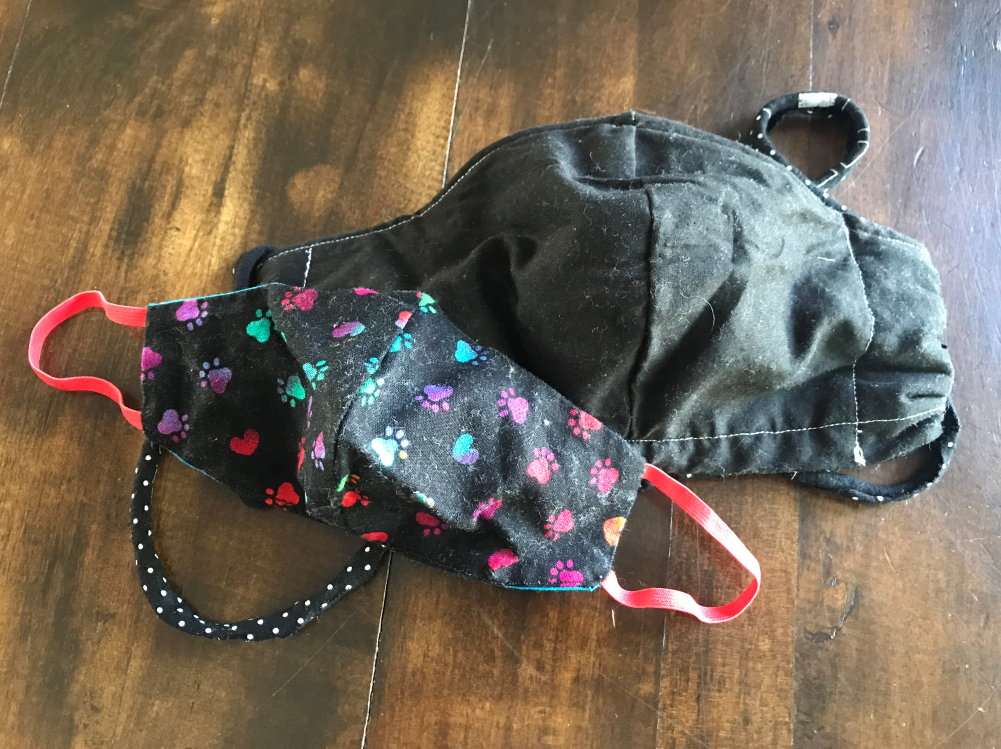
We face a similar situation in our contexts today.  Yes, we have a right to worship together in our buildings.  We have a right to not wear masks, to give hugs, to have Bible studies or pool parties.  But maybe someone else isn’t as ready to meet their Maker as we are.  Maybe someone else isn’t as mindful of keeping a safe distance or doesn’t have as strong an immune system.

Maybe someone else is more likely to do something if they see everyone else doing it, even if it wouldn’t be safe for them.  Maybe they’d feel silly if they were the only one not going, the only one not wearing a mask, the only one who seems to be afraid, the only one who seems to be less confident in the Spirit’s protection.

We indeed have rights, Paul acknowledges, but not everything is beneficial or constructive (1 Corinthians 10:23).  Don’t let anything you do “hinder the gospel” (9:12).  You don’t have to win everyone, he says; Paul was willing to give up his rights if it might even save some (9:22).

Paul summed it up simply: “Whatever you do, do it all for the glory of God. Do not cause anyone to stumble—whether outside or inside of the church. For I am not seeking my own good but the good of many, so that they may be saved” (1 Corinthians 10:32-33, NIV adapted).

Filed Under: Articles, Blog Tagged With: coronavirus, Emily Ralph Servant, formational

Conference Offices Update

July 23, 2020 by Conference Office

Next month construction is set to begin on new offices for Mosaic Mennonite Conference. The new space will be located on the high school campus of Dock Academy, in the Longacre Center, close to Detweiler Road. The new six-office suite will include a conference center and a larger classroom space with up-to-date technology.

The new offices will be bright, professional space designed for collaboration and the changing work environment.  Remaining on Dock’s campus continues to strengthen the relationship between Mennonite education and the Conference while also providing easy access to major regional transportation networks.  While many staff are working disbursed and from home, especially during the pandemic, the need for a hub for office staff, materials, and gathering remains critical.

Meanwhile, Dock Academy will begin classroom renovations in the space where the Conference offices are currently located in Dock Academy’s Rosenberger Center.  During this transition time, offices will temporarily relocate beginning July 30 until at least December 1 to 115 East Broad Street in Hatfield.  Reduced numbers of staff will work from this location with most staff continuing from other locations until the new offices are completed later this year.

Mail will be forwarded from the 1000 Forty Foot Road, Lansdale address to the Hatfield location during this time. Phone numbers will remain the same. Church mailboxes will not be available at this location.  Temporary open office hours are yet to be determined.

Filed Under: Articles, Blog

What Can We Do?

July 23, 2020 by Conference Office

How the Shalom Fund Offered Help in Mexico

By Javier Márquez, Conference Communication Intern

There is a crisis happening in Mexico, due to COVID-19. Pastor Oscar Dominguez shared about the situation many people are facing today in Mexico and the work being done by Anabaptist churches to respond to the famine and economic insecurity that families are experiencing.  

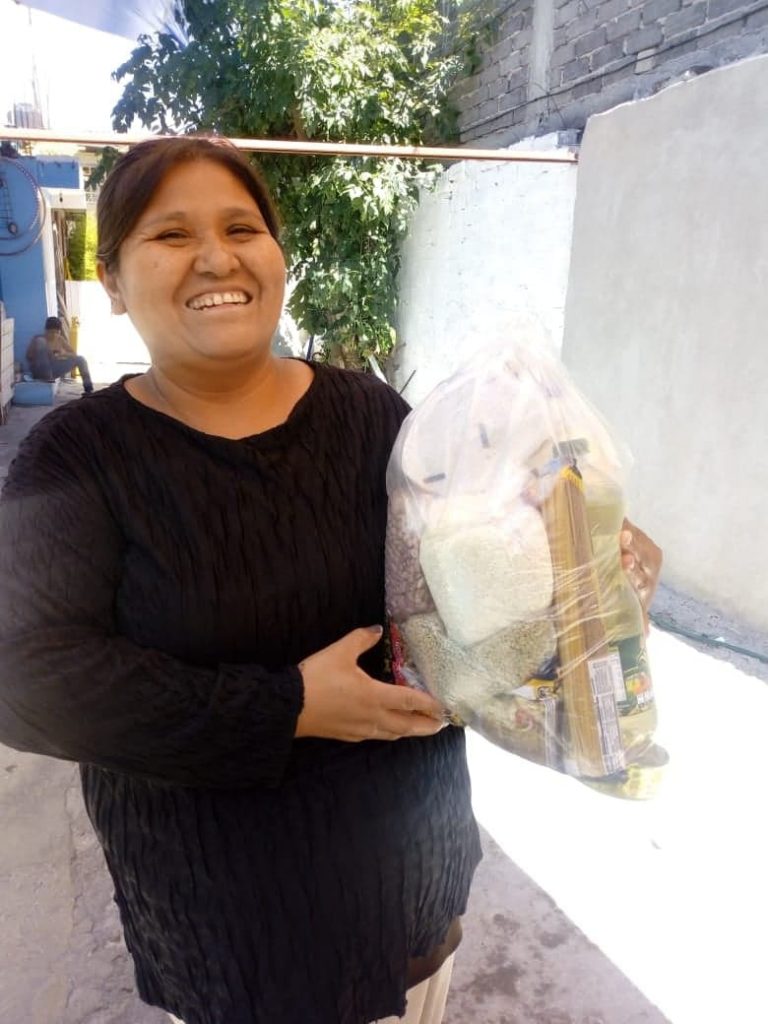
A delighted woman in Mexico receives a food bag during COVID-19. Food was provided by Mennonite Churches in Mexico, Mosaic Mennonite Conference Shalom Funds, and Mennonite Central Committee.

In Mexico, the public data regarding the pandemic is being underreported. Data from private, non-profit institutions are showing much higher numbers than data from the Mexican government. Knowing this, the brothers and sisters of the Conference of Evangelical Anabaptist Mennonite Churches of Mexico (CIEAMM) began to take measures of mutual collaboration with the aim of surviving the imminent period of scarcity that was approaching like a wave on their coast.  

Pastor Oscar said, in addition to a time of challenges, it was a moment that allowed them to discover the talents of different people in the churches that are oriented to mutual care and service.  

The first weeks of the pandemic were a period of transition for the churches in Mexico when each one needed to adapt to new technologies, utilize others’ resources, and face their limitations. 

“If the virus didn’t kill them, hunger would kill them. It was important for the church to ask itself how to help and find ways to do it.” – Pastor Oscar Domínguez

Each church started looking for ways to help out by giving baskets of donated food, contacting food banks, and sharing leftover food with other families. In Pastor Oscar´s church, they coordinated monitoring situations among the members of the congregation to determine needs, as some lost jobs, others had more mouths to feed, and some were single parents.  

  “The important thing was to share with love, to take care of each other, but also to share
with those who have the least.  People who are not even part of our churches but are part
of the community need help. We listen –without   any type of religious proselytizing. It
has always been a matter of genuine generosity, an explicit action of love.” – Pastor Oscar
Dominguez.

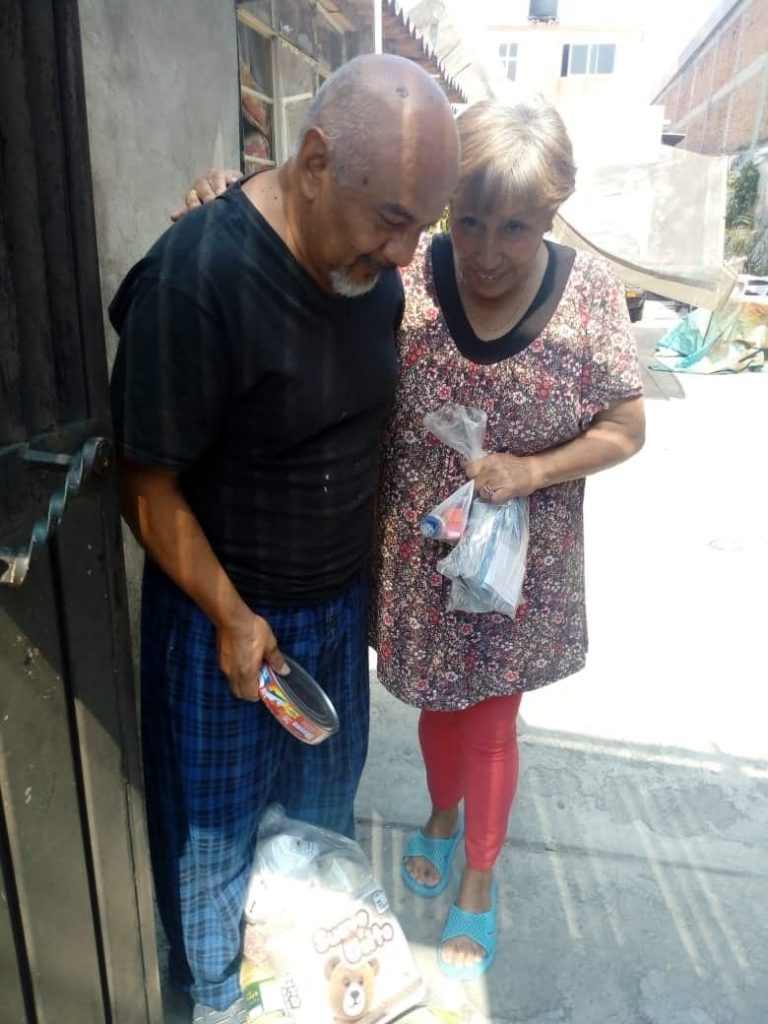
Members of Mennonite Churches in Mexico give and receive food during the pandemic. Mosaic Mennonite Conference Shalom Funds were used to support this work.

Pastor Oscar highlights that everything has been maintained, thanks to the generosity of church members and donations. Two of these donations, of great worth, were the donation of the Shalom Fund from Mosaic Mennonite Conference and the donation of food pantries by Mennonite Central Committee (MCC). Pastor Oscar told the story of Sister Adela, a senior citizen in a wheelchair, who upon receiving a food pantry, sent him a photo of herself with her grandchildren as a thank you.   

“The eyes of those children when they received the bag full of food … how they looked at and contemplated every little thing in the basket… they said to the grandmother, “We are rich,’”  reported Pastor Oscar, as he himself makes an effort not to cry. 

Pastor Oscar also shared about a blind man for whom Sister Eloida, an elderly woman and widow, prepared a box of food with what little she had in her pantry. She asked the blind man to go collect the food, but on the way his cane broke. Faced with this new challenge, another act of generosity was awakened by the members of the church; they bought him a new cane. 

Filed Under: Articles, Blog Tagged With: CIEAMM, coronavirus, intercultural, Javier Marquez, Oscar Jaime Dominguez Martinez, Oskar Dom

The Wounds of Racism

July 15, 2020 by Conference Office

by Danilo Sanchez, Conference Youth Formation Pastor

The reality of systemic racism has become evident with recent stories of Breonna Taylor, Ahmaud Arbery, and George Floyd. The week after protests and riots demanding justice erupted across the country, we noticed increased anxiety among our community members at Ripple Community Inc (RCI). Some did not understand why African Americans were so upset. Others happily shared about attending protests and what they witnessed. Some began to share stories of family members who were killed by the police or their fears of law enforcement. Ripple Church (Allentown, PA) and RCI began to respond to the collective anxiety bubbling to the surface. Immediately, we offered a safe place for people to process their emotions.  

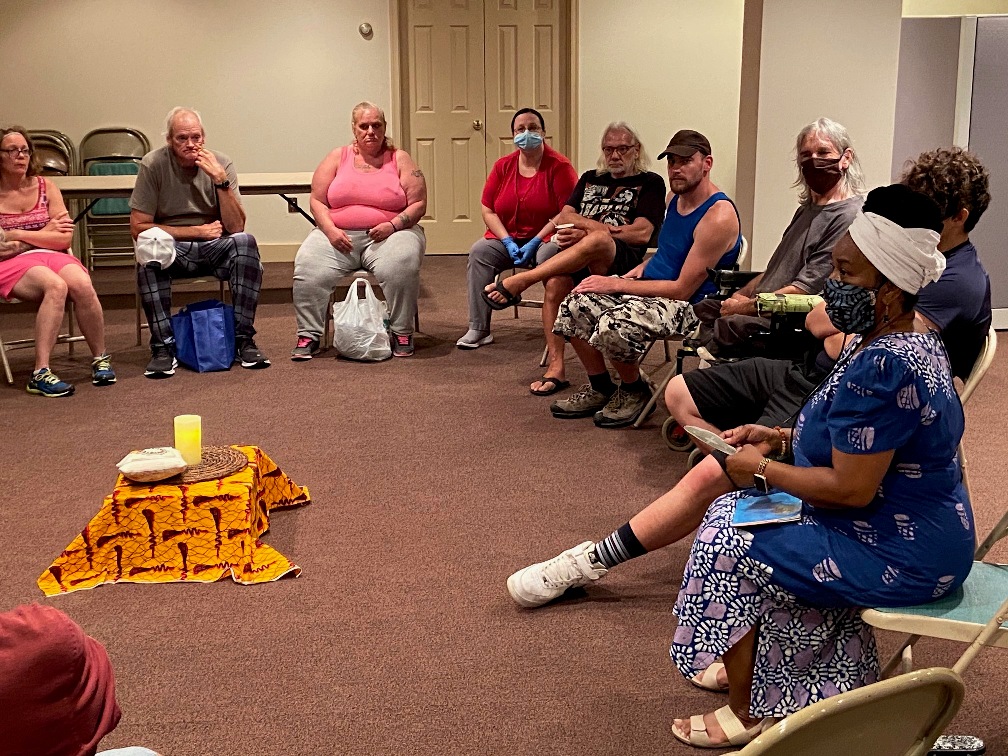
Yvonne Platts (far right) leads a Community Listening Circle on the topic of racism at Ripple Community Center. Photo provided by Danilo Sanchez.

A recent conversation with Trent stood out for me. Trent came into the Community Center proudly wearing a shirt with nine historical Black figures. He was quizzing staff to see who knew the most. I knew seven of the nine. Trent was pleasantly surprised. 

Then I decided to ask Trent a vulnerable question, “Hey man, how are you doing?” 

There was a bit of silence and then a sigh from Trent, “You know what? Not great. I keep thinking to myself, that could have been me.” 

That hit me hard. I knew he was right. I did not have any comforting words for Trent. I just sat there gazing into his eyes. I let the truth of his words seep into my bones. 

I’ve had experiences with racism, but I’ve never been worried that the color of my skin could get me killed while out running or that police would enter my house without a warrant and start shooting. I do not want that to be Trent’s, or anyone’s, story. 

Ripple Church and RCI took more action toward racial justice by hosting two events at RCI’s Community Building Center. The first event was with police officers as a way to build trust and ask them how they were addressing racial bias, police accountability, and excessive use of force. 

The second event was a Listening Circle with Yvonne Platts from Norristown, PA. It allowed the community to listen to one another and for people of color to speak about their experiences with racism. 

I was glad Trent was there for the Listening Circle. It would give him an opportunity to share and use his voice.  As ground rules were explained, Trent fidgeted in his seat. He leaned over to Platts and said, “You know what, this isn’t for me. I can’t do this.” He got up and exited the circle. 

I followed Trent to see what was going on. He confessed this was just too much for him. The pain of racism is real, and he was not ready to share his story. In my desire to empower Black voices, I overlooked Trent’s safety and emotional readiness to share, perhaps doing more harm than good. The rest of the Listening Circle was sacred, honest, and challenging. We plan to host another circle to educate the white members in our community about systemic racism.

I fight against white supremacy and racial injustice because God’s love demands it and they have caused deep wounds that need healing. Those wounds will not heal for the oppressed or the oppressor if we deny the reality of systemic racism in this country. There is much work to be done towards racial justice: repentance, prayer, listening, truth-telling, relinquishing power, learning, teaching. Find your part and join in the Spirit’s work.

Filed Under: Articles, Blog Tagged With: anti-racism, Danilo Sanchez, Racism, Ripple, Ripple Community Inc, Yvonne Platts

  • « Go to Previous Page
  • Go to page 1
  • Interim pages omitted …
  • Go to page 9
  • Go to page 10
  • Go to page 11
  • Go to page 12
  • Go to page 13
  • Interim pages omitted …
  • Go to page 17
  • Go to Next Page »

Primary Sidebar

  • Home
  • About Us
    • Our History
    • Vision & Mission
    • Staff
    • Boards and Committees
    • Church & Ministry Directory
    • Mennonite Links
  • Media
    • Articles
    • Newsletters
    • Video
    • Audio
    • Bulletin Announcements
  • Resources
    • Conference Documents
    • Missional
    • Intercultural
    • Formational
    • Stewardship
    • Church Safety
    • Leaders’ Resources
    • Request a Speaker
    • Pastoral Openings
    • Job Openings
  • Give
  • Events
    • Delegate Assembly
    • Youth Event
    • Conference Calendar
  • Mosaic Institute
  • Vibrant Mosaic
  • Contact Us

Footer

  • Home
  • Contact Us
  • Delegate Assembly
  • Vision & Mission
  • Our History
  • Formational
  • Intercultural
  • Missional
  • Mosaic Institute
  • Give
  • Stewardship
  • Church Safety
  • Leaders’ Resources
  • Articles
  • Bulletin Announcements

Copyright © 2026 Mosaic Mennonite Conference | Privacy Policy | Terms of Use
Aligned with