• Skip to main content
  • Skip to primary sidebar
  • Skip to footer

Mosaic MennonitesMosaic Mennonites

Missional - Intercultural - Formational

  • Home
  • About Us
    • Our History
    • Vision & Mission
    • Staff
    • Boards and Committees
    • Church & Ministry Directory
    • Mennonite Links
  • Media
    • Articles
    • Newsletters
    • Video
    • Audio
    • Bulletin Announcements
  • Resources
    • Conference Documents
    • Missional
    • Intercultural
    • Formational
    • Stewardship
    • Church Safety
    • Leaders’ Resources
    • Request a Speaker
    • Pastoral Openings
    • Job Openings
  • Give
  • Events
    • Delegate Assembly
    • Youth Event
    • Conference Calendar
  • Mosaic Institute
  • Vibrant Mosaic
  • Contact Us
  • English
  • Español (Spanish)
  • Indonesia (Indonesian)

Javier Marquez

Young Leaders Build Peace in Barranquilla

August 20, 2026 by Cindy Angela

by Javier Márquez

A couple of weeks ago, when I called José and Pastor Victor from Oasis Formation and Leadership Church, they told me that the church had not been able to carry out any of its activities throughout the entire week because of a curfew. Criminal groups had forced the cities of Barranquilla and Soledad to close businesses and stay home that weekend.

These kinds of situations may seem strange or surprising to people who are unfamiliar with certain contexts in South America, but they are a reality experienced by local communities and the church. A week later, everything returned to normal, and the church was able to resume its work in the community.

José served this summer as one of Mosaic Mennonite Conference’s Summer Ambassadors. This year marked an important expansion of the Ambassadors program, with José among the first group of Ambassadors to serve in placements outside the United States. His placement at Oasis helped strengthen a ministry that has already been developing for several years.

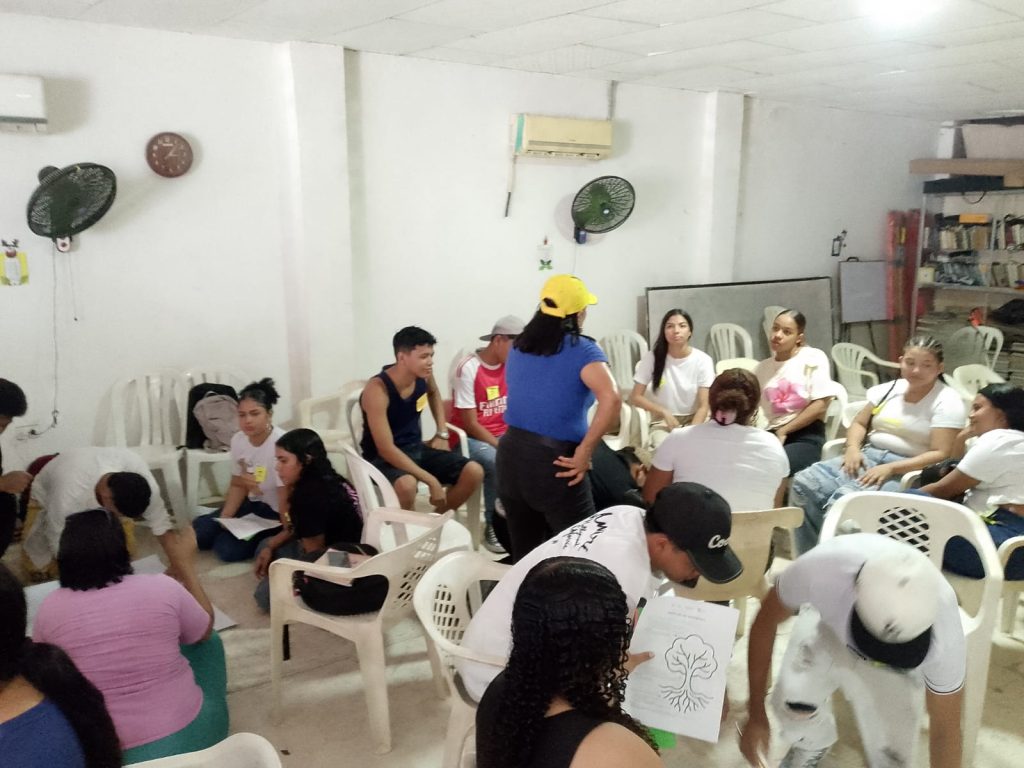
The church is currently offering a season of activities for young people, including music, reflection through film forums, and sports. This work is not being carried out by José alone, but by a group of young people who are very active in the church and are serving their community with a message of peace.

One of their recent projects was a soccer tournament. The young people from the church, together with their pastor, organized the one-day competition, with ten teams registering to participate. Most of the participants were not young people from the church, but the tournament created an opportunity to promote peaceful coexistence in the neighborhoods. These activities are organized with the purpose of sharing a Christian message with the community and inviting people to become part of the church.

Each week, the young people visit one another to read the Bible and pray together. On Saturdays, they meet to plan activities and then go out into the community to carry them out.

In this sense, the Ambassadors program served as an encouragement and catalyst for a ministry that has been developing for several years. It helped strengthen a group of young people who are going through their own process of growth and are beginning to establish themselves in universities and workplaces. At the same time, they continue to maintain a relationship with the church, participating in its activities and taking leadership in organizing them.

José’s presence this summer is one way Mosaic is investing in young leaders while also learning from the leadership and ministry already taking place in its communities beyond the United States.


Javier Márquez

Javier Márquez is Associate for Community Cultivation and Leadership Development. He is an Anabaptist Colombian pacifist and poet. He is based in Bogota, Colombia.

Mosaic values two-way communication and encourages our constituents to respond with feedback, questions, or encouragement. To share your thoughts or send a message to the author(s), contact us at communication@mosaicmennonites.org.   

Filed Under: Articles, Mosaic News En Español Tagged With: Javier Marquez, Mosaic News en Español

Men Strengthened in Their Calling at Florida Leadership Empowerment Gathering

August 5, 2026 by Cindy Angela

by Javier Márquez

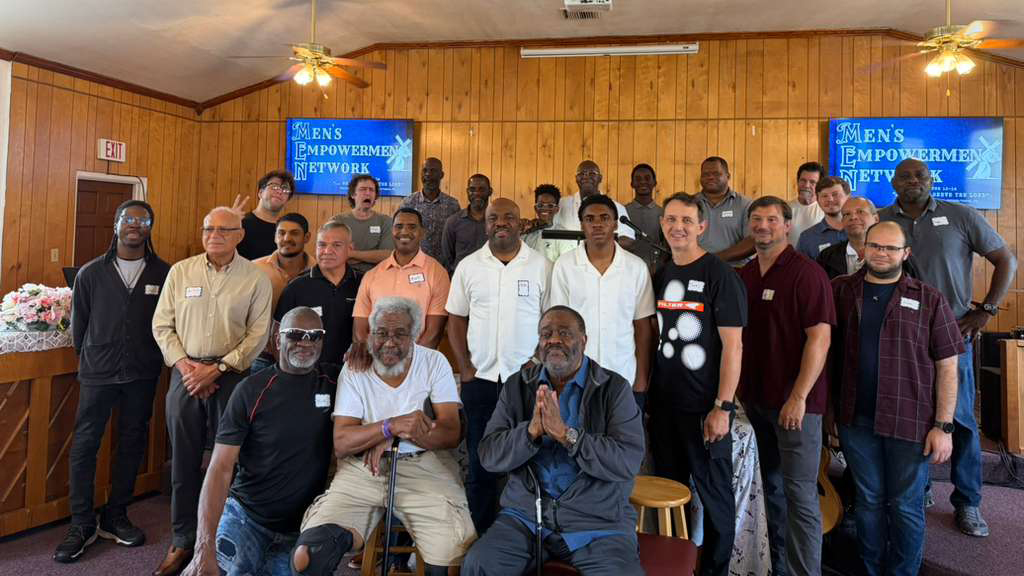
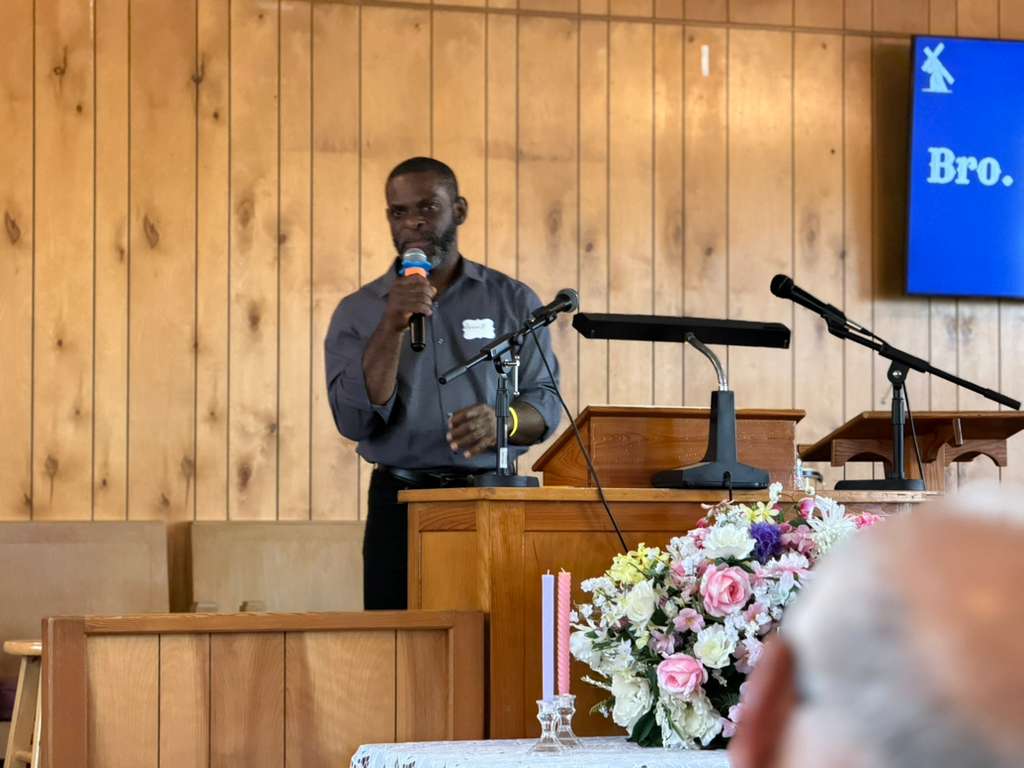
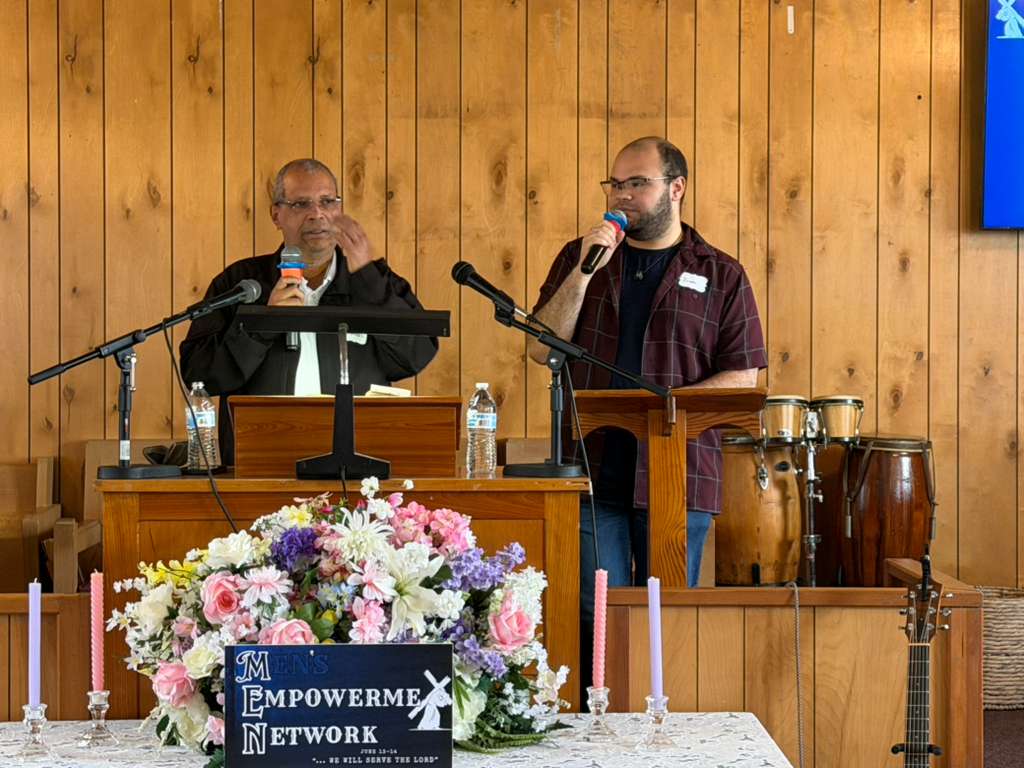
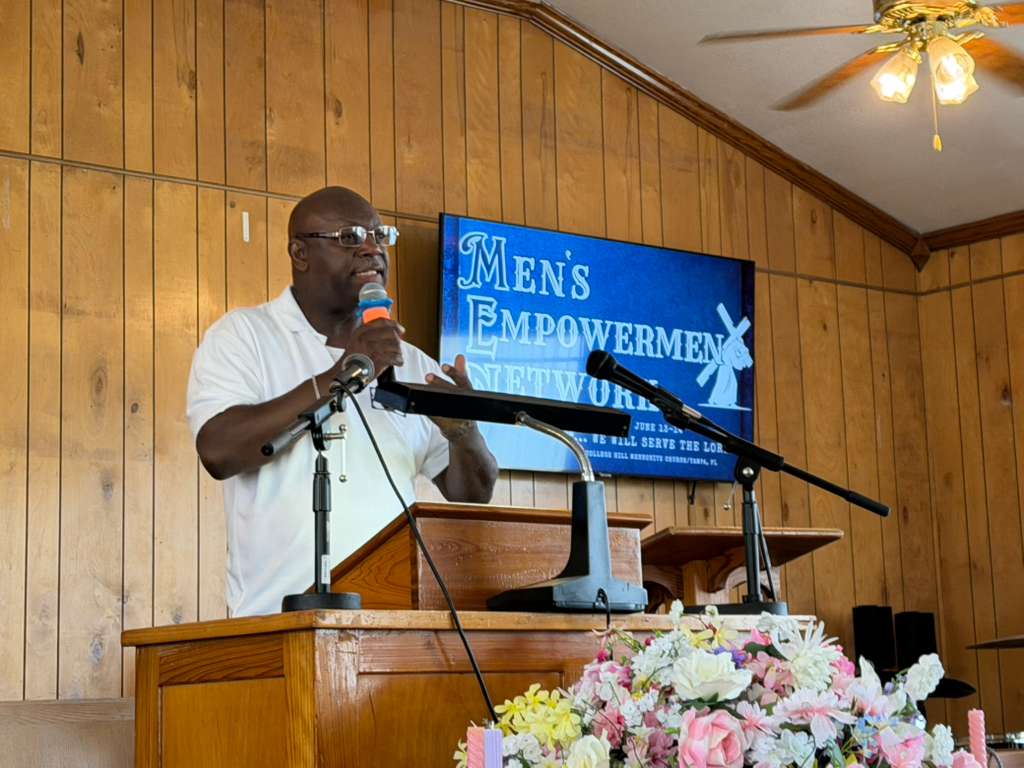
Pastors and leaders from Mosaic Mennonite Conference congregations in Florida gathered on June 13 for a men’s leadership empowerment event hosted by College Hill Mennonite (Tampa, FL) in partnership with pastors from across Florida. The gathering provided opportunities for worship, teaching, fellowship, and reflection on biblical leadership for men.

For Pastor Secundino Casas of Iglesia Menonita Shalom (Tampa, FL), one of the most meaningful aspects of the event was reconnecting with fellow ministers after several months apart. Spending time with other leaders strengthened friendships and served as a reminder of the importance of serving God together.

“It was a real blessing to greet one another and share this time together,” Casas said.

Pastor Secundino also expressed appreciation for the event’s organization, thanking Pastor Joseph Brooks and the College Hill Mennonite host team for their work. He had the opportunity to open the gathering with a prayer based on Joshua 1:5, a passage that set the spiritual tone for the day.

What stood out most to Casas was that, without any prior coordination, Pastor Tomás Ramírez of Iglesia Menonita Luz y Vida (Orlando, FL) centered his teaching on the same book of Joshua. For Secundino, this was a confirmation of the Holy Spirit’s leading and a reminder of God’s call to strengthen those who serve in Christ’s name.

One of the teachings that resonated most deeply with participants focused on the role of men as fathers and spiritual leaders. Secundino shared that one statement, in particular, stayed with him: the observation that many fathers have begun to live in fear of their own children.

“That reflection made me think about my own family and also about our role as spiritual fathers within the church. We need the strength God gives us to counsel, correct, and serve with love—not out of fear, but with confidence that God equips us to do what is good.”

The gathering also featured testimonies from two Christian authors who shared how God transformed their lives after difficult experiences. Their stories reminded those in attendance of God’s restoring power and the hope available to those who place their trust in God.

Beyond the teaching sessions, the event created a rare space where men could worship together, have honest conversations, and openly share their struggles, challenges, and lessons learned in an atmosphere of mutual support.

“I left feeling strengthened and reminded that God gives us the power to do good. I came away encouraged to continue serving with greater confidence, both in my family and in the church,” Casas shared.

The gathering reaffirmed the commitment of Mosaic’s Hispanic churches to continue equipping men to lead with humility, spiritual strength, and faithfulness to Christ’s calling.


Javier Márquez

Javier Márquez is Associate for Community Cultivation and Leadership Development. He is an Anabaptist Colombian pacifist and poet. He is based in Bogota, Colombia.

Mosaic values two-way communication and encourages our constituents to respond with feedback, questions, or encouragement. To contact Javier Márquez email jmarquez@mosaicmennonites.org.
Filed Under: Articles, Mosaic News En Español Tagged With: Javier Marquez, Mosaic News en Español

Studying the Priority Guide: A Living Experience in Mosaico Colombia

March 12, 2026 by Cindy Angela

by Javier Márquez

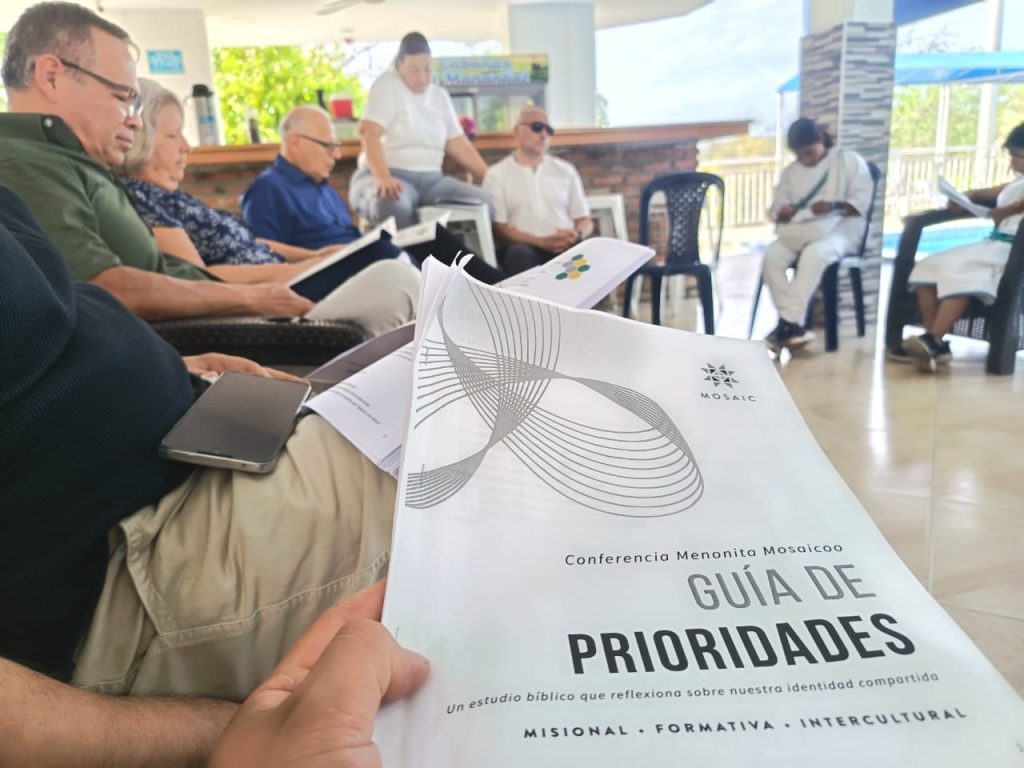
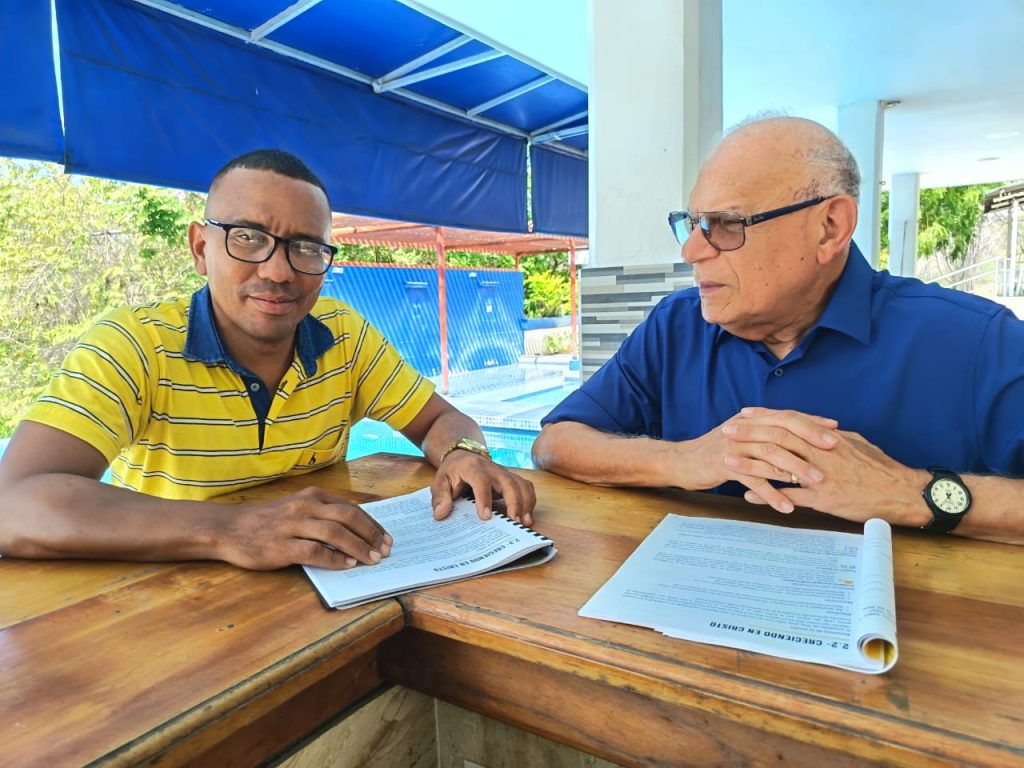
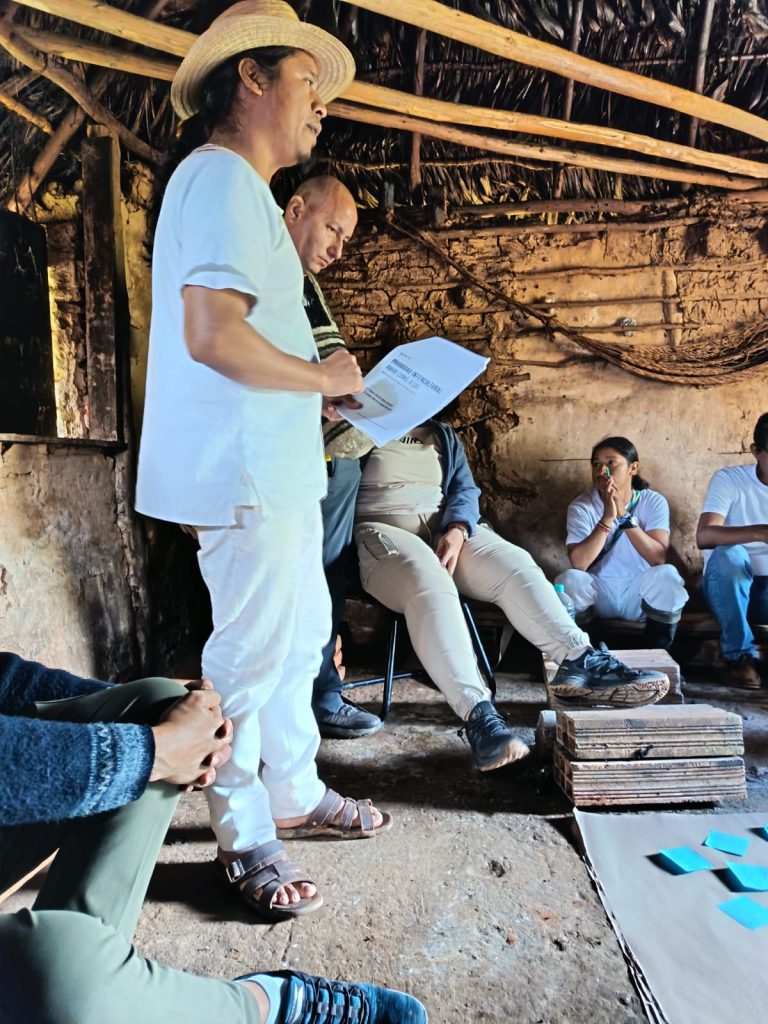
Colombian pastors gathered in February to reflect on how formation, mission, and intercultural transformation are part of their communities. All photos by Javier Márquez.

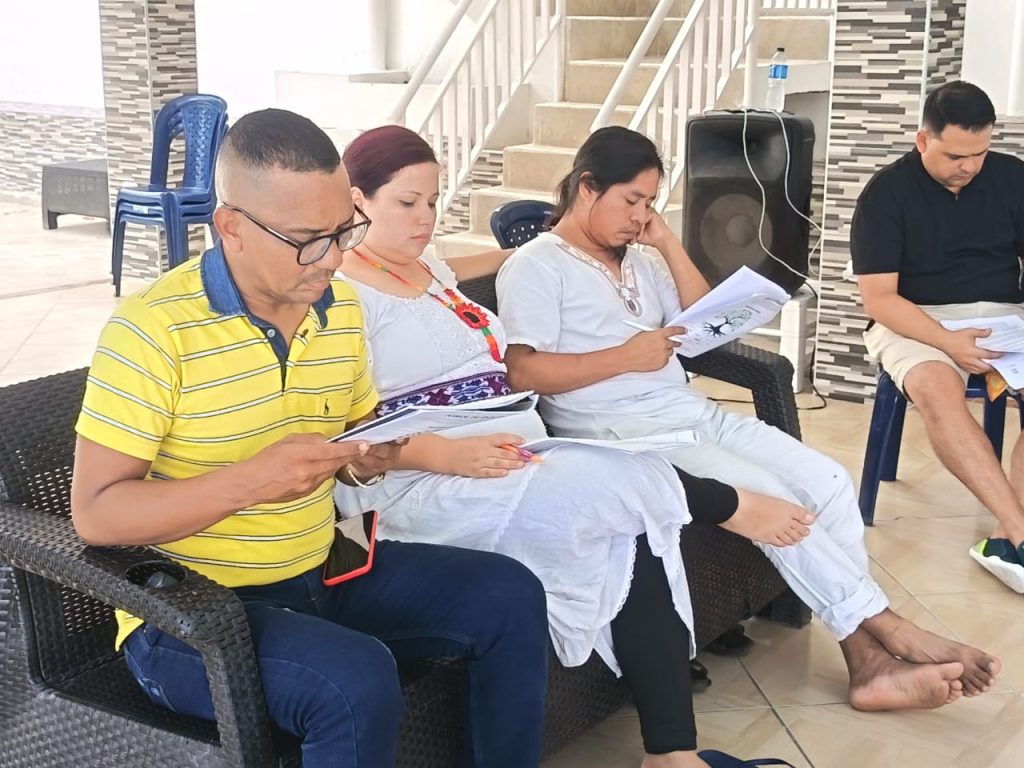
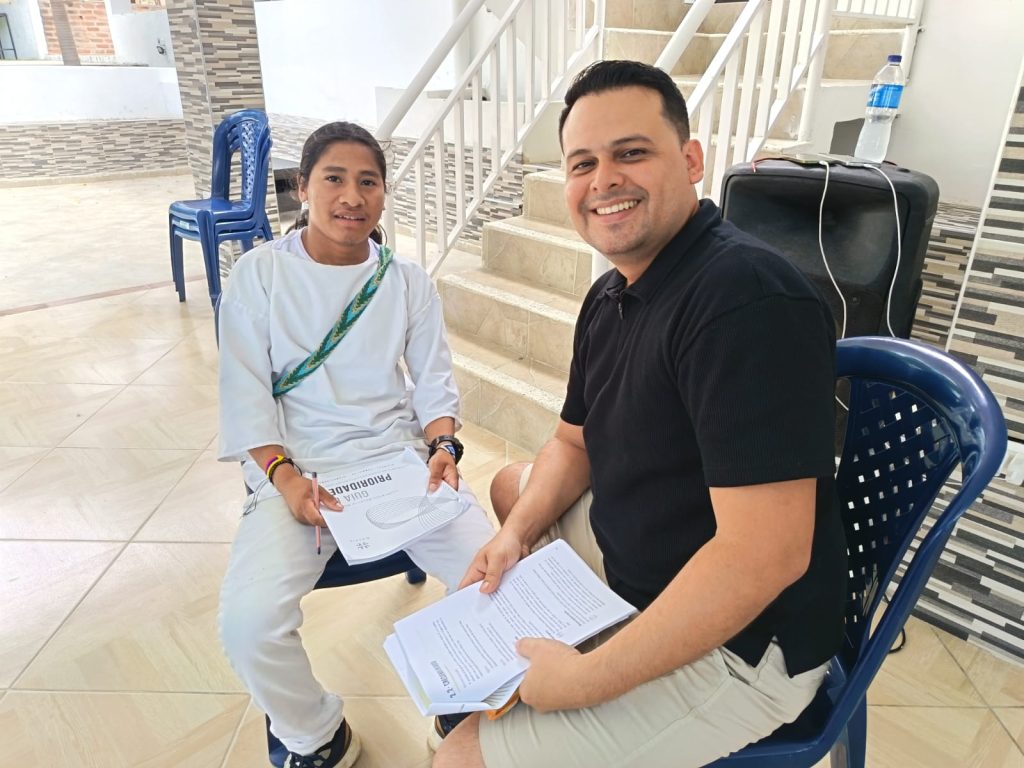
From February 6–9, 2026, during the annual Mosaico Colombia gathering in Santa Marta, the study of the Mosaic Conference Priorities Guide was a spiritual, communal, and intercultural experience that allowed us to embody what we were reading.

The Guide is structured around three priorities: formational (knowing and growing in Jesus), intercultural (loving like Jesus), and missional (living like Jesus). In Santa Marta, this framework came alive. The study was not cold or merely academic; it included dialogue, attentive listening, and prayer.

The study began with the introductory section shared by Leadership Minister Marco Güete, who helped frame the conference’s vision and mission within the Colombian process. Each priority was then guided by different leaders: Pastor Nidia Montoya led the formational reflection; Associate Executive Minister Marta Castillo, shared the missional reflection; and Ismael Conchacala facilitated the intercultural reflection. This diversity of leadership enriched the process and connected each priority to lived realities.

Reflecting on the experience, Castillo shared, “What a beautiful experience to listen and learn together from the Priorities Guide in the Colombian context, with the participation of different voices.” That plurality was one of the greatest gifts of the gathering. Urban pastors, Indigenous leaders from the Sierra Nevada, and Mosaic Conference representatives all contributed from their own contexts, expanding our understanding of the text.

One highly valued aspect was the emphais on participation. Conchacala affirmed that the guide creates space for everyone’s voice. In contexts where one-directional teaching often prevails, opening room for honest conversation allowed the intercultural priority to move from theory to practice.

Constructive critiques also emerged. Conchacala noted that the guide includes numerous appendices and guiding questions which, though valuable, can feel overwhelming or distracting if not used intentionally. He emphasized the importance of contextual adaptation: working with trained leaders differs from engaging communities with long-standing theological traditions. Simplifying does not weaken the content; rather, it can foster deeper appropriation.

Güete highlighted another significant fruit: Colombian churches drawing closer to Mosaic Conference. Many pastors arrived having already studied the material and left encouraged to continue exploring it and sharing it within their congregations.

A particularly moving moment was reflecting on the intercultural priority within the Wiwa community, hosted by Conchacala. In the Sierra Nevada mountains, the image of the “mosaic” gained tangible depth: distinct pieces coming together to reveal God’s larger design.

Studying the Priorities Guide in Mosaico Colombia was good news. It affirmed our identity as a shared journey, learned around the table, in Scripture, in prayer, and in life together.


Javier Márquez

Javier Márquez is Associate for Communication and Community Engagement for Colombia. He is an Anabaptist Colombian pacifist and poet. He is based in Bogota, Colombia.

Mosaic values two-way communication and encourages our constituents to respond with feedback, questions, or encouragement. To contact Javier Márquez, please email jmarquez@mosaicmennonites.org.
Filed Under: Articles Tagged With: Javier Marquez, Priorities Guide

Walking with Mosaic: A Historic Encounter

March 13, 2025 by Cindy Angela

by Javier Márquez

Between February 5 and 12, 2025, Medellín was the scene of a historic meeting that marked a new chapter in this process of transformation and movement that we are experiencing in the Mosaic Conference. A team of seven people from different countries—the United States, Brazil, Puerto Rico, and Colombia—traveled to the Colombian city to meet with pastors and leaders of Christian communities in Colombia, especially from the Anabaptist Community of Medellín, Resplandece Mennonite Church (Pembroke Pines, FL, Barranquilla, Colombia, and hybrid)—ministries that are part of the Conference—and the Shalom Anabaptist Christian Church of Cartagena. The purpose of the meeting was twofold: to strengthen ties between the communities and to witness the pastoral licensing of Manuel García and Carlos Sánchez as new pastors within Mosaic Conference. 

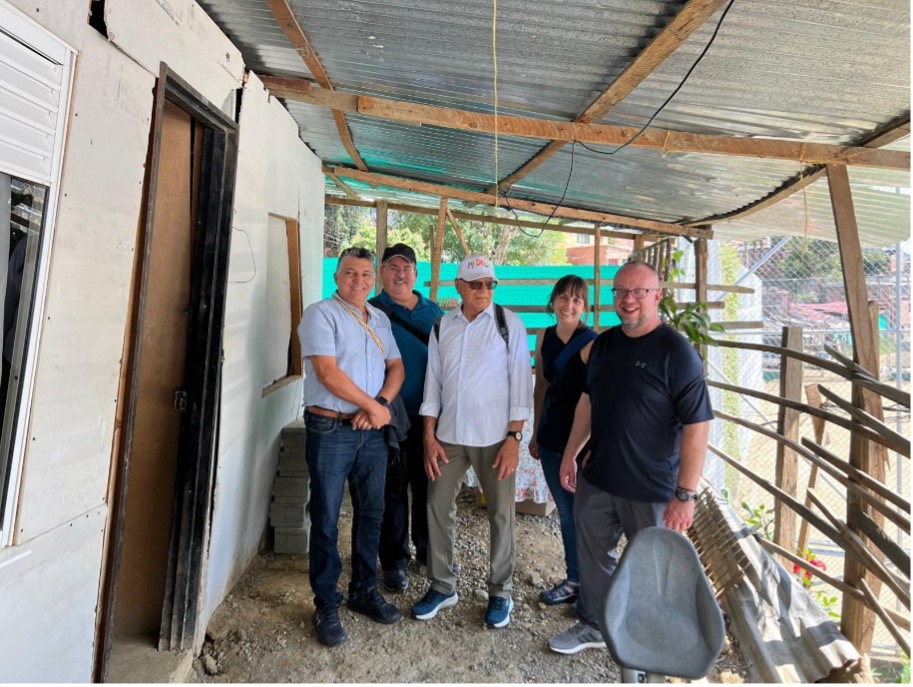
The visiting Mosaic board and staff members at the home of a sister of the Anabaptist Community of Medellín. Photo by Javier Márquez.

“The Colombian churches and leaders have been involved in God’s mission for a long time, Mosaic Conference noticed it, called them, and is walking with them,” reflected Leadership Minister Marco Güete. “The meeting in Medellín was an awakening guided by the Spirit of God.” From the beginning, the atmosphere was marked by fellowship, reflection, and the desire to share. 

“I discovered that God has a plan for each of these leaders and that they are ready to walk with Mosaic,” reflected Sandra Guëte. This feeling of walking together with mutual support was reflected throughout the visit. 

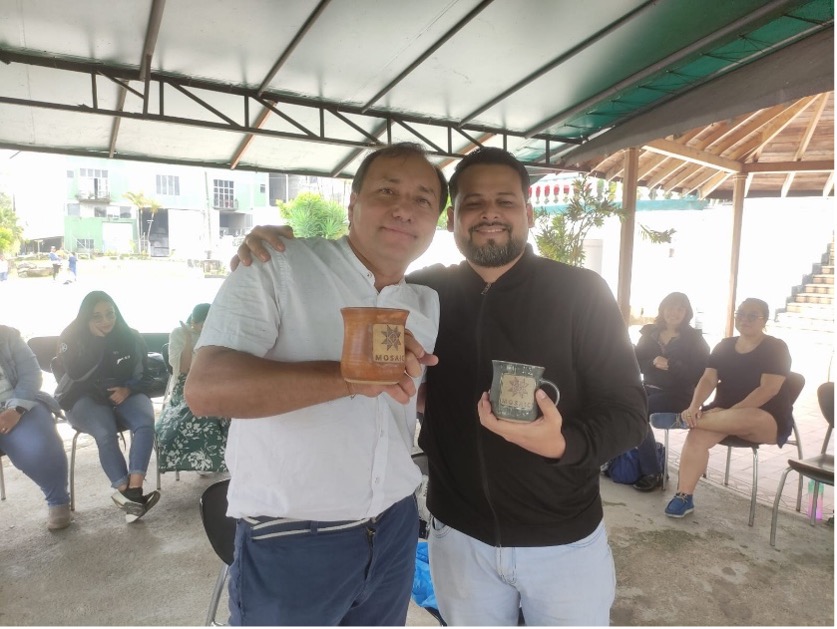
Pastors Carlos Sánchez (left) and Manuel García after receiving their credentials and mugs from Mosaic Conference. Photo by Javier Márquez.

The culminating moment was the pastoral licensing ceremony. Manuel García, pastor of Resplandece Mennonite, shared his emotion upon receiving his acceptance into Mosaic Conference: “The day I received the message that I was accepted to be licensed was unforgettable. I hugged my wife and cried with happiness. My mind traveled through the memories, the processes and the experiences that God allowed me to live until that moment.”

Likewise, Carlos Sánchez, pastor of the Anabaptist Community of Medellín, expressed, “Being part of Mosaico as a credentialed pastor and baptizing a small group of new brothers and sisters in the faith is an achievement for my life. It is one more step that God has affirmed in his mercy.”

In addition to these moments of joy and emotion, there was a space for community reflection led first by Ismael Conchacala Gil, a Wiwa indigenous Christian leader from the Sierra Nevada de Santa Marta, and then by Nidia Montoya, leader of the Anabaptist Community of Medellín. First, Conchacala shared a message about Luke 18 and, later, Montoya guided us in an exercise of expressing our feelings about these relationships that were emerging. In this context, the group “Walking with Mosaico” was born, which brings together Colombian pastors and leaders.

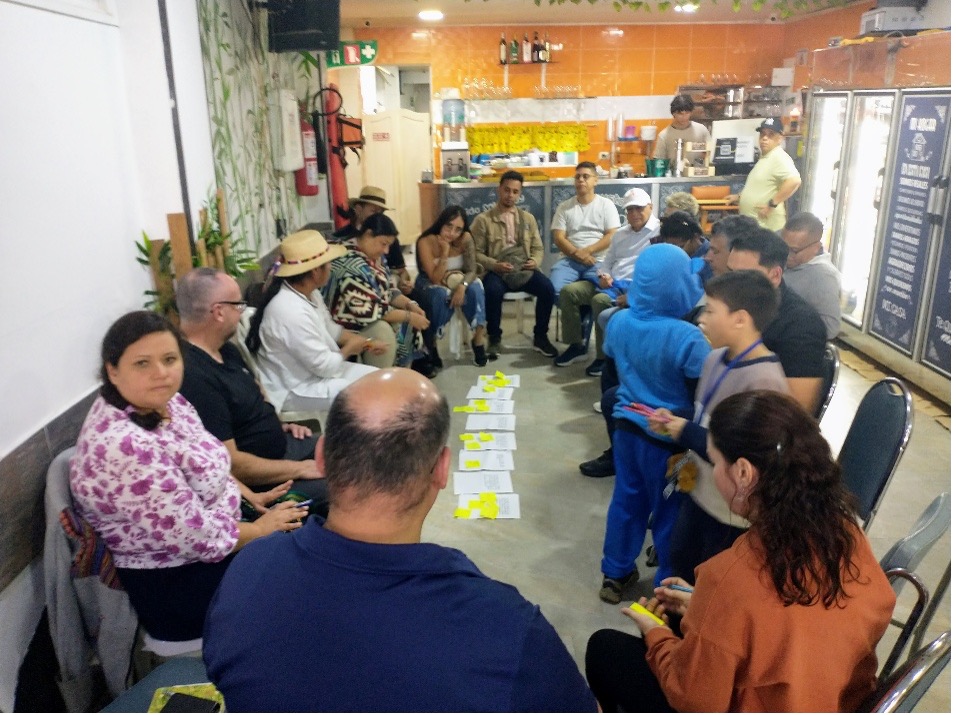
Working meeting with all the attendees. Photo by Jennifer Svetlik.

The cultural exchange was one of the most significant riches of this meeting. “The trip gave us the opportunity to connect and learn from each other while we traveled to different places in Colombia. We enjoyed delicious meals, drank good coffee, and had meaningful conversations and moments of communion. We got to know each other better,” said Mosaic Conference Leadership Minister for Mission Noel Santiago. The visits to the homes of the members of the Medellín community, the touristic activities, and the fellowship further enriched the meeting.

Sister Keila Barrero, who was accompanied by her husband Santiago Góngora, also shared about the experience lived during this meeting: “The opportunity to share with the pastors and leaders of Mosaico in various settings made this a valuable and enriching time. In addition, the welcome and attention provided made this experience a significant memory for us as a family.” These words reflect the sense of community and human warmth that characterized this historic meeting.

Santiago Góngotra and Keila Barrero. Photo by Javier Márquez.

For many, this trip was unforgettable, not only for the cultural and spiritual context, but for the human connection that was established. “I will never forget these two and a half days together,” shared Malka Blanco.

(from left) Marco Güete, Eliécer Virola, Malka Blanco, and Haroldo Nunes. Photo by Javier Márquez.

Pastor Eliécer Virola also expressed with enthusiasm: “My experience of this meeting with Mosaic was spectacular. What God is preparing in the spiritual sphere, what God is going to do in the church, is great.” His testimony reflects the vision and hope that the group shared during their meeting in Medellin.

Thus, in this historic meeting, Walking with Mosaic was born, both as a group of leaders united by faith, and as a tangible expression of the work that God is doing in Colombia and throughout the region. As Mosaic Conference continues to grow, “Let us be attentive to the voice of the Lord, wherever He calls us to get up and go,” encouraged Noel Santiago.


Javier Márquez

Javier Márquez is Writer & Communication Coordinator for Mosaico Colombia. He is an Anabaptist Colombian pacifist and poet. He is based in Bogota, Colombia.

Filed Under: Articles, Mosaic News En Español Tagged With: Colombia, Comunidad Anabautista de Medellín, Javier Marquez, Mosaic News en Español, Resplandece Mennonite Church

Killing Butterflies: Get to Know Healthy Niños Honduras (Part IV)

October 10, 2024 by Cindy Angela

by Javier Márquez


Editor’s Note: This is the first in a series of four feature articles on HNH, originally published in Spanish in 2024. All photos by Javier Márquez.

Part I | Part II | Part III | Part IV

It started with a bumpy journey due to flight delays that forced me to wait until the early hours of Sunday to travel from Bogotá, Colombia to Honduras. When I finally arrived, Don Felix was waiting for me at the small airport exit with a little orange paper sign with my name on it. Don Felix is a middle-aged man, short, with a gray mustache, who has lived practically all his life in San Francisco de Yojoa.  

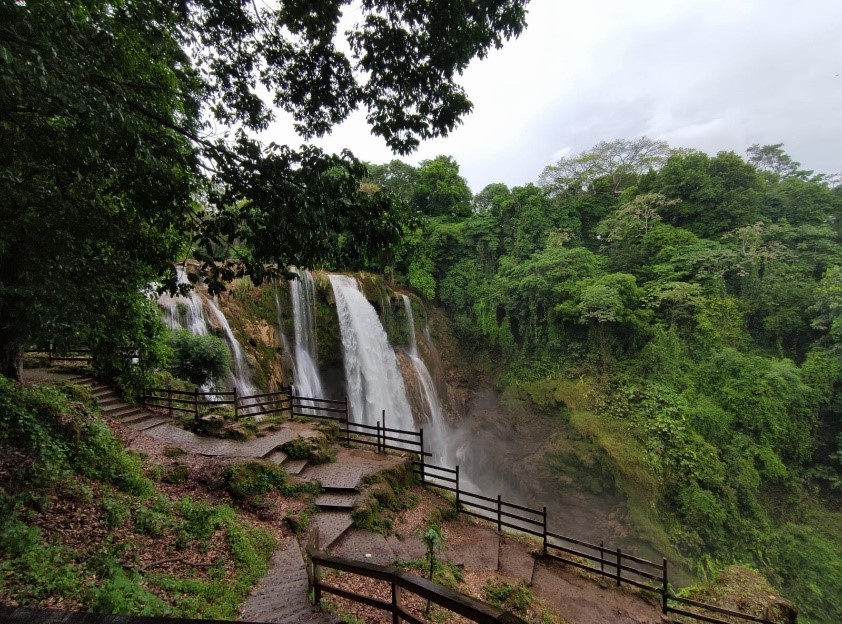
Waterfall Pulhanpanzank

The Conference-Related Ministry Healthy Niños Honduras (HNH) is located in San Francisco de Yojoa, in the Cortés Department, an hour and a half drive from the airport. The journey there took us through colorful landscapes, between vast valleys and mountains. I was first surprised to see so many cornfields and factories along the road, followed by large areas of cattle ranching, all fed by rivers and small streams. The landscape is green, full of wild and exotic birds, with the magical and tragic element of yellow butterflies abundantly flying across the road. When driving at 80 km/h, they collide with the car’s windshield as if it were a shower of golden raindrops. 

Upon arriving in San Francisco de Yojoa, the classic structure of a Latin American town becomes visible, with its small, colorful houses, roads—some well-paved and others dirt or trail—a main park with the Catholic church, a communal laundry area located by a stretch of the creek, and small shops. 

When we finally arrived at the Healthy Niños Honduras building, the team was at the Nutritional Center, but I couldn’t join them until later, after resting from the long, tedious day I had endured from having my flight rescheduled. 

On the way from the airport, I had the opportunity to get to know Don Felix a bit. I asked him to take me to buy a cap, and we stopped three times along the way, with all his patience until we found the right one. After the second stop, when I didn’t take the cap offered, he calmly said, “I’ll take you to a friend.” We stopped at his friend’s place, a small market near San Francisco de Yojoa. There, an older man with a beautifully humble demeanor greeted us and sold me one of his caps. He had known Don Felix for many years, and not only him but basically everyone in the small market. 

It is me! And Doña Blanca! 

Don Felix is known in all the towns of Cortés after so many years of working with HNH. He walks or drives through these towns, performing a ritual resembling a greeting parade. 

During my visit to HNH, I met many people like Don Felix who are also the face of this organization. HNH stands at the top of the town’s mountain as a place of service to others, with people who dedicate their lives to attending to hundreds of people each day, building floors, or cooking for the volunteers, all to serve the most vulnerable and those in greatest need: the children. 

From my first night to the final report

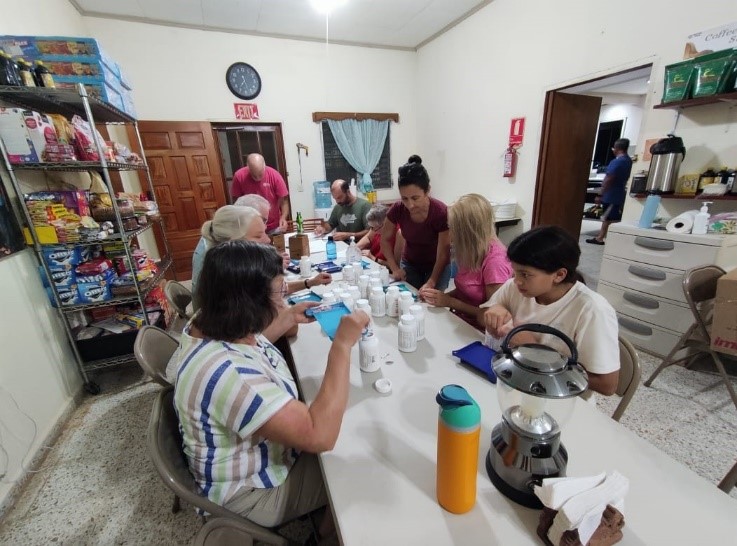
On the eve of the workday, the team gathered to pray and pack hundreds of vitamins to be distributed during the following days in the communities. 

The team’s first night at HNH. 

After four days of work, with a team of 26 people, 14 of whom were volunteers, a summary of the results was made: 

  1. 517 people were registered. 
  2. 282 children were examined, of which 192 were in a state of malnutrition: 68%. 
  3. 46 reading glasses were donated. 
  4. Eight floors were built, benefiting 23 people, including 15 children.
  5. 17 water filters were donated. 

          Filed Under: Articles, Mosaic News En Español Tagged With: Healthy Niños de Honduras, Javier Marquez, Mosaic News en Español

          A Ministry of Water, Concrete, Corn and Gratitude: Get to Know Healthy Niños Honduras (Part III)

          September 26, 2024 by Cindy Angela

          by Javier Márquez

          Editor’s Note: This is the first in a series of four feature articles on HNH, originally published in Spanish in 2024. All photos by Javier Márquez.

          Part I | Part II | Part III | Part IV

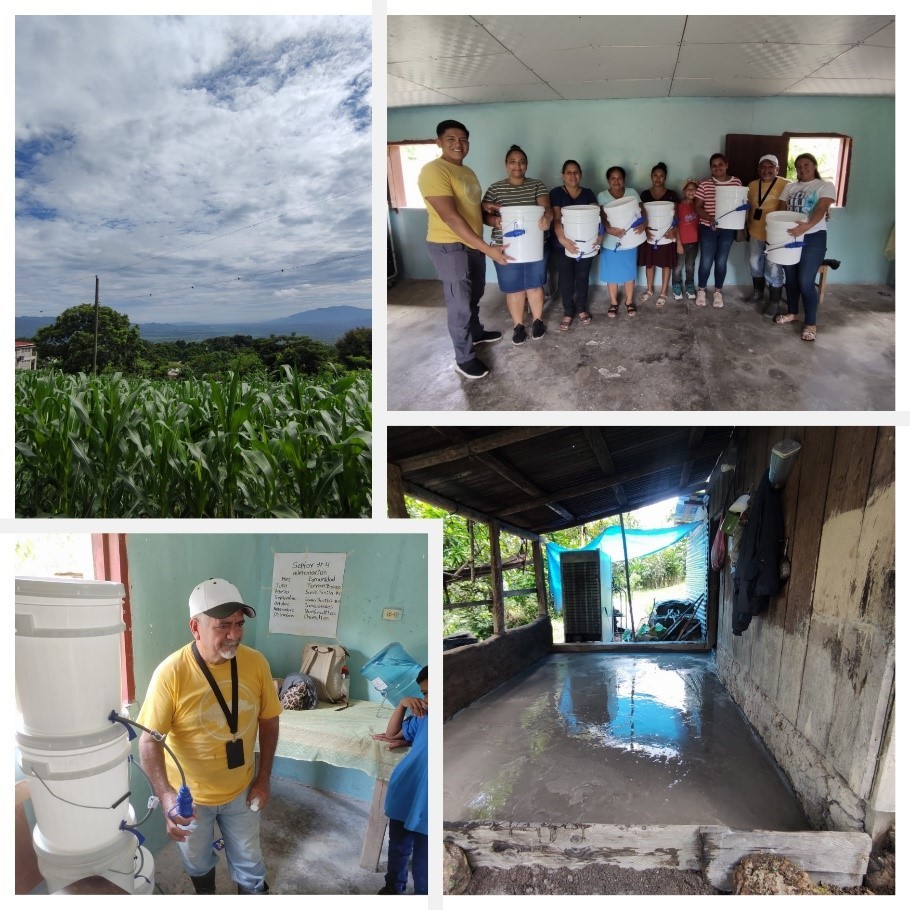
          In bottom left, a man from the community receiving medical assistance. In the top right, a family that has known the program for many years. In the bottom right, the construction of a concrete floor in a home.

          Three of the Conference-Related Ministry Healthy Niños Honduras (HNH)’s key services are represented by water, concrete, and corn. 

          The deep level of poverty in the mountains of Honduras creates conditions where people must live in precarious houses, with dirt floors and without clean water. When babies crawl and take their first steps on dirt floors, the bacteria and insects present start a cycle of gastrointestinal illnesses, which make children vulnerable to diseases that threaten their development.

          Without a potable water system, families build rainwater storage wells, which are holes in the ground filled with water that they use for bathing, drinking, and washing boots and dishes. Honduras faces diseases like dengue, chikungunya, and Zika, which are transmitted by mosquitoes that breed and dwell in these water wells.

          To address these problems, HNH offers to build cement floors, which are donated to families and built by the brigades. Over the years, hundreds of these floors have blessed families and provided safer places for children to grow.

          HNH also donates small, simple water filtration systems that protect everyone, especially children, from diseases that can come from consuming contaminated water. 

          At the Nutrition Center

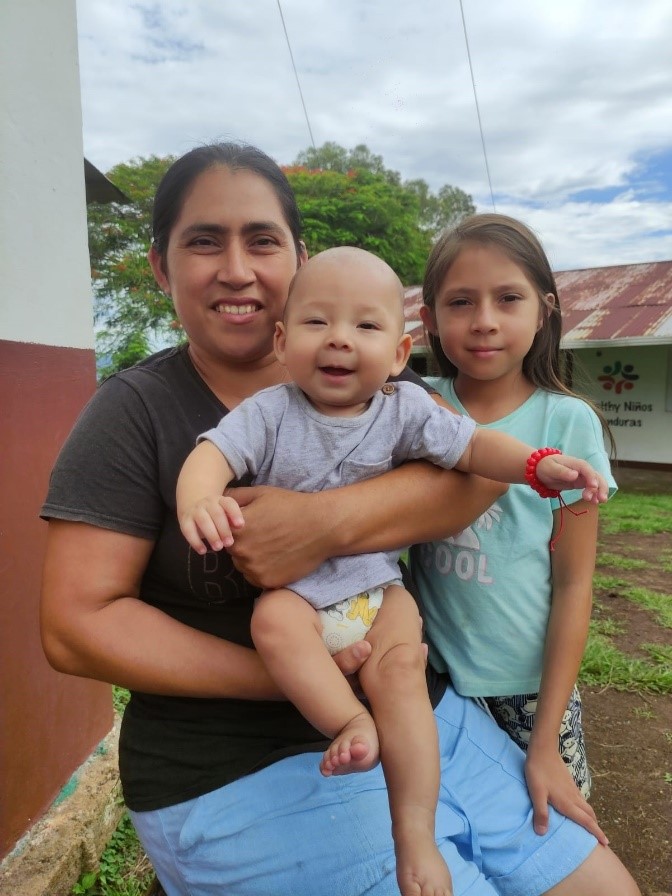
          Norma Gutiérrez and her daughters at the Nutrition Center. 

          HNH maintains a digital record of everyone it has served and offers professional follow-ups on each case. The families of children who are below the healthy nutrition line are invited to go to the Nutrition Center. 

          The Nutrition Center is a beautiful place that resembles a small village with colorful houses, a small school, a park, and a kitchen. Surrounded by bean, cassava, soybean, papaya, and plenty of corn fields, families who accept the invitation come here to help their children recover over several months. 

          The Nutrition Center becomes a small community where mothers work together to cook tortillas and coffee each morning, clean the center daily, and take care of their babies in a place where there is enough food to eat.

          Hundreds of children have been rescued at this center. It is a place where families receive nourishment for their stomachs and their hearts. Parents who have saved their children by admitting them to this center have become community leaders who invite other families to come. Some, like Don Félix, have even ended up working on staff with Healthy Niños. 

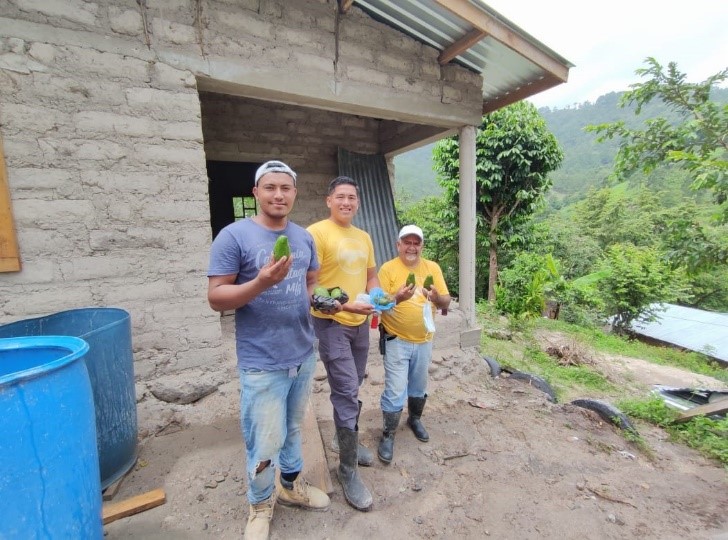
          Freddy brings avocados from his plot to thank the brigade for helping him build the floor of his house. That day, his daughter Celestin was celebrating her first birthday: “She is the apple of my eyes,” he said.
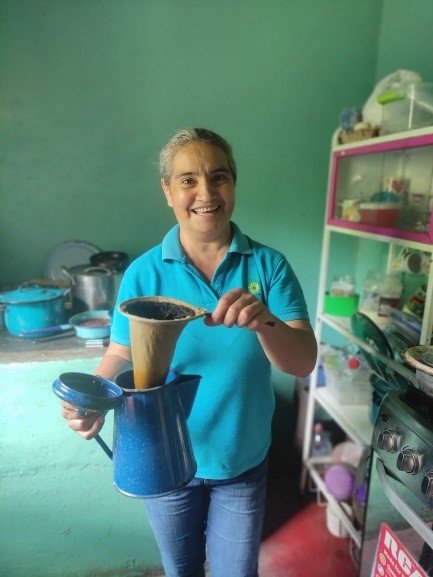
          Mrs. Blanca Isabelle prepares coffee for the brigade. Sadly, her eldest son passed away suddenly a year ago. For her, he will always live on in her memory.

          Filed Under: Articles, Mosaic News En Español Tagged With: Javier Marquez, Mosaic News en Español

          Starting to Shell the Corn: Get to Know Healthy Niños Honduras (Part II)

          September 19, 2024 by Cindy Angela

          by Javier Márquez

          Editor’s Note: This is the first in a series of four feature articles on HNH, originally published in Spanish in 2024. All photos by Javier Márquez.

          Part I | Part II | Part III | Part IV

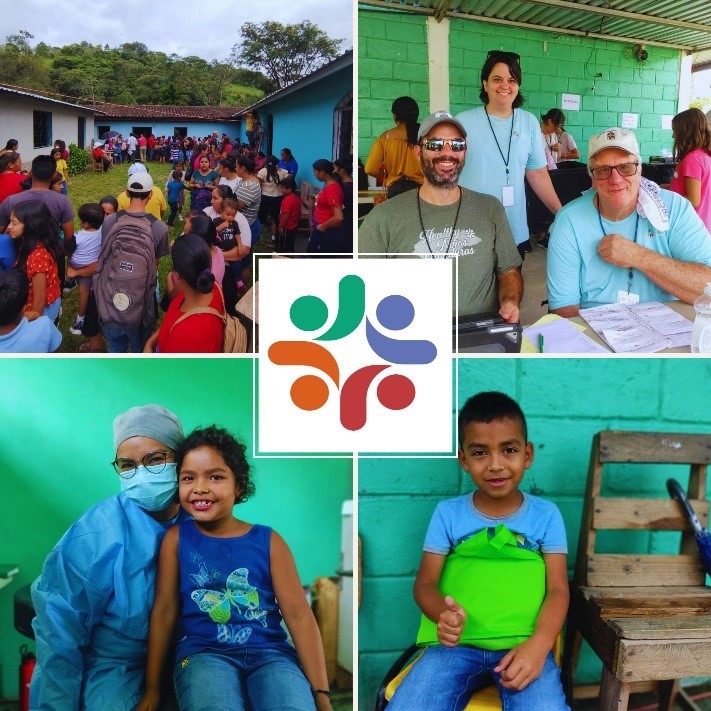
          In the top left, we can see one of the communities waiting for a medical brigade. Top right, one of the registration stations. Bottom left, a dentist and child, after performing a dental cleaning. Bottom left, a child with donations to take home.

          The Brigades

          Every morning, after breakfast, four vehicles leave from the main facilities of the Conference-Related Ministry Healthy Niños Honduras (HNH) toward a local community that has been previously selected and prepared by the staff. Among these vehicles are a team of volunteers and medical staff, along with the medical brigade equipment. When they arrive, there are nine stations organized: registration, vital signs and vitamins, deworming, height and weight, donations, medical consultation, pharmacy, dentistry, and construction. 
           

          To reach the communities, one must drive to pick up the doctors working with HNH, then travel a path surrounded by cornfields, cross rivers, and climb mountains. When the brigade arrives, the community is always organized, either at the town’s school or church. Sometimes they have prepared signs that read “WELCOME,” and community leaders are always ready, some with lists in hand and a team prepared to help unload the truck and set up each of the stations.

          Each brigade serves around 120 people per community, most of whom are children. The brigades provide families with donations such as clothing and toys, medically attend to the entire community, build floors in the poorest houses, and donate water filters. Undoubtedly the most important goal, though, is to identify children suffering from malnutrition, based on height and weight assessments. Once identified, the families—which often exceed 60% of those present—are invited to take their children to the Nutrition Center, a place designed for children to recover.

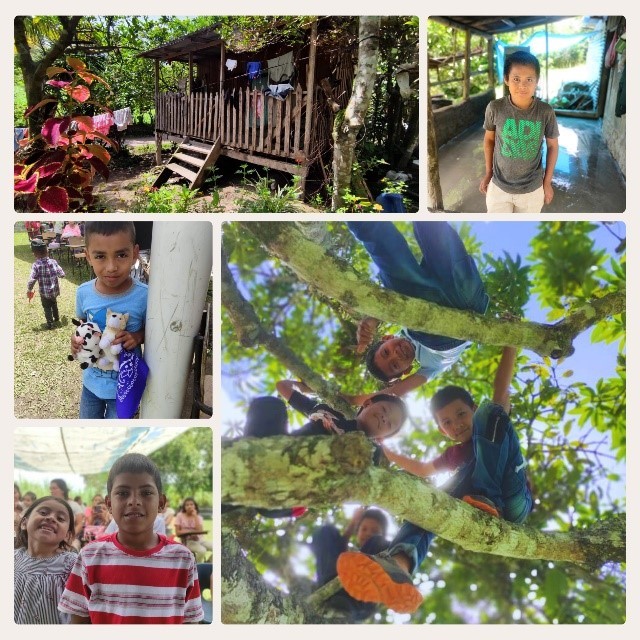
          Children from a local community; top left, a typical house in the rural area of Honduras; and top right, a child whose family is receiving a concrete floor for their home.

          The Volunteers

          The volunteer teams are a key part of this ministry. On each visit, a group from a Mennonite congregation in the U.S. volunteer for a week along with the medical team. Many of these congregations are part of Mosaic Conference. Last year, 56 teams from congregations volunteered.

          The teams are diverse. At least twice a month, people of all ages, genders, and professions arrive. They are students, pastors, entrepreneurs, and retired people, some who are here for the first time and others have been serving with HNH for years. Many have developed friendships with people from HNH or the community.

          They arrive enthusiastic, ready to lend a hand at one of the nine stations, prepared to learn and ask questions, to pray every morning before heading out to the brigades, and to pray and reflect with the Bible every night when they return.

          The Communities and the Medical Team

          It is amazing, even in areas where there aren’t many houses, how many people come to the school or church where the brigade will take place. That is how villages and mountains are throughout much of Latin America. Rural communities that, despite growing some crops, have a high level of malnutrition and poverty. Families who have been waiting for the brigade for months arrive clean and smiling. The brigade also strengthens community leadership and is a gathering time for locals. 

          The volunteers arrive alongside highly qualified doctors, nurses, interpreters, engineers, and community leaders. A staff person coordinates the brigade, including oversight of registering medical information, reviewing patients’ medical histories, attending to families, cleaning or extracting teeth, building floors, or encouraging families to go to the Nutrition Center. 

          Filed Under: Articles, Mosaic News En Español Tagged With: Healthy Niños de Honduras, Javier Marquez, Mosaic News en Español

          What is Healthy Niños Honduras? Get to know this Conference-Related Ministry!

          August 15, 2024 by Cindy Angela

          by Javier Márquez

          Editor’s Note: This is the first in a series of four feature articles on HNH, originally published in Spanish in 2024. All photos by Javier Márquez.

          Part I | Part II | Part III | Part IV

          In the top left, Amanda Sagastume registers a family. Top right, Felix, Geron, and Herman Sagastume pray for the community. Bottom left, the Sagastumes lead a time of reflection with a volunteer team. Bottom right, Brendan Sagastume works at the pharmacy. Center, two children from the community.

          Founded in 1987 as Mama Project and growing into Healthy Niños Honduras (HNH) in 2017, this Christian organization aims to provide “much-needed resources and hope to children and communities suffering in adverse conditions in Honduras…[through] a network of partnerships across all sectors of society and organizations willing to join and participate with initiatives and programs that offer healthy alternatives to children and communities in Honduras, as well as hope for a sustainable future,” states their website. 

          Dr. Herman Sagastume and his wife Amanda Sagastume are the Executive Director and Business Manager, respectively, of the organization, which they joined in 2010.

          From East Greenville, Pennsylvania, they coordinate the various aspects of the project: medical care, supported by a team of professionals and a professional medical record system; connections with churches in the United States, volunteer groups, and community outreach; financing the medical center, and self-sustaining gardens.

          “We want to offer alternatives to families and children living in poor communities, so they have a better future and, most importantly, to save lives; so they don’t die because there is no food at home or because they don’t have access to good nutrition,” says Dr. Herman Sagastume. “We dream that one day no family will suffer from a lack of food.”

          “The organization in Honduras plays an independent role; we don’t want to be an organization from the United States that says, ‘As Americans, we’re doing this work…’, but rather we want the communities in Honduras to identify and name the support they need,” says Amanda Sagastume.

          Healthy Niños Honduras is a Mosaic Conference-Related Ministry. Over the years, various teams from congregations have developed that serve at HNH year after year. Additionally, HNH has connections with local Honduran churches who offer leaders for each community’s medical brigades.

          In the top left, a man from the community receives medical assistance. Top right, the community waits for an event. Bottom left, a family that has known the program for many years. Bottom right, the construction of a floor in one of the homes.

          Healthy Niños Honduras is a Mosaic Conference-Related Ministry. Over the years, various teams from congregations have developed that serve at HNH year after year. Additionally, HNH has connections with local Honduran churches who offer leaders for each community’s medical brigades.

          “At HNH, we offer a soft introduction to the missionary world,” says Dr. Sagastume. “People can see what we do in the name of God, serving those in greatest need. Universities have also sent students in pedagogy, nutrition, and health.”

          Another key feature of the program is the Nutritional Center, where children are rehabilitated nutritionally and where mothers receive information on essential nutrients for children’s development. The center also has gardens with nutrient dense crops like corn and beans, which serve both the center’s pantry and as a classroom where mothers learn planting methods and optimization techniques from professionals.

          “Little by little, we have been able to teach mothers how they can change the mentality of ‘my land does not produce.’ When they leave, we have seeds available for them,” says Dr. Sagastume.

          “We teach families that when they have extra money, they should buy seeds, bananas, and nutrient-dense foods, rather than sweets. Constant education is important for change,” says Amanda Sagastume. 

          Filed Under: Articles, Mosaic News En Español Tagged With: Healthy Niños de Honduras, Javier Marquez, Mosaic News en Español

          • Go to page 1
          • Go to page 2
          • Go to page 3
          • Go to Next Page »

          Primary Sidebar

          • Home
          • About Us
            • Our History
            • Vision & Mission
            • Staff
            • Boards and Committees
            • Church & Ministry Directory
            • Mennonite Links
          • Media
            • Articles
            • Newsletters
            • Video
            • Audio
            • Bulletin Announcements
          • Resources
            • Conference Documents
            • Missional
            • Intercultural
            • Formational
            • Stewardship
            • Church Safety
            • Leaders’ Resources
            • Request a Speaker
            • Pastoral Openings
            • Job Openings
          • Give
          • Events
            • Delegate Assembly
            • Youth Event
            • Conference Calendar
          • Mosaic Institute
          • Vibrant Mosaic
          • Contact Us

          Footer

          • Home
          • Contact Us
          • Delegate Assembly
          • Vision & Mission
          • Our History
          • Formational
          • Intercultural
          • Missional
          • Mosaic Institute
          • Give
          • Stewardship
          • Church Safety
          • Leaders’ Resources
          • Articles
          • Bulletin Announcements

          Copyright © 2026 Mosaic Mennonite Conference | Privacy Policy | Terms of Use
          Aligned with