• Skip to main content
  • Skip to primary sidebar
  • Skip to footer

Mosaic MennonitesMosaic Mennonites

Missional - Intercultural - Formational

  • Home
  • About Us
    • Our History
    • Vision & Mission
    • Staff
    • Boards and Committees
    • Church & Ministry Directory
    • Mennonite Links
  • Media
    • Articles
    • Newsletters
    • Video
    • Audio
    • Bulletin Announcements
  • Resources
    • Conference Documents
    • Missional
    • Intercultural
    • Formational
    • Stewardship
    • Church Safety
    • Leaders’ Resources
    • Request a Speaker
    • Pastoral Openings
    • Job Openings
  • Give
  • Events
    • Delegate Assembly
    • Youth Event
    • Conference Calendar
  • Mosaic Institute
  • Vibrant Mosaic
  • Contact Us
  • 繁體中文 (Traditional Chinese)
  • English
  • Việt Nam (Vietnamese)
  • Español (Spanish)
  • Indonesia (Indonesian)

intercultural

Learning from the Church in Ghana

June 25, 2026 by Cindy Angela

After years of pandemic-related postponements, Mosaic Mennonite Conference Board member Maati Yvonne was eager to finally join a learning tour to Ghana with Mennonite Mission Network this spring. Sent to represent Mosaic Conference, she was joined by African American Mennonite leaders from LMC and Mennonite Church USA. Leaders gathering from various groups enriched the trip tremendously, and Maati especially enjoyed getting to know people new to her, such as Pastor Felix Rocha of Evangelical Garifuna Church in New Orleans.

“I had been waiting so many years to go on this trip, and I was going to soak up every single minute,” Maati said.
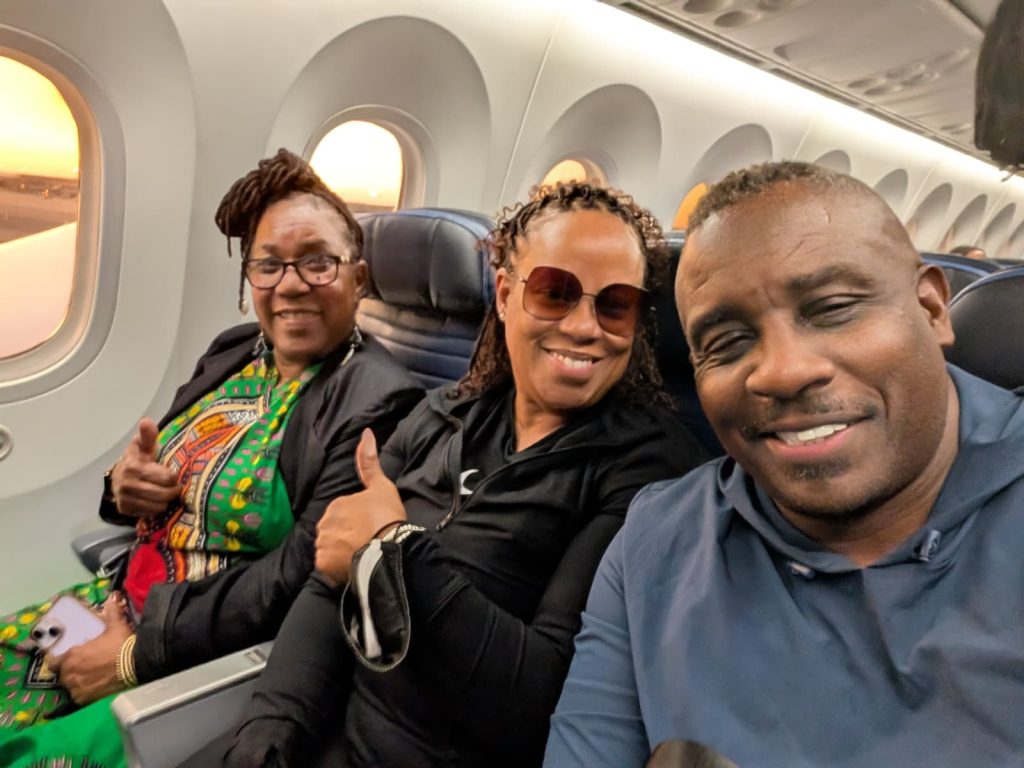
Maati, left, with Jae and Wil LaVeist.

From the beginning of the journey, relationships were central. Even before leaving Philadelphia, she connected with fellow travelers Wil and Jae LaVeist (Wil is Senior Executive for Advancement of Mennonite Mission Network), sharing conversations during the long flight across the Atlantic.

While Maati came to the trip interested in connecting with other peacebuilders in Ghana, the opportunities for encounter that were presented offered new insights about local churches, seminaries, and expressions of Christian faith.

One unexpected moment came while standing alone on a balcony beneath a bright full moon.

“It was the same moon we see at home,” she reflected. “People all around the world are looking at the same moon, and we can all relate to the same God no matter where we are.”

The tour also included visits to sites connected to the transatlantic slave trade. For Maati, walking through the slave castle was overwhelming.

“As I stood in the dungeon at Cape Coast Castle, I tried to imagine the darkness,” Maati reflected. “I tried to imagine the smell, the cries, the fear. I could not fully imagine it in my mind, and felt in my spirit I had to flee that space. After catching my breath, this spoken piece came to me:

Imagine
Imagine being deprived of sunlight and fresh air. 
Imagine living in darkness, in despair, with the constant fear of rape, violence, and death. 
Imagine being torn from your mother, your father, your language, your name. 
Yes, this is what our ancestors endured. 
Young people, you do not know the full story— the strength, the losses, the sacrifices, the courage. 
A people stripped of their homeland, their future, their identity. 
Washed in the stench of slavery, how could their minds ever be free? 
Yet they survived. 
But the chains did not end when the ships stopped sailing. 
For somebody told a lie. 
As Dr. Martin Luther King Jr. said, “Somebody told a lie one day.” 
A lie that Black was ugly. A lie that Black was less than. A lie that Black was something to fear. 
And our children inherited those lies. 
What can they hope for? What can they dream of? What can they live for if all they see are reflections of a story that was never true? 
This land which we call America were built with the blood, the sweat, the flesh, and the tears 
of our ancestors for more than four hundred years. 
Yet too many of our children walk without purpose, quick to hate, quick to fight, slow to see their own worth. 
So we must build them up. 
Fill them with pride. Teach them their history. Tell them the stories of resilience and strength, of wisdom and power, of people who endured and still rose. 
Teach them that they are descendants of survivors, dreamers, builders, and believers. 
The moment is ours. 
The time is now. 
It is our duty to walk in freedom, to live lives of service, to lift those in need, and to share the Gospel— not only in our words, but in our understanding, our actions, and our deeds. 
For freedom is not merely given. 
Freedom must be remembered. Freedom must be claimed. Freedom must be lived. 
And we are the living testimony of those who survived.” 
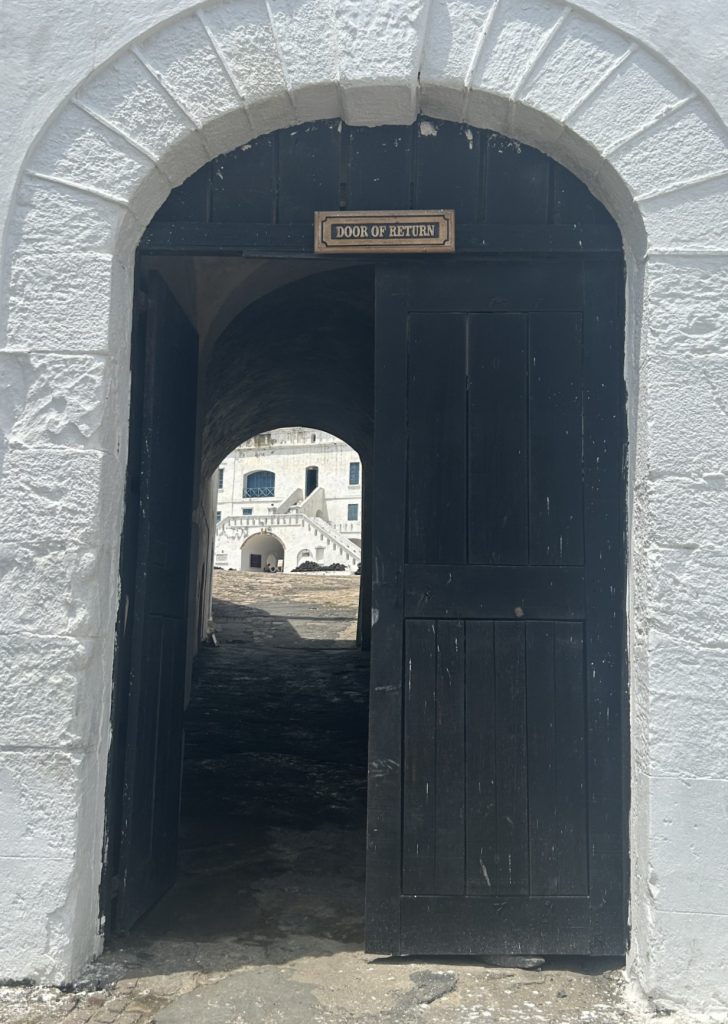
The slave castle’s “Door of Return.”

Throughout the trip, Maati was impressed by the vitality of the African Independent Churches. She observed congregations that were well-resourced, deeply committed to discipleship, and able to sustain ministry without relying on Western support. She noted vibrant Sunday school programs, ministries for new mothers, testimonies shared by both adults and children, and generous and lively community celebrations that surrounded events such as a baby dedication.
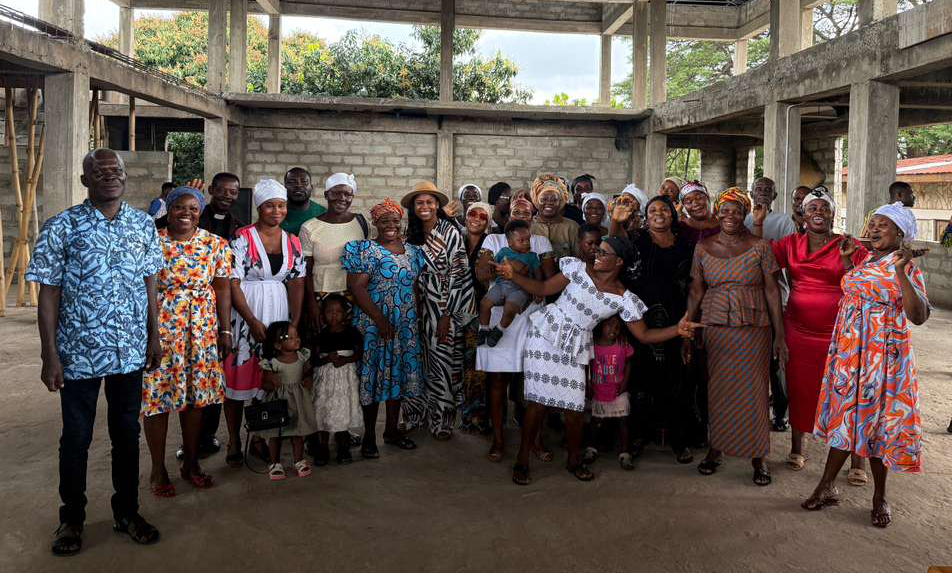
The seminary community warmly welcomed the group.

The experience also sparked reflection on Mosaic’s commitment to becoming an intercultural conference.

“As we are growing as Mosaic, we have to be intentional about checking ourselves,” Maati said. “Are we assimilationists, multicultural, or are we truly intercultural? We have made many strides forward, and we also still need to examine ourselves.”

Inspired by the churches she worshipped with in Ghana, Maati hopes Mosaic will continue creating space for congregations to express their unique cultural traditions while also finding opportunities to worship, learn, and celebrate together.

“What I want for Mosaic is to allow every congregation to express who they are and how they worship,” she said. “How do we truly celebrate each other?”

Maati returned home inspired by the hospitality, fellowship, and discipleship she witnessed in Ghana. Her hope is that Mosaic congregations will continue learning from one another and from the global church as they seek to follow Christ together.

“We need to get tighter and more serious about making disciples,” she said. “And take the Ghanian churches’ example for how to fellowship, witness, and make disciples—for the good of others and the glory of Christ.”


Mosaic values two-way communication and encourages our constituents to respond with feedback, questions, or encouragement. To share your thoughts or send a message to the author(s), contact us at communication@mosaicmennonites.org.   
Filed Under: Articles Tagged With: intercultural, Maati Yvonne, Mennonite Mission Network

Introducing the Mosaic Priorities Guide: Living Our Intercultural, Formational, and Missional Priorities

November 20, 2025 by Cindy Angela

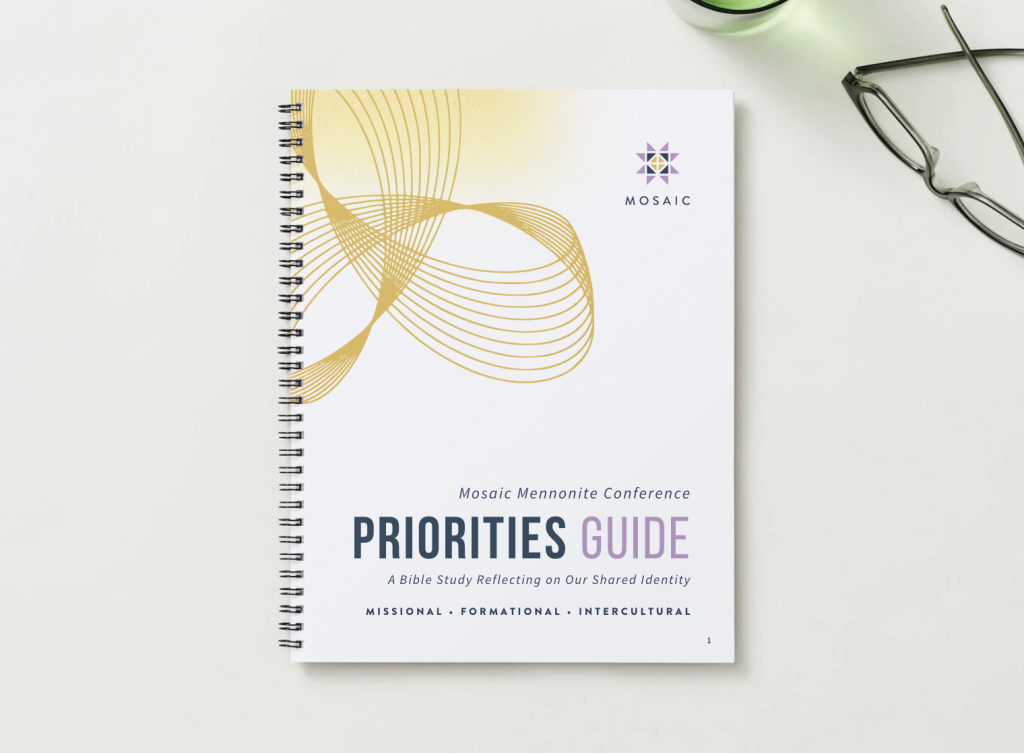
Hard copies of the Priorities Guide were distributed during the Friday night equipping session at the 2025 Conference Assembly.

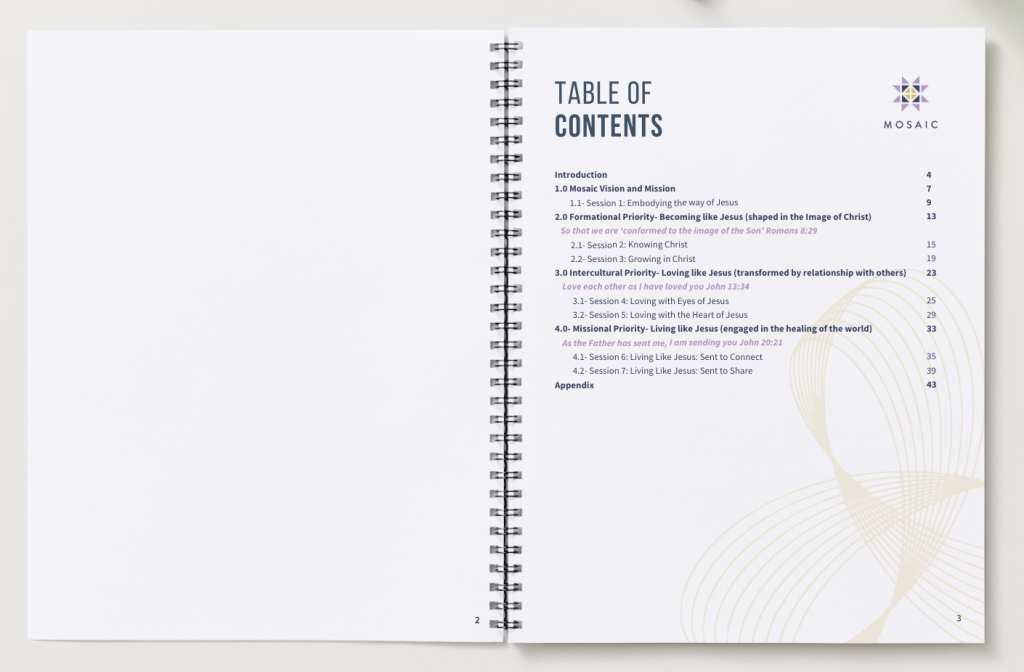
At Mosaic Conference, our three core priorities—Intercultural, Formational, and Missional Transformation—guide how we grow as communities of faith. The Mosaic Priorities Guide: A Bible Study to Reflect on Our Shared Identity was created to help congregations, leaders, Conference-Related Ministries (CRMs), and Partners in Ministry (PIMs) move beyond simply naming these priorities to truly living them out in their unique contexts. 

The guide includes seven interactive lessons with a biblical story, discussion questions, and activities and spiritual practices in which those gathered can engage. Facilitators have access to outlines, resources, and handouts to make leading easier. The appendix provides sermon starters and additional activities.  

DOWNLOAD THE GUIDE IN ENGLISH, SPANISH, AND INDONESIAN at mosaicmennonites.org/leadersresources/ 

Why the Guide Exists 

Resources for reflection, growth, and shared discernment 

The guide was created to make space for listening to God, to one another, and to the diverse communities in which we serve. It is not an instructional manual, but offers invitations to slow down, notice God’s presence, and reflect together on how the Spirit is at work. Designed to be flexible, the guide allows formation and mission to emerge naturally from relationships, dialogue, and shared discernment. It can be used in a small group, Bible study, or as a sermon series.  

Intercultural Priority 

Loving with the eyes and heart of Jesus 

The Intercultural Priority helps communities grow in seeing and valuing people as God sees them. The guide encourages participants to love with the eyes and heart of Jesus, noticing the gifts, experiences, and perspectives of others with compassion and humility. By practicing empathy and attentive love, congregations, leaders, CRMs, and ministry partners create spaces where God’s Spirit shapes us together, fostering understanding, connection, and mutual care. 

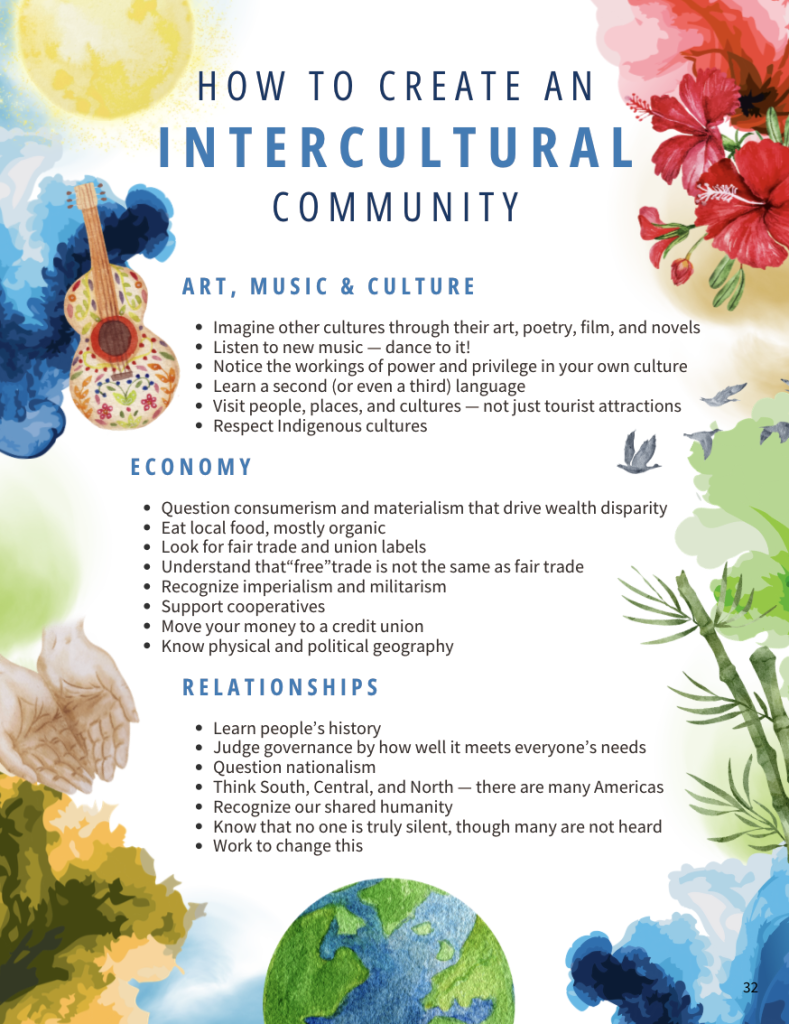
One of the Spiritual Practice for the Intercultural Lesson: How to Create an Intercultural Community.

Formational Priority 

Knowing Christ and Growing in Christ 

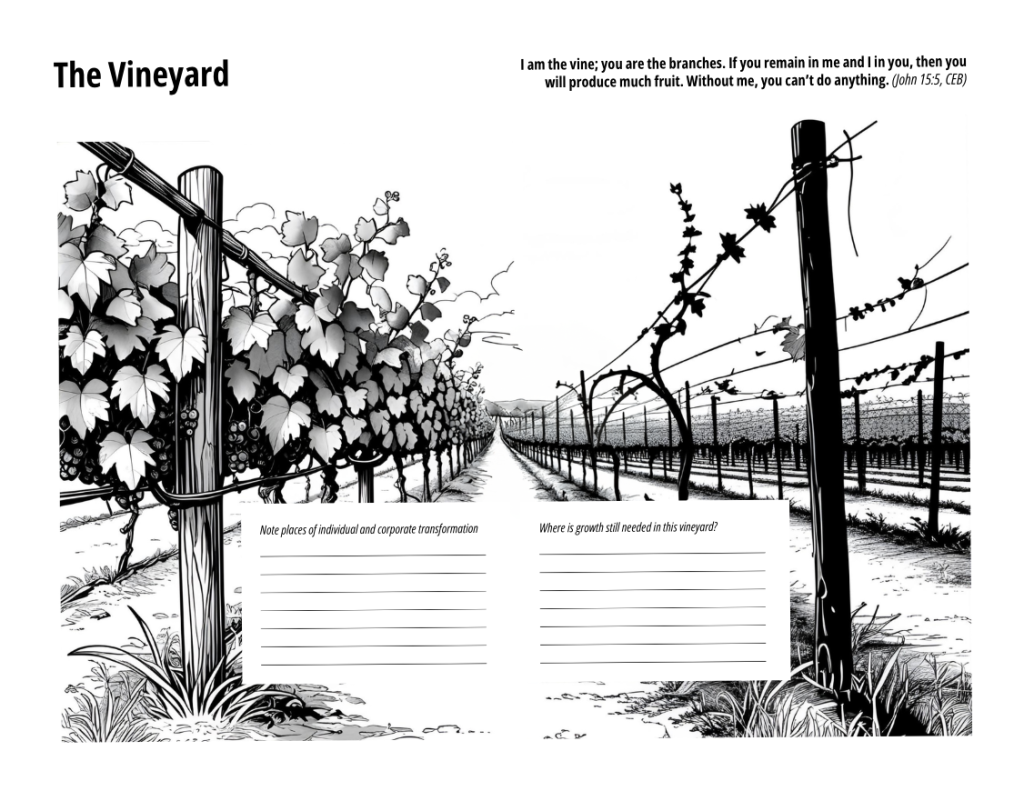
One of the Spiritual Practice for the Formational Lesson: The Vineyard Coloring and Journaling Sheet

The Formational Priority focuses on how God is shaping us as followers of Jesus. The guide invites participants to know Christ and grow in Christ, using Scripture, reflections, spiritual practices, and conversation questions. This priority emphasizes personal and communal transformation, helping participants embody Jesus’ love and wisdom in everyday life, while encouraging mutual growth through shared experience. 

Missional Priority 

Living like Jesus: Sent to Connect and Share 

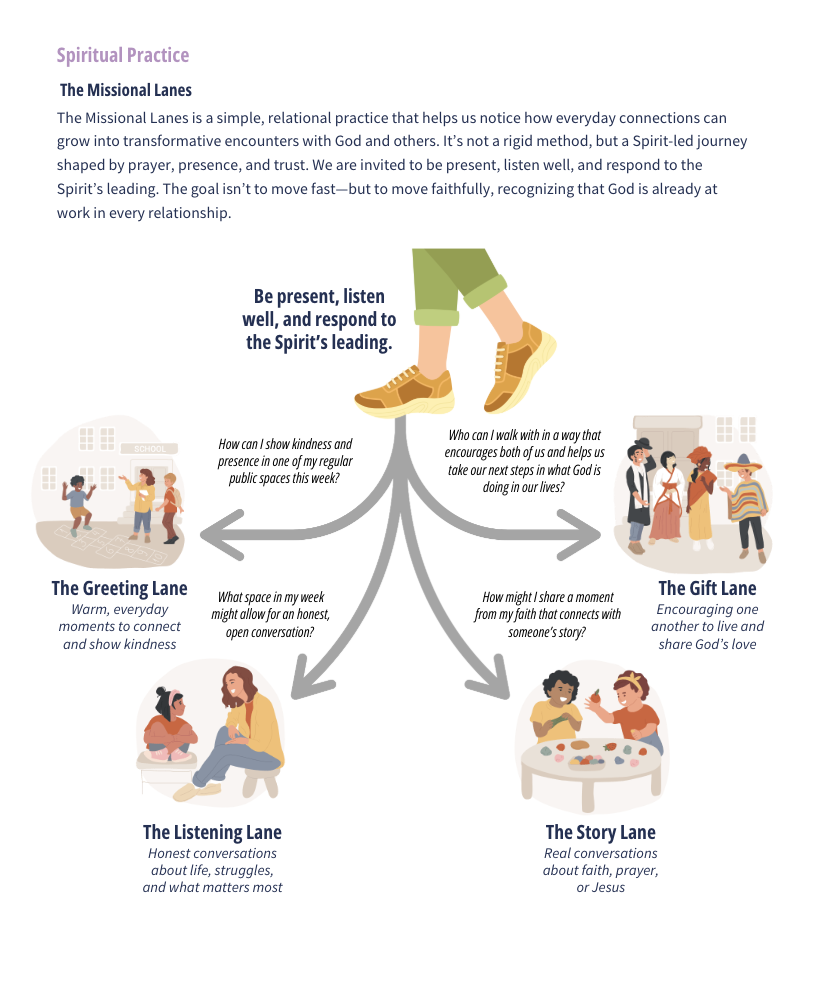
The Missional Priority explores what it means to live as people who are sent into the world in everyday life. Mission is not only about going somewhere far away, but about noticing God’s movement in our neighborhoods, workplaces, and daily relationships. The guide encourages communities to act with openness and compassion, living like Jesus through connecting with others and sharing God’s love, fostering mutual transformation as God’s work unfolds among us. 

One of the Spiritual Practice for the Missional Lesson: The Missional Lanes

Using the Guides 

Flexible tools for congregations, leaders, CRMs, and ministry partners 

The guides can be used in congregations, ministry teams, small groups, or intergenerational gatherings. They work best when participants share experiences, listen deeply, and notice the transformation happening in the process. 

The Mosaic Priority Guides are available on the Mosaic website. We invite communities to engage with them in ways that fit their language, culture, and rhythm of life. As we journey together, may we continue to be formed as communities for God’s mission, carried by the Spirit, and sent with the good news of Jesus, right where we are. 

DOWNLOAD THE GUIDE IN ENGLISH, SPANISH, AND INDONESIAN at mosaicmennonites.org/leadersresources/ 


Mosaic values two-way communication and encourages our constituents to respond with feedback, questions, or encouragement. To share your thoughts or send a message to the author(s), contact us at communication@mosaicmennonites.org.   
Filed Under: Articles Tagged With: formational, intercultural, missional, Priority Guides

Following Jesus Means Becoming Intercultural

July 24, 2025 by Cindy Angela

by Sharon K. Williams

Editor’s Note: Faith and Life Gatherings are designated meetings for credentialed and retired leaders in Mosaic Mennonite Conference to study scripture together and build relationships across the conference. The next Faith and Life Gathering will take place on September 25 and will focus on another of Mosaic’s priorities.  

Mosaic Conference’s Faith & Life team recently invited credentialed pastors and leaders to reflect on our intercultural priority (Mosaic’s two other priorities are being formational and missional).  

We reflected on Jesus’ encounter with the Syrophoenician mother (Matthew 15:21–28). We noted Jesus’ willingness to playfully engage with this Gentile woman who stood strong in her faith—that she and her people could access the same blessings from God as the Jewish believers. Jesus even affirmed her in flipping the script with her bold sassiness! We marveled at the transformation that happened for them both because of their willingness to stay engaged with each other.   

We also reflected on Paul’s teaching that “there is no distinction between Jew and Greek, because the same Lord is Lord of all, who gives richly to all who call on him” (Romans 10:12). This biblical affirmation is well known, but what challenges does it hold for us today?   

As we examined the scriptures, reflected on our ministry experiences, and prayed together, we noted the following: 

  • Culture is a way of life shared by a group of people who are bound together by ethnicity, food, values, religion or theology, politics, and many other aspects. A deeper dive into a perceived culture often reveals diversity within a culture.   
  • In the past, as Franconia Conference and Eastern District embraced their missional calling, we had to start learning how to minister across cultures.  
  • Being intercultural is different from being multicultural. We need to be aware of and respect the values that people of other cultures hold. We can recognize our culture and others’ cultures without judgment, by giving and receiving, and experiencing mutual transformation.  
  • God works through intercultural encounters to shape us and our communities. An important part of intercultural ministry and relationships is to not minimize differences between cultures but to curiously embrace the differences and be open to the transformation that can happen. 
  • Being intercultural takes work. We must seek ways to develop curiosity about other cultures as we build relationships. Then we will recognize the image of God in ourselves and others.  
  • Being intercultural includes doing the long-term, hard work of being antiracist. We must learn to recognize systemic racism and its dynamics and work together to create different ways of ministering together and respecting others. It requires commitment to stay in the struggle. 
  • Being intercultural requires the daily practice of empathy, humility, and flexibility. 

The group curiously raised these questions: What is the vision for the conference’s intercultural priority? What are our expectations? How can this priority strengthen our conference and beyond? 

Love like Jesus, preach the character of Jesus—and be transformed. 

What can we do? Loving like Jesus transforms our relationships with him and others. Preaching the character of Jesus can help us move beyond our propensity to be difficult or stuck in our ways. Like the Syrophoenician mother, people are looking for authentic transformation and healing and will cross cultural boundaries when they find it.  

We need to lean into the character of Jesus, set aside our norms, and look for the transformation. Sometimes we miss it because we operate by our blind spots. What draws our attention and what might we be missing? We must preach Jesus and be as caring and loving as him so we can recognize what is happening. We must be willing to hear and acknowledge each other and their truth.  

Intercultural transformation is a mystery, and it is beautiful! Let us press forward to learn together and receive what God has for us. 

Recommended resource

The New Testament in Color: A Multiethic Bible Commentary, edited by Amy L. B. Peeler, et al, InterVarsity Press, 2024.  


Sharon K. Williams

Sharon K. Williams serves as the minister of worship with the Nueva Vida Norristown (PA) New Life Mennonite congregation. 

Mosaic values two-way communication and encourages our constituents to respond with feedback, questions, or encouragement. To contact the author(s) of this article, please email communication@mosaicmennonites.org.

Filed Under: Articles Tagged With: Faith and Life, Faith and Life Gathering, intercultural, Sharon Williams

Intercultural Workshop Nourishes Intercultural Exchange and Community

May 1, 2025 by Cindy Angela

by Sam Charles

Nutrition plays a vital role in human existence, providing the essential vitamins and energy needed for the body’s proper functioning. Acknowledging the importance of nutrition in sustaining human life, God created the necessary resources for sustenance before the creation of humankind. 

This idea is affirmed by the teachings of Jesus Christ, who said, “People do not live by bread alone, but by every word that comes out of the mouth of God” (Matthew 4:4, NLT). Beyond its nutritional value, food serves as a catalyst for social and intercultural bonds. The way food is prepared, served, and shared—whether on the floor or at a table —represents cultural practices that reflect the traditions and customs of different communities. 

For example, Haitian and Jamaican cuisines bear notable similarities, but differ considerably from those of other populations. Food can act as both a unifier and a point of distinction between groups. Family meals, national celebrations, and religious feasts are all instrumental in passing down cultural values from one generation to the next. Food thus plays a role in both celebrating cultural diversity and encouraging cross-cultural interaction. 

Sharing a meal with individuals from different cultural backgrounds is a dynamic medium for fostering communal bonds, cultivating friendship, and facilitating intercultural exchange. Such shared meals encourage the acceptance of diverse identities and practices, highlighting the importance of mutual respect and understanding. 

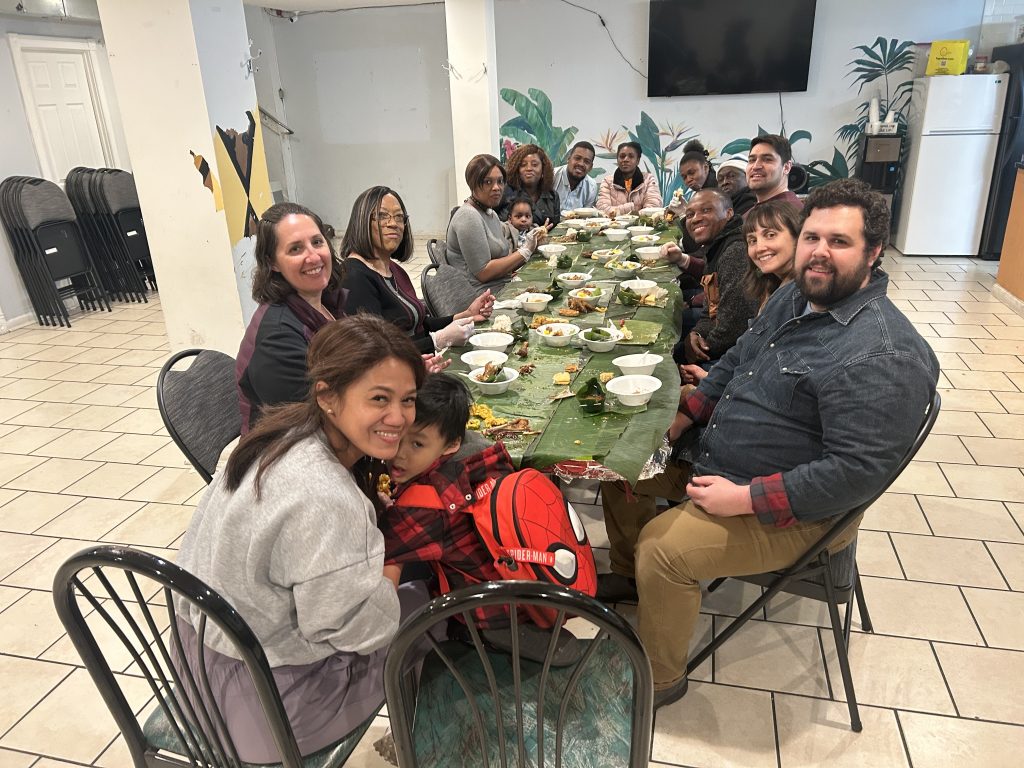
On Saturday, March 22, members of Indonesian Light Church (Philadelphia, PA) and the Haitian congregation Bethel Worship and Teaching Center (Levittown, PA) collaborated to offer food as part of an extraordinary intercultural encounter. The event melded elements of Indonesian, Haitian, and American cultures, fostering a rich exchange of ideas and practices.  

The workshop discussions centered on the dynamics of power and seeking understanding of differing perspectives. The event culminated in a shared meal, fostering a sense of communal harmony, understanding, and lack of judgement among participants from diverse cultures.  

The event provided a valuable opportunity for Americans, Haitians, and Indonesians to engage in meaningful dialogue and mutual learning. The event also served to promote the principles of love, as exemplified by Jesus, and to embrace our neighbors, thereby achieving the unity in diversity articulated by Paul in Galatians 3:28, NIV, “There is neither Jew nor Greek, slave nor free, male nor female, for you are all one in Christ Jesus.” 


Sam Charles

Sam Charles is the pastor of Bethel Worship and Teaching Center in Levittown, PA and a member of Mosaic’s Intercultural Committee.

Mosaic values two-way communication and encourages our constituents to respond with feedback, questions, or encouragement. To share your thoughts or send a message to the author(s), contact us at communication@mosaicmennonites.org. 
Filed Under: Articles Tagged With: Bethel Worship and Teaching Center, Indonesian Light Church, intercultural, Ripple Church, Salford Mennonite Church, Sam Charles

Where is God Hiding in South Philadelphia?

June 6, 2024 by Cindy Angela

REFLECTION FROM INTERCULTURAL LUNCH

by Wayne and Mary Nitzsche

Is God present in South Philadelphia? I (Wayne) grew up pretty sure that God lived on a farm in northeast Nebraska. That was my life up until college, and my perception of the city at that time was that it was a scary place with lots of bad people and bad things happening. I felt my dad’s fear when our family got lost while driving through Detroit, Michigan, on our way to visit my brother who lived in an Ontario city at that time. We locked our car doors and released our anxious breath only when we were back in a more rural environment. My journey to meeting God in the city has been a long and winding road. 

Mary’s journey began in Detroit, her birth home. Her father pastored a mission church there for six years. While growing up primarily in Hesston, Kansas, she lived in Indianapolis, Indiana, during her last year of high school and spent a year in voluntary service in Canton, Ohio. 

The city was a place of diversity and adventure. 

Our mutual journey of experiencing God in the city expanded as our daughters settled in two of this country’s largest urban areas, greater Los Angeles and New York City.  

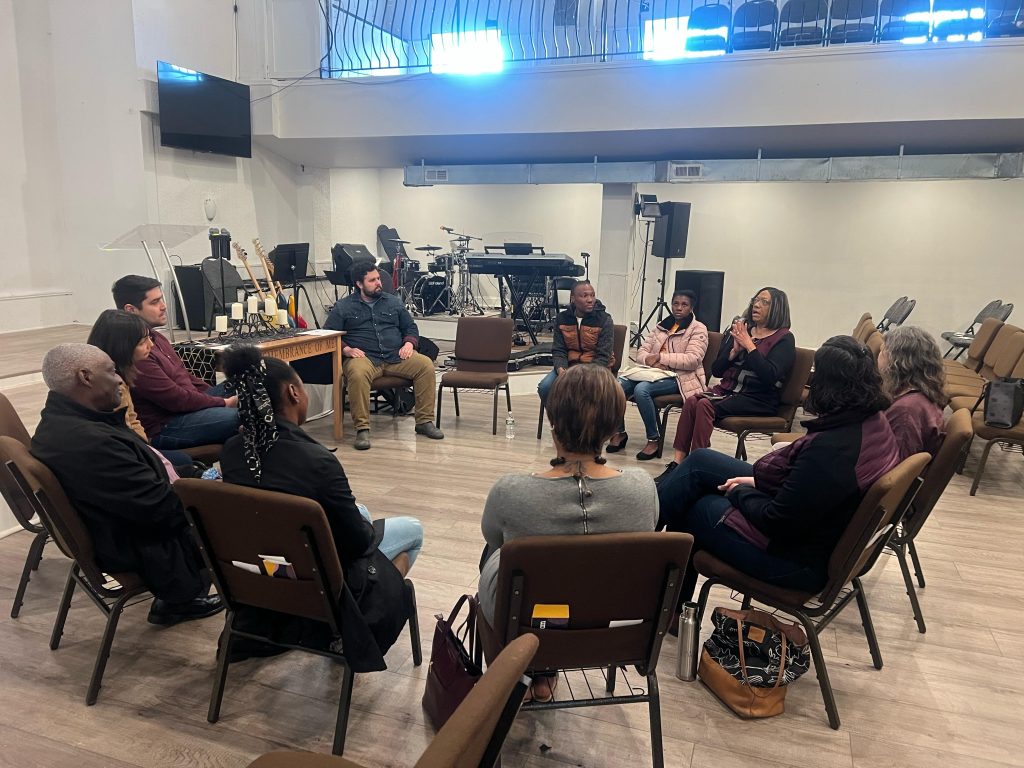
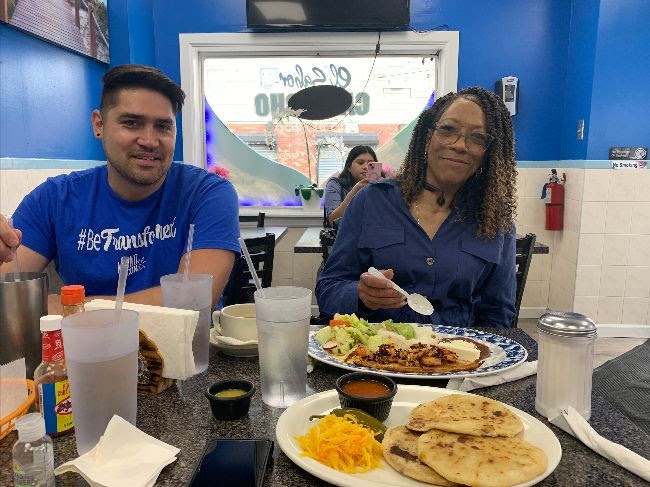
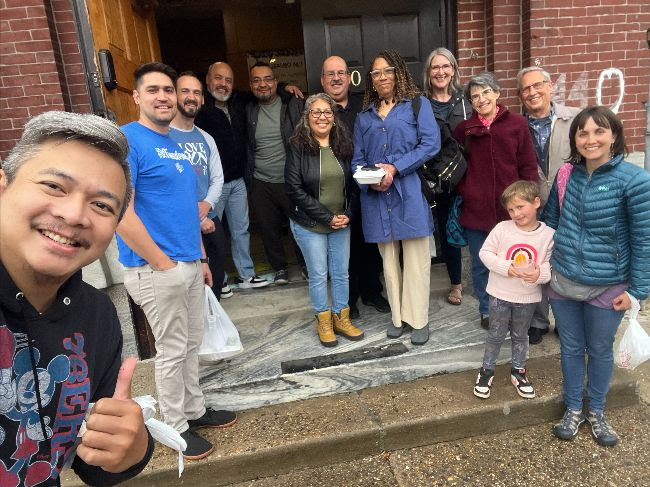
The Intercultural and Missional Teams of Mosaic Conference invited us, on May 4, to come from wherever we live, gather at Centro de Alabanza on Snyder Ave. in South Philadelphia, and experience the city. Twelve of us gathered and were sent out to four different restaurants, Honduran, Asian fusion, Vietnamese or Cambodian cuisine. Before going out, our leaders, Danilo Sanchez and Noel Santiago, asked us to use our five senses as we pondered: “what is the Holy Spirit inviting you to experience and consider as you taste, touch, smell, hear and see?”  

Centro de Alabanza welcomed participants to their building for a time of reflection and sharing after lunch.
Participants split into groups of 3-4 to eat at different restaurants near Centro de Alabanza. 
From left: Hendy Matahelemual (Mosaic staff), Danilo Sanchez (Mosaic staff), Dan Barlow (Centro de Alabanza), Fernando Loyola (Centro de Alabanza), Angel Galicia (Centro de Alabanza), Letty Cortes (Centro de Alabanza), Noel Santiago (Mosaic staff), Charlene Smalls (Ripple [Allentown, PA]), Sheri Brokopp Binder (Ripple Community, Inc.), Mary Nitzsche (Mosaic staff), Wayne Nitzsche (Perkasie [PA]), Magda and Jenn Svetlik (Mosaic staff). 

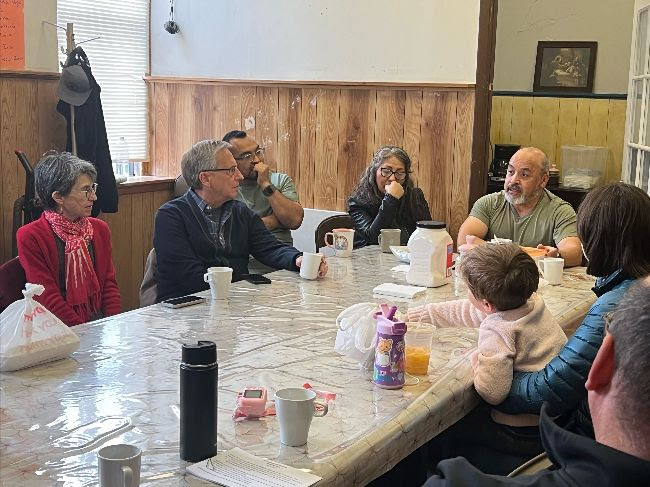
After lunch we returned to the church to share the stories of our experiences. We told of the aromas, flavors, and colors of the delicious food we ate. Some of us admitted our reluctance to try a new cuisine only to discover how tasty the food was. Several women felt vulnerable walking in the city. Others noted birds singing amid the loud traffic noise and flowers and vegetables growing in planters along with garbage. Two groups encountered those who were unhoused and shared their responses to them. Others were surprised to receive hospitality. All of us agreed that the Holy Spirit was active in our small simple interactions and observations. 

For those of us from more rural or suburban places, to confront our fears, to be surprised, and notice that God is in the city is an intercultural bridge we are called to walk. Maybe traffic goes the other way on the bridge too. Urbanites might need to learn to see God in our rural or suburban neighborhoods. Thank you to Intercultural and Missional Teams for giving us the opportunity to notice God at work in the city.  


Wayne & Mary Nitzsche

Wayne and Mary Nitzsche are Midwest natives. Wayne is the pastor of Perkasie (PA) Mennonite Church, and Mary is a Leadership Minister for Mosaic Conference. They have two adult daughters, Alison and Megan, sons-in-law, Michael and David, and two delightful grandchildren, William and Audrey.

Filed Under: Articles Tagged With: intercultural

What Color Am I? 

August 10, 2023 by Cindy Angela

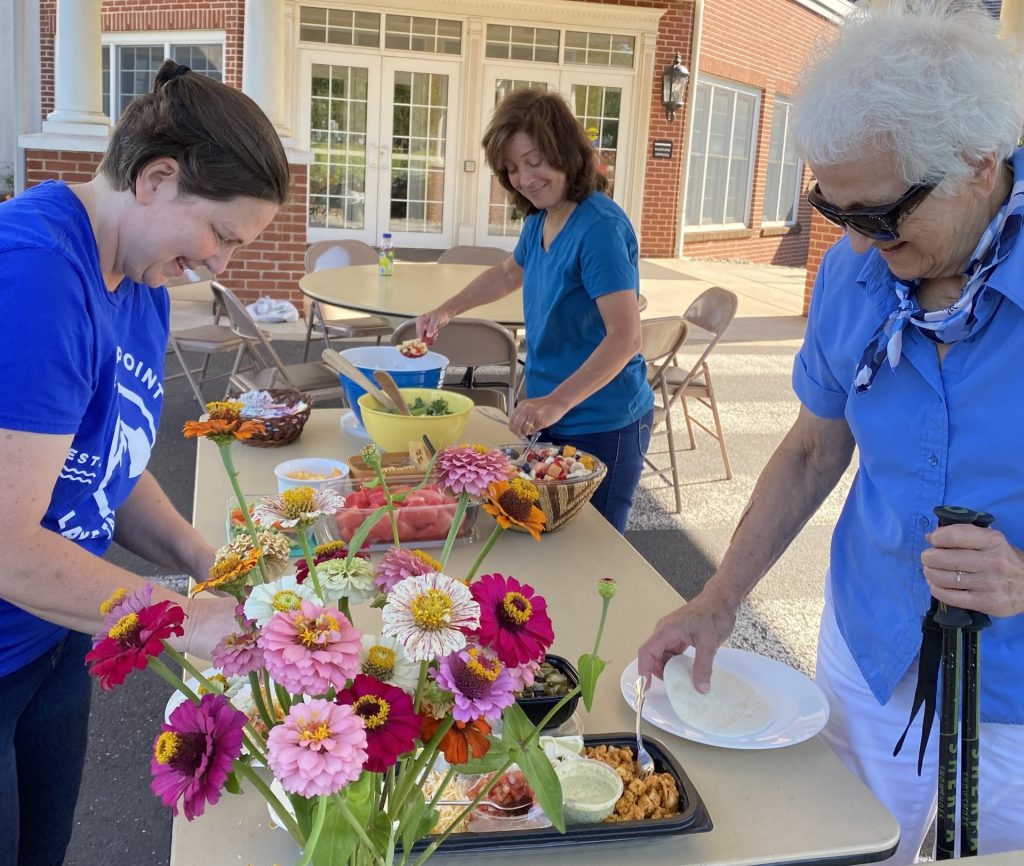
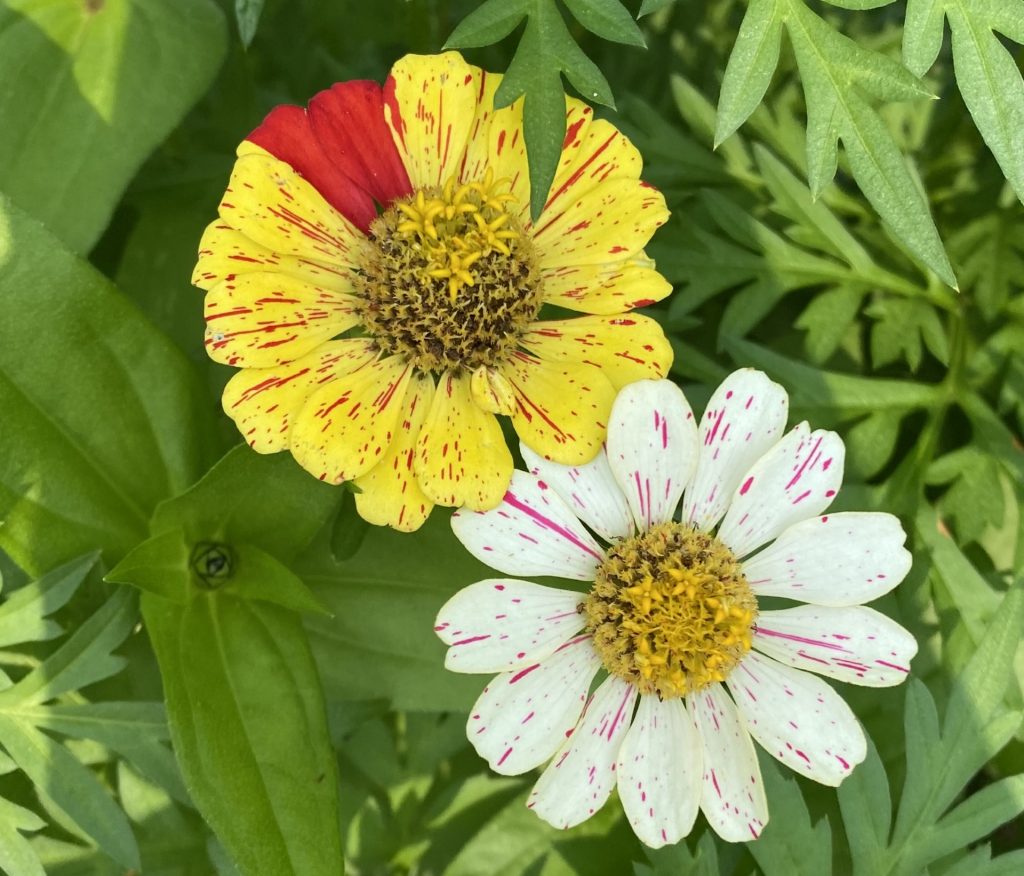
I was intrigued by zinnias on the buffet table when I arrived at Mosaic’s first White Caucus on July 30 at Salford Mennonite Church (Harleysville, PA).  A new variety with speckles was mixed in with the brilliantly colored flowers. I am drawn to color, and yet here I was at a White caucus group.  What was I doing?  

(L-R) KrisAnne Swartley, Berdine Leinbach, and Emma Frederick enjoy good food and fellowship at the White caucus gathering at Salford on July 30. Photo by Jordan Luther.

Andrew Zetts (Salford) made the most of the amazing weather by hosting the gathering outside.  First, we savored a potluck meal with special music provided by local birds. Facilitators Jordan Luther (Methacton; Norristown, PA) and KrisAnne Swartley (Doylestown) created a friendly, safe space for this small gathering of participants from Plains, Souderton, Doylestown, Methacton, and Salford congregations.   

Next, KrisAnne Swartley shared how this gathering grew from a request of Mosaic’s Intercultural Committee.  Each race and ethnic group within Mosaic Conference meets as a caucus for encouragement, growth, and accountability, so it seemed like a White group should meet, too. Meeting in a caucus can prepare us to interact in a multicultural environment with more cultural awareness and mutual respect.  

After prayer, we collaborated on a memory-based retelling of the story of Peter and Cornelius from Acts. We noticed long-held traditions being challenged, personal emotions, and people listening. God felt the need to repeat the message 3 times. The Holy Spirit falling on this diverse group was powerful. The gospel is for all! 

Jordan Luther then invited us to reflect on our experiences as White people in a race-based society. How/when did you become aware of your race? Was there a time you learned about your race from an uncomfortable experience? The conversation flowed easily even though I had never met any of these people before.  Each of us had different experiences and perspectives on being White. Points of connection were made, and patterns were noticed.  The time was blessed. 

While counterintuitive, meeting as a White caucus for reflection shows respect for our brothers and sisters of color. Whites need to intentionally do some antiracism work on their own.  I know I have much to learn.  Current society gives me the choice to think about my race or not. Others are forced to deal with it every day.  

I don’t like clicking a box saying I am just White. My identity is so much more in Christ. However, I can grow in awareness, consider new perspectives, and seek mutual transformation with all of God’s family.  

Who knows what Mosaic’s mutual transformation will eventually look like, but maybe we will be like a colorful garden with some speckled zinnias! 

Speckled zinnias. Photo by Jordan Luther.

If you would like more information about joining the White caucus or another caucus, contact Danilo Sanchez, Mosaic’s Leadership Minister for Intercultural Transformation.  

Filed Under: Articles Tagged With: Berdine Leinbach, intercultural, White Caucus

Mosaic Conference Launches a White Caucus 

July 13, 2023 by Cindy Angela

The Mosaic Intercultural Committee is starting a White Caucus for active, inactive, and retired White credentialed leaders. A White Caucus is a dedicated space for White people to talk openly about Whiteness, White privilege, and White supremacy culture. The purpose is to counsel one another on how to live into more mutually transformative relationships across racial, ethnic, and cultural differences. As followers of Jesus, we desire to share in Peter’s declaration in Acts 10 when he was changed through his encounter with God and the Gentile Cornelius “that God doesn’t show partiality to one group of people over another…He is Lord of all!” 

The first Mosaic White Caucus will be Sunday, July 30 from 5:00 – 7:00 pm. The group will meet in the fellowship hall at Salford Mennonite Church for a potluck meal and a group discussion. Salford Mennonite Church is located at 480 Groff Mill Road, Harleysville, PA. KrisAnne Swartley (Doylestown) and Jordan Luther (Methacton) will serve as facilitators. 

Here are some Frequently Asked Questions (FAQs) to help you learn more about the White Caucus and what to expect: 

What is a caucus? A group of people coming together around a specific topic/issue, for discussion and counsel. Our topic is White culture. It is a place of healthy accountability rather than a place of blame or shame. It may even be fun! This caucus is an extension of the Mosaic Intercultural Committee’s work. In intercultural relationships, we periodically meet within our culture so that we are equipped to better relate to others outside of our culture. Caucusing is one tool we have, among many, for deepening our relationships both within and beyond our cultural background. 

Why a White caucus as opposed to a diverse group? It provides a place where White people hold one another accountable for their own responsibility to organize and take action as they are willing and able.  It frees people of color from the burden of educating and helping White people to learn and grow in the areas of anti-racism and mutual transformation. People of color are always welcome to come and observe and offer observations after the meeting. 

What will happen at a meeting? We will build relationships of joy and trust by meeting regularly (every 6 weeks to start). We will center our anti-racism and mutual transformation in our Christian spirituality and discipleship. We will reflect on what we want to learn about anti-racism and ways we desire to practice it. We will learn and grow as we share openly our successes and shortcomings from our everyday intercultural relationships. 

What will the meetings be like? We will begin with food and games, pot-luck style, during the first hour. At the beginning of the second hour, we will gather with a simple centering practice, followed by reflective sharing around our anti-racism theme. We will close the second hour with prayer and singing. 

For questions or more information regarding the White Caucus, please contact Danilo Sanchez, Mosaic Leadership Minister for Intercultural Transformation.  

Filed Under: Articles Tagged With: intercultural, White Caucus

Lenape Asks PA Mennonites for Land to Bury Their Ancestors 

May 25, 2023 by Cindy Angela

by Eileen Kinch

The Mennonite Heritage Center, a Conference Related Ministry (CRM) in Harleysville, PA, welcomed the Lenape (Delaware) tribe of Bartlesville, OK, on April 12. After a potluck supper with local Mennonites, Chief Brad KillsCrow, tribal elder John Thomas, and tribal historic preservation officer Susan Bachor presented their request: land to bury their ancestors. 

Since 1990, the Native American Graves and Protection and Repatriation Act has required that museums and universities return Indigenous human remains and funerary items after consulting with descendants and tribal organizations. As Indigenous groups receive the bones of their ancestors, however, some tribes face the next question: where to bury them. 

Mennonites arrived in southeastern Pennsylvania in 1683 and many now live on the Lenape ancestral homeland, which encompasses greater Philadelphia, New Jersey, and parts of New York. 

“We have no presence in our homeland,” KillsCrow said. “How do we put our ancestors back in the ground?” 

The Lenape have already worked with the Commonwealth of Pennsylvania to bury about 200 ancestors at Pennsbury Manor, William Penn’s country estate in Morrisville, in 2022. But thousands still need burial space. 

Addressing the crowd of 120 gathered in the Mennonite Heritage Center barn, KillsCrow said, “Our ancestors helped you. Your ancestors helped us. I humbly ask if there is anything you can do.” He suggested a few acres, preferably an open meadow in a remote location. The Lenape would like to bury their ancestors with traditional ceremonies. 

The Lenape had considered burying their ancestors in Oklahoma, KillsCrow said, but tribal elders pointed out these ancestors never lived in Oklahoma. The Lenape settled there in the 1860s after gradual displacement from Pennsylvania by European expansion and then forced removal by the US government. The Lenape want to honor their ancestors, whose bones have been kept in museums and other institutions, by bringing them home. 

The event took place after a year of conversation between John Thomas, a Lenape tribal elder, and John L. Ruth, a noted historian of Mennonites in eastern Pennsylvania. The two men first met in 2022 at the Perkiomen Valley School District’s dedication of the Lenape Arboretum. The southeastern Pennsylvania school district partners with Ursinus College on the Welcome Home Project, which honors the history and culture of the Lenape people. 

As Ruth and Thomas talked, they discovered they had common roots in southeastern Pennsylvania. Ruth’s Mennonite family has lived in the area since the early 1700s. Thomas’ ancestors lived on the same land for thousands of years before that. Eventually, Ruth said, “My people have been living on your land for 300 years. We didn’t run you off or kill you. We prospered here. We have freedom. What can we do to help you?” 

Thomas responded, “We need a place to bury our ancestors.” 

Ruth began to lay groundwork with Mosaic Mennonites. In November, Ruth introduced Thomas and his wife, Faye, to about 80 people gathered at the Salford (Harleysville, PA) Mennonite meetinghouse. Ruth also gave a talk at the Mennonite Heritage Center about his own journey with Lenape history. 

At the April 12 meeting, Bachor, the tribal historic preservation officer, said it is not appropriate for ancestors to be buried in Mennonite church graveyards. She also requested Mennonites not offer land with a known history. “We also have to look out for everybody’s historic preservation,” she said. Archaeological research is more expensive for lands with known histories. 

The evening ended with John Ruth leading the group in singing “Blessed Be the Tie That Binds.” At a follow-up discussion on April 25 at the Mennonite Heritage Center, attendees reflected on the conversation with the Lenape and discussed possible ways to continue Lenape-Mennonite dialogue and to respond to the land request. 

Editor’s note: This article originally appeared in Anabaptist World on April 20, 2023 and is reprinted here with permission. To view the original article, click here.  


Eileen Kinch

Eileen Kinch is a writer and editor for the Mosaic communication team. She holds a Master of Divinity degree, with an emphasis in the Ministry of Writing, from Earlham School of Religion. She and her husband, Joel Nofziger, who serves as director of the Mennonite Heritage Center in Harleysville, live near Tylersport, PA. They attend Methacton Mennonite Church. Eileen is also a member of Keystone Fellowship Friends Meeting in Lancaster County.

Filed Under: Articles Tagged With: anabaptist world, Eileen Kinch, intercultural

  • Go to page 1
  • Go to page 2
  • Go to page 3
  • Interim pages omitted …
  • Go to page 34
  • Go to Next Page »

Primary Sidebar

  • Home
  • About Us
    • Our History
    • Vision & Mission
    • Staff
    • Boards and Committees
    • Church & Ministry Directory
    • Mennonite Links
  • Media
    • Articles
    • Newsletters
    • Video
    • Audio
    • Bulletin Announcements
  • Resources
    • Conference Documents
    • Missional
    • Intercultural
    • Formational
    • Stewardship
    • Church Safety
    • Leaders’ Resources
    • Request a Speaker
    • Pastoral Openings
    • Job Openings
  • Give
  • Events
    • Delegate Assembly
    • Youth Event
    • Conference Calendar
  • Mosaic Institute
  • Vibrant Mosaic
  • Contact Us

Footer

  • Home
  • Contact Us
  • Delegate Assembly
  • Vision & Mission
  • Our History
  • Formational
  • Intercultural
  • Missional
  • Mosaic Institute
  • Give
  • Stewardship
  • Church Safety
  • Leaders’ Resources
  • Articles
  • Bulletin Announcements

Copyright © 2026 Mosaic Mennonite Conference | Privacy Policy | Terms of Use
Aligned with