• Skip to main content
  • Skip to primary sidebar
  • Skip to footer

Mosaic MennonitesMosaic Mennonites

Missional - Intercultural - Formational

  • Home
  • About Us
    • Our History
    • Vision & Mission
    • Staff
    • Boards and Committees
    • Church & Ministry Directory
    • Mennonite Links
  • Media
    • Articles
    • Newsletters
    • Video
    • Audio
    • Bulletin Announcements
  • Resources
    • Conference Documents
    • Missional
    • Intercultural
    • Formational
    • Stewardship
    • Church Safety
    • Leaders’ Resources
    • Request a Speaker
    • Pastoral Openings
    • Job Openings
  • Give
  • Events
    • Delegate Assembly
    • Youth Event
    • Conference Calendar
  • Mosaic Institute
  • Vibrant Mosaic
  • Contact Us
  • 繁體中文 (Traditional Chinese)
  • English
  • Việt Nam (Vietnamese)
  • Español (Spanish)
  • Indonesia (Indonesian)

intercultural

Been in the Struggle

May 18, 2023 by Cindy Angela

Reflections on Mosaic’s Intercultural Book Study

by Tim Weaver
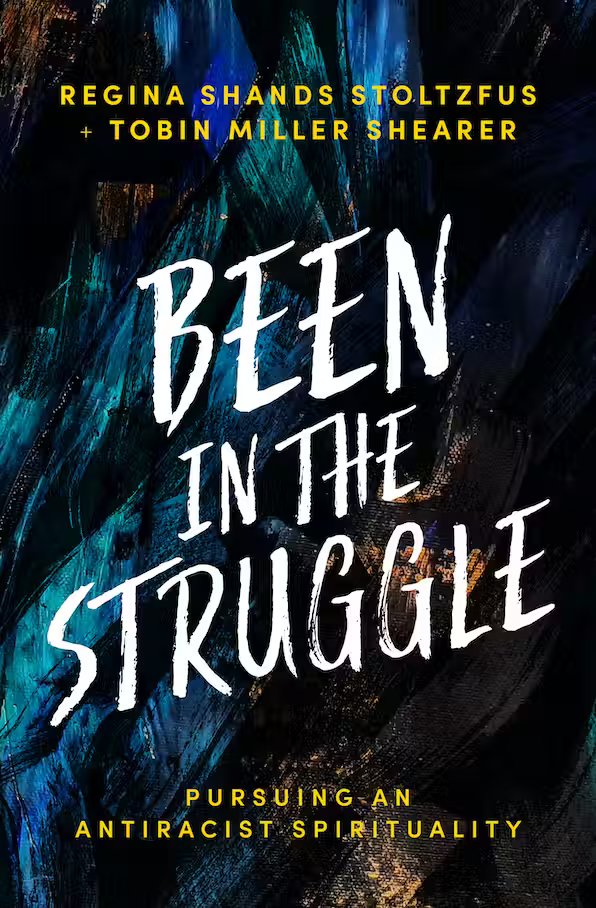
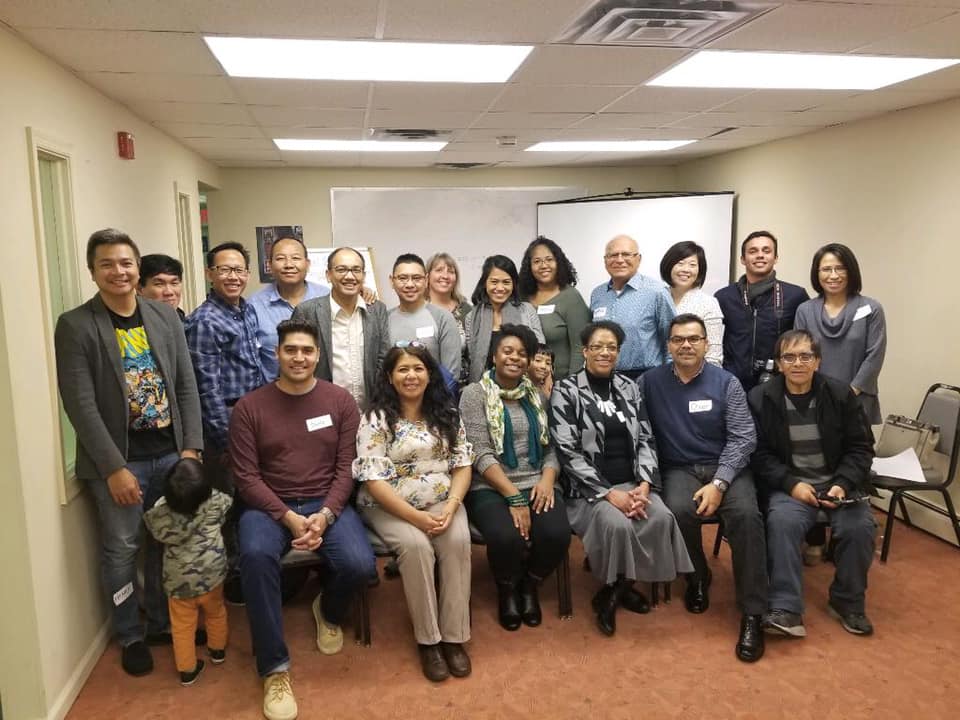
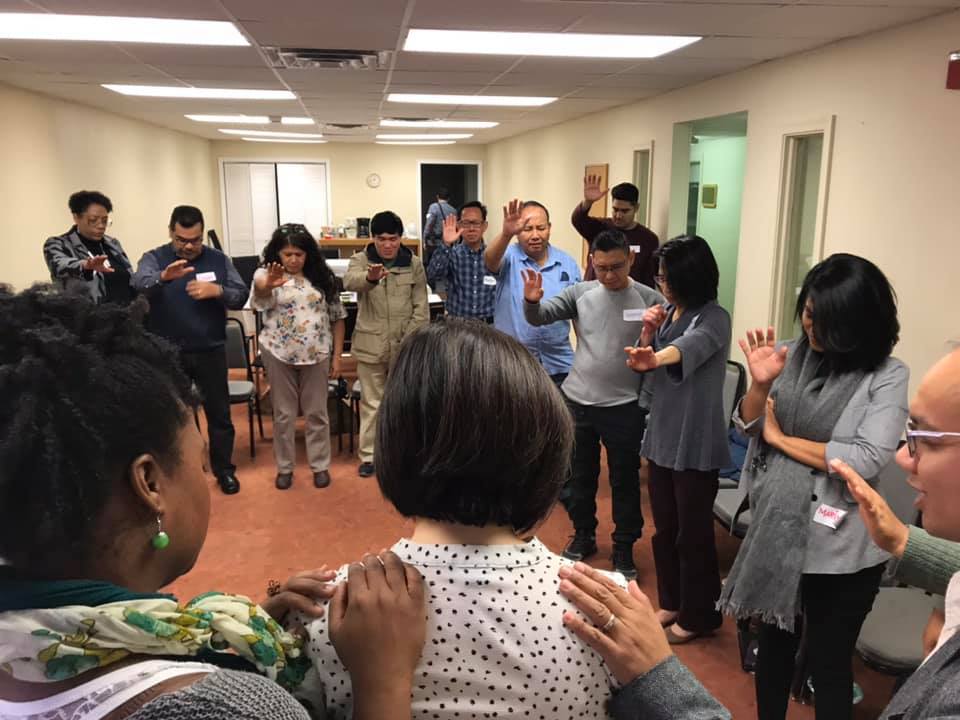
The book, Been in The Struggle: Pursuing an Antiracist Spirituality, invites the Anabaptist community to examine our history of resistance to antiracism work in light of our commitment to following the way of Jesus.  The authors, Tobin Miller Shearer (a white man) and Regina Shands Stoltzfus (an African American woman), have worked together for more than 30 years around the task of antiracism. They shared stories of both grief and joy in examining the church’s willingness to address white supremacy in our life together. I was part of a Mosaic Conference discussion group for this book.  We were an even mix of men and women, with people of color being the majority represented.   

“An Antiracist spirituality is a way of being in the world that draws on the Spirit to encourage, empower, and enthuse the action of undermining systems of White supremacy around us.” Our group learned that an antiracist spirituality is a resource to sustain the struggle against racism, to invite growth in our lives, and to help us learn to be humans who refuse to give in to white supremacist power.  It is learning to love with integrity and to be authentic in our work and our witness.   

An antiracist spirituality values stories and relationships. There was a profound respect among us as our group met together.  As we shared, it was sobering to hear accounts of white supremacy in our neighborhoods and our churches.  Our faith stories center on our conviction that God loves ALL the world.  Life has not been equal for people of color, even within the church.  Even though Jesus indicated that the Kingdom of God has come near, many people of color have found themselves to be second class citizens in the church.  

We examined how Whiteness has often been seen as the norm and how segregation did not happen accidentally.  An insight that was new to me was how Whites often view racism in interpersonal ways, which made me wonder, as a White man: Have I demonstrated racism in any relationships that I have?  However, African Americans often understand racism as systemic in nature and not in specific interpersonal relationships.   

An antiracist spirituality does not ignore the past, yet it calls us to move forward.  It names our errors when we have fallen short, and it boldly makes public our commitment to being antiracist.   It is done effectively as we work together as a community.  We need the voices of the elders who have been in the struggle before us and to listen to their words of wisdom for our current time.   

As we completed our book study, I found myself reminded that in Christ there is no longer Jew or Greek, male or female.  The book of Revelation says there will be a great multitude from every nation, tribe, and language—and here and now, I want to surround myself with a community that is committed to telling the truth about our history, working to interrupt systems of oppression, and seeking the healing of those who have been or continue to be harmed.  Will our church communities be places that focus on the hurts of the world and that respond with courage and integrity? 
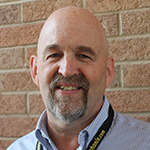

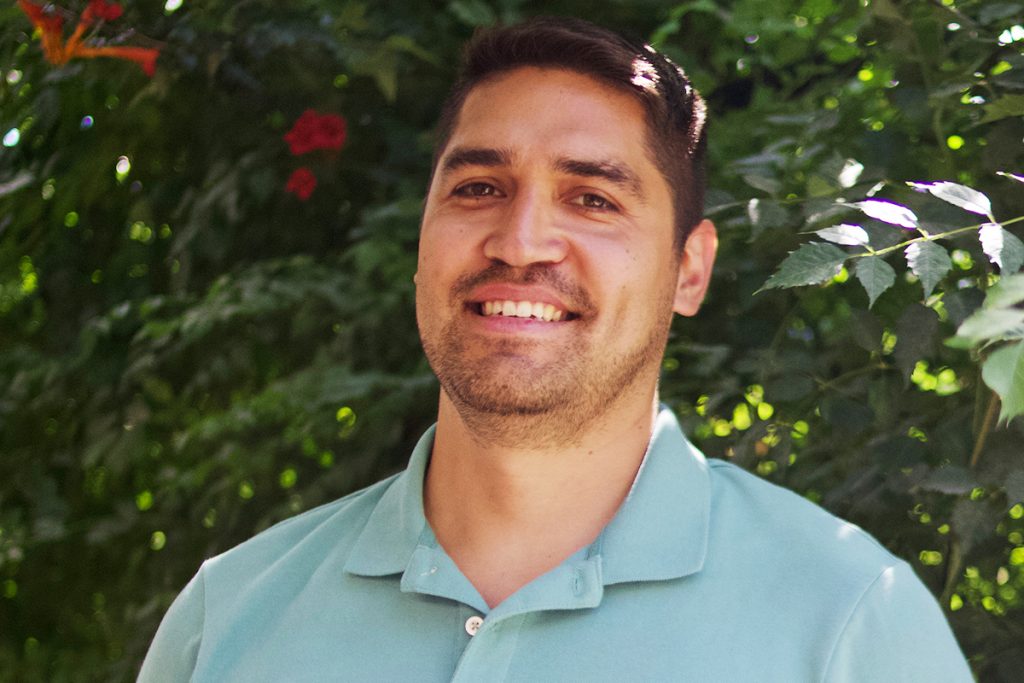
Tim Weaver

Tim Weaver recently retired as Chaplain from The Community at Rockhill (Sellersville, PA).  His ministry experience included leadership training in Venezuela, pastoring three congregations, and several interim pastorates. His spouse, Juanita, is a professor at Villanova University and they are parents to 2 daughters and have 2 grandchildren and 3 granddogs. Tim lives in Perkasie, PA and attends Souderton (PA) Mennonite Church.  He has traveled to Honduras annually with Healthy Ninos Honduras for 20+ years. 
Filed Under: Articles Tagged With: Been in the Struggle, intercultural, Intercultural Book Study, Tim Weaver

Sanchez Named Leadership Minister for Intercultural Transformation

June 9, 2022 by Conference Office

Mosaic Conference has named Danilo Sanchez to a new position as Leadership Minister for Intercultural Transformation effective May 1, 2022.  Sanchez had been part of Mosaic’s Youth Formation team over the last several years and also worked with intercultural initiatives.  In his new role, Sanchez will support the work of the Intercultural Committee which began with the formation of Mosaic Conference in 2020. 

Sanchez grew up as an active participant at Boyertown (PA) Mennonite Church. As an adult, he has worked with Mennonite Central Committee (MCC) and has served on the pastoral teams of Whitehall (PA) Mennonite Church and Ripple (Allentown, PA) congregation.  Sanchez will continue his work with Ripple Community Inc (a Mosaic Conference-Related Ministry) and Ripple congregation.  Sanchez’s experiences with diverse congregations combined with his deeply rooted commitment to Anabaptism and the various Mosiac communities are an exciting combination of passion and knowledge.  

“Danilo brings a depth to our Conference work and broad relational connections,” said Stephen Kriss, Mosaic Conference Executive Minister.  “His Spanish language skills help to strengthen bridges to our growing Spanish language communities.  I’m grateful he was willing to step into this new role.” 

Marta Castillo previously held this position and began a transition from the role when she began as Associate Executive Minister in February of this year.  Sanchez will continue to serve as part of the Youth Formation Team and in his role as the Mosaic Conference representative to the board of Mennonite Central Committee East Coast.  He also will serve as one of the Conference representatives to the Mennonite Church USA Constituency Leadership Council.  Sanchez lives in Allentown, PA with his wife, Mary, and two daughters and will continue his work based in Allentown. 

Filed Under: Articles Tagged With: Danilo Sanchez, intercultural, Marta Castillo

Haciendo Iglesia en Tiempos Difíciles (Doing Church in Difficult Times) 

March 31, 2022 by Conference Office

Associate Executive Minister Marta Castillo and I traveled to Puerto Rico in mid-March and participated in the Convencion de Iglesias Menonita Evangelicas de Puerto Rico (Puerto Rico Mennonite Conference) as part of a Mosaic Conference Partner in Ministry exploratory trip.

This Convencion has a long and treasured history arising from Mennonite work that continues to this day.  Marta and I had the opportunity to lead workshops, preach, and share about the work of Mosaic Conference. 

When we arrived in San Juan, we were greeted by Pastor Jose Luis and Sister Linette Vargas. Marta and I stayed in different hosts’ homes in La Plata, the hometown where both my father and my wife, Juanita, grew up.

Mennonite Church of Aibonito, location of the closing worship service of the 74th Annual Puerto Rico Mennonite Conference. Photo by Noel Santiago.

Early the next morning we made our way along winding, curving, and sometimes horseshoe turning roads, as we drove up to the beautiful, sunny, and breezy town of Barranquitas. Here, the Palo Hincado Church hosted the assembly. 

Delegates and visitors gather for the PR Conference Assembly closing worship service and installation of the new Conference Executive Secretary, Jose Luis Vargas. Photo by Noel Santiago.

Delegates and visitors from the island gathered. COVID fist bumps, masked-covered smiles, and choruses of “Dios te bendiga, come estas, tanto tiempo” (God bless you, how are you, it’s been so long) filled the little church. Cars piled into the available parking spots and others had to find space where possible. 

The sessions were called to order. The Assembly theme, “Haciendo Iglesia en Tiempos Difíciles,” (Doing Church in Difficult Times) was noted and the Exodus text read: 

Éxodo 15:2 (NVI) – El SEÑOR es mi fuerza y mi cántico; él es mi salvación. Él es mi Dios, y lo alabaré; es el Dios de mi padre, y lo enalteceré. (Exodus 15:2 – The Lord is my strength and my song, and he has become my salvation; this is my God, and I will praise him, my father’s God, and I will exalt him. ESV) 

The worship was lively and uplifting; reports of 12 churches were read revealing active, community engaged churches seeking to grow through witness, service, and invitation. Quality, passionate leadership helped guide the work of the Convencion. 

Challenging institutional realities were noted by their Conference Related Organizations and Institutions. The challenges at Academia Menonita Betania, a Mennonite K-12 school, are being navigated by competent, committed leaders who along with other organizations/institutions, support the work of the Convencion. Prayers for increased resources and teachers were lifted and continue to be welcomed. 

The tasty and delicious Puerto Rican cuisine of arroz con gandules y pollo (yellow rice with peas and chicken) among other dishes, were graciously prepared and served by warm, friendly folks who expressed gratitude for the privilege of serving. As always, no puede faltar el cafecito (we can’t do without the coffee). 

As Marta and I shared about Mosaic Conference, Convencion leaders received the affirmation of the assembly to explore the possibilities of a Partner in Ministry relationship between Mosaic and the Conference of Evangelical Mennonite Churches of Puerto Rico in the coming year. We look forward to what the Lord has in store for us as we walk together in this potential partnership. 

Installation and commissioning of new Puerto Rico Conference Board members. Photo by Noel Santiago.

The climax of the assembly was the Sunday closing worship service held at the Iglesia Menonita de Aibonito (Aibonito Mennonite Church) where Pastor Jose Luis Vargas was installed as the Executive Secretary of the Convencion.  

As Mosaic Conference, we’ll keep exploring what partnership possibilities might look like this year and trust that God’s kind and gracious guidance will clarify future possibilities that will continue to bear fruit for advancing God’s mission in the world. 

Filed Under: Articles Tagged With: intercultural

Here I am, Lord

February 17, 2022 by Conference Office

Josué González, of Mosaic Conference, Elected as Moderator-Elect for Hispanic Mennonite Church 

In a national assembly on January 29, 2022, Iglesia Menonita Hispana (IMH – Hispanic Mennonite Church) elected Josué González of Miami, FL, as moderator-elect.

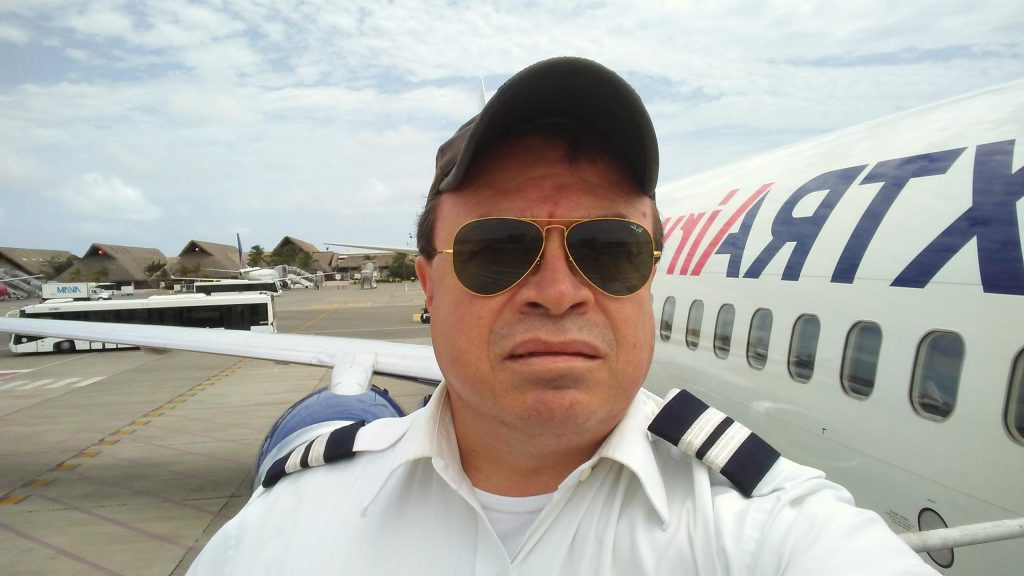
Gonzalez is a founding member and elder of Iglesia Menonita Encuentro de Renovación (Encounter for Renewal Mennonite Church) in Miami, FL which is part of Mosaic Conference. He is a cargo flight dispatcher and is married to Noemi. González is also a student of the Instituto Bíblico Anabautista, (IBA – Hispanic Anabaptist Bible Institute) which is operated by Mennonite Education Agency (MEA). He is completing his final trimester and is set to graduate this Spring.

Iglesia Menonita Hispana is a Racial/Ethnic constituency group of Mennonite Church USA (MC USA) and reaches multicultural Hispanic and Latino/a Mennonites across the country.

González’ four-year term begins immediately. He will serve two years as moderator-elect and two years as moderator. He will also serve on the Constituency Leaders Council (CLC) of MC USA.

Marco Güete, Leadership Minister for Mosaic Conference and the director of MEA’s Hispanic Ministries Education programs, affirmed González’ readiness for this role.

“Josué has shown maturity, Christian spirituality, and intelligence serving on the local church board, and he will do well nationally with Iglesia Menonita Hispana,” Güete said.

María Teresa Pérez-Soto agrees. She is a leader of Encuentro de Renovación church and a tutor for IBA. “It is a blessing that Brother Josué González has been appointed moderator-elect of the Hispanic Mennonite Church board,” she said. “His dedication and commitment to the Lord’s work has been manifested in his Bible study with IBA and the help he has given to the local church as Treasurer. Through his passion for public speaking, Brother Josué will be a great asset for the board of IMH; additionally, he will ensure he moderates all meetings and assemblies fairly.”

González shared his thoughts about being called to a ministry position in the Hispanic Mennonite church. “When I started my studies at the Anabaptist Bible Institute, (IBA), my life changed and I started to think that God is training me not only to know more about him, but to serve him as a true disciple,” he said.

“I understood that I should work with the Mennonite Church and be able to help in the ministry where the Lord will use me. I just said, ‘Here I am Lord. I am willing to work for you.’ And this was how the Lord opened the doors to work with the intercultural committee of Mosaic [Mennonite Conference], and now with the Hispanic Mennonite Church USA,” reflected Gonzalez.

Ulises Arenas, the Executive Director of Iglesia Menonita Hispana, welcomed Josué, saying, “We appreciate Josué González becoming IMH’s new moderator-elect and we are blessed for his willingness to serve on the new IMH executive board. It is a pleasure for us to welcome Josue and work with him.”

Filed Under: Articles Tagged With: Iglesia Menonita Encuentro de Renovación, Iglesia Menonita Hispana, Instituto Bíblico Anabautista, intercultural, Mennonite Church USA, Mennonite Education Agency

Creating Spaces

October 21, 2021 by Conference Office

Mutual transformation happens when we acknowledge, own, and celebrate our cultural differences, allowing ourselves to be changed by our relationships with God and others.  The theme for the 2021 Mosaic Annual Assembly is “Mutual Transformation,” based on  Romans 12:2-10.   

“Christians are strangers and aliens within all cultures. Yet the church itself is God’s nation, encompassing people who have come from every tribe and nation. Indeed, its mission is to reconcile differing groups, creating one new humanity and providing a preview of that day when all the nations shall stream to the mountain of the Lord and be at peace.” 

from Confession of Faith in a Mennonite Perspective, Article 10 

To be mutually transformed, we need to recognize our status as aliens and strangers in this world.  We “do not think of ourselves more highly than we ought, but rather think of ourselves with sober judgment, in accordance with the faith God has distributed to each of us” (Romans 12:3, NIV). We learn to identify and locate ourselves in cultures, worldviews, families, and systems. Then we decenter ourselves, in order to re-center ourselves in Christ so that we can be reconciled to God and to others. 

Mutual transformation within the framework of Mosaic Conference means that power and equity will shift around the table.  Part of intercultural work is letting go of power and part of the work is empowering others.  

Loosely calculated, in Mosaic Conference, 40% of our staff, 30% of our credentialed leaders, and 20% of our congregations are persons of the Global Majority (a.k.a. people of color) and that number is growing.  (People of the Global Majority (PGM) is an emerging term surrounding race that is arguably the most universally inclusive. Unlike the terms “minority” or “marginalized,” the term People of the Global Majority offers Black, Brown, and Indigenous people – who are numerically in the majority all over the world – an empowering term that encompasses a global solidarity against racial injustice.) 

“the term People of the Global Majority offers Black, Brown, and Indigenous people – who are numerically in the majority all over the world – an empowering term that encompasses a global solidarity against racial injustice.”

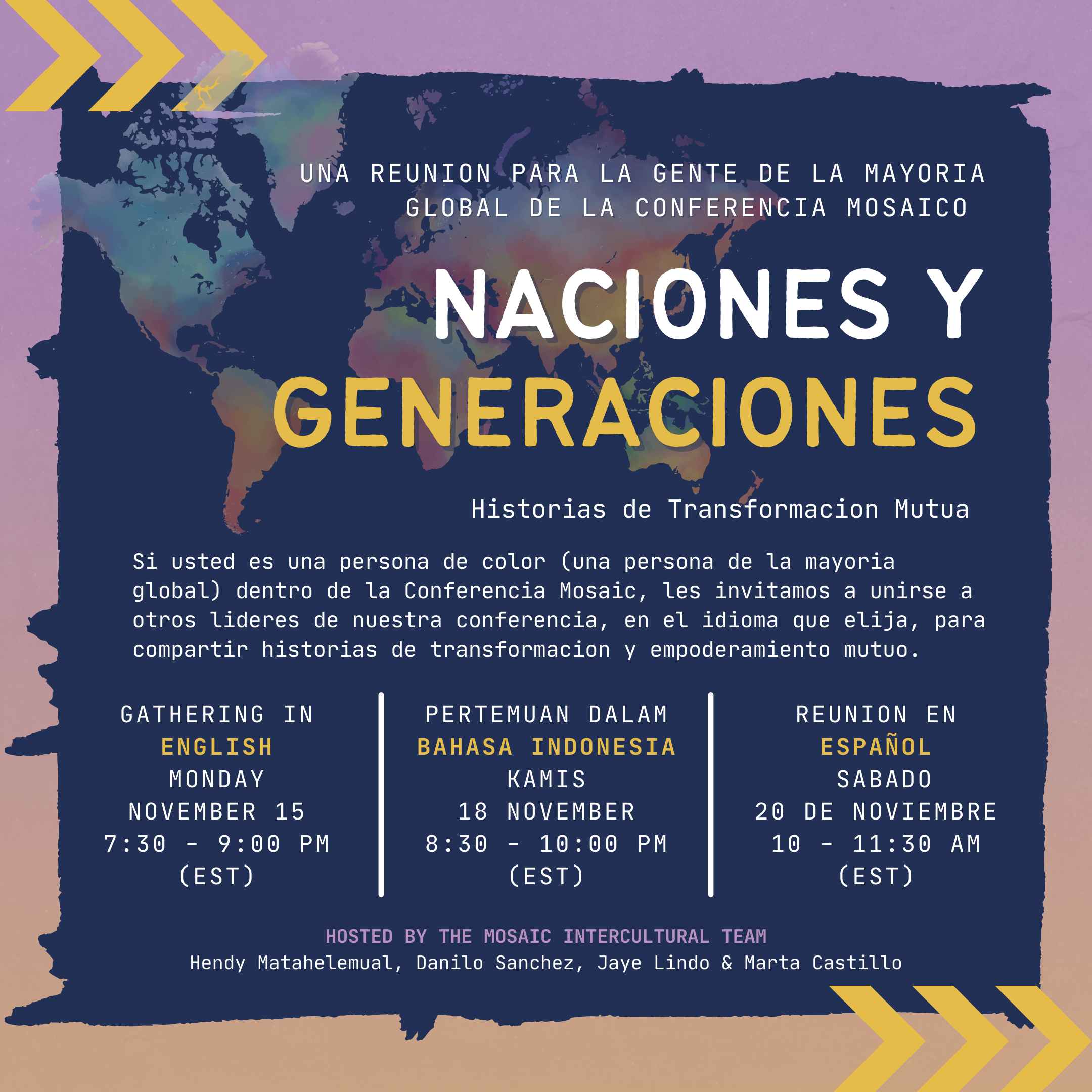
One of lesser-known components of fall Assembly is a gathering called, “Nations and Generations,” held for the leaders of the Global Majority (the leaders of color) in our Conference.  Imagine an intercultural space where language, nationality, and cultural differences are recognized and honored.  An “us” emerges from growing relationships and connections as similarities, shared experiences, and unity in Christ result in mutual transformation.  Meeting together is one way for leaders to encourage one another, worship, build vision, and celebrate God’s work.   

This year’s “Nations and Generations” gathering will be held virtually at three different events, in three languages (Spanish, Indonesian, and English).  If you are a person of color/global majority within Mosaic Conference, we invite you to join with other leaders from our Conference, in the language of your choice, to share stories of mutual transformation and empowerment. 

En Español | Dalam Bahasa Indonesia

May God bless us all as we meet together in our Annual Assembly! 

May God continue the intercultural, formational, and missional work of mutual transformation in and among us!   

Filed Under: Articles Tagged With: intercultural, Marta Castillo, Mosaic Intercultural Team, Nations and Generations Gathering

Introducing the New Intercultural Committee

December 30, 2020 by Cindy Angela

We need another committee!  

What? 

Said who? 

Said the newly formed Mosaic Mennonite Conference.

With the formation of Mosaic Mennonite Conference, the new by-laws included the inclusion and formation of the Intercultural Committee. This committee shall provide leadership in the areas of undoing racism, sexism, and cultural bias, and in facilitating and supporting mutual transformation in intercultural contexts. This committee will be represented on the conference board by its chair as a non-voting member. 

Photo by Marta Castillo

As a conference located in multiple states and with global connections, we believe God’s design is for all people in all places to flourish and be transformed by loving, mutual relationships with God and one another.  To see this become a reality, by the power of the Spirit, we shape our lives and our work together around missional, intercultural, and formational priorities.

We have this intercultural priority: “As human beings made in the image of God, we acknowledge, own, and celebrate our cultural differences, allowing ourselves to be changed by the relationships we build across cultures while we work together for racial justice.”  

With this priority, we purposely bring people of different cultures and ethnicities alongside one another. However, we are committed to something deeper than that. We strive for more than just a distant appreciation of one another, or other cultures accommodating to the dominant white culture. 

An intercultural commitment means we nurture “a deep understanding and respect for all cultures.” This means we work at deep relationships, even if this means uncomfortable conversations, where “no one is left unchanged because everyone learns from one another and grows together” (see Spring Institute for more).

Photo by Marta Castillo

The work has already begun. In the past 3 years, an intercultural staff team of Chantelle Todman, Marta Castillo, Hendy Matahelemual, Aldo Siahaan, and Danilo Sanchez have been assessing and moving current relationships and communities in an intercultural direction. We have been building connections between communities and leaders of the global majority. We have also been educating and coaching congregations and leaders around the themes of racial justice, cultural differences, and mutual transformation. 

During our first meeting with the intercultural board committee in October 2020, staff shared the work that we have done as a team. We look forward to joining and following the lead of this new committee.

Diverse in geography, culture, gender, and age, this new committee represents experience, passion for intercultural work, and desire to see growth in themselves, their congregations, and in the conference.  We ask for your prayers and your support for this committee and for this intercultural work. 

The Mosaic Intercultural Committee members are:

  • Beny Krisbianto, chair, Nations Worship Center, Philadelphia, PA
  • Roy Williams, College Hill Mennonite Church, Tampa, FL
  • Josue Gonzalez, Encuentro de Renovación, Miami, FL
  • Emmauel Mwaipopo, Nueva Vida Norristown New Life, Norristown, PA
  • Jocelyn Clement, Eglise Evangélique Solidarité et Harmonie, Philadelphia, PA
  • Jenna Villatoro, Philadelphia Praise Center, Philadelphia, PA
  • Steve Zacheus, JKI Anugerah congregation, Sierra Madre, CA 
  • Marta Castillo (conference staff)
  • Danilo Sanchez (conference staff)

For further information and resources, please go to https://mosaicmennonites.org/intercultural/.

Filed Under: Articles Tagged With: Beny Krisbianto, Danilo Sanchez, intercultural, Marta Castillo

What is Your Flag?

August 20, 2020 by Conference Office

by Hendy Matahelemual, Indonesian Light congregation (Philadelphia, PA)

(Editor’s note: August 17 is Independence Day in Indonesia. This past Monday was the 75th anniversary of the Declaration of Independence.)

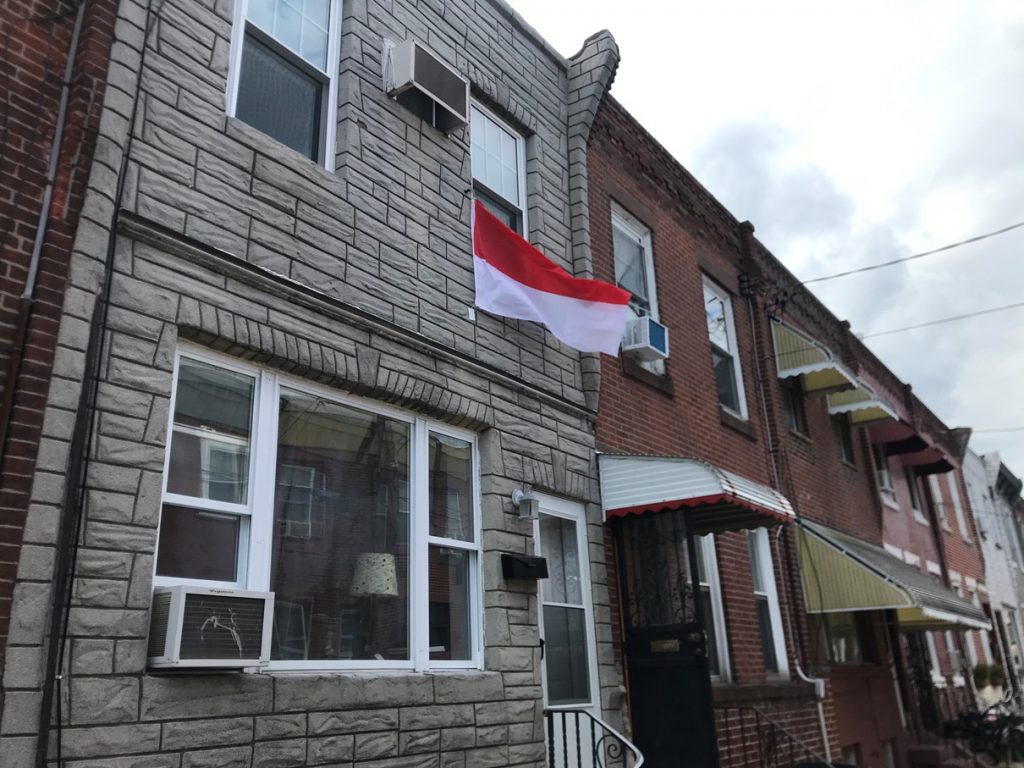
An Indonesian flag waves on a house in South Philly on August 17, Indonesian Independence Day.

My nationality is Indonesian, so the flag of my country is “Bendera Merah Putih.”  It is a simple red and white flag with two equal horizontal bands. It was introduced and hoisted publicly, 75 years ago during the proclamation of Indonesian independence on August 17, 1945, in Jakarta, Indonesia.

When I was in high school, I was a member of the flag-raising squad. August 17 was the most important day for us. On that day, the squad had one job to do: raise the flag as a part of the ceremony to celebrate Indonesian Independence Day. 

At that time, I was not Mennonite. My parents didn’t teach me Anabaptism values, such as separation of church and state and non-violence. After my introduction to Anabaptism, everything related to Independence Day found new meaning. The way I view the flag also found new meaning.

National flags are patriotic symbols, often associated with the military because of their original use. But as a follower of Christ, our identity as a Child of God is beyond any flag or governmental institution. 

We don’t need to take pride in our own national identity. We don’t need to make our country great (again). We don’t need to pledge our allegiance to the flag. We are God’s people, a holy nation.  

We do need to work together, instead of competing, by working across state and political boundaries. 

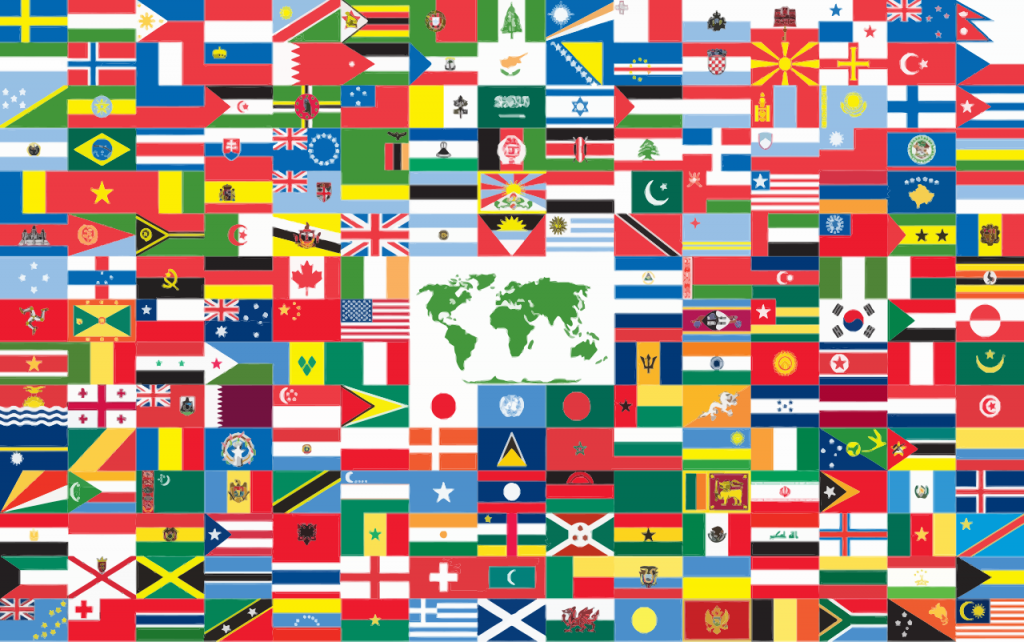
Perhaps the only competition that I enjoy between nationalities is the FIFA (soccer) World Cup.  I remember watching the World Cup with my dad and uncles when I was a little boy. Our family never missed it.  The first thing that I noticed as a boy when watching the World Cup was all the colorful flags of the teams. My favorite teams will always be the Netherlands and Argentina. I remember their flags very well.

In the book of Exodus, we find that flags are mentioned. At that time, Moses built an altar to God. He named the altar, “The Lord is my banner” (Exodus 17:15, NIV). I keep wondering what God’s banner looks like. I don’t know, but I will argue that it is not “Bendera merah putih,” nor the Stars and Stripes, Union Jack, or even the flag of Zion. 

I believe God’s flag should unite us as followers of Christ and not divide us. God’s flag needs to represent our victory against principalities and rulers of this dark world and spiritual forces of evil. 

I believe the blood of Jesus is one “spiritual” flag that can unite us. It is not made from a piece of fabric, but it will give us victory from sin and death. It can reach people from a liberal, capitalist, and communist country, crossing continents and geographical boundaries, regardless of nationalities. If we carry this flag as part of our faith, as followers of Christ, we will be effective witnesses who transform life while also being transformed by God.

Filed Under: Articles, Blog Tagged With: Hendy Matahelemual, intercultural

What Can We Do?

July 23, 2020 by Conference Office

How the Shalom Fund Offered Help in Mexico

By Javier Márquez, Conference Communication Intern

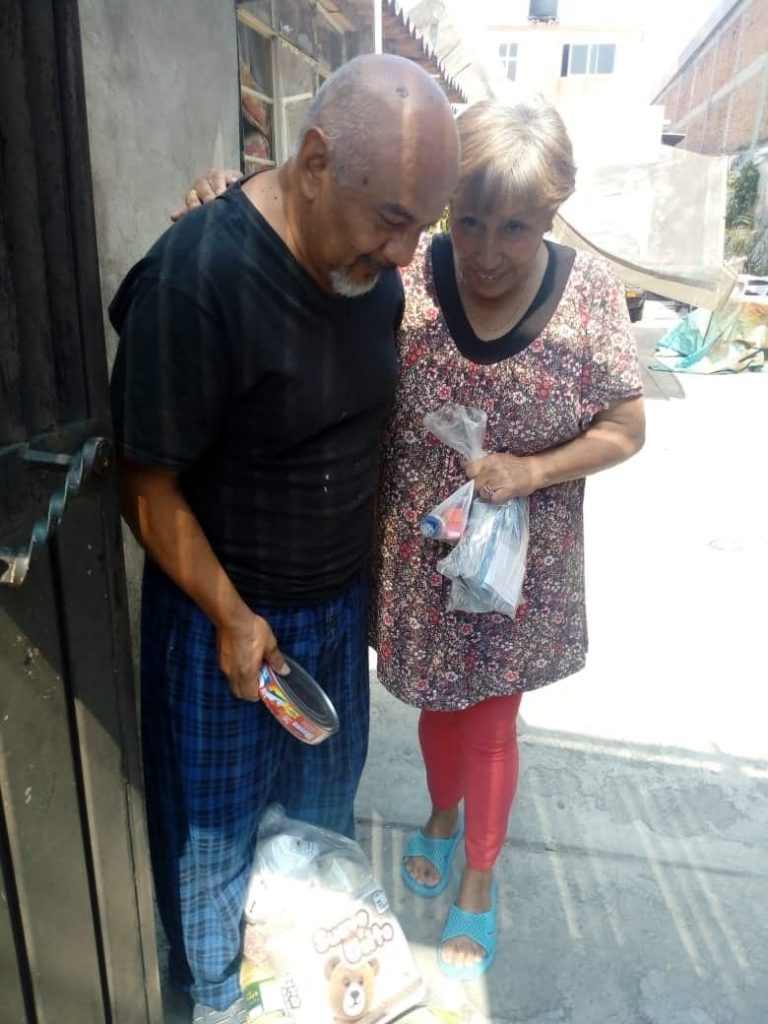
There is a crisis happening in Mexico, due to COVID-19. Pastor Oscar Dominguez shared about the situation many people are facing today in Mexico and the work being done by Anabaptist churches to respond to the famine and economic insecurity that families are experiencing.  

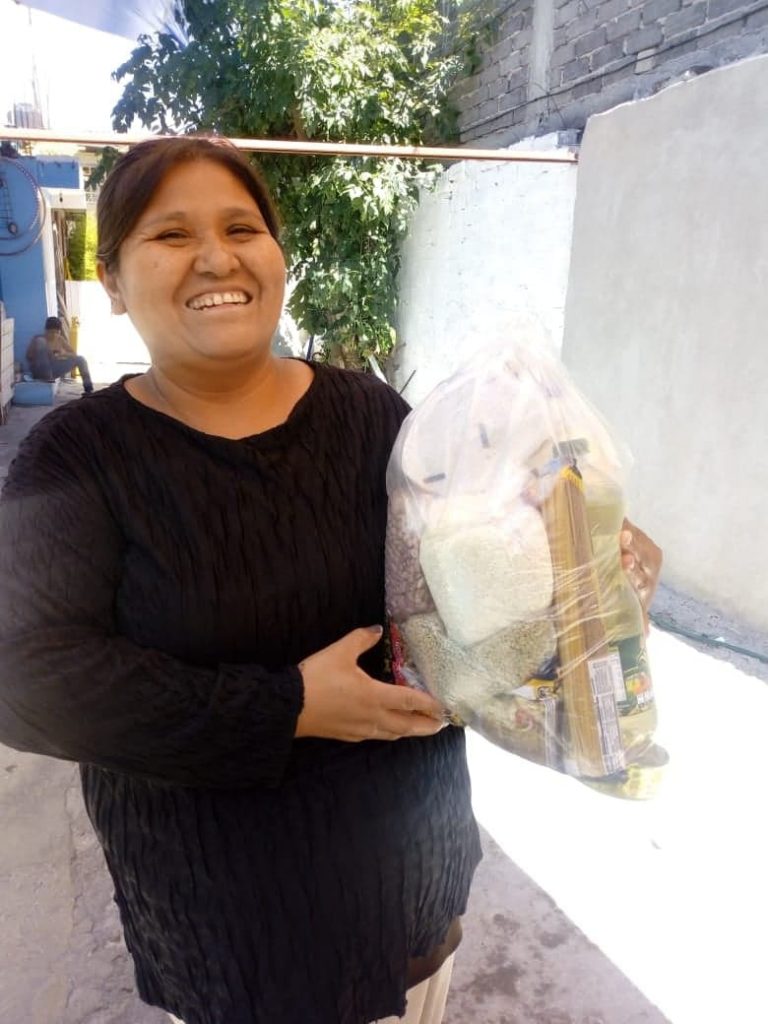
A delighted woman in Mexico receives a food bag during COVID-19. Food was provided by Mennonite Churches in Mexico, Mosaic Mennonite Conference Shalom Funds, and Mennonite Central Committee.

In Mexico, the public data regarding the pandemic is being underreported. Data from private, non-profit institutions are showing much higher numbers than data from the Mexican government. Knowing this, the brothers and sisters of the Conference of Evangelical Anabaptist Mennonite Churches of Mexico (CIEAMM) began to take measures of mutual collaboration with the aim of surviving the imminent period of scarcity that was approaching like a wave on their coast.  

Pastor Oscar said, in addition to a time of challenges, it was a moment that allowed them to discover the talents of different people in the churches that are oriented to mutual care and service.  

The first weeks of the pandemic were a period of transition for the churches in Mexico when each one needed to adapt to new technologies, utilize others’ resources, and face their limitations. 

“If the virus didn’t kill them, hunger would kill them. It was important for the church to ask itself how to help and find ways to do it.” – Pastor Oscar Domínguez

Each church started looking for ways to help out by giving baskets of donated food, contacting food banks, and sharing leftover food with other families. In Pastor Oscar´s church, they coordinated monitoring situations among the members of the congregation to determine needs, as some lost jobs, others had more mouths to feed, and some were single parents.  

  “The important thing was to share with love, to take care of each other, but also to share
with those who have the least.  People who are not even part of our churches but are part
of the community need help. We listen –without   any type of religious proselytizing. It
has always been a matter of genuine generosity, an explicit action of love.” – Pastor Oscar
Dominguez.

Members of Mennonite Churches in Mexico give and receive food during the pandemic. Mosaic Mennonite Conference Shalom Funds were used to support this work.

Pastor Oscar highlights that everything has been maintained, thanks to the generosity of church members and donations. Two of these donations, of great worth, were the donation of the Shalom Fund from Mosaic Mennonite Conference and the donation of food pantries by Mennonite Central Committee (MCC). Pastor Oscar told the story of Sister Adela, a senior citizen in a wheelchair, who upon receiving a food pantry, sent him a photo of herself with her grandchildren as a thank you.   

“The eyes of those children when they received the bag full of food … how they looked at and contemplated every little thing in the basket… they said to the grandmother, “We are rich,’”  reported Pastor Oscar, as he himself makes an effort not to cry. 

Pastor Oscar also shared about a blind man for whom Sister Eloida, an elderly woman and widow, prepared a box of food with what little she had in her pantry. She asked the blind man to go collect the food, but on the way his cane broke. Faced with this new challenge, another act of generosity was awakened by the members of the church; they bought him a new cane. 

Filed Under: Articles, Blog Tagged With: CIEAMM, coronavirus, intercultural, Javier Marquez, Oscar Jaime Dominguez Martinez, Oskar Dom

  • « Go to Previous Page
  • Go to page 1
  • Go to page 2
  • Go to page 3
  • Go to page 4
  • Interim pages omitted …
  • Go to page 34
  • Go to Next Page »

Primary Sidebar

  • Home
  • About Us
    • Our History
    • Vision & Mission
    • Staff
    • Boards and Committees
    • Church & Ministry Directory
    • Mennonite Links
  • Media
    • Articles
    • Newsletters
    • Video
    • Audio
    • Bulletin Announcements
  • Resources
    • Conference Documents
    • Missional
    • Intercultural
    • Formational
    • Stewardship
    • Church Safety
    • Leaders’ Resources
    • Request a Speaker
    • Pastoral Openings
    • Job Openings
  • Give
  • Events
    • Delegate Assembly
    • Youth Event
    • Conference Calendar
  • Mosaic Institute
  • Vibrant Mosaic
  • Contact Us

Footer

  • Home
  • Contact Us
  • Delegate Assembly
  • Vision & Mission
  • Our History
  • Formational
  • Intercultural
  • Missional
  • Mosaic Institute
  • Give
  • Stewardship
  • Church Safety
  • Leaders’ Resources
  • Articles
  • Bulletin Announcements

Copyright © 2026 Mosaic Mennonite Conference | Privacy Policy | Terms of Use
Aligned with