• Skip to main content
  • Skip to primary sidebar
  • Skip to footer

Mosaic MennonitesMosaic Mennonites

Missional - Intercultural - Formational

  • Home
  • About Us
    • Our History
    • Vision & Mission
    • Staff
    • Boards and Committees
    • Church & Ministry Directory
    • Mennonite Links
  • Media
    • Articles
    • Newsletters
    • Video
    • Audio
    • Bulletin Announcements
  • Resources
    • Conference Documents
    • Missional
    • Intercultural
    • Formational
    • Stewardship
    • Church Safety
    • Leaders’ Resources
    • Request a Speaker
    • Pastoral Openings
    • Job Openings
  • Give
  • Events
    • Delegate Assembly
    • Youth Event
    • Conference Calendar
  • Mosaic Institute
  • Vibrant Mosaic
  • Contact Us
  • 繁體中文 (Traditional Chinese)
  • English
  • Việt Nam (Vietnamese)
  • Español (Spanish)
  • Indonesia (Indonesian)
  • Kreol ayisyen (Creole)

Blog

Yet Even Now

November 28, 2022 by Conference Office

By Noel Santiago 

As Mosaic Conference, we have affirmed what has become known as the Pathway Document. The first action step listed in this document states: “We believe that we are called by God in this time: To share in the practice of continued prayer and fasting so that we may discern, yield, and listen to the Spirit among us.” 

In John 11, two sisters are concerned about their brother Lazarus. He’s not doing well and could die. They send word to their close, personal friend Jesus, asking him to come. Their hope is that he would heal him, and all would be well. 

As we know, Lazarus dies, and the sisters are in deep mourning and distress. All seems lost. What do they make of this close friend who could have done something about it but didn’t? 

Jesus finally arrives. He is informed of how things could have been different had he arrived sooner, but it’s too late. Lazarus has been dead now four days.  

However, in John 11:22, even though her brother is dead, Martha knows something: “Yet even now I know that whatever You ask from God, God will give You” (HCSB). 

 Yet even now I know that whatever You ask from God, God will give You.

John 11:22 (HCSB)

Three little words make a huge difference: “Yet even now.” 

As Mosaic Conference, we have affirmed the Pathway Document which calls us to prayer and fasting. Might these three little words, “yet even now,” still hold possibilities for us? 

  • Yet even now, though we are unsure of what the future holds. 
  • Yet even now, when we wonder how things will work out? 
  • Yet even now, when we ask what the relationship will be between Mosaic and Mennonite Church USA? 
  • Yet even now, when we wonder will Mosaic thrive, survive, or struggle? 

Yet even now … what is it that Jesus knows? 

The beauty we find in the midst of a painful situation is that Jesus was getting ready to show a new side of himself no one had seen before, the side of being the resurrection and the life. 

Could “yet even now” lead to newness of life, to renewed energy, commitment, and lasting life? As we pray, fast, and yield to Holy Spirit, may we experience God’s renewing life!

The beauty we find in the midst of a painful situation is that Jesus was getting ready to show a new side of himself no one had seen before, the side of being the resurrection and the life. 

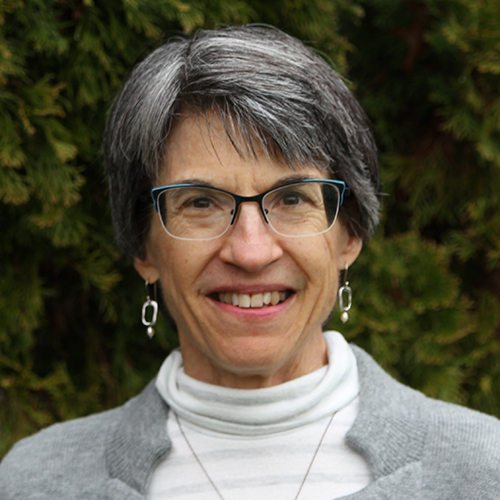
Noel Santiago

Noel Santiago is the Leadership Minister for Missional Transformation for Mosaic Conference.

Filed Under: Articles, Blog Tagged With: Noel Santiago

Journeying with God

November 16, 2022 by Conference Office

By Eileen R. Kinch

In early October, my husband and I moved to Telford, PA from Ephrata, Lancaster County, PA.  We had an embarrassment of help – more than we needed – to load and unload the moving truck. Most of the furniture is now where we want it, and we have unpacked many boxes. We are now figuring out how to find the things we need in our new community, such as groceries, car repair, and healthcare. Adjusting to a new place is hard work, and it takes emotional and physical energy. 

Moving is also disorienting. I have lived most of my life in Lancaster County. I grew up in the southern end of Lancaster County, twelve miles from the Maryland border. I know the routes and the roads. In our new area, I don’t know where I am going most of the time. I am only starting to recognize where I am, and the other day, I considered it a victory when I found a post office.  

In Genesis 12, God tells Abraham, “Go forth from your native land and from your father’s house to the land that I will show you” (12:1, JPS). I wonder how that felt for Abraham. Did he think, I am just fine where I am, thank you very much. I have everything I need. Why do I need to go somewhere else? Did he feel sad to leave his family and his home area? Did Abraham have a difficult time on his journey? Did he find it exhausting? 

Moving and journeying also characterized the Israelite experience, especially after the escape from the Egyptians across the Red Sea. The Israelites moved from place to place and carried the tabernacle with them. When they reached the Promised Land, had planted crops, and were offering the first fruits of harvest, God commanded that the Israelites recite their history, beginning with these words: “My father was a wandering Aramean, and he went down into Egypt with a few people and lived there and became a great nation, powerful and numerous” (Deuteronomy 26:5, NIV). Even after they settled, the Israelites were supposed to remember their ancestor Jacob’s experience of wandering. 

Did he think, I am just fine where I am, thank you very much. I have everything I need. Why do I need to go somewhere else?

The book of Hebrews mentions wandering as part of the journey of faith, naming Abraham, Moses, and many others: “All of them died in faith, not having obtained the things promised, but having seen and hailed them from afar, and they acknowledged themselves to be foreigners and sojourners on the earth” (Hebrews 11:13, translation by David Bentley Hart). 

Sometimes God calls us to do something that requires a change of location. Often this means leaving the comfort of home. Sometimes the purpose of moving is clear to us, but other times, it is not. As we pack, unpack, and try to make our way in a new place, we may wonder if the moving and disorientation are worth the immediate (or ongoing) trouble. Yet the writer of Hebrews points out that the big picture is important, even if we don’t recognize what it is. Faith, after all, is “the substance of things hoped for, the evidence of unseen realities” (Hebrews 11:1). 

I am grateful for the experiences of wanderers in the Bible. I am sure Abraham, Isaac, and Jacob (and Sarah, Rebecca, and Leah and Rachel) asked some of the same questions I do and experienced similar feelings. Even if I feel a bit lost right now, I can still find a home in this faith story.


Eileen Kinch

Eileen Kinch is part of the Mosaic communication team and works with editing and writing. She holds a Master of Divinity degree, with an emphasis in the Ministry of Writing, from Earlham School of Religion.

Filed Under: Articles, Blog Tagged With: Eileen Kinch

Courageous & Faithful Women 

November 10, 2022 by Conference Office

By Mary Nitzsche 

In the last year, I have been reading or listening to stories of women who served the Mennonite church and its institutions as pastors, educators, administrators, or theologians. Some of these women are living and continue to serve the church in their retirement; some face declining health and its limitations. Others have died. I am grateful, blessed, and inspired by these faithful, vibrant, and gifted followers of Jesus.  

I began to gather stories of women leaders, lay and credentialed, from the former Franconia and Eastern District Conferences who paved the way for women exercising the full range of ministry gifts in the church. Their stories need to be shared publicly as a witness of the Spirit’s movement. I read two books about women leaders that have provided additional inspiration: She Has Done a Good Thing: Mennonite Women Leaders Tell Their Stories, edited by Mary Swartley and Rhoda Keener (Herald Press, 1999) and Quiet Shouts: Stories of Lancaster Conference Women Leaders, edited by Louise Stoltzfus (Herald Press, 1999).  

©Herald Press, 1999

In my listening and reading, I discovered the women had some similar qualities. They were faithful followers of Jesus, and they had a love for the church and a desire to serve. They were responsive to the Spirit’s nudging. The women also had male leaders who recognized their gifts and encouraged and supported them.  

As young women growing up in the church, they did not have a theology allowing women to be in primary leadership roles in congregations, conferences, denominations, or in institutions of the church, nor were they aspiring to assume any of these roles. Most of the women did not have female role models serving in these leadership roles. In college, they majored in education or nursing, which were considered acceptable professions for women. 

In their journeys, the women began to feel unsettled in their current roles. They sensed a desire and call to serve the church in a role that had not been assumed by women. The nudging came from within and was often accompanied by encouragement and support from a male colleague. Most of the women experienced resistance in their ministry. People walked out of the room when they preached. They were silenced or not taken seriously when they spoke in a meeting. They were shamed or told they were not being obedient to scripture. Their attempts to offer pastoral care were rejected.  

Changes in belief and understanding of scriptural teaching on women’s leadership roles in the church did not happen quickly. Disagreement in belief and practice continues in our congregations, conferences, and institutions. The 1995 Confession of Faith in a Mennonite Perspective, Article 15, states clearly the position of Mennonite Church USA and Mosaic Conference: The church calls, trains, and appoints gifted men and women to a variety of leadership ministries on its behalf. These may include such offices as pastor, deacon, and elders as well as evangelists, missionaries, teachers, conference ministers, and overseers. Even though this is the conference’s position, Mosaic allows congregations to discern the role of women in leadership in their context. 

I am so grateful for women who courageously accepted roles they did not feel prepared for. I am also glad these women persevered when they faced resistance or animosity when accepting a leadership role, even as the church was disagreeing, arguing, and dividing. It is evident in all these stories that the Spirit was moving within the women who were doing a new thing. The Spirit was also moving in people in the church who responded to the transforming power of the Spirit through these courageous women.


Mary Nitzsche

Mary Nitzsche is a Leadership Minister for Mosaic Conference. She and her husband, Wayne, are Midwest natives. They have two adult daughters, Alison and Megan, son-in-laws, Michael and David, and one delightful grandson, William.

Filed Under: Articles, Blog

Appreciating Our Ministers by Waiting

October 13, 2022 by Conference Office

By Noel Santiago

I want to appreciate, affirm, and acknowledge all Mosaic pastors and the hard work they do, giving of themselves to help guide us in the way of Jesus.  I also acknowledge the families of these leaders who give of themselves unselfishly in many ways.  

I was inspired by an article by Sarai Rice, How to Manage Expectations. “Your ministers may look OK, but they are not. All ministers, even those who thrive on challenges, are by now exhausted, anxious, and at least intermittently depressed,” wrote Rice. “Ministers need affirmation and affection right now.” 

Not every minister is experiencing this, but we certainly understand that ministers have had many challenges over the past two plus years. “Ministers have moved mountains -taking congregations from minimal technology to fully virtual in a matter of weeks, becoming experts on mask quality, air exchange, and disinfection … all while being pressured, disrespected or ignored by people who resist their efforts to keep themselves and their members safe,” Rice reflected.  

“Your ministers may look OK, but they are not. All ministers, even those who thrive on challenges, are by now exhausted, anxious, and at least intermittently depressed,” wrote Rice. “Ministers need affirmation and affection right now.” 

Can anyone identify?  

Pastors had to figure a lot out quickly and succeeded. But these unexpected realities, which required a lot of creative energy, were done in addition to normal responsibilities. This added stress was often unknown to many in the congregation. Every step forward added another measure of exhaustion, possibly accompanied by an underlying fear that we may not be able to keep up this pace and manage all the anxiety that is present. There was less time to slow down to just be with and trust God. 

Making decisions has also gotten harder. Data that churches have relied on to gauge fruitfulness (e.g., attendance) are no longer easily measurable. Budget decisions seem to take longer and feel riskier. Long-time members are suddenly ready to leave the church over disagreements that could have been worked at previously.  

What can be done?  

The Apostle Paul offers some instructions, “Live in peace with each other. 14 We encourage you, brothers and sisters, to instruct those who are not living right, cheer up those who are discouraged, help the weak, and be patient with everyone” (1 Thess. 5:13b-14, GW).  

One of the best gifts we can give pastors is to live at peace with one another. How much work would ministers have if everyone were at peace with each other, not just at church but at home, work, school, and daily life? 

How can we support our ministers?  Rice suggests us “to manage expectations—yours and one another’s.” 

Just for today …  

let’s realize we all are doing our best. 
let’s not curse each other—not our friends, ourselves, or even our cats. 
let’s let go of our disagreements and embrace compromise. 

Instead … 

Let’s say thank you. 
Let’s pray. 

Just for today, let’s wait.  

Let’s wait to complain.  
Let’s wait before we send an impatient email.  
Let’s wait in order to make space for breath and life and the movement of the Spirit.

–Sarai Rice 

Rice continues, “Let’s wait before expecting that we and our ministers always will work harder and go faster and be even more creative. Let’s slow down, find grace, and wait before expecting one more thing. There will be a better time.” 

Perhaps the best support we can give our minsters is to grow in our own walk with the Lord, to not wait for the Pastor to “feed us.”  

The ongoing fruitfulness of our congregations and ministries is connected to how we care for our ministers and their families. October is Pastors’ Appreciation month. Let’s give them the gift of living at peace with one another and continue all year long. 


Noel Santiago

Noel Santiago is the Leadership Minister for Missional Transformation for Mosaic Conference.

Filed Under: Articles, Blog

Who Wants to be 91?

September 8, 2022 by Cindy Angela

by Margaret Zook

August 21 was National Senior Citizens’ Day.  By 2060, those aged 65 or older will total more than one quarter of the world’s population.  According to the World Health Organization, the number of persons aged 80 and older is expected to triple between 2020 and 2050 to reach 426 million.    

Community elders, or those of us who are aging, may be viewed as retired, empty-nesters, babysitters, volunteers, or vacationers spending their children’s inheritance. Others may think of them as forgetful, frumpy, frail, and feeble. 

“Who wants to be 91?” a 19 year-old young man asked with a sneer.  “I do,” replied a ninety-one-year-old man modestly. Most of us want to live a long time, but we don’t want to grow old.  

We start aging the moment we are born.   The first stage of life is filled with learning and growing.  The second stage is focused on production and accomplishment. These years go quickly.

The third stage of life, or the later years, is time for reflection, renewal, relationships, and grace. Author Katie Funk Wiebe writes of the third stage as the “proving ground of whatever one has believed, thought, practiced, and said.”  It is a time to use life-giving skills—those skills developed and practiced during the previous two stages—that will continue to give meaning and strength to life and faith. 

“Can we expect to become brighter and sweeter as the years roll by?” asks Tilman Smith in In Favor of Growing Older. “Not necessarily; it depends on how we live today. You will take your baggage with you as you grow older.”   

Life is complex at all stages. Funk Wiebe recommends in her books Border Crossing: A Spiritual Journey and Bless Me Too, My Father some faith practices for living today and all tomorrows. “It’s never too late to learn,” says Smith, so “develop the resources within … throughout your life.”   

I invite you to, no matter what your age is, join me in some of these faith practices: 

Gratitude: Exercise the “thank you” muscle. Repeat the words “thank you” to God and to those around and watch what happens.  

Generosity: Scientific studies report that giving back and helping others make us feel happier and more content. Create an inward picture of your generosity’s recipients and pray a blessing for and around them.  

Reframing: All of life has its share of reverses, losses, and sorrows.   What makes a difference is the attitude we have towards them.   Practice reframing time and focus on the positive aspects of the present. Be aware of events and persons in the present—give them your attention.   

Flexibility: Things change as we age, and some of those changes are irrevocable.   But with every reversal comes a new opportunity.  Practice never giving up learning, listening, and growing.   

Forgiveness: Anger and payback do not turn into the healing balm of love.  Forgiveness is the therapy of old age that wipes the slate clean and heals.  Practice true forgiveness, for it is more important to the one who forgives than it is to the one who is forgiven. 

As the Apostle Paul reminds us, “I press on to take hold of that for which Christ Jesus took hold of me…. I press on toward the goal to win the prize for which God has called me heavenward in Christ Jesus” (Philippians 3:12-13, NIV). 


Margaret Zook

Margaret Zook is the Director of Collaborative Ministries for Mosaic Conference. She and husband, Wib, are members of Salford Mennonite Church and live in Harleysville, PA.

Filed Under: Articles, Blog Tagged With: Margaret Zook

An Urban Minister Reflects on Farming and Prayer

June 30, 2022 by Conference Office

Most of my life I have lived at the western edge of the Sonoran Desert. Inland southern California has neither enough good topsoil or enough water to have sustainable harvests without assistance. We import food or someone else’s water to build up our topsoil.  Living in Pennsylvania this year has helped me to think about the different ecosystems of my life.   

As a more regular inhabitant of PA, I have come to recognize that God’s good creation (above sea level) and all of God’s very good humanity are dependent on two things: six inches of healthy topsoil and the presence of rain.  Without those two ingredients, nothing God has made for the land survives.   

In the church, we need a healthy ecosystem too. It is built on the spiritual topsoil of historic longevity, the complex relationships of closely-knit families, and many people of different cultures. Spiritual topsoil also requires distribution into wild areas, cultivated spaces, and lived-in realities.  But we also need rain.  The atmosphere needs to be stirred and water vapor needs to be condensed into drops that fall on our organized topsoil, creating watersheds of life and hope together.  In short, we need a vision shaped by two ingredients that engage in a constant and complex relationship of restoring life together. 

So how do I pray these days for the congregation I am currently serving and the churches I continue to be privileged to serve as a Leadership Minister?   

  1. First, I am learning in new ways to pray with an end in mind. That is, I pray for a good harvest (Matthew 9:37). I pray that our churches would conspire together to labor that all may come to know Jesus Christ as our ever-present Savior, teacher, friend, and Lord.   
  1. For that harvest to happen, I also pray for good soil (Matthew 13:8). In our “good soil” I pray that the interplay of our traditions, experiences, and the ever-present, ever-compassionate Holy Spirit will make the Word of God a living thing in our lives that bears good and abundant fruit.   
  1. Third, I pray for rain (Hebrews 6:7).  I pray that the atmospheric conditions of turbulence in my congregation and in Mosaic Conference are stirred up by the Holy Spirit and the Word of God in such a way that the water vapor condenses, and fresh water falls into our common life. We who were once parched find ourselves quenched. 

It is my observation that I have spent too much time, energy, and treasure on worrying about things that are not the main thing.  I choose to pray for a return to collaborating on a great harvest, made possible by healthy, fertile topsoil, and refreshed from the turbulent atmosphere giving us the water we need for life together. 

 I realize that the church I currently serve and the Conference I have been serving have all the ingredients needed to fulfill God’s first great commission: to be stewards of all He has made.  As we hold a vision for a great harvest, tend to the precious and thin layer of topsoil, and welcome the turbulent rain that makes us whole and alive, we fulfill our great purpose as the people of God.  

As we hold a vision for a great harvest, tend to the precious and thin layer of topsoil, and welcome the turbulent rain that makes us whole and alive, we fulfill our great purpose as the people of God.

In this season of reimagining the church in the post-pandemic realities of our time, may we seek a great harvest, not shriveled relationships. May we tend to the precious resources God has given us together, and not walk away from one another.  May we welcome the turbulent rains – soft showers and strong storms – that keep our souls thriving. 

Filed Under: Articles, Blog Tagged With: Jeff Wright

Yet This I Call To Mind

June 16, 2022 by Conference Office

We read in Ecclesiastes 3:1, “For everything there is a season, and a time for every matter under heaven” (ASV).  The text continues by explaining that positive events are paralleled with negative ones to reflect reality. The author reflects on human mortality, and states that because we are creatures of time and occasion, we must live in harmony with the ebb and flow of life. 

No matter how we frame something, there are times we simply must acknowledge that life hurts. While acknowledging this, we also recognize that Jesus knows us more intimately and personally than anyone else.  

In God’s love and mercy, we are also given the Book of Lamentations in the Bible. We may not turn to it daily, but it offers us companionship in the human struggle 

“For everything there is a season, and a time for every matter under heaven”

(Ecclesiastes 3:1 ASV)

To lament is to bring our experiences of disappointment, pain, hurt, anger, and dismay to God—to acknowledge that things are not as they ought to be. Lamentation can be a powerful and meaningful form of worship because it places our love for God above even the worst circumstances in our lives.  

“Though he slay me, yet will I trust in him”

(Job 13:15a, KJV)

We see this in the story of Job, when he said, “Though he slay me, yet will I trust in him” (Job 13:15a, KJV). Job stood fast, turning his suffering into worship. He took everything he feared, total disaster, loss of everything, and false accusations, and still praised the Lord. 

Declarations like Job’s don’t change the realities of what has happened in our lives. However, they help us to keep looking to God above our circumstances and situations. We still may feel pain and hurt, but we do not need to let this pain form, shape, and guide our lives. Instead, through the Holy Spirit, we will let Jesus continue to shape and guide our lives until … Christ is formed in you! (Gal. 4:19). We will continue to receive the love, grace and truth of God and the comfort and strength of the Holy Spirit. 

Lamentation does not deny the existence of pain or hurt. It calls us to worship God even in midst of it! It recognizes that God stands in the moment with us. Therefore, we are truly not alone. 

We also recognize that in this process, we may find ourselves at different places of healing on this path. That is okay. Each of us will process our realities in different ways and at different paces. So, might we extend grace and understanding to each other? 

I invite you to an exercise. On a sheet of paper create two columns, one column entitled, “Though” and the other, “Yet.” In the “Though” column, write things that have brought sadness or hurt to you in regard to your current situation. In the “Yet” column, write memories of God’s faithfulness in the past, that you can draw on now, to move forward. 

For example: Though – “I feel deeply hurt because….” Yet – “I will cast all my anxieties on him for I know he cares for me.” 

Present yourself and this list before the Lord. Listen for what God wants you to know as you remain open to His presence moving forward. Receive that which He offers you.  

May your faith remain strong, even if it has been shaken. May you not lose hope, for it is like a bridge that connects our present to our future.  May you, being rooted and grounded in love, know the love of God that surpasses all understanding and guards our hearts and minds in Christ Jesus. 

Filed Under: Articles, Blog Tagged With: Noel Santiago

Stretched Out

January 26, 2022 by Conference Office

Every other month I join the Mosaic Women’s Gathering to talk about our annual gathering, share stories, and empower each other. At our last meeting, as we were brainstorming ideas for this year’s gathering, Marta Castillo shared from Isaiah 54, about enlarging our tent, or dreaming big.

2 “Enlarge the place of your tent, 
    and let the curtains of your habitations be stretched out; 
do not hold back; lengthen your cords 
    and strengthen your stakes. 
3 For you will spread abroad to the right and to the left, 
    and your offspring will possess the nations 
    and will people the desolate cities. 

Isaiah 54:2-3, ESV

After the meeting, I found myself reflecting upon this passage for the rest of the week. As little children, we were often told to dream big. Every Sunday at Philadelphia (PA) Praise Center, the benediction includes, “May God enlarge your territory to the left and to the right…” in Indonesian.

However, Isaiah 54 reminded me that before we can enlarge our tent, we first must let ourselves be stretched out. And as we all know, being stretched out is uncomfortable.

We’re still in the middle of a global pandemic. Throughout this time, I’m sure that all of us had to pivot and adapt to the current situation. Personally speaking, I have felt stretched thin because I feel trapped in a season of waiting yet having too little time to do everything. I can feel overwhelmed, like God is stretching me too hard.

Close-Up Shot of a Person Holding a Pink Slime

However, God has always found a way to gently remind me whenever I feel like I’m at the lowest point in my life. I find strength by being reminded of this passage, that was addressed to the desolate as an eternal covenant of peace.

I am taking away three things from the Isaiah passage: 

1. Do not hold back 

When God is stretching me, I must constantly tell myself to not speed up or put a speed bump on God’s process. I should try to enjoy the uncomfortable. I need to enjoy the stretch!

2. Lengthen your cords 

Sometimes when I feel I don’t have enough to give, I keep telling myself that it’s okay to say no. It’s also okay to ask for help. A tent cord is used to secure a tent to the ground. Our limitations are what ground us and keep us human. In the areas where I feel like I lack, I find peace in knowing that God will be able to fill the empty spaces.

Photo Of People Reaching Each Other's Hands

3. Strengthen your stakes 

A house without a strong foundation won’t last long in the middle of a storm. Sometimes I get so wrapped up in doing things that I forget to recenter myself in God. I can find myself lost. I need to humbly be reminded of how little control I have, and how much I need God to help me through.

Black Ceiling Wall

As I reflected on times when I felt stretched to my limit, I found comfort when I felt God’s helping hands during those times. In my little, God is big. In my weak, God is strong.  

May you find strength and peace in this closing verse, as it did to me: 

“For the mountains may depart 
and the hills be removed, 
but my steadfast love shall not depart from you, 
    and my covenant of peace shall not be removed,” 
    says the Lord, who has compassion on you. 

Isaiah 54:10, ESV

Filed Under: Articles, Blog Tagged With: Cindy Angela

  • « Go to Previous Page
  • Go to page 1
  • Interim pages omitted …
  • Go to page 5
  • Go to page 6
  • Go to page 7
  • Go to page 8
  • Go to page 9
  • Interim pages omitted …
  • Go to page 17
  • Go to Next Page »

Primary Sidebar

  • Home
  • About Us
    • Our History
    • Vision & Mission
    • Staff
    • Boards and Committees
    • Church & Ministry Directory
    • Mennonite Links
  • Media
    • Articles
    • Newsletters
    • Video
    • Audio
    • Bulletin Announcements
  • Resources
    • Conference Documents
    • Missional
    • Intercultural
    • Formational
    • Stewardship
    • Church Safety
    • Leaders’ Resources
    • Request a Speaker
    • Pastoral Openings
    • Job Openings
  • Give
  • Events
    • Delegate Assembly
    • Youth Event
    • Conference Calendar
  • Mosaic Institute
  • Vibrant Mosaic
  • Contact Us

Footer

  • Home
  • Contact Us
  • Delegate Assembly
  • Vision & Mission
  • Our History
  • Formational
  • Intercultural
  • Missional
  • Mosaic Institute
  • Give
  • Stewardship
  • Church Safety
  • Leaders’ Resources
  • Articles
  • Bulletin Announcements

Copyright © 2026 Mosaic Mennonite Conference | Privacy Policy | Terms of Use
Aligned with