• Skip to main content
  • Skip to primary sidebar
  • Skip to footer

Mosaic MennonitesMosaic Mennonites

Missional - Intercultural - Formational

  • Home
  • About Us
    • Our History
    • Vision & Mission
    • Staff
    • Boards and Committees
    • Church & Ministry Directory
    • Mennonite Links
  • Media
    • Articles
    • Newsletters
    • Video
    • Audio
    • Bulletin Announcements
  • Resources
    • Conference Documents
    • Missional
    • Intercultural
    • Formational
    • Stewardship
    • Church Safety
    • Leaders’ Resources
    • Request a Speaker
    • Pastoral Openings
    • Job Openings
  • Give
  • Events
    • Delegate Assembly
    • Youth Event
    • Conference Calendar
  • Mosaic Institute
  • Vibrant Mosaic
  • Contact Us
  • 繁體中文 (Traditional Chinese)
  • English
  • Việt Nam (Vietnamese)
  • Español (Spanish)
  • Indonesia (Indonesian)
  • Kreol ayisyen (Creole)

Blog

Not Your Typical Mennonite: A Take on Violence 

February 15, 2024 by Cindy Angela

by Andrés Castillo

I remember my first Judo Club practice at West Chester University. Its demanding drills would eventually lead to throwing, sweeping, and wrestling other students on blue mats.  

A semester of Kickboxing Club left me similarly realizing I had never known how to properly throw a punch or kick before—let alone at another person. 

Within a couple of years, I was regularly feeling invigorated following my weekly Jiu Jitsu* or Muay Thai† classes. 

In my teens, much to my parents’ dismay, I began listening to rock and metal music. In 2021, I would be invited to my first ever hardcore‡ music show. I witnessed a brutal karate dance floor accompanied by loud, fast music. I even clumsily attempted to participate by throwing myself at friends and flailing my limbs around. 

These days, I attend a couple shows each month to continue perfecting the art of karate dancing known as moshing, and I play in two hardcore bands. 

If you are slightly horrified at this point, I will admit this to you: as someone who identifies as Mennonite, these activities are fun for me, and I now consider them a big part of my personality.  
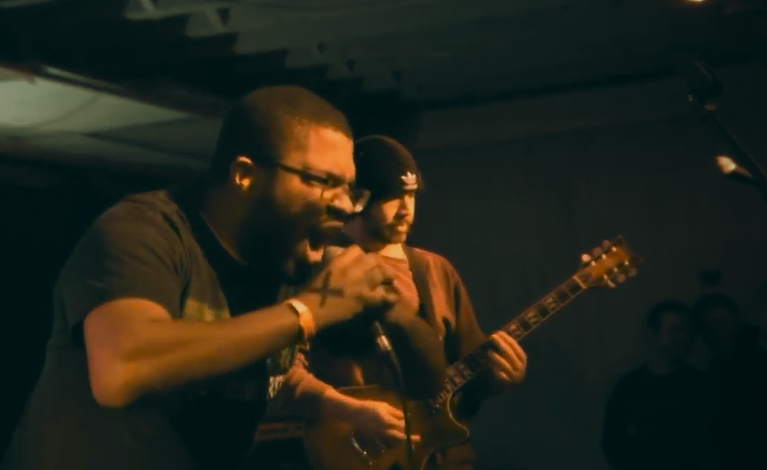
Andrés Castillo (right) playing guitar with his band at a show in Phoenixville, PA. Photo provided by Andrés Castillo.

I cannot explain why I signed up to try martial arts during college. And although I always had a special connection to music, I never imagined myself physically participating in it with such zeal. I had never been athletic, aggressive, competitive, or a dancer.  

Sometimes I question my newfound joys. Do I like violence? 

Growing up, I knew of my poppop’s prowess in badminton and tennis. I also knew of his and my nana’s involvement in the Vietnam War as peacemakers. As missionaries teaching English, they stared violence calmy and dutifully in the face. 

My grandparents enjoy hearing about my hobbies, but I sometimes wonder how they can connect with a grandson who enjoys “violent” activities. Expressing my interest in such things at church or family functions sometimes raises eyebrows. “Where’s the nonviolence in that?” some ask. 

The Confession of Faith In a Mennonite Perspective tells us that, “Although God created a peaceable world, humanity chose the way of unrighteousness and violence.”  

Have I chosen the way of unrighteousness and violence? 

The confession continues to say, “[Mennonites] witness to all people that violence is not the will of God. We witness against all forms of violence, including war among nations, hostility among races and classes…and capital punishment.”  

Andrés Castillo (left) practicing Brazilian Jiu Jitsu with a friend in Conshohocken, PA. Photo provided by Andrés Castillo.

My insider opinion is that martial arts classes are a place of personal strengthening and friendship where pride is frowned upon; hardcore shows provide a place to let out stress in a controlled-chaos environment. These are consensual activities, and I doubt they will lead me toward a love of true violence and unrighteousness. 

I reflect on a conversation with Juan Marrero of Crossroads Community Center (Philadelphia, PA). Part of Crossroads’ enrichment activities for youth involve boxing. Juan sees boxing as an empowering activity that discourages young people from defaulting to gun violence and has been used to resolve lethal situations in his neighborhood. 

I challenge you to discover what unorthodox pastimes exist in your community and the purposes they serve for those who partake in them. Was your pastor in a punk band? Is Mosaic Executive Minister Steve Kriss a “gym bro”? As we seek to celebrate differences within Mosaic, it is worth discovering what more of them are. 

*Brazilian Jiu Jitsu, a grappling art popularized in the 90s 
†Thai Kickboxing 
‡Hardcore is a music scene/style originating in the 80s, but has often been used as an ambiguous term 


Andrés Castillo

Andrés Castillo is the Intercultural Communication Associate for the Conference. Andrés lives in Philadelphia, PA, and currently attends Methacton Mennonite Church. He loves trying new food, learning languages, playing music, and exploring new places.

Filed Under: Articles, Blog Tagged With: Andrés Castillo

To Shoot or to Sing 

February 8, 2024 by Cindy Angela

by Josh Meyer

1 Give thanks to the Lord, for he is good; his love endures forever… 
8 Let [us] give thanks to the Lord for his unfailing love and his wonderful deeds for humankind, 
9 for he satisfies the thirsty and fills the hungry with good things. 

Psalm 107:1, 8-9, NIV

The word הֹד֣ו (hō-ḏū) in the Hebrew Bible is fascinating. It means “to give thanks,” but it also means “to shoot.” We read in the Psalms: “I will give thanks to the Lord because of his righteousness; I will sing the praises of the name of the Lord Most High” (Ps. 7:17).  But the same word, הֹד֣ו, is also used in Jeremiah 50:14: “Take up your positions around Babylon, all you who draw the bow. Shoot at her! Spare no arrows…”   

To shoot or to sing…   

Both meanings of הֹד֣ו come from the same root word for “hand.” You can use your hands to draw a bow, or you can use your hands to lift in gratitude.   

Built into this one Hebrew word is the tension we all feel in life. Sometimes it’s easy to give thanks: life is going well, circumstances are manageable, we feel God’s blessings. Other times it’s much more difficult: we are tempted instead to “shoot” arrows – arrows of anger, cynicism, sarcasm, bitterness, judgement.      

To shoot or to sing… 

Tradition tells us that the psalm 107 was written by David after being wrongfully accused of conspiracy against King Saul, which would surely result in David’s death. He pleads to God: “…save and deliver me from all who pursue me, or they will tear me apart like a lion and rip me to pieces with no one to rescue me.” (7:1). It was a dark and potentially deadly situation for David. He had every right to spare no arrows.  

Yet, in the final verse he chooses to lift his hands in song. “I will give thanks to the Lord because of his righteousness and will sing praise to the name of the Lord Most High.” In reflecting on this psalm, Charles Spurgeon writes: “What a blessing would it be if we could turn even the most disastrous event into a theme for song, and so turn the tables upon our great enemy.” 

And that’s just it, isn’t it? Giving thanks is actually the more effective “weapon.” It’s easier to reach for an arrow than a song, but it always misses the mark. The bow never satisfies.   

But we turn the tables when we choose to give thanks to Jesus, the One who on the cross took every arrow humanity could shoot, then rose from the dead to begin the restoration of all things – from death to life; from darkness to light; from shooting to singing… 

This week, may you turn the tables by giving thanks.   

May you choose singing over shooting, giving thanks over slinging arrows.   

May you put down your bow and lift up your hands.     


Josh Meyer

Josh Meyer is a Leadership Minister for Mosaic Conference.

Filed Under: Articles, Blog Tagged With: Josh Meyer

When 1 + 1 = 3 (or more) 

February 1, 2024 by Cindy Angela

“Eight weeks. Would you be willing to help us out for eight weeks…maybe ten at the most?”  

This was the invitation I received to join the Conference communication staff in January 2020. As the Conference changed and grew, so did the needs of the communication staff, so my eight weeks was extended multiple times until I became a permanent staff member. Now, four years later, I have decided it is time for me to pass the baton along.  

For the four years that I worked for Mosaic, I worked at least one other job, sometimes two. My jobs were always part-time jobs, so on paper, it seemed like the math should add up. Rarely did the number of hours purportedly worked add up to over 40. Surely, I could handle a full-time load. Many weeks, I did, and it was fine. Some weeks felt lighter than full-time, and others more than full-time. I was bi-vocational, working in two areas that I loved: communication and chaplaincy. I was on the communication staff for Mosaic, and I was a chaplain. I felt fortunate. And I was. 

But over time, the toll of doing two part-time jobs that required my energy and thinking outside of the standard hours worked began to feel heavy. It was hard to juggle the schedules; which job do I prioritize when I have both jobs requesting my presence at the exact same time? How do I make sacrifices in one job to be successful in the other? Carrying the energy, knowledge, and responsibility of two jobs began to feel like I wasn’t able to do either one as well as I wanted.  

I know many people, especially those of us in ministry, are bi-vocational. Some people may choose this, as they welcome the opportunity to set boundaries and feel like having another job allows them this possibility. Other people are bi-vocational due to financial needs. For some, being bi-vocational allows them to experience a variety of professional experiences, something I enjoyed in my two roles.  

But, after four years, I realized that juggling two jobs is not sustainable for me in the long run. I want to be able to focus more steadily on one job and do it well. For me, this meant choosing the job that allowed my truest passion, being a chaplain, to shine.  

As a result, I say goodbye to my role on the communication team of Mosaic Conference. I do so sadly, as I have thoroughly enjoyed my time as a staff member. But I’m not going away, as I still am an active member of a Mosaic congregation. I just won’t have the regular staff interaction now, and I will miss that. The Mosaic staff are amazing. They work very hard to support a growing, changing, diverse group of people and theological beliefs and they do it with joy, integrity, commitment, and even some laughter.  

Many of the Mosaic staff are bi-vocational. Many of them are juggling multiple roles in their life too, like you. So, as you work with them, give them grace and understanding, knowing that 1 + 1 does not always equal 2.  


Sue Conrad Howes

Sue Conrad Howes is a chaplain at St.Luke’s Penn Foundation and is an ordained pastor in MC USA. She and her husband live in Quakertown, PA and are members at West Swamp Mennonite Church.

Filed Under: Articles, Blog Tagged With: Sue Conrad Howes

“God With Us” In the Liminal Spaces 

January 25, 2024 by Cindy Angela

by Jennifer Svetlik

Catholic priest and writer Richard Rohr talks about the importance of “dwelling together in the liminal space between life and death.” This past Christmas my family and I lived in this liminal space.  

In December, as I traveled to rural central Texas to be with my dad, brothers, and extended family, one of my youngest uncles, who had struggled with heart disease for 15 years, was in the hospital. After the first of two expected heart procedures, he initially improved. Until he didn’t. 

Within days, he was no longer able to live without the medical interventions that were fully supporting his heart. He elected to have the supports removed and knowingly face death. 

The grace with which he faced his fate was moving. As he visited with small groups of family members throughout the day, he regaled us with stories, gave us advice on how to enjoy life, and had his first root beer float in many years. 

Amid the tears, I experienced several surprise glimpses of God’s presence. While filling my water bottle next to a woman cleaning the bathrooms, she encouraged me, in Spanish, to “drink the good water, with ice,” from the machine around the corner. As we started talking about my large extended family that was gathered to say goodbye to my uncle, she showed me where I could get free coffees and sodas, and offered me encouragement from Ephesians 2:6, “For he raised us from the dead along with Christ and seated us with him in the heavenly realms because we are united with Christ Jesus” (NLT). Her care and hospitality were a balm. 

Soon after his supports were removed, my uncle went on hospice care. However, he did not die in “minutes to hours” as predicted. So, family members began to keep vigil with him.  

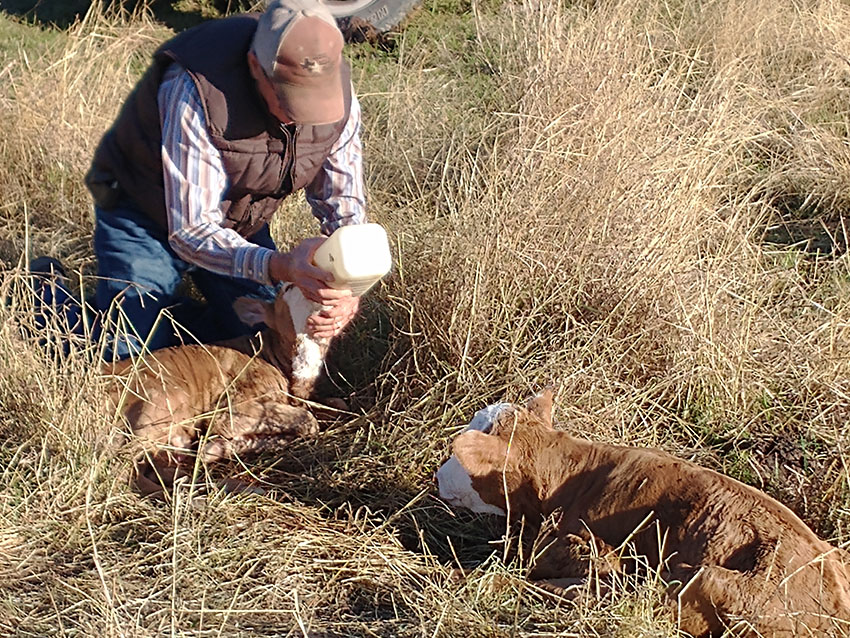
My family returned to my dad’s home in the country and awoke the next morning to another glimpse of God’s presence in the liminal space we found ourselves in. One of my uncle’s heifers – one of dozens of cattle that graze on the prairie land my dad lives on – was pregnant. We thought she had an infection that might take her life and her baby’s. Instead, she successfully gave birth to twins! 

The surprise twin calves being bottle fed on my father’s ranch land near Shiner, TX. Photo provided by Jennifer Svetlik.

The twins were very weak and unable to nurse. They began to bottle feed. Their lives, and my uncle’s, were hanging in the balance. The line between life and death was noticeably thin. 

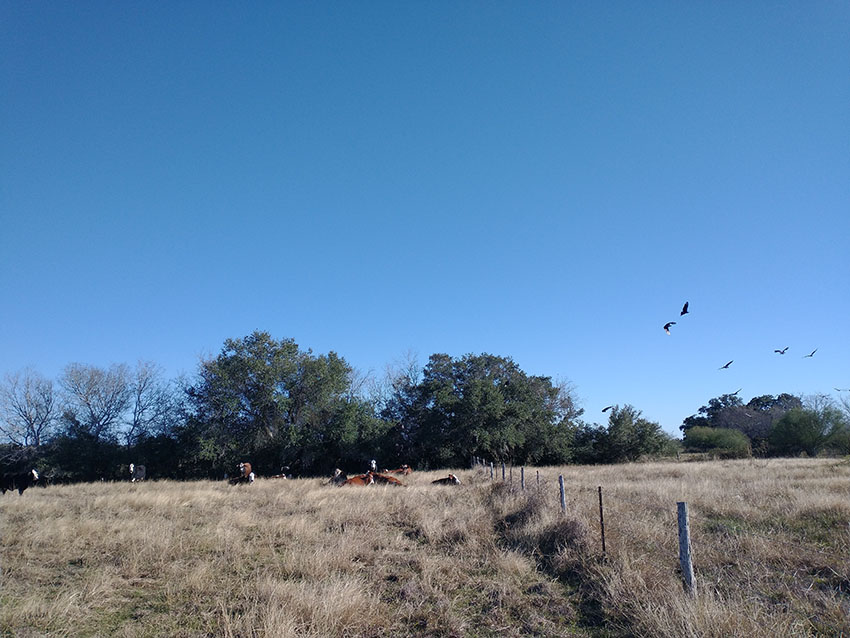
Two days later, both calves died. Their mother kept watch over them, even after their bodies were moved to the back pasture, as vultures and coyotes moved in to feast.  

As my relatives kept vigil with my uncle at the hospital, the whole herd of cattle moved to the back field and stayed close to the bodies of the calves, until there was nothing left but bones. 

The whole herd of cattle keeps watch as vultures feast on the calves’ bodies. Photo provided by Jennifer Svetlik.

The day after the calves died, so did their would-be caretaker, my uncle. 

Amid the liminal space between life and death, Father Rohr says, is where transformation takes place. “There alone is our old world left behind, though we’re not yet sure of the new existence,” he says. 

“When we embrace liminality, we choose hope over sleepwalking, denial, or despair,” Rohr says. “The world around us becomes again an enchanted universe, something we intuitively understood when we were young and somehow lost touch with as we grew older.” 

The night my uncle died, my family built a bonfire in the yard and allowed the kids to roast marshmallows as we wondered why some live and some die, and how life and death are all wrapped up in the same sacred space. 


Jennifer Svetlik

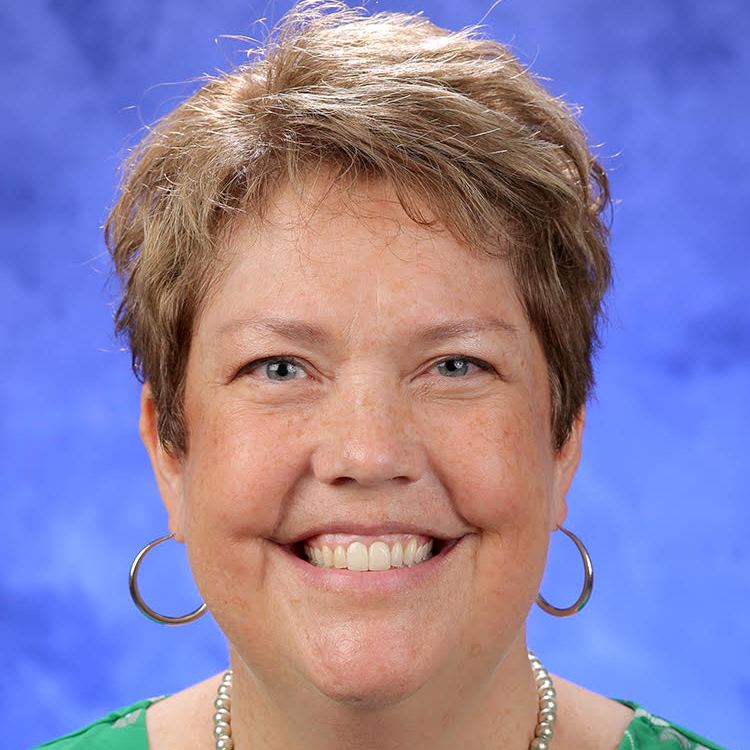
Jennifer is Communication Associate/Editor for Mosaic. She was born near Houston, TX and spent a decade living in an intentional community in Washington DC, before moving to Lansdale, PA with her spouse, Sheldon Good. She is a graduate of the University of Texas and Washington Theological Seminary. She serves as Children’s Faith Formation Director at Salford Mennonite (Harleysville, PA). Jenn has two elementary-school-aged children and loves biking, camping, gardening, and vermicomposting with her family. 

Filed Under: Articles, Blog Tagged With: Jennifer Svetlik

You Have Never Traveled This Way Before

January 18, 2024 by Cindy Angela

by Noel Santiago

“Since you have never traveled this way before…” – Joshua 3:4a (NLT)

Assembled on the Plains of Moab, Israel received the Mosaic laws outlined in Deuteronomy and mourned the loss of their leader, Moses. Now Joshua is to lead the people of Israel. A generation before, the people did not want to enter the land God had promised Abraham, so they wandered in the wilderness for 40 years. They had crossed the Red (Reed) Sea and experienced the Lord’s deliverance from Egypt’s might. 

Now this generation, under new leadership, finds themselves on a similar path. They were to cross the Jordan River by following the Ark of the Covenant, the place of God’s presence as noted in Joshua 3:3-4: “When you see the Levitical priests carrying the Ark of the Covenant of the Lord your God, move out from your positions and follow them.”  

The instructions to the people continue in Joshua 3, “Since you have never traveled this way before, they will guide you. Stay about a half mile behind them, keeping a clear distance between you and the Ark. Make sure you don’t come any closer.” (NLT) 

In the wilderness, God had used a pillar of cloud and pillar of fire to lead, protect, and provide for the people. That generation was accustomed to experiencing God’s presence and leading in these pillars. Now the new generation is being instructed to follow the Ark of the Covenant. What happened to the pillars? 

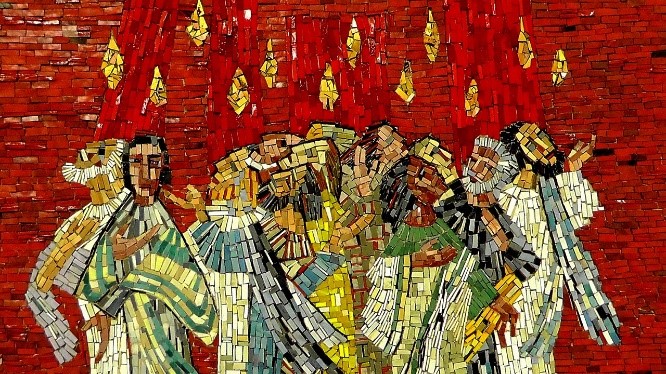
All these sojourns and symbols point to and climax in Jesus. From pillars of fire, the Ark of the Covenant, and New Testament imagery like ascending on a cloud and tongues of fire descending on disciples, there is a coherent connectedness through which God’s story flows from one generation to the next.  

How might we understand our story in this larger narrative of God’s story? What pathways are we on? What rivers or seas do we need to cross? What mountains are we invited to climb? What are ways of knowing and following God’s Holy Spirit that might be different than previous generations?


Noel Santiago

Noel Santiago is the Leadership Minister for Missional Transformation for Mosaic Conference.

Filed Under: Articles, Blog Tagged With: Noel Santiago

The Confrontational Fire of MLK 

January 11, 2024 by Cindy Angela

by Jordan Luther

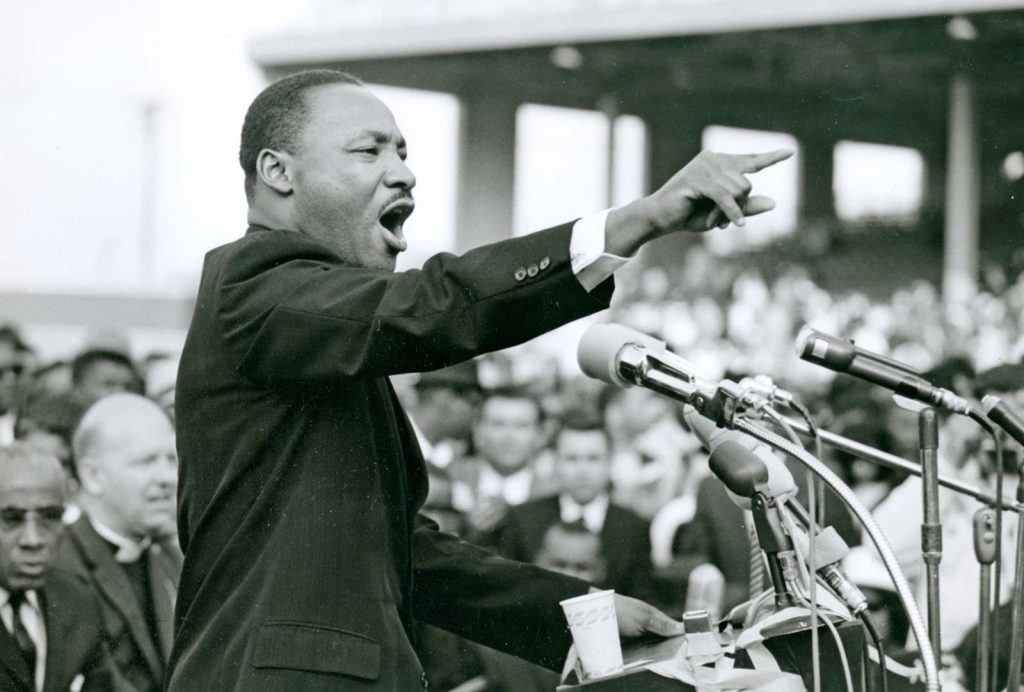
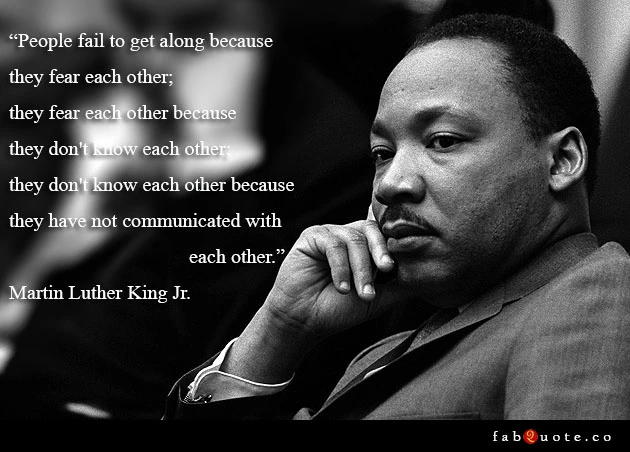
On Monday, the US will celebrate Martin Luther King Jr. Day. It is a federal holiday that honors the life and legacy of one of the great Christian pastors, orators, and civil rights icons in US history. 

If you are like me and were born after 1986, MLK Day has always been a federal holiday. My earliest lessons of Martin Luther King Jr. were about how Dr. King was a man who advocated for equality among the races. Soundbites from his famous “I Have a Dream” speech were often read in class and commented on to paint the picture of a nice, Black man who longs for everyone to get along. I have since learned that there is more confrontational fire to Martin Luther King Jr. than our nation likes to remember. 

In a 2014 chapel sermon, Eastern Mennonite Seminary professor David Evans called the popular public narrative around Dr. King as a “domesticated King.” Sometimes we memorialize prophets as a way to smooth out their rough edges that make the status quo feel uncomfortable. As a historian, Evans reminds us that up until his death, Dr. King had a knack for confronting oppressive powers and making enemies. 

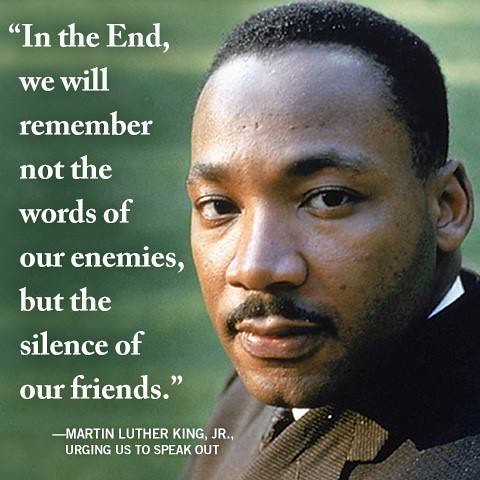
Dr. King made many enemies in his lifetime. He was critical of racial segregation in the Jim Crow South and the subject of hatred for segregationist politicians and White mobs. He also was an enemy of the rich for fighting for jobs and fair pay for low-wage workers. Dr. King was an outspoken critic of the Vietnam War and militarism. King made many enemies because he tirelessly made the nation uncomfortable in his pursuit of justice. 

It is well documented through King’s sermons and books that he experienced anger. He regularly called himself “discontent” and expressed his anger at both the powers of government and the church.  

Perhaps King’s anger was no more apparent than with the White church and its leadership. Much of King’s frustration with the White church came from its lack of support during the Birmingham boycotts. King had hoped the White church and its leadership would show moral outrage and speak out against the city’s Jim Crow policies. King was hoping to receive love and solidarity from his fellow Christians. Instead, King and other organizers from the Southern Christian Leadership Conference were met with rebuke and scolded for spending time in jail and asked to “wait” for their freedom to come eventually.  

Martin Luther King’s life reminds us that sometimes the hardest enemies to love are the folks with whom we share the most in common. It angered Dr. King that White Christians were turning a blind eye towards the injustice of their Black neighbors—many of whom were also Christian. In King’s famous “Letter from a Birmingham Jail,” King implored these White church leaders to see social issues as integrated concerns for the gospel. King worried that if the church fails to practice the “sacrificial spirit of the early church, it will lose its authenticity…and be dismissed as an irrelevant social club.”

So on this upcoming MLK Day, we would be wise not to smooth out the rough edges of his prophetic voice. May King’s holy discontentment invite us to challenge the status quo and seek transformation through Jesus Christ. 


Jordan Luther

Jordan Luther is a member at Methacton Mennonite Church in Worcester, PA. He volunteers with the Mosaic Intercultural Committee and leads the committee’s White Caucus. Jordan lives in Souderton, PA with his wife Sarah and their daughter.

Filed Under: Articles, Blog Tagged With: Jordan Luther, Martin Luther King Jr Day, MLK

Stewarding a Spiritual Legacy 

January 4, 2024 by Cindy Angela

by Eileen Kinch

Last year, a Friend in my Quaker meeting died. Later I learned that he had named me in his will to take care of his religious books and writings.  

Boxes and boxes of old books came to our house, as well as to my parents’. As I sorted through the collection, I discovered a few surprises: a copy of Scottish Quaker Robert Barclay’s Apology from 1678, a two-volume set from 1753 of A Collection of the Sufferings of the People Called Quakers by Joseph Besse, and an almost complete book set of the writings by Quaker founder George Fox. 

What does it mean to steward a spiritual legacy? I have spent a lot of time thinking about this. Terry Wallace gave these books to me. But before Terry gave me these books, Lewis and Sarah Potts Benson gave these books to Terry. Lewis and Sarah worked very hard to teach Quakers in the 1970s and 1980s about their religious heritage. Lewis, Sarah, and Terry traveled to Friends meetings in the United Kingdom and in the US with the same message: that Quakers have a very special understanding of Christ being alive here and now, and that we can know and obey him. 

Some of the books have notes scribbled on the edges of pages or even on the end pages.  Lewis kept meticulous notes of how Friends used words in their journals or other writings from the seventeenth and eighteenth centuries. He even assembled a word index. Terry wrote books that interpret some of these older writings. My experience of Christ has been shaped and nurtured because of the faithfulness of others, including Sarah, Lewis, and Terry. 

A few Friends recommended that I send older volumes to the archives at Haverford and Swarthmore Colleges. Since Barclay’s Apology is now available online, an archival facility would know best how to take care of a book from 1678. This is helpful advice. 

I’m still deciding what I want to do. One thing very clear to me is that the legacy I have been given is not simply the books themselves; what the books contain, teach, or even document is even more important than where I decide to store them.  I need to talk and write about my spiritual heritage and why Quaker history and witness are so important. The books are not dead relics. I want them to make a difference for the Kingdom of God, and I want to be a living witness to Christ’s power today. 

I am a Quaker who lives and works among Mennonites. Mennonites also have a spiritual legacy that should be nurtured and stewarded. I hope Mennonites are sharing stories of living witness with each other and preserving them at places like the Mennonite Heritage Center. Stories do not simply belong to individuals — they belong to all of us. God’s faithfulness and the faithfulness of our brothers and sisters shape our own. 


Eileen Kinch

Eileen Kinch is a writer and editor for the Mosaic communication team. She holds a Master of Divinity degree, with an emphasis in the Ministry of Writing, from Earlham School of Religion. She and her husband, Joel Nofziger, who serves as director of the Mennonite Heritage Center in Harleysville, live near Tylersport, PA. They attend Methacton Mennonite Church. Eileen is also a member of Keystone Fellowship Friends Meeting in Lancaster County.

Filed Under: Articles, Blog Tagged With: Eileen Kinch

Take Heart, It Is Almost the End of Advent Again

December 21, 2023 by Cindy Angela

by Stephen Kriss

It is Advent again. We call this time Advent because it reminds us of what comes from God for the creation of his kingdom on earth. We who are here have been led in a special way to keep what is coming on our hearts and to shape ourselves according to it. That which comes from God—that is what moves our hearts, not only in these days but at all times.

Christoph Friedrich Blumhardt

Waiting is part of the human experience. We live in the in-between space, where the reign of God is upon us and not yet, where there is grieving and rejoicing, when things are both lost and found. However, as we see in the Gospel of Mark (this year’s primary lectionary text), there are moments when things are suddenly upon us.  

The Christmas season brings out a level of tenderness in many of us, a time when gift-giving and remembering those less privileged than ourselves is part of the US cultural practice rooted in a Christendom story. It is also a season where we are sometimes the most overtaxed or aware of our lack. The seasonal time of longer nights and less sunlight can make us more acutely aware of all that is not right or well, including ourselves. 

…we practice waiting for light and for Christ’s inbreaking in the midst of long darkness.

As a Mosaic of Christ-followers, a diverse people of God following Christ’s way of peace, we practice waiting for light and for Christ’s inbreaking in the midst of long darkness. We practice pensive waiting more than we might embrace overflowing joy. We know that all is not well in a world where wars wage, injustice dominates, and Herodian leaders call for violence against innocents even now. 

My opening passage excerpt from German theologian Christoph Blumhardt is an invitation to engage with our heart and to respond to the things of our hearts. It reminds me of the Emmaus Road story in Luke 24, the disciples’ post-resurrection encounter with Jesus. The disciples’ hearts warmed while they talked together about all of the difficult things they had experienced, even though they did not recognize Jesus with them. That conversation was not a glossing over the struggle, but a willingness to listen, to validate, to accompany, and eventually, to eat together. There is something within us beyond our head, feet, and hands, deep in our body, that knows the holy from the inside out. 

There is something within us beyond our head, feet, and hands, deep in our body, that knows the holy from the inside out. 

While we wait for Christmas, what does it means to acknowledge all that is fraught, all that we are waiting for, all that is “not yet the reign of God” and yet, still gather and celebrate? We know that wars and rumors of wars rage, we know the personal failures, theological, and political disagreements among us, and we seek to listen and be heard. Even so, we still gather around the table, or a Christmas tree, around a fire or in worship, knowing we are participating in the inbreaking of God–knowing it in our hearts, and enacting it in our bodies, in our communities, and in our relationships. We celebrate this not just now, but always, because we are always waiting, and the reign of God is always breaking through. “I am about to do a new thing; now it springs forth, do you not perceive it?” (Isaiah 43:19, NRSV). 


Stephen Kriss

Stephen Kriss is the Executive Minister of Mosaic Conference.

Filed Under: Articles, Blog Tagged With: Advent, Stephen Kriss

  • « Go to Previous Page
  • Go to page 1
  • Go to page 2
  • Go to page 3
  • Go to page 4
  • Go to page 5
  • Interim pages omitted …
  • Go to page 17
  • Go to Next Page »

Primary Sidebar

  • Home
  • About Us
    • Our History
    • Vision & Mission
    • Staff
    • Boards and Committees
    • Church & Ministry Directory
    • Mennonite Links
  • Media
    • Articles
    • Newsletters
    • Video
    • Audio
    • Bulletin Announcements
  • Resources
    • Conference Documents
    • Missional
    • Intercultural
    • Formational
    • Stewardship
    • Church Safety
    • Leaders’ Resources
    • Request a Speaker
    • Pastoral Openings
    • Job Openings
  • Give
  • Events
    • Delegate Assembly
    • Youth Event
    • Conference Calendar
  • Mosaic Institute
  • Vibrant Mosaic
  • Contact Us

Footer

  • Home
  • Contact Us
  • Delegate Assembly
  • Vision & Mission
  • Our History
  • Formational
  • Intercultural
  • Missional
  • Mosaic Institute
  • Give
  • Stewardship
  • Church Safety
  • Leaders’ Resources
  • Articles
  • Bulletin Announcements

Copyright © 2026 Mosaic Mennonite Conference | Privacy Policy | Terms of Use
Aligned with