
• Skip to main content
  • Skip to primary sidebar
  • Skip to footer

Mosaic MennonitesMosaic Mennonites

Missional - Intercultural - Formational

  • Home
  • About Us
    • Our History
    • Vision & Mission
    • Staff
    • Boards and Committees
    • Church & Ministry Directory
    • Mennonite Links
  • Media
    • Articles
    • Newsletters
    • Video
    • Audio
    • Bulletin Announcements
  • Resources
    • Conference Documents
    • Missional
    • Intercultural
    • Formational
    • Stewardship
    • Church Safety
    • Leaders’ Resources
    • Request a Speaker
    • Pastoral Openings
    • Job Openings
  • Give
    • Leadership Development Matching Gift
  • Events
    • Pentecost
    • Delegate Assembly
    • Faith & Life
    • Youth Event
    • Women’s Gathering
    • Conference Calendar
  • Mosaic Institute
  • Vibrant Mosaic
  • Contact Us
  • 繁體中文 (Traditional Chinese)
  • English
  • Việt Nam (Vietnamese)
  • Español (Spanish)
  • Indonesia (Indonesian)
  • Kreol ayisyen (Creole)

Articles

Jesus Never Said You Should Use LED Light Bulbs

May 13, 2020 by Conference Office

by Jennifer H. Schrock, Mennonite Creation Care Network

Members of Taftsville (VT) Chapel Mennonite Fellowship participated in a spring clean-up of their native plantings around their church building last month. Photo credit: Jennifer Schrock

Mennonite Creation Care Network (MCCN) has selected an Eastern District & Franconia Conference congregation, Taftsville (VT) Chapel Mennonite Fellowship, to receive its first annual Art and Jocele Meyer Award.

The award recognizes exemplary creation care at the congregational level and the creation care liaison’s role in communicating with the broader network. It includes a $500 donation to the congregation’s creation care efforts.

Taftsville’s liaison is Heather Wolfe, a dietician and wellness coach who has also authored the forthcoming Herald Press book, “Sustainable Kitchen: Recipes and Inspiration for Plant-based, Planet-Conscious Meals.”

Wolfe has been in the role since 2016 and spearheaded a number of initiatives. These range from installing solar panels to landscaping with native plantings to holding an intergenerational conversation on climate change. Wolfe has created a webinar outlining the steps that their congregation took to create a culture of creation care as a guide to help other churches do similar work.

Many of the church’s actions stem from completing MCCN’s Greener Congregation Score Sheet. The scoresheet encourages congregations to look at creation care from multiple angles, from identifying green leaders to landscaping decisions to worship. The results can provide a road map for years to come.

An intergenerational discussion on climate change at Taftsville (VT) Chapel Mennonite Fellowship allows those under 40 and over 40 to take turns listening to each other. Heather Wolfe, the congregation’s creation care liaison, is in the center facing forward. Photo credit: Jennifer Schrock

Taftsville Pastor Steve McCloskey said one of the first things he knew about the church before his initial interview in 2017 was that the members had chosen to install solar panels.  “I saw life in the church,” he said. “I saw that this church is not just thinking about themselves as a congregation but asking, ‘How can we be part of a solution to a broader problem?’ ”

To McCloskey, it showed a seriousness about loving one’s neighbors, even if the neighbors were on the other side of the world or still unborn. He said his role is often to help clarify the connection between the Bible and an emphasis on caring for the Earth.

“Jesus never says you should put LED light bulbs in your home or ride bicycles,” McCloskey said. “Why does our faith imply that we should make decisions that are healing to the Earth? I like wrestling with those questions, and Heather does a good job of keeping those questions on our minds.”

Wolfe said she’s always giving credit to the Holy Spirit. “We are just vessels of this Spirit at work in our congregation,” she said.

She is grateful creation care has made the church visible to the local community and attractive to new attendees. “People associate our faith tradition with care for creation,” Wolfe said.


A version of this article originally appeared in Mennonite World Review and is used with permission.

Filed Under: Articles, Blog Tagged With: creation care, Heather Wolfe, Mennonite Creation Care Network, Steve McCloskey, Taftsville Chapel Mennonite Fellowship

Holy Humor

May 13, 2020 by Conference Office

by Pastor Tami Good, Swamp Congregation

Associate Pastor Tami Good (Swamp Congregation) records entertaining videos for children (and adults) to connect with her congregation during this time of social distancing. All of her videos are available here.

The Sunday after Easter my sister-in-law sent me a video entitled, “Holy Humor Sunday.” It was a church service filled with funny hymns, jokes, bright clothing, and a thoughtful reflection on the need for laughter today.

My first reaction was, “This is amazing!” However, it also brought me pause. Is this kind of thing really allowed in church? Church is supposed to be a solemn place, right? I was a bit skeptical. So I researched it.

In the early Church, the Sunday after Easter was a day of laughter and joy. Parties were thrown and practical jokes were played. Bright clothing was worn, and everyone joined in on the fun. The custom of “Bright Sunday,” as it was called, was an idea formed by early church theologians who believed that God played a joke on the devil by raising Christ from the dead. The resurrection was God’s ultimate surprise on Death. Over time, this practice was pushed aside and forgotten … until recently.

The importance of joyfulness and gladness has always been part of our tradition. Psalm 100:1-2 (NRSV) says, “Make a joyful noise to the Lord…worship the Lord with gladness; come into his presence with singing.” As God’s beloved children we are encouraged to live out the joy and thanksgiving God’s presence brings.

However, God does not only exist to bring us joy.  Does God experience joy and laughter too? Imagine God during Creation, breathing over the waters. Couldn’t a breath be one big burst of joyous laughter?

Jesus was no different. Think about Jesus’ companions: weathered fisherman, party girls, and outcasts, who sorely needed a dose of hope, joy, and laughter. This is one of the reasons the religious people of Jesus’ day hated him so much. He was a friend to “a glutton and a drunkard, a friend of tax collectors and sinners” (Luke 7:34, NRSV). Maybe it was Jesus’ laughter with these people that was so scandalous to the religious leaders.

Remember when Jesus breathes on his disciples (John 20:19-23)? Just as God breathed creation into being, Jesus breathed in a new creation as well. Only this new creation was the power of the Holy Spirit. I can hardly believe this breath of God’s Chosen One was a gentle, fluttering breeze. Instead I picture it as a gregarious eruption of laughter! What pure elation the disciples must have felt as they celebrated the complete defeat of death!

We are currently living in chaotic and stressful times. It is hard to live within the unknown.  I wonder, however, if we might be able to find ways to imitate Jesus’ sense of humor through all of this? I’m sure there were smirks and giggles when Jesus told some of his outlandish parables or crazy ideas: A camel going through the eye of a needle? Feeding 5,000 with a few loaves of bread and fish?

Laughter puts things back into perspective and reminds us to see the good in those around us. It takes the focus off what we cannot control and lets us see our situation in a new light. If Jesus appeared on earth to deliver God’s punchline, how might God long to surprise you in the coming days?

As we continue in this time of being apart, I encourage you to ask God to help you see the humor all around you. Wear bright clothing, sing a silly song, and tell the cheesiest “Dad jokes” you know. How might God long to bring some “Holy Humor” into your life today?

Filed Under: Articles, Blog Tagged With: Swamp Mennonite Church, Tami Good, Tamira Good

Creating Change through Love

May 13, 2020 by Conference Office

by Jennifer Svetlik, Salford congregation

Steve KrissIn 2005, Steve Kriss was living in Pittsburgh, working in leadership cultivation with young people, and going to graduate school at Duquesne University. When he saw Franconia Conference’s job description for a role that involved cultivating young adult leaders, Steve said to himself, “How can I say no to this?”

Franconia’s vision and staff culture were a good fit for Steve.  After flourishing on conference staff for over a decade, in 2017, he was asked to serve as Executive Minister.  “I would never have anticipated or asked for this role, but it has allowed me to live into God’s calling,” he reflects.

In his fifteen years on staff, Steve has “come to love the people” of the conference, and that love was one of his primary motivations in accepting his current role. He describes his leadership posture as seeking to create change through love, which grows over time. “It is work that feels very personal, meaningful, and with people and communities I’ve come to care about deeply,” he says.

Steve works with the Conference’s executive leadership, leadership cultivation, and serves as a leadership minister. A typical workday for Steve has at least three meetings and additional contacts with lots of people in a variety of ways. Usually, this involves conversing in English or Spanish and texting in Spanish, Indonesian, and/or English. “I don’t know many professional roles that have the diversity of people that I encounter daily, and sometimes that is disorienting,” Steve reflects.

The most rewarding aspect of Steve’s work is watching people grow over many years. There are high school students that he worked with 15 years ago that are now leaders in the conference. “It is also significant to watch our conference’s intercultural transformation, and to have been around long enough to see us changing,” says Steve.

“I continue to be amazed by how our conference communities are comprised of so many gifted, committed, and compassionate people,” shares Steve. “I am amazed by the generosity of individuals and communities, feeling a sense of ‘us’ as the conference and wanting to dream together.”

Steve Kriss (right) visits with Isai Sanchez, Diana Salinas, and Gama Sanchez along with board members Angela Moyer and Gwen Groff, on a visit to CIEAMM in Oaxaca in 2018.

Recently Steve has been inspired by the work of reconciliation. “It feels like a privilege to get to lead the Conference in the time of the reconciliation work,” admits Steve. “When so much in the culture around us is divisive, we are attempting to bring the resources, strengths, and shared history of these conferences together. It has been shared and holy work.”

Steve grew up near Johnstown, PA in a three-generation household. His great grandparents were from Slovakia and many Eastern European immigrants lived near him as a child. In middle school his family moved to a more Mennonite area in a suburban setting and began to attend a Mennonite church.

Steve graduated from Eastern Mennonite University (Harrisonburg, VA), and served as a pastor for Mennonite congregations in Somerset County, PA and Staten Island, NY.

Steve lives in Northwest Philadelphia and is a member of Philadelphia Praise Center. Even though he is an extrovert, his work is so people-oriented that he really values time by himself, along with time with family and friends. He enjoys being outside and biking on trails. He prioritizes going to the gym to maintain both his mind and body. His love of planting things comes from his grandfather, for whom Steve is named. “I feel tangibly connected to him when I am working in my garden,” Steve shares.

Filed Under: Articles, Blog Tagged With: Steve Kriss

A Wedding & A Funeral: Pandemic Life Realities

May 7, 2020 by Conference Office

by Randy Heacock, Leadership Minister

Randy Heacock and his daughter, Vanessa, at her recent wedding. The bride’s grandfather’s boots, seen in the photo, represent Randy’s father.

As we continue, day after day, in this time of social distancing, there are moments I find myself feeling like I have discovered a bit of a routine. Meanwhile, there are moments of hazy confusion, when I need to remind myself what day of the week it is. One moment there seems like there are a lot of new things going on; the next it seems like another 24 hours of the same old thing.

In the last 3 weeks, I experienced the high of seeing my daughter get married and the low of burying my father.

With this weird mix of highs and lows, busy and bored, normal and unusual, I am reminded of Ecclesiastes 3. Perhaps you remember the song by The Byrds, “Turn! Turn! Turn!” which states much the same:

For everything there is a season, and a time for every matter under heaven: a time to be born, and a time to die; a time to plant, and a time to pluck up what is planted; a time to kill, and a time to heal; a time to break down, and a time to build up; a time to weep, and a time to laugh; a time to mourn, and a time to dance; a time to throw away stones, and a time to gather stones together; a time to embrace, and a time to refrain from embracing; a time to seek, and a time to lose; a time to keep, and a time to throw away; a time to tear, and a time to sew; a time to keep silence, and a time to speak; a time to love, and a time to hate; a time for war, and a time for peace.  -Ecclesiastes 3:1-8 (NRSV)

This text comes out of the wisdom literature of the Bible. It contains the wisdom of the people of Israel as they learned both from God and from the circumstances of daily life. There is the awareness that there are different seasons to life. It acknowledges what appear to be opposite ends of the spectrum, such as a time to gather and a time to throw away. Often we tend to embrace one of these ends, and consider it good, while trying to avoid the other, and labeling it as bad.

Perhaps we are to live more in the tension, somewhere in the middle of the spectrum, rather than merely embracing one place and running from the other. For example, in both the wedding and the funeral I attended recently, there were tears of loss but also celebrations of profound joy.

In relationships, it is always good to be at peace. But there are times, even in our best relationships, when we experience conflict, which may feel like war.  If we hold these things in tension, while looking to God, we can find hope and energy. Perhaps the call is to simply remain present and wait on God.

A few people have expressed to me how this pandemic has provided them the space to sort out things they have neglected for many years.  In a culture that believes busyness is better than stillness and accumulation is better than reduction, consider what we can learn from the biblical wisdom that proposes a time for everything.

How might we continue to learn what God has for us?  What new practices might we develop as we come out of social distancing?  There is a time to reflect and a time to practice.

Filed Under: Articles, Blog Tagged With: Randy Heacock

Crossing Frontiers and Cultures

May 7, 2020 by Conference Office

by Jennifer Svetlik, Salford congregation

Debbie & Jeff Wright

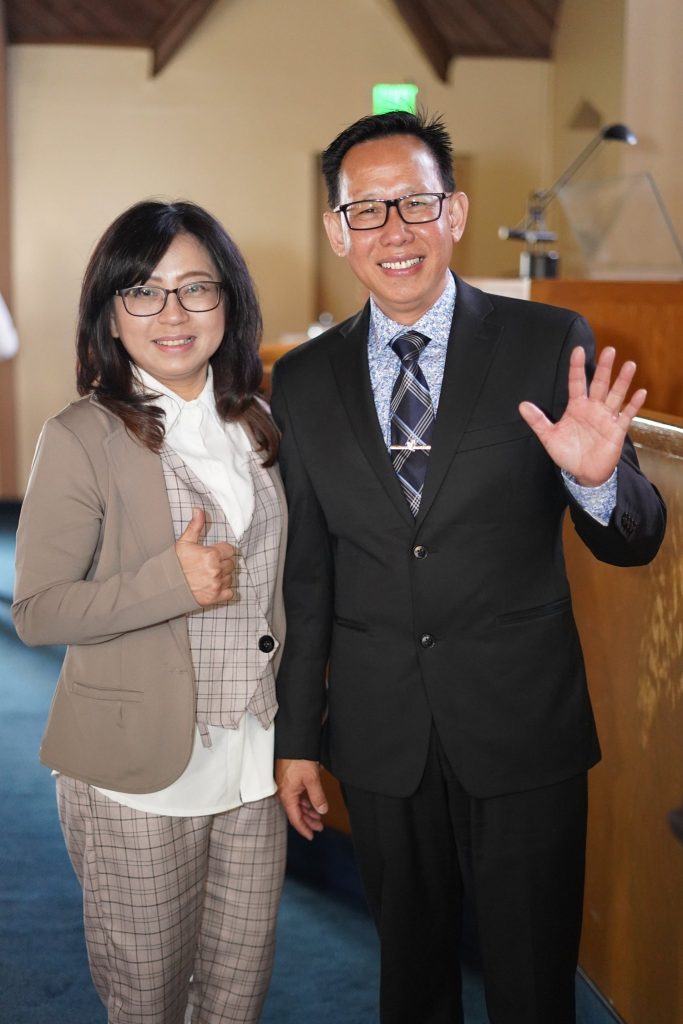
“I’m a white boy from Oklahoma,” shares Jeff Wright, leadership minister, based in Riverside, California. Yet, somehow, Jeff has found ways to connect and support with congregations who are culturally different from his upbringing.

“I’d always had a sense of calling to international mission,” Jeff reflects. “For a variety of reasons that never worked out, but I try to live out the definition of mission offered by David Bosch: to ‘cross frontiers in the form of a servant’.” Jeff’s work crosses frontiers as he interprets for those at the Pennsylvania core of the conference what it means to be church in California. He also works to serve as a human transcontinental bridge, connecting brothers and sisters in the same conference, but living on opposite coasts.

Jeff works with three Indonesian churches in southern California: Indonesian Community Christian Fellowship (Colton, CA), International Worship Church (San Gabriel, CA), and Jemaat Kristen Indonesia Anugerah (JKIA or Grace Indonesian Christian Fellowship; Sierra Madre, CA). He also accompanies San Francisco (CA) Chinese Mennonite Church, a Cantonese speaking church, in his conference leadership role.

“These churches are immigrants and first- and second-generation Americans,” and offer unique perspectives, Jeff reflected. “They have a global view of their lives, and many of them go back to their home countries often. This global perspective is part of these congregations’ DNA.”

As leadership minister, Jeff assists pastors with credentialing, coaches, and troubleshoots challenges they bring to him. He also prays regularly for the pastors and their congregations and connects them to other conference staff and resources.

“Working intentionally at intercultural competency is challenging for me, in a good way,” Jeff reflects. He has begun learning the Indonesian language, and he finds conversations with Chantelle Todman Moore, the conference’s Intercultural Leadership Coach, particularly helpful.

“To have a conference that is intentionally dedicating resources to and training for intercultural competency is an amazing gift that isn’t always available to other conferences because of size, capacity, or vision,” Jeff reflects.  “These are the things we need to pay attention to in order to be the church in North America.”

Jeff first connected with Franconia Conference twenty years ago when he was a lead consultant in the conference’s vision and finance plan. Currently, aside from his leadership minister role, he also serves as pastor of Madison Street Church, a Brethren in Christ (BIC) congregation, in Riverside, CA and as president of viaShalom, a small nonprofit missional resource agency.

Jeff considers himself an “Anabaptist without borders.” He came to faith in the Mennonite Brethren (MB) church, was previously a pastor of a General Conference (GC) Mennonite church, has been a conference minister for MCUSA, and is now a pastor of a BIC church.

“Not being a ‘cradle’ Mennonite has helped me to learn from the different traditions,” Jeff reflects. “I appreciate the piety of the MB, the commitment to unity of GC, the holiness perspective of the BIC, and the commitment to scripture of MC USA.”

In his free time, Jeff either has a book in his hand, is watching the LA Dodgers, is attending a minor league baseball game, or is riding his bike.

Filed Under: Articles Tagged With: Jeff Wright

Generosity & God’s Provision in Social Isolation

May 7, 2020 by Steve Kriss

by Steve Kriss, Executive Minister

According to clinical psychologists who study these things, we are in the “third quarter” of social isolation. In this phase, we want things to get back to normal.  We grieve what we’ve lost in the time away from work, each other, routine.  We’ve let go of celebrations and now interact virtually. We’re reluctantly wearing masks at the grocery store.  We’re reluctantly going to the grocery store. We each experience the crisis of a pandemic differently.

Antonio Martinez, Aurelio Hernandez, Suly Sosa and Tomas Galicia, preparing food for distribution at Centro de Alabanza.

The children of Israel grew weary of the time in the Sinai.  The exhilaration of release from Egypt became the exhaustion of the not yet.  There was God’s obvious care through the quail and manna.  But there was distraction through the creation of a golden calf that harkened backward rather than toward true identity and future.  And there were frustrated leaders, like Moses, who broke the original tablets of the commandments and had to return to a conversation with God for a second round.

In our Conference, we implemented a lean and responsive plan to work for a 60-day period, ending June 1.  We paused a hiring process for our director of Community Engagement in order to work more closely with Conference Related Ministries and communication. We’ve put a hold on travel and some grant processes.

We’ve focused energy toward more frequent communication. Randy Heacock has assumed an interim role as leadership minister for Conference Related Ministries.  We’re continuing our work toward our new reconciled identity that is scheduled to be released at Pentecost.  We’ve filed for a government-backed loan to help carry us through, like many other nonprofits and small businesses, but still reduced expenses during this time. Meanwhile, we’ve launched the Shalom Fund initiative.

Food ready for delivery at Centro de Alabanza.

What we’ve discovered in this in-between time is God-inspired generosity, compassion, and empathy.  We’ve been able, through the generosity of so many, to respond to real human needs in vulnerable communities and situations.  What began as a half ton of potatoes in the back of a pick-up truck has multiplied into truckloads of food delivered to Allentown, North Jersey, Philadelphia, and Tampa.

Some days I wonder if we will have enough resources to meet the needs arising in our Conference.  Each time God, working through God’s people, has supplied what was needed. Like the widow’s vessel of oil that never ran dry and the loaves and fish Jesus multiplied, there has always been more than enough.

We’ve exceeded our $100,000 goal for the Shalom Fund. Glory be to God and thanks to each of you who have shared in this extension of Christ’s peace in a disrupted time.  This has been amazing to witness.

I have been overwhelmed, but not surprised, by the commitment and creativity of our worshipping communities and leaders.  I trust that we will continue to respond well in ways that keep our love of God and our neighbors in the foreground.

Yet, we are still in the in-between. Needs still exist. The journey to the Promised Land was not about returning to normal but imagining a new way of being God’s people together.  The Israelites were not without fears and complaints in their odyssey. But God continued to work among them, inviting them to be renewed in their relationships, both vertically and horizontally.

When we look back, my hope is that we will remember the ties that bound us when we shared our loaves and fishes and continued our work creatively and courageously rooted in Christ’s love. Because there was indeed abundance.

Filed Under: Articles, Blog

Learning to Grieve, Slowly

April 30, 2020 by Conference Office

By Chantelle Todman Moore, Intercultural Leadership Coach

I have struggled with grief; I still do. Growing up as a Christian, I learned platitudes in response to grief. But they never gave me the tools I needed to be present with myself, community, and the myriad of feelings and experiences that grief entails.

Life has slowed down for me during this pandemic. With new reasons to grieve on a daily basis, I am finding that I have more capacity to engage and explore personal and communal grief. I am finding guidance and wisdom through conversations with others and reading about grief.

Two books that are bringing me comfort, lessening the feelings of grief isolation, and allowing the tears to flow are The Book of Solace by Dane Kuttler and Rebellious Mourning: the Collective Work of Grief, an anthology edited by Cindy Milstein.

The Book of Solace was gifted to me this past holiday season. In turn, I gifted my copy to another person whom, at the beginning of the pandemic, lost their brother to illness. The wisdom of this book has accompanied me when grief caught me off guard in the middle of completing a task and has been shared with others as they wrestle to make sense of what cannot be tied up into a neat bow. I was also gifted The Book of Solace and have read the contributions with tears streaming down my face. These texts speak to the hard spaces where grief finds us and takes us, as part of the human experience.

Our grief and our mourning is both personal and unique as well as collective and ordinary. Beyond reading and talking with others, additional practices that are holding me in my grief is finding ways to see the potential for transformation for myself and our world. I am planting seeds with my family in our raised beds, making and enjoying delicious meals, finding ways to rest and enjoy pleasurable things.

As most of us shelter at home, there is unreserved access to media. But grief needs stillness and silence. Many things can distract yourself from grief. So I am opening myself up to moments of silence: sitting in my yard, going for walks, and listening to the wind, all while resting and quieting a mind and heart that wants to keep racing for answers and solutions.

I invite you to name what you are grieving both personally and communally right now. Open up yourself to see where grief is leading, teaching, and softening you for transformation.

Filed Under: Articles, Blog Tagged With: Chantelle Todman Moore

Always Reinventing Himself

April 30, 2020 by Conference Office

Leer en espanol

by Jennifer Svetlik, Salford congregation

Originally from Columbia, leadership minister Marco Güete has found numerous ways to combine his passion for the church with his creativity, high energy, and intercultural sensitivities. Since August 2019, Marco has worked with nine congregations, eight of whom were recently part of Southeast Mennonite Conference, that will join Eastern District & Franconia Conference this year. He spends much of his time answering questions about the process of switching conferences and transferring credentials, along with helping the congregations complete the paperwork for transferring membership. He finds the opportunity to bring clarity in the midst of confusion to be rewarding.

“These churches were looking for an established conference to be affiliated with, and decided that Franconia was the best option because of the conference’s racial and ethnic diversity and attentiveness to intercultural ministry,” explains Marco. Eastern District & Franconia Conference was also attractive, Marco explained further, as it has a good Anabaptist foundation and a solid relationship with MC USA.

For Marco, the most rewarding part of his job is seeing these churches continue their affiliation with MC USA. “They consider MC USA as a family and that they belong to them,” shares Marco. “Seeing that gives me a sense of accomplishment.”

Marco was born in Colombia and moved within the country several times as a child, which helped him develop confidence and a sense of independence, as well as learn about different cultures. He and his wife, Sandra, immigrated to the U.S. and Marco worked as a salesperson in an international corporation while he sought professional training in Christian ministry. He opened up two small stores in Queens, NY and was introduced to Anabaptism by a fellow businessman who was a pastor of a Hispanic Mennonite church plant in New York City. A couple of years later, Marco enrolled in the Pastoral Ministry Program at Goshen College (Goshen, IN) and then at Northern Baptist Theological Seminary (Lisle, IL).

Soon after began Marco’s long career of leadership in the Mennonite church. He received a call as a pastor at Community of Faith Mennonite Church (Chicago).  In 1986, Marco became the Hispanic Ministries Program Director of the General Conference Mennonite Church. During this ten years in this role, Marco began the Instituto Bíblico Anabautista (IBA, or Anabaptist Biblical Institute), a Spanish training program for local congregations in Mennonite history and theology. Later, Marco was the director of the Latin American Anabaptist Resource Center (CLARA) and Colombia Mennonite Bible Seminary. More recently he has served as a conference minister for three area conferences. He and Sandra reside in Sarasota, FL.

“I am the kind of person that is always re-inventing myself, and creating something new in my ministry and my personal life,” reflects Marco. “If I have goals that I find meaningful, I don’t consider my job ‘work’.”

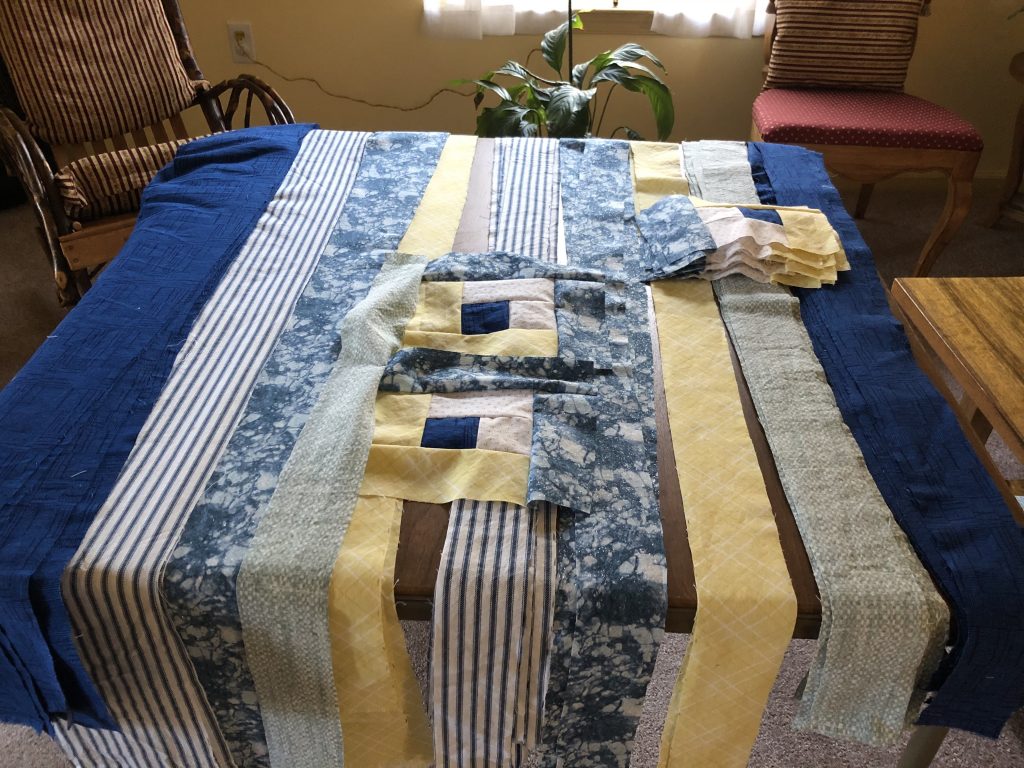
In his free time, Marco exercises a lot, including walking at least one hour daily with his wife. In September, Marco walked part of the Camino de Santiago in Spain to raise money for the IBA. Marco also stays busy putting together comforters for Mennonite Central Committee (MCC) with his wife and considers the work to be an act of creative expression. He enjoys watching movies and reading historical fiction.

Filed Under: Articles, Blog Tagged With: Marco Guete

  • « Go to Previous Page
  • Go to page 1
  • Interim pages omitted …
  • Go to page 97
  • Go to page 98
  • Go to page 99
  • Go to page 100
  • Go to page 101
  • Interim pages omitted …
  • Go to page 167
  • Go to Next Page »

Primary Sidebar

  • Home
  • About Us
    • Our History
    • Vision & Mission
    • Staff
    • Boards and Committees
    • Church & Ministry Directory
    • Mennonite Links
  • Media
    • Articles
    • Newsletters
    • Video
    • Audio
    • Bulletin Announcements
  • Resources
    • Conference Documents
    • Missional
    • Intercultural
    • Formational
    • Stewardship
    • Church Safety
    • Leaders’ Resources
    • Request a Speaker
    • Pastoral Openings
    • Job Openings
  • Give
    • Leadership Development Matching Gift
  • Events
    • Pentecost
    • Delegate Assembly
    • Faith & Life
    • Youth Event
    • Women’s Gathering
    • Conference Calendar
  • Mosaic Institute
  • Vibrant Mosaic
  • Contact Us

Footer

  • Home
  • Contact Us
  • Delegate Assembly
  • Vision & Mission
  • Our History
  • Formational
  • Intercultural
  • Missional
  • Mosaic Institute
  • Give
  • Stewardship
  • Church Safety
  • Leaders’ Resources
  • Articles
  • Bulletin Announcements

Copyright © 2026 Mosaic Mennonite Conference | Privacy Policy | Terms of Use
Aligned with