• Skip to main content
  • Skip to primary sidebar
  • Skip to footer

Mosaic MennonitesMosaic Mennonites

Missional - Intercultural - Formational

  • Home
  • About Us
    • Our History
    • Vision & Mission
    • Staff
    • Boards and Committees
    • Church & Ministry Directory
    • Mennonite Links
  • Media
    • Articles
    • Newsletters
    • Video
    • Audio
    • Bulletin Announcements
  • Resources
    • Conference Documents
    • Missional
    • Intercultural
    • Formational
    • Stewardship
    • Church Safety
    • Leaders’ Resources
    • Request a Speaker
    • Pastoral Openings
    • Job Openings
  • Give
  • Events
    • Delegate Assembly
    • Youth Event
    • Conference Calendar
  • Mosaic Institute
  • Vibrant Mosaic
  • Contact Us
  • 繁體中文 (Traditional Chinese)
  • English
  • Việt Nam (Vietnamese)
  • Español (Spanish)
  • Indonesia (Indonesian)
  • Kreol ayisyen (Creole)

Articles

Dear God … It’s me, Marta 

October 5, 2023 by Conference Office

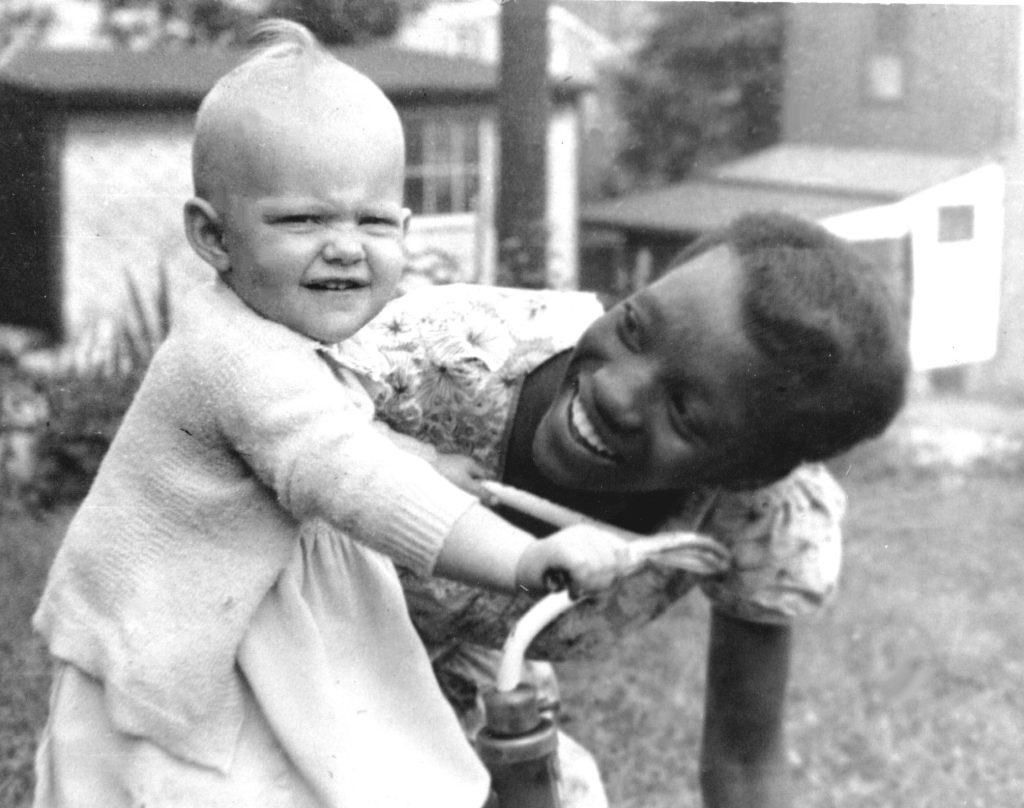
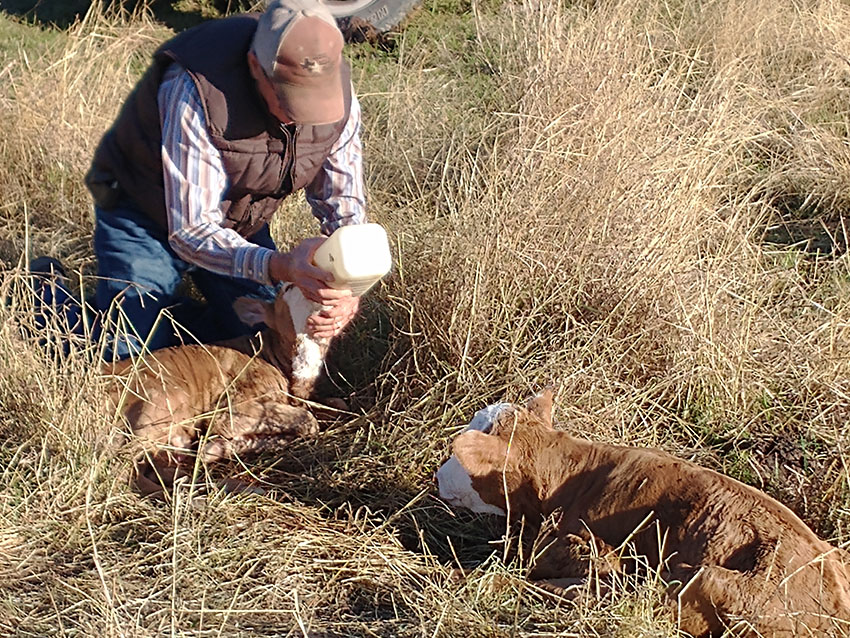
Photo by Andrea Piacquadio & Photo by Ben Vaughn on Unsplash

Dear God, 

It’s me, Marta. 

I am still glowing inside from my visit to Garden Chapel yesterday. The two-hour drive on a Sunday morning was long enough to quiet my mind and open space for your presence, your peace, and your Spirit to settle in and take hold.   

Upon arriving I found the two pastors, Tim and Hector, already hard at work, setting up systems for two services, one in English and one in Spanish (or Spanglish), in-person and on Zoom, one upstairs and one downstairs in their newly renovated building, divinely provided through a community ministry connection. These pastors have full-time time jobs and a deep passion for Christ, ministry, the Word of God, and their diverse community. Oh, the stories they tell, Lord, of how You are working and moving.   

After the service, one of the sisters invited me and the two pastor’s wives for a coffee at a local Colombian bakery. What a wonderful gift to sit and fellowship with my sisters, covering topics from the Conference to our ministry work and our families. I am still glowing, Lord, from spending time with You and Your people. 

But it’s not just at Garden Chapel but at Spring Mount, Plains, Nations Worship Center, Peña de Horeb, Mennonite Bible Fellowship, Circle of Hope, Evangelica Menonita de Oracion y Adoracion, and all the other churches I am invited to visit. 

“For there is one body and one Spirit, just as you have been called to one glorious hope for the future. There is one Lord, one faith, one baptism, one God and Father of all, who is over all, in all, and living through all” (Ephesians 4:4-6, NLT).  

Thank You, Lord.   

Love, Marta 


Dear Mosaic Conference, 

It’s me, Marta.   

During the Pathways Forward focus groups, I heard a phrase multiple times: “I love the diversity of Mosaic but…” The “BUT” threw me off. “But” is used to introduce a phrase contrasting what has already been mentioned. It invalidates everything said before. It does not allow for both things to exist at the same time. 

If we use the word “AND,” we can make both statements true: “I love the diversity of Mosaic AND…” 

We need the AND to answer in unity. We need the AND for our commitment “to making our churches places of radical hospitality, inviting and engaging all people regardless of race, ethnicity, age, gender, lifestyle, or socioeconomic status. God desires to bring transformation to all people; therefore, we will welcome all people and call all people to repentance and holy living” (Grace and Truth, Church Together Statement). 

We need the AND to “be intentional about identifying those on the margins of our churches and society and provide resources for the work of mutual transformation according to the good news of Jesus Christ” (Going to the Margins, Church Together Statement). 

The diverse congregations of Mosaic Conference already minister in the margins.  There are no BUTS about it. Let us be attentive to sticking points and replace them with, “We love the diversity of the body of Christ in Mosaic, AND we will worship the Lord and serve the Lord in unity.” 

“True worship of God transcends time, culture, language, and nation,” says Nelson Kraybill in his book, Apocalypse and Allegiance. Kraybill says that when we worship God, we join a vast multitude of saints from all peoples and all eras of history. When we “see ourselves as part of this multitude, it makes us less likely to idolize our countries. We are less likely to let issues and perspectives of our own generation eclipse the shared wisdom of saints through the ages.”  

Love, Marta 

Filed Under: Articles, Blog Tagged With: Marta Castillo

Inspiring Books on Spiritual Reading and Commitment 

September 28, 2023 by Conference Office

“What an astonishing thing a book is,” writes Carl Sagan, who captures my love and appreciation for books quite well. “It’s a flat object made from a tree with flexible parts on which are imprinted lots of funny dark squiggles. But one glance at it and you’re inside the mind of another person, maybe somebody dead for thousands of years. Across the millennia, an author is speaking clearly and silently inside your head, directly to you. Writing is perhaps the greatest of human inventions, binding together people who never knew each other, citizens of distant epochs. Books break the shackles of time. A book is proof that humans are capable of working magic.”   

Here are two of the magic-working, shackle-breaking, people-binding books that I’ve been reading lately: 

Eugene Peterson’s Eat This Book: A Conversation in the Art of Spiritual Reading  

I recently read this as part of the Mosaic Institute class I’m teaching called “Formed By Scripture.” In this rich and beautifully written book, Peterson argues that the way we read the Bible is as important as that we read it. Do we read the Bible for information about God and salvation, for principles and “truths” that we can use to live better? Or do we read it in order to listen to God and respond in prayer and obedience?   

In typical Peterson-style, Eat This Book is written with warmth and wisdom, offering readers greatly needed, down-to-earth counsel on reading the Scriptures on their own terms, as God’s revelation. He discusses the nature of language, the practice of lectio divina, the role of translations, and how to engage in the formative, life-changing art of spiritual reading.   

This book is the fruit of decades of reading, pondering, conversing about, praying over, and living the biblical story. If you are going to read a book about how to read “The Book,” it’s hard to do better than this one. 

David Brooks’s The Second Mountain: The Quest for a Moral Life  

Every so often you meet people who radiate joy, who seem to know why they were put on this earth, who glow with a kind of inner light. Life, for these people, has often followed what we might think of as a two-mountain shape.   

They get out of school, start a career, and begin climbing the mountain they thought they were meant to climb. Their goals on this first mountain are the ones our culture endorses: to be a success, to make your mark, to experience personal happiness. But when they get to the top of that mountain, something happens. They look around and find the view…unsatisfying. They realize, “This wasn’t my mountain after all.” There’s a different, better mountain out there for them to pursue. And so, they embark on a new journey.   

On the second mountain, life moves from self-centered to other-centered. They want the things that are truly worth wanting, not the things other people tell them to want. They embrace a life of interdependence, not independence. They surrender to a life of commitment, this time to the things with lasting value.   

In The Second Mountain, Brooks explores the four commitments that define a life of meaning and purpose: (1) to a spouse and family, (2) to a vocation, (3) to a faith, and (4) to a community. He argues that our personal fulfillment depends on how well we choose and execute these commitments.  

I resonated with the book’s central premise and found its discussion on the four commitments that make a meaningful life to be thought-provoking and reflection-generating. This is a book worth pondering.  

Filed Under: Articles Tagged With: Book Review, Josh Meyer

Yet We Still Declare That God Is Faithful 

September 21, 2023 by Conference Office


I was raised and spiritually formed by Mennonites. God’s call to ministry came to me when I was in my late 20s. It came as a surprise and was disorienting. I do not come from a family of pastors, and I was a single woman. Yet, the spiritual foundation had been laid for me to hear God’s call and respond with faithfulness.  

Ministry has been a great joy in my life, but it has also been full of hardships. Like so many in Scripture, I testify to the faithfulness of God, the love of Jesus, and the power of the Holy Spirit amid those hardships.   

This has also been the testimony of Mosaic Conference. The birth of Mosaic was filled with hope. It has been an honor to be among its leadership from its beginning. We had work to do to live with integrity into this name, yet the Spirit was among us.  

The birth of Mosaic coincided with the unprecedented pandemic. Together we navigated that time, supporting and praying for one another. We chose different ways of being together and “doing church,” but we stayed connected to God and one another.  

Last year, our Assembly theme focused on the Hebrew word, chesed, meaning, the loving kindness of God which was given freely to us, even when undeserved.  This year, our theme emet builds off of that. In Hebrew, emet means powerful kindness and faithful truth. Psalms 116 and 117 remind us that God’s kindness for us is powerful; the Lord’s truth endures forever.  

We began our Pathways Forward process in 2022. During that time, our country, our neighborhoods, our churches, and even our homes have been through a lot. We have had severe weather, widening wealth inequality, episodes of hatred and violence, cultural and political polarization, and even divided family gatherings.  

Yet we still declare that God is faithful. There has been space for prayer, fasting, listening, relationship building, and dreaming together. The opportunity to live into the hope of Mosaic Conference remains.   

The Mosaic Board recently received a summary report from the Pathways Steering Team and the consultants, reporting on the focus groups’ meetings. Please take time to read this summary report. We will have the opportunity to discuss its implications at our Delegate Preparatory meetings (September 23-28) and Assembly on November 4. There will be lots of conversations to articulate who we are and to name our similarities and differences, and how they inform our missional, formational, and intercultural priorities.  

It may feel like learning to ride a bike without training wheels, full of bumps yet worth it. I anticipate needing to remember what it was like when I felt a call to ministry as a single woman; it was hard, and God was with me. Similarly to the disorienting pandemic, God will see us through.  

We knew living into the Mosaic name would require us to work at being transformed by one another through God’s power. I am grateful for the scriptures about the chesed and emet of God. It gives us strength to do the reconciling work of following Jesus through the power of the Spirit.  

We need not be afraid. We can have the boldness and courage to wait on the Lord as we heard proclaimed in Psalm 27 at Pentecost this year. May our work and lives together reflect the beauty of the quilt that has become a symbol for us and draws us back to chesed and emet, God’s powerful kindness and faithful truth. See you at Assembly on November 4th! 


Filed Under: Articles Tagged With: Angela Moyer Walter, Assembly23

The Faith of a Tonsil 

September 21, 2023 by Conference Office

I had just sent out the invitations for my Remission party – to celebrate that after two years, I had finally achieved remission from leukemia, when I got the call. They noticed a small area of concern in my tonsil on a recent scan. “It is probably nothing,” but I should get another scan. A day later, my doctor called me and said they found a tumor in my tonsil. My surgery was in 13 days.  

Things happened quickly. Mostly, I was grateful. Let’s get this tumor out. Yet I also had to plan for an unexpected two weeks off from work and more. For two years I had gone through multiple treatments and chemo. It had been long and tiring. I was ready to return to my old self. If the tumor was malignant, this would be the first of two surgeries, plus possible radiation. My head was swirling.  

I moved toward the surgery, checking things off my lists, preparing for recovery, and praying. Praying that this would be benign. I was surrounded by an army of prayer warriors too. Yet, I still found myself struggling to sleep at night. I googled “tonsil cancer.” I worried. I was scared and depressed, no matter how much I prayed or others prayed for me.  

One morning I awoke, feeling like I had received a message from God: “All will be well.” The assurance I felt did not ensure a benign biopsy or an easy road ahead, but that “all will be well,” regardless. This reminder of God’s presence carried me for the next few days. 

My surgery went well. Now to wait for the biopsy results, which would take about a week. Recovery from such surgery is awful. I was barely able to swallow, even my own saliva, and I lost ten pounds in the first week. The silver lining about having such intense pain is that it kept my mind off the biopsy results. A week passed and no results. My pain was still bad, but slightly improving, so I found myself thinking more about the biopsy. The hypothetical scenarios would play out, often in the middle of the night, as I waited. God’s assurance a week before seemed distant. 

In the hospital, just a few minutes before surgery, Sue is ready for her tonsil and tumor to be removed.

Photo by: Michael Howes

Last week, I met with my doctor. He told me that the primary biopsy results were in, but that it would be another two weeks until I received the final, full report. The initial biopsy report showed no signs of malignancy. Benign. He was quite confident that the final report would be the same.  

I felt lighter, relieved, renewed.   

I’m still waiting for those final biopsy results … probably for another week. But now the waiting doesn’t seem so difficult. I have trust in the doctor and his belief, for which I am grateful.  

However, it makes me pause. I still don’t know what the final biopsy result will be. Yet, the doctor’s confidence has allowed me to release my fear of the unknown. Why was I not able to release that fear to God as I prayed? Shouldn’t I be able to release it, trusting God that all will be well, regardless of the final biopsy? I confess I wasn’t. But with the doctor I was.  

I don’t want to beat myself up for my lack of faith. It’s common. But it has made me think about prayer and faith, especially during medical challenges. What are we praying for? If we pray in faith, why do we still worry? Why can’t I trust God’s word in the same way that I trust the doctor’s word? 

Lord, I believe. Help my unbelief.  

Filed Under: Articles, Blog Tagged With: Sue Conrad Howes

It’s Your Turn: Pray & Engage the Pathway Forward  

September 14, 2023 by Conference Office


The Pathways Steering Team has diligently listened, prayed, and discerned over the last year. Together with Grovider, our consultants, we have sought to collect and organize thoughts, feelings, and opinions from the variety of voices represented in our Conference community, under the direction of the Holy Spirit. 

The first outlined point of the Pathways Document approved by delegates in 2022, reads, “To share in the practice of continued prayer and fasting so that we may discern, yield, and listen to the Spirit among us.”  In preparation for our Assembly on November 4, the Pathways Steering Team and the Mosaic Board invite everyone to fast and pray each Wednesday between now and November 4. There are weekly guiding scriptures to focus your prayer and fasting time. An online, Mosaic prayer group meets each Wednesday at 12 pm ET/9 am PT. To join the group, click here at that time for the Zoom connection.  You may also host a time of prayer in your congregation. Regardless of when it is done, fasting and praying together to surrender to God is important.

During the spring and summer months, The Pathway Steering Team met with various focus groups throughout the Conference. We now offer you this working document and summary of what we heard from the focus groups and interviews and say, “It is your turn.” Please prayerfully read the document and share it with anyone who would be interested. Have conversations with other leaders in your congregations, Conference Related Ministries (CRMs), and around the Conference. Ask the questions: What are the various pieces of our mosaic? What can we affirm? What is missing?

At our Delegate Preparation Meetings from September 23-28 (click here for registration to these meetings), we plan to process the report with delegates further.  We hope delegates will read and process the report with others in their congregation prior to the Delegate Preparation Meetings and come prepared to discuss the findings.  The input we gather at these Delegate Preparation Meetings will inform our agenda and discernment at our Assembly gathering on November 4 (register here for Assembly, as a delegate or a guest). It will also help us develop proposed priorities for the Strategic Plan. In order for the official strategic planning to begin in January 2024, as outlined in the original Pathways Forward proposal, the identified priorities will need to be approved by the Conference Board and Mosaic staff by the end of 2023. 

Prior to Assembly, the Mosaic Board asks you to also review the guiding documents of our Conference. We will be using these as we navigate through the tensions and areas of dissent in the Conference.  These documents were adopted by Franconia Conference in 2015 and folded into Mosaic’s framework in 2020. Please familiarize yourself with these important, foundational documents.  

In the coming year, with the guidance of the Holy Spirit, the Board and Conference Committees will lead discussion and discernment in areas of current tensions within our Conference. Such topics include nationalism, immigration policies, patriarchy, poverty, economic inequality, human sexuality, white supremacy, racism, and oppression. The purpose of these discussions is to hear different perspectives and be mutually transformed.  

As we think about the potentially challenging work we have ahead of us, we desire to bear witness to God’s church together. How do we find clarity in our differences and work at loving one another and being people of God’s peace? How can we be the church and be a counter-cultural alternative to the world around us?   

God is creating our mosaic:  together, the broken and beautiful pieces form a representation of Christ for each other and the world. 

Photo by: Marta Castillo

God’s various gifts are handed out everywhere; but they all originate in God’s Spirit. God’s various ministries are carried out everywhere; but they all originate in God’s Spirit. God’s various expressions of power are in action everywhere; but God himself is behind it all. Each person is given something to do that shows who God is: Everyone gets in on it, everyone benefits. All kinds of things are handed out by the Spirit, and to all kinds of people! The variety is wonderful: wise counsel, clear understanding, simple trust, healing the sick, miraculous acts Proclamation, distinguishing between spirits, tongues, interpretation of tongues. All these gifts have a common origin but are handed out one by one by the one Spirit of God. He decides who gets what, and when. (1 Corinthians 12: 4-11, MSG) 

Filed Under: Articles Tagged With: Jim Musselman, Marta Castillo, Pathway

300 Patients Who Reminded Me What It Means to Be Mosaic 

September 14, 2023 by Conference Office

Photo by Mark Neal

As part of my summer sabbatical, I joined the St. Mary’s Hospital Clinical Pastoral Education (CPE) program and was placed at Nazareth Hospital in northeast Philadelphia. It’s a Catholic hospital in a diverse part of the city. Each week, for 11 weeks, I spent 14 hours in classroom education and 24 hours walking the floors of the hospital, discerning whom to visit on my shift. Over the summer, I visited approximately 300 patients.  

I worked in the Emergency Room, Intensive Care, and General Surgery floors regularly. About 25% of the patients were Spanish-speaking, 10% Jewish, and 10% Muslim. Staff and patients were from around the world, each with their unique stories.

Every day was full of complicated stories. I saw people struggling with addictions, strokes, end-of-life issues, suicide attempts, and behavioral health concerns. It was invigorating and exhausting to attempt to provide spiritual care to this wide variety of people.

I re-learned some basic things about ministry and my own sense of call to service and leadership. I was reminded that the love of people is essential to our work. I encountered the mystery of God’s power in words, touch, and silence. I saw again the importance of understanding and being understood when working with a limited knowledge of languages — the frustration of Babel and the power of Pentecost.  

I was reminded of the generosity of people who serve in healthcare, human services, and education. I was often frustrated with the inadequacies of our systems to respond to patient needs. I saw the challenge to maintain meaningful wages for staff. I felt the struggle to communicate compassion and care behind a surgical mask. 

I was reminded that I often could not have meaningful conversations with patients if basic needs like food, water, temperature, and pain were not addressed. I was surprised how intimate conversations could emerge if I helped people feel safe and valued, even for a few minutes. I learned the power of paying attention, of stumbling to speak another person’s language, of trying to understand other religious perspectives. 

I learned the importance of just showing up, making cold calls, admitting when I made mistakes, and of taking breaks. I appreciated the care of staff in the cafeteria, staff who cleaned the rooms, nurses who felt their work was a calling, and doctors who went above and beyond to try to provide adaptive care for patients with complex situations.

I return from sabbatical grateful for this break, for the opportunity to peer into another kind of ministry space, for the 300 people I visited, and for the staff who welcomed a Spanish-speaking, Slavic-background, Mennonite minister into their midst.

Photo by Kampus Production

I’m grateful to our Mosaic board and my Mosaic colleagues for making this sabbatical possible. I was able to be away with full confidence, particularly with Marta Castillo’s willingness to serve as Acting Executive Minister. It’s my first sabbatical in over 25 years of ministry. These three months allowed me to be reminded of my basic love of God and people that rooted my willingness to begin pastoral work back in 1996. 

Coming back, I am reminded that we as Mosaic felt our own sense of call to be a diverse community, where uniqueness is welcomed and the broken and beautiful are acknowledged. I return, committed to my own sense of call to be kind, open, and centered. I come back to my Executive Minister work, knowing there is tough, hard, and holy work ahead. This work requires all our skills and gifts, and our mutual trust, to bring healing and hope to ourselves, our neighborhoods, and the world. 


Filed Under: Articles, Blog Tagged With: Steve Kriss

Register Now for Assembly and Delegate Preparation Meetings 

September 6, 2023 by Conference Office


Mosaic Mennonite Conference Assembly

Saturday, November 4, 2023

(Registration and Exhibits Open 9:00-9:30 AM)
9:30 AM – 4 PM ET
Souderton Mennonite Church (map)
(in person – there is no virtual option this year)

Register your attendance!

Why should I register?  Your church or CRM may have reported to Mosaic that you are a delegate, but now we need you to REGISTER your attendance.  All attendees – delegates and guests – should register their attendance, to help us plan and prepare.


What are Assembly Delegate Preparation Meetings?
Mosaic Conference holds a series of delegate preparation meetings in the weeks leading up to our gathered Assembly. The purpose of these meetings is to help delegates understand the important commitment and specific duties they are responsible for, to prepare them with the latest information on the issues that will be discussed, and to give an opportunity to give feedback and ask questions.

Delegates are asked to please register and attend at least one meeting on a date & location that best suits them. 

Register for a delegate preparation meeting


* Find important Mosaic Conference documents HERE
* Delegate Assembly Policy & Delegate Ministry Description: pages 8-10 HERE
* Mosaic News – our weekly e-newsletter: see past issues HERE
(new delegates will begin to receive Mosaic News next week!)

The 2023 Docket will be released in a few weeks … watch your email!


(5/11) Powerful Kindness, Faithful Truth – Conference Assembly Theme


Visit MosaicMennonites.org/assembly 
or check your email for important information, documents

& details as they become available! 

register now!

Filed Under: Articles Tagged With: Assembly23

Living in the Why

September 6, 2023 by Conference Office

Photo by Ann H from Pexels

I am often asked, “What does a pastor do?” The question is meant to probe into what my job entails outside of the three hours I am on duty Sunday mornings. I don’t begrudge the person for asking the question; in today’s world, employees need to justify their time at work, and pastors are often seen as employees of the church.

So, when answering the “what” question, I am often tempted to prove my worth and tell them every detail of my weekly schedule. My duties range from visiting the sick or homebound members, counseling folks, and planning worship and sermons, to setting up tables and chairs and other janitorial duties.

But instead, my answer is usually a snarky, “Not a whole lot. It is a great job that only requires me to work one day a week!” That comment usually ends with an awkward silence followed by some laughter.

Last month, I was in line at a grocery store, talking with the person in front of me. When the person asked the “what” question of me after I said I was a pastor, another person behind me in line, who was listening in, followed up by asking simply, “Why?”

Somewhat startled, I asked, “Why what?” The person said that she wanted to know why anyone would want to be a pastor. Then she shared that her spouse was a former pastor who had been deeply hurt by people’s mistrust, harsh words, unmet expectations, and insinuations. Not only had this pastor left the ministry, but he also left his faith behind in the wake of all his pain and hurt. After I heard about this couple’s experience, the “why” question to me was completely appropriate.

In that moment, I wondered how or even if I should respond to the “why” question. I have gone through times of disappointment and discouragement in ministry. I have experienced failures, challenges, and made many mistakes. An honest answer may have been to tell the woman that I often wonder “why” I am doing this as well.

Yet, my response to the “why” question was simply that I felt called by God to the pastoral office. And that feeling of call makes all the difference as other pastors and l live into our ministry communities and react to the struggles and pressures that our churches are experiencing today.

I cannot help but recall the years that I spent on the Credential Committee of Mosaic Conference. Whenever we interviewed new pastoral candidates, the first question we asked them was about their call to ministry. The candidates answered the “why” question with a passionate sense of God’s call on their lives to serve the church.

Photo by Timon Studler

Perhaps we have simply forgotten that God has called our pastors. God has given them a purpose and passion for ministry. Pastors are not perfect. Pastors have families, personal struggles, and emotional issues that affect their lives and their ministries. And pastors certainly do not have all the gifts necessary to lead and guide their churches by themselves.

But that is why we are called to serve in the church with many other members and gifts. If we allow our pastors to focus on their call to serve rather than on all the tasks and expectations that many put on them, their ministry will be fulfilling, inspiring, and life-changing to everyone. Let’s pray that our pastors will experience a renewed sense of God’s call on their lives and that the congregations will allow them to minister and live in the “why” with passion, love, and humility.


Filed Under: Articles, Blog Tagged With: Mike Clemmer

  • « Go to Previous Page
  • Go to page 1
  • Interim pages omitted …
  • Go to page 44
  • Go to page 45
  • Go to page 46
  • Go to page 47
  • Go to page 48
  • Interim pages omitted …
  • Go to page 174
  • Go to Next Page »

Primary Sidebar

  • Home
  • About Us
    • Our History
    • Vision & Mission
    • Staff
    • Boards and Committees
    • Church & Ministry Directory
    • Mennonite Links
  • Media
    • Articles
    • Newsletters
    • Video
    • Audio
    • Bulletin Announcements
  • Resources
    • Conference Documents
    • Missional
    • Intercultural
    • Formational
    • Stewardship
    • Church Safety
    • Leaders’ Resources
    • Request a Speaker
    • Pastoral Openings
    • Job Openings
  • Give
  • Events
    • Delegate Assembly
    • Youth Event
    • Conference Calendar
  • Mosaic Institute
  • Vibrant Mosaic
  • Contact Us

Footer

  • Home
  • Contact Us
  • Delegate Assembly
  • Vision & Mission
  • Our History
  • Formational
  • Intercultural
  • Missional
  • Mosaic Institute
  • Give
  • Stewardship
  • Church Safety
  • Leaders’ Resources
  • Articles
  • Bulletin Announcements

Copyright © 2026 Mosaic Mennonite Conference | Privacy Policy | Terms of Use
Aligned with