• Skip to main content
  • Skip to primary sidebar
  • Skip to footer

Mosaic MennonitesMosaic Mennonites

Missional - Intercultural - Formational

  • Home
  • About Us
    • Our History
    • Vision & Mission
    • Staff
    • Boards and Committees
    • Church & Ministry Directory
    • Mennonite Links
  • Media
    • Articles
    • Newsletters
    • Video
    • Audio
    • Bulletin Announcements
  • Resources
    • Conference Documents
    • Missional
    • Intercultural
    • Formational
    • Stewardship
    • Church Safety
    • Leaders’ Resources
    • Request a Speaker
    • Pastoral Openings
    • Job Openings
  • Give
    • Leadership Development Matching Gift
  • Events
    • Pentecost
    • Delegate Assembly
    • Faith & Life
    • Youth Event
    • Women’s Gathering
    • Conference Calendar
  • Mosaic Institute
  • Vibrant Mosaic
  • Contact Us
  • 繁體中文 (Traditional Chinese)
  • English
  • Việt Nam (Vietnamese)
  • Español (Spanish)
  • Indonesia (Indonesian)
  • Kreol ayisyen (Creole)

Articles

Eternity

April 2, 2026 by Cindy Angela

by Ruth Baugher Palmer

Editor’s note: This reflection is drawn from the 2026 Souderton (PA) Mennonite Lenten Devotional Guide and reprinted with permission. The devotional, titled Breathing Light and Life: Stories Shaped by Jesus contains daily reflections on the Gospel of John, through Easter Sunday, and was written, illustrated, and edited by many members of the congregation.  

Near the cross of Jesus stood his mother, his mother’s sister, Mary the wife of Clopas, and Mary Magdalene.

John 19:25

Scripture for Friday, April 3, 2026: John 19:23-42

What was this moment like for Mary, the mother of Jesus? Despite what we are told, death is not “a natural part of life.” Jesus’ murder on a cross held agony, terror, and final desperate gasps for breath. No – Death is an offense.

In early January, I was with my mother-in-law the night she died. I sang to her the old hymn, “Face to Face with Christ My Savior,” praying the Lord would take her gently. In the morning, she was gone. I felt relieved that our sweet Mimi got her wish to “just slip away.” Yet I felt outraged as I came to her deathbed that morning. Nothing left of her vibrant 93 years but a corpse – cold, rigid body and gaping mouth. The poem Dylan Thomas wrote for his dying father, “Rage, rage against the dying of the light,” was now personal.

My own dear grandmother passed away at 90. The pastor at her funeral looked out at our grieving family and said, “You had Helen a good, long time.” He seemed to be scolding us into thankfulness. As if gratitude for her life precluded grief at her death.

The morning of his mom’s death, my husband walked around her house saying, “The absence of her presence is so big.” Why does every death—even those of “natural causes” seem wrong? Why does the death of someone in their nineties still feel too soon?

Ecclesiastes 3 declares, “To everything there is a season…a time to be born, a time to die,” yet later in the same chapter we find the missing clue: “God has made everything beautiful in its time. He has also set eternity in the human heart.”

There we have the human condition—burden, beauty and mystery. Could it be that we weep at a 90-year-old grandmother’s dying and are appalled at seeing a lifeless body because we know—deep in our bones—that we weren’t meant to die? Rather, we were created in the image of our eternal, relational God—and meant to live in a garden forever in sweet communion with God and each other. St. Paul declares, “The last enemy to be destroyed is death.” (1 Cor. 15:26). Death is not “natural,” and deep in the human heart we know it.

So yes, I will weep for loved ones lost—the severing of the bonds of love. And I will rage at death’s robbery. But I will not despair. For I know the grave does not get the last word.

Easter is coming.


Ruth Baugher Palmer

Ruth Baugher Palmer is Vice President of Program Development at Lakeside Educational Network and attends the Movement and Meditation ministry at Souderton (PA) Mennonite.   

Mosaic values two-way communication and encourages our constituents to respond with feedback, questions, or encouragement. To share your thoughts or send a message to the author(s), contact us at communication@mosaicmennonites.org.   
Filed Under: Articles Tagged With: Holy Week, Souderton

Holy Imagination and the Comedy of Resurrection

April 2, 2026 by Cindy Angela

by Stephen Kriss

Slavoj Žižek, a Slovene philosopher, suggests that the Christian story is about comedy over tragedy. I have been caught up in this idea for years. Often the way we tell the story of our faith relies on the tragic, with a focus on death and sin more than life and resurrection. Žižek insists that what makes the Christian story real is its insistence on life over death.

Comedian Trevor Noah suggested in a recent interview that the church often lacks imagination. In many of our current realities, including what we see each day in the news, there is a strong pull to return to what used to be rather than to imagine a faithful and flourishing way forward. I do not believe in inevitable progress, a steady march toward something better. But I do believe that faith, hope, and love pull us forward toward God’s comedic conclusion: life over death, belonging over alienation, flourishing over failure, peace over violence.

The challenge for me, and for the church, is to trust God for that conclusion and to live toward it in our daily lives. This happens in tangible ways, like how we greet a stranger, and in more abstract ways, like our images of God and how we understand atonement.

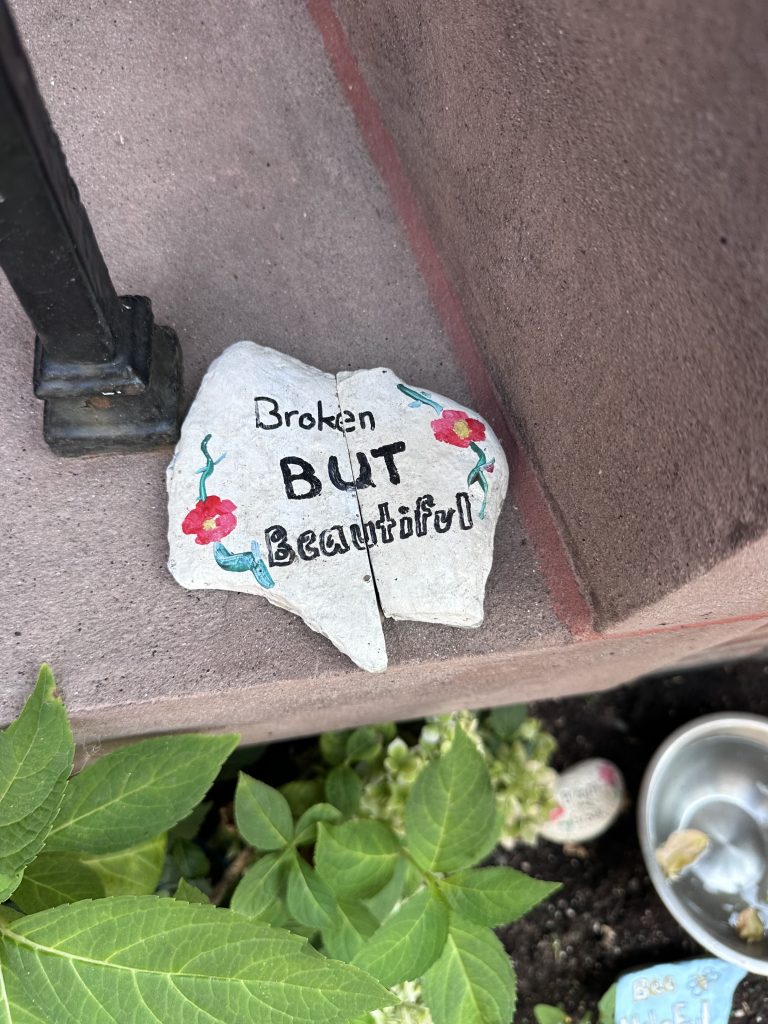
Our Mosaic mission and vision remind us that the world is both broken and beautiful. Our life together reflects this tension. The diversity of who we are, and who we are becoming as God’s Mosaic people, stretches our patience and challenges our assumptions. The Anabaptist concept of discipleship calls us into a lifelong posture of learning to follow Jesus. It is not a one-time confession at baptism but a continual way of life.

John Paul Lederach suggests we need communities that are hubs, or evidence, of what is possible with the peaceable away of Jesus. (c.f. The Moral Imagination: The Art and Soul of Building Peace). In earlier generations, Mennonites described this as being “contrast communities,” visible expressions of the good news shaped by the Holy Spirit. In the Catholic tradition, Dorothy Day’s work among the poor manifests this model in all its loveliness and imperfection.

These days, we sometimes resemble the surrounding culture, shaped by political voices and economic realities. Yet there are practical ways to live into the upside-down kingdom, where the first are last and the last are first. There are also new ways still waiting to be imagined, grounded in our 500-year-old practices and responsive to a polarized, post-pandemic world.

Consider a few invitations that reflect resurrection life. Mutual aid that crosses boundaries, such as the Shalom Fund, offers care to vulnerable people across our communities. Generosity in the face of scarcity cultivates abundance instead of fear.

Love of neighbor that moves beyond words. This winter, I visited one of our newer immigrant congregations. The pastor shared during worship, “What I appreciate about being part of Mosaic is that we are not only about saying the right words. We put action behind those words.” When we wonder whether someone counts as our neighbor, Jesus’ answer is almost always yes. (Boundary work is a topic for a different article).

Investing in children, youth, and young adults expresses trust that faith will endure into the next generation. We are called to create open and meaningful spaces where young people can encounter the story of Jesus, ask hard questions, and grow in spaces that are safe enough to be brave. Whether through children’s time in worship, athletic coaching relationships, or programs like Mosaic’s summer Ambassadors (which once again this year is seeing record numbers of applicants), these investments reflect hope and the promise of new life.

The basic act of showing up for worship in a broken and beautiful community reminds us of comedy over tragedy. Gathering for worship with people who are similar to and different from us stretches and shapes us. Our worshipping communities are meant to both console the brokenhearted and to challenge the comfortable. The ways we show up together matter and should (I rarely use that word) change us.

Finding ways to move toward both/and rather than either/or. How do we allow the Spirit to break down barriers between us? In a time marked by division, both/and invites humility and possibly confidence. We are both progressive and conservative, citizen and alien, protestant and catholic1, careful and risk-taking. Living within these tensions opens us to transformation as we trust the wisdom of Scripture and the Spirit’s work among us.

Our invitation as followers of Jesus is to live in ways that are more than words, that mumble (when that is all we can manage) or proclaim boldly (when God provides the strength), that Christ is risen indeed. Life conquers death.

  1. protestant and catholic intentionally lowercase in reference to Walter Klassen’s Anabaptism: Neither Catholic nor Protestant, which he later suggested might have been better titled with “both/and.”  ↩︎


Stephen Kriss

Stephen Kriss is the Executive Minister of Mosaic Conference.

Mosaic values two-way communication and encourages our constituents to respond with feedback, questions, or encouragement. To contact Stephen Kriss, please email skriss@mosaicmennonites.org.

Filed Under: Articles Tagged With: Holy Week, Stephen Kriss

Strengthening Shared Mission with Mennonite Partners

March 26, 2026 by Cindy Angela

Mennonite Mission Network and Mosaic Mennonite Conference have set new pathways for partnership as Wil LaVeist, PhD, senior executive for advancement at Mission Network has been appointed as the liaison between the two organizations.

LaVeist is responsible for the Mission Network division that includes the Development and Marketing and Communication departments. A former journalist before joining Mission Network, LaVeist has executive level experience in community relations and outreach with major companies, nonprofits, and churches. He is also a member of the board of trustees at the Lincoln University of Pennsylvania.

“We are grateful for our ongoing relationships with Mission Network and look forward to continuing shared mission and engagement,” states Stephen Kriss, executive minister for Mosaic Mennonite Conference. “Mission Network has been a long-term trusted partner with Mosaic communities.”

Marisa Smucker, executive director for Mission Network comments, “We have been in close partnership with Mosaic Mennonite Conference and its congregations for many years. It is a blessing to be able to continue on this missional journey together.”


Mosaic values two-way communication and encourages our constituents to respond with feedback, questions, or encouragement. To share your thoughts or send a message to the author(s), contact us at communication@mosaicmennonites.org.   
Filed Under: Articles Tagged With: Conference News, Mennonite Mission Network

Faith, Finances, and Fellowship Come Together in South Philadelphia

March 26, 2026 by Cindy Angela

A group of nearly 20 participants from four Mosaic Conference congregations gathered on Sunday, March 22, at Nations Worship Center (Philadelphia, PA) for the second session of God and Money: Tools for Faithful Personal Finance. The workshop is part of a three-part series designed for youth and young adults across Mosaic Conference congregations.

The afternoon began with energy as Dan Barlow, youth pastor at Centro de Alabanza, led a Kahoot review of themes from the first session, helping participants reconnect with earlier conversations about faith and finances.

Rose Bender Cook, pastor at Whitehall (PA) Mennonite and the Mosaic Conference Leadership Minister for Formation, guided the group into deeper reflection on the spiritual dimensions of money. Participants explored biblical perspectives on wealth, reviewing scriptures passages in categories of righteous rich, unrighteous rich, righteous poor, and unrighteous poor. In small groups, they reflected on what it means to be rich in righteousness, wisdom, and generosity, and how those values shape God’s hopes for our lives.

Building on that foundation, Everence Stewardship Consultant Franco Salvatori offered practical tools for financial health. He walked participants through the basics of creating a budget, emphasizing the importance of making room for saving and sharing. He also addressed the benefits and risks of credit and loans and offered guidance on seeking financial counsel.

Pastor Rose Bender Cook shares about the spiritual implications of money.
Franco Salvatori (center) shares about budgeting and credit.

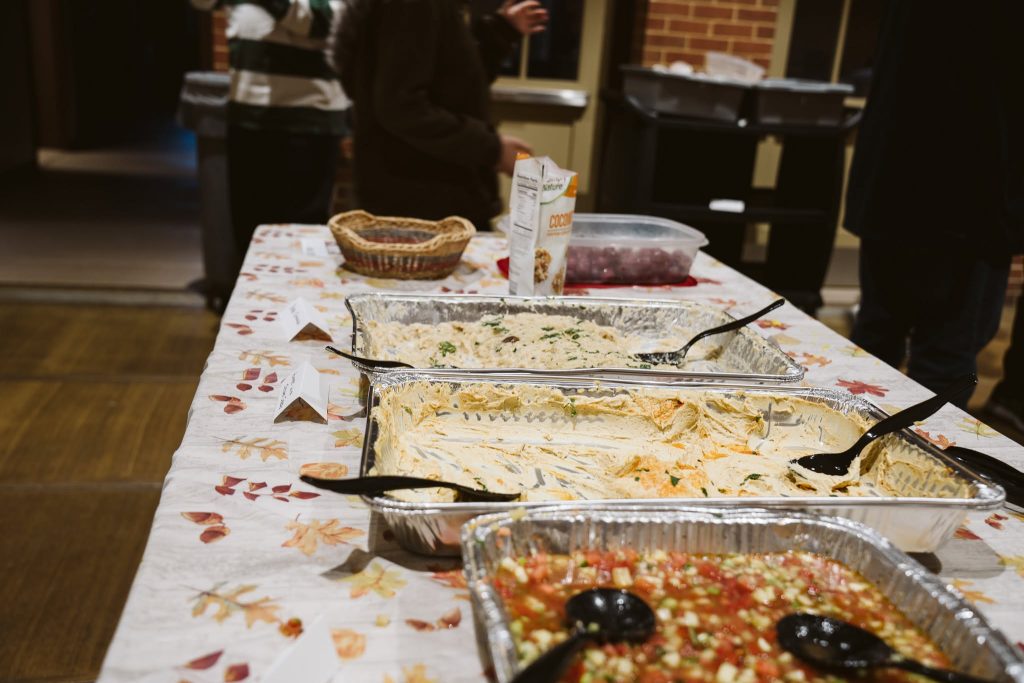
The workshop concluded with a shared meal of Chinese food, creating space for additional conversation and connection.

Participants left with practical knowledge and renewed perspective. “I learned about what budgeting means and how to do so,” said Marciella Shallomita of Nations Worship Center.

“I come from a background that doesn’t think much about this. The assumption is to work a lot to earn more and spend what you have. But this session taught me a new way of handling money, one that is beneficial for the future. I also enjoyed exploring what the Bible says about being wise and generous. Rather than just rich in wealth, we should be rich in love and generosity.”

The final session of the series will take place at Centro de Alabanza on Sunday, April 26 from 2:30 to 5:30 p.m., focusing on investing and saving for retirement.


Mosaic values two-way communication and encourages our constituents to respond with feedback, questions, or encouragement. To share your thoughts or send a message to the author(s), contact us at communication@mosaicmennonites.org.   
Filed Under: Articles Tagged With: Centro de Alabanza, Everence, formational, God and Money, Nations Worship Center

Dignity is the only way

March 19, 2026 by Cindy Angela

by Peter Sensenig

Editor’s Note: Originally published on March 16, 2026, in Anabaptist World and reprinted with permission.  

Peter is a long-term mission worker serving through Eastern Mennonite Missions and Mennonite Mission Network. His work is supported by Souderton Mennonite (PA) through MMN. He’s part of Peacemakers Confessing Christ International, which also includes members of Philadelphia Praise Center.  

Peter Sensenig, right, in Qom, Iran, in 2024 with Positive Global Ethics conference participants, from left, Mohammad Kashani, Mohammad-Taghi Eslami, Hamid Makarem and Mohammad Suri. — Courtesy of Peter Sensenig

Talking on the phone with a friend in Iran, in the middle of a U.S. bombing campaign, my intention was to offer condolences. But to my surprise, the main thing he wanted to say to me was, “You need to come back. Let me know what I can do to make this happen.”

What my friend is communicating, even as his country is being bombed, is that there is only one way out of this mess: deeper attachment to one another — as Christians and Muslims, as Iranians and Americans.

The U.S.-Israeli war on Iran has elicited all kinds of reactions. Some focus on the human toll — the number of lives lost, disrupted or displaced. Some highlight the economics of it — the staggering cost of war, its economic impact.

Others draw attention to the rationale, theology or eschatology behind it, still others the security implications for the region and beyond.

What is often missing is perhaps the most fundamental to understanding how something like this could happen and how to find our way out of it: the power of dignity.

The violation of dignity

Donna Hicks describes dignity as the glue that holds all our relationships together. It’s the desire to be understood, heard, and treated fairly. It’s the need to feel safe in the world.

Dignity violation, on the other hand, is the hijacking of those basic needs. Our brains are wired to be super sensitive to dignity violations, because they represent a threat to us. Dignity violations can be physical, emotional, or even symbolic.

The assassination of the supreme leader of Iran at the outset of the war was a basic and symbolic dignity violation. Even Iranians or other Shia Muslims who are critical of the country’s authoritarian government experienced the killing of a clerical leader as an attack on their identity.

This sort of response is universal for us as humans. When our family moved to Somaliland, we arrived on the very day that members of al-Qaeda attacked the office of the French satirical newspaper Charlie Hebdo. The murders were in response to the magazine’s publication of cartoons of the Prophet Muhammad, including a caricature on its cover. All over the city of Hargeisa I observed bumper stickers reading, “We love the Prophet more than we love ourselves.”

What was the sentiment behind these messages? From the perspective of dignity, what was going on? The message was obvious: My identity is wrapped up in the Prophet. What I aspire to be as a Muslim is shaped by him. When you insult him, you insult me and everything I believe in.

The difference between dignity and respect is important. Honoring dignity does not validate the actions of the other, or label them respectable. J. Daryl Byler demonstrates this well in “A Better Way Than War” (AW, March 9): There is no need to defend the oppressive Iranian regime to affirm the dignity of Iranian people.

War is dignity violation at its extreme. This is why violence can never lead to lasting positive change, only to shifts in power that leave resentments bubbling under the surface.

The power of dignity

The alternative to the dignity violation of war is personal engagement. Mennonites have been part of initiatives in Iran for decades, and these exchanges have borne remarkable fruit. One piece of this legacy is an organization called Luke 10, which is focused on building friendships with Iranians.

In the buildup to the current war, Luke 10 released the statement “A Time for Peace,” with original signatories in both Iran and U.S. In the weeks since, hundreds of people around the world have signed the statement, with the largest number adding their names from Iran.

People are hungry for dignity — not only to be offered it, but also for a chance to extend it to others in concrete ways. Iranian-American Reza Aslan says cultural exchange is the way lasting positive change happens. The doors that open around dignity are surprising and can break out of our paradigms of what is possible.

Dignity is so powerful it can transcend even religious identities or boundaries.

One of the most honored champions of democracy in Iran is a young American missionary named Howard Baskerville, who was killed in a democratic uprising in Iran in 1909. To this day he is honored as a martyr in Iran. Aslan writes: “Baskerville did not arrive with a mandate from Washington. He did not offer ultimatums or airstrikes. He chose solidarity over leverage. ‘The only difference between me and these people is the place of my birth,’ he said shortly before his death, ‘and that is not a big difference’ ” (“The Iranian Dream of an American Savior,” New York Times International Edition, March 9, 2026).

Imagine it: Iranians honor the memory of an American who went to Iran to teach English and to preach the gospel. A gospel that is freed from nationalist trappings and from the threat of dominance is good news indeed and can be received as such.

In Iran I observed the honor for Jesus Christ at every turn — in mosques, museums and homes. This reverence is an authentic part of Shia spirituality. But I believe it goes beyond religious conviction. Iranian Muslims have recognized the power of extending dignity to Christians, for whom Jesus Christ is the center of our faith.

My friend is not alone in extending the invitation to mingle our lives, as Iranians and Americans, as Muslims and Christians. This sentiment is widespread. Cultural exchange is the only way to peace, because it is the path of dignity.

If our concern is for Iranian Christians, then dignity is the only way. When a closed society begins to open up to the outside world, it also creates more space for diversity within. Furthermore, the church in the wider region will be given more space to flourish.

If our concern is for the security of the region and the world, then dignity is the only way. Dialogue and negotiations, though slow and imperfect, make a difference and bring us closer to peace and security.

And if our concern is to become better disciples of Jesus, then the Samaritan dignity that he offers his hearers in Luke 10 is the only way.


Peter Sensenig

Peter Sensenig works with Eastern Mennonite Missions and Mennonite Mission Network in France. He is a member of EMM’s Christian-Muslim Relations Team.

Filed Under: Articles Tagged With: anabaptist world, Peter Sensenig

A Training Opportunity for Hispanic Leaders in Mosaic Conference

March 19, 2026 by Cindy Angela

by Javier Márquez

Spanish-speaking congregations and communities in Mosaic Mennonite Conference have a new opportunity to strengthen the formation of their leaders. During 2026, the conference will collaborate with Ministerios Hispanos de la Iglesia Menonita USA to offer the SeBAH (Seminario Bíblico Anabautista Hispano). SeBAH is a theological learning space in Spanish designed for those serving in ministry within our congregations.

SeBAH is a certificate-level training program that does not lead to a formal academic degree, but seeks to equip leaders with biblical, theological, and pastoral tools for their service in the church. The goal is to support the development of leaders who are already in ministry and who want to deepen their preparation in the Anabaptist tradition.

The program begins with an initial orientation, where participants become familiar with the dynamics of theological study, including academic reading and writing, and the use of digital platforms that will facilitate learning.

Throughout the process, a minimum of twelve courses will be offered, organized around ministry competencies that respond both to the Mennonite tradition and to the current leadership needs of our churches. The courses will be taught by faculty with experience in theological education and pastoral accompaniment.

All classes are held virtually, using educational platforms such as Moodle and other digital tools. This format is intended to make it easier for leaders to participate while continuing to serve actively in their faith communities.

For Mosaic Conference, this initiative is part of a broader effort to continue developing and equipping Spanish-speaking leaders. The partnership with Ministerios Hispanos de la Iglesia Menonita USA strengthens access to academic resources and formative experiences in our own language.

We hope that this program will be a blessing for many people who feel called to serve and who seek to continue growing in their vocation. The formation of leaders is a shared task of the whole church, and spaces like SeBAH remind us of the importance of walking together in that process.


Javier Márquez

Javier Márquez is Associate for Communication and Community Engagement for Colombia. He is an Anabaptist Colombian pacifist and poet. He is based in Bogota, Colombia.

Mosaic values two-way communication and encourages our constituents to respond with feedback, questions, or encouragement. To contact Javier Márquez, please email jmarquez@mosaicmennonites.org.

Filed Under: Articles Tagged With: Javier Márquez

Ministerial Committee Update – March 2026

March 12, 2026 by Cindy Angela

The Ministerial Committee makes decisions on ministry credentials and policies that promote the support, health, and training of credentialed leaders and safe church practices for congregations. They meet quarterly to act on recommendations from the credentialing committee, review and revise current policies around credentialed leaders, and provide leadership in cases of misconduct.

Report from the March 2026, Ministerial Committee Meeting    

Committee Actions

Credentialing 

License Toward Ordination (LTO) – grants the person all the privileges and responsibilities accorded to an ordained person, except to ordain someone else. This license is issued for a three-year period with the purpose of testing the inner and outer call to ministry, further discerning of ministerial gifts, abilities and aptitude and may or may not lead to ordination.  

  • Cindy Angela – Philadelphia (PA) Praise Center
  • Karen Bennett – Bally (PA) Mennonite 

Ordination – grants the person the full range of ministerial privileges and responsibilities. This is a long-term, leadership ministry credential appropriate for all pastors, area conference ministry staff, chaplains, missionaries, evangelists, and those determined by the church to have a continuing ministerial-leadership role in, and on behalf of, the church.   

  • Beverly Benner Miller – Plains Mennonite (Hatfield, PA) 

Reactivation   

  • Jenny Fujita (LTO) – Blooming Glen (PA) Mennonite 

License Extension – This LTO is issued for a three-year period with the purpose of testing the inner and outer call to ministry, further discerning of ministerial gifts, abilities and aptitude and may or may not lead to ordination. It is extended for three more years as needed.   

  • Sherilee Samuel – (LTO) – College Hill Mennonite (Tampa, Florida) 

Moved to Active without Charge – held by those not presently holding a ministry assignment   

  • Manuel Garcia
  • Steve McCloskey   

Moved to Inactive  – held by those who have been without a ministerial assignment for more than three consecutive years. This credential is not valid for performing ministerial functions.   

  • Jessica Miller 

Committee Updates and Discussions 

Credentialing Procedure Update – The committee discussed revising the process to ensure that the profile is accessible for individuals to complete when seeking a position. Once submitted, the conference would maintain these profiles and make them available to congregations upon request.  

Abuse and Misconduct Policy and Procedure – An update was given concerning collaboration with GRACE to develop appropriate policies and procedures. The committee requested additional information regarding how the process would be implemented in an international context.  

Posture Document application in Ministerial Committee and Credentials Committee – An update was given related to how the Credentialing Profile for Leaders (which replaced the Ministry Leadership Information [MLI] form) was updated to include the centering document (A Mosaic Identity: Clarifying Our Center). 


Mosaic values two-way communication and encourages our constituents to respond with feedback, questions, or encouragement. To share your thoughts or send a message to the author(s), contact us at communication@mosaicmennonites.org.   
Filed Under: Articles Tagged With: ministerial committee

Shared Generosity Shapes Pastoral and Next Generation Leadership

March 12, 2026 by Cindy Angela

For years, Plains Mennonite (Hatfield, PA) has invested in the next generation of leaders across Mosaic Mennonite Conference. Plains sets aside $10,000 annually in scholarships for BIPOC pastors and leaders attending Mennonite institutions. In 2025, for the first time, the congregation asked Mosaic to administer the funds.

“The Plains congregation is blessed to have a scholarship fund to support students from the congregation attending Mennonite colleges,” shared Mike Derstine, Lead Pastor of Plains Mennonite. “Several years ago, when there were no students at Plains using the fund, we chose to make $10,000 available to BIPOC students across Mosaic studying at Mennonite institutions.”

Derstine continued, “We’re grateful that Mosaic staff can connect these funds with needs across the conference. I’ve been humbled when students thank me at Conference Delegate Assembly, even though I have little to do with the process. Our Church Council looks forward to continuing this partnership for the foreseeable future.”

In 2025, 11 students from congregations in California, Florida, Pennsylvania, Colombia, and Mexico received support via the Plains scholarship fund. They are studying at Eastern Mennonite University and Seminary, Anabaptist Mennonite Biblical Seminary, and Seminario Bíblico Anabautista Hispano (SeBAH). Because the recipients change each year, the gift multiplies and touches new communities across the conference.

For students, the impact is both personal and communal.

“EMU shaped my leadership because it gave me opportunities to step forward,” shared Marciella Shalomita of Nations Worship Center in Philadelphia. Through campus clubs, the biology department, and serving as a student chaplain, she learned to take initiative, communicate clearly, and lead collaboratively. “It broadened my faith,” she said, “helping me see it not just as personal belief, but as service.” Leading worship on campus also stretched her: she introduced contemporary styles from her home church while learning to invite others into meaningful participation.

“My studies at SeBAH have given me a deeper ethical foundation and strengthened my ability to make decisions rooted in justice, truth, and service,” offered Pastor Andrés Mendoza of Iglesia Menonita Encuentro de Renovación in Miami, Florida. “Theological study has deepened my faith in Jesus Christ, clarified my calling, and equipped me to bring hope, love, and mercy to those who suffer.”

Mosaic Leadership Minister Marco Güete sees similar growth among students studying through SeBAH and Instituto Bíblico Anabautista. Their education, he says, deepens biblical and theological grounding while nurturing spiritual maturity and confidence in their calling. “It strengthens pastoral leadership and equips them to guide congregations faithfully,” he reflects.

Plains Mennonite’s offering of mutual aid demonstrates how congregations can bless each other through helping to cultivate leaders who will serve in various parts of the body of Christ.

Other congregations are invited to imagine what shared investment in education could look like in their context. Individuals are also invited to give. Contributions to Mosaic’s Pastoral Leadership Fund helps pastors and emerging leaders grow in faith, skill, and courage for ministry today and for the future.

Ways to Support Leaders in Mosaic Conference:

  • Give to the Pastoral Leadership Fund
  • Give to the Hope Scholarship for Black & African American Leaders
GIVE NOW

Contributions may also be sent by check, with your designation in the memo line, to: 

Mosaic Mennonite Conference 
1000 Forty Foot Rd., Suite 100 
Lansdale, PA 19446 


Mosaic values two-way communication and encourages our constituents to respond with feedback, questions, or encouragement. To share your thoughts or send a message to the author(s), contact us at communication@mosaicmennonites.org.   

Filed Under: Articles Tagged With: Plains

  • Go to page 1
  • Go to page 2
  • Go to page 3
  • Interim pages omitted …
  • Go to page 170
  • Go to Next Page »

Primary Sidebar

  • Home
  • About Us
    • Our History
    • Vision & Mission
    • Staff
    • Boards and Committees
    • Church & Ministry Directory
    • Mennonite Links
  • Media
    • Articles
    • Newsletters
    • Video
    • Audio
    • Bulletin Announcements
  • Resources
    • Conference Documents
    • Missional
    • Intercultural
    • Formational
    • Stewardship
    • Church Safety
    • Leaders’ Resources
    • Request a Speaker
    • Pastoral Openings
    • Job Openings
  • Give
    • Leadership Development Matching Gift
  • Events
    • Pentecost
    • Delegate Assembly
    • Faith & Life
    • Youth Event
    • Women’s Gathering
    • Conference Calendar
  • Mosaic Institute
  • Vibrant Mosaic
  • Contact Us

Footer

  • Home
  • Contact Us
  • Delegate Assembly
  • Vision & Mission
  • Our History
  • Formational
  • Intercultural
  • Missional
  • Mosaic Institute
  • Give
  • Stewardship
  • Church Safety
  • Leaders’ Resources
  • Articles
  • Bulletin Announcements

Copyright © 2026 Mosaic Mennonite Conference | Privacy Policy | Terms of Use
Aligned with