
Donna Merow, Ambler
Edward Albee wrote, “Sometimes it’s necessary to go a long distance out of the way in order to come back a short distance correctly.” This describes my journey to pastoral ministry.
In the seventh grade an aptitude test indicated “nun” as a suitable career choice. This is not what most adolescent girls dream of becoming, especially if they are Protestant. It took me decades to realize that there were few other options available in 1970 to young women with a decidedly religious bent and even longer to answer the call to pastor. I went to college, dropped out, got married, raised two daughters, finished my bachelor’s degree, was diagnosed with early stage cancer, began a teaching career, earned a graduate degree in education and became a grandmother.
All the while I was actively involved in churches—Methodist, Baptist, Mennonite (where I was rebaptized thirty years ago), Episcopalian, Presbyterian—and the communities they served. Many people along the way encouraged me to consider seminary (none more persistently than former Ambler pastor Mel Thomas), but I always had a ready excuse.
For twenty years I was a stay-at-home mom with an incomplete degree and lots of time to invest in the lives of young people through the scouting and Odyssey of the Mind programs. By the time I finished my undergraduate work, my firstborn was beginning her’s; her sister was four years behind. As a first generation college graduate, I wanted this to be the best possible experience for my girls.
Although I had been collecting catalogues from area seminaries, the timing did not seem right. After our youngest graduated, I was able to spend several months trying on a pastoral role when Sharon Wyse Miller was granted a sabbatical. I wanted to see what it was like to prepare and deliver a message each week before I could seriously entertain the idea of attending seminary full-time. It was a wonderfully rich summer for me as I applied many of the pedagogical techniques I had practiced in the classroom to Jesus’ teaching through parables. At its conclusion, I wrestled with God about seminary.
I learned two important lessons from my undergraduate experience that informed my decision. The first was that I could not study in isolation; I needed to have one foot in the “real” world. The other was my desire for face-to-face interaction. I am an introvert by nature, so while distance education was comfortable and rewarding, it did not afford the opportunities for growth that I needed.
I found a good fit with Biblical’s LEAD MDiv degree. An alternative program designed for working adults, this allowed me to continue teaching and to build relationships with the members of cohort 12 with whom I have all of my courses.
I am old enough to be my classmates’ parent, but we enjoy a symbiotic relationship. I have the life experience and they have the tech savvy. It has proved to be a winning combination. With only a year of seminary completed, I did not expect to be looking for a position in a church for several years, but God had other plans. Sharon announced her planned retirement at the end of August at our January congregational meeting. Her announcement prompted me to complete the necessary paperwork to be considered as a candidate.
A month later, I learned that I would not have a job come September. The economic downturn made it necessary to cut my position at school. Unemployment made it necessary for me to trust God’s providence and possible to see the search process through to completion. It also freed me to do many things grading papers never allowed time for—a week at camp with special needs adults, putting siding on a Habitat house, helping to build a playground.
On October 4, the congregation that I have called “home” for a decade called me as its next pastor. It has been a long and convoluted path to pastoral ministry, but my installation service on November 8 confirmed that this is where I belong. I am excited by the possibilities before us as we live out the Gospel and respond to Christ’s missional call here in Ambler and beyond. Thanks be to God!
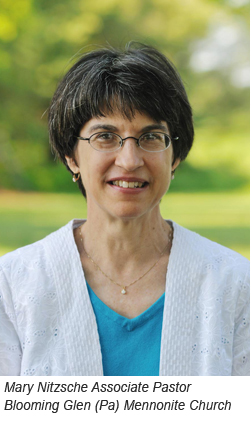 As a child, I loved to play church with my sister. We sang songs of faith, read scripture and I “preached.” It was not in the realm of my thinking or imagination at this early age that one day God would call me to be a pastor. My parents were people of deep faith in Jesus and served many years in either a congregational setting or in a Mennonite institution. Their love for Jesus and the Mennonite church inspired me to consider how I might serve the church.I was a shy child and slowly developed confidence and leadership gifts during my college and young adult years. I graduated from Hesston and Goshen colleges, served a year in voluntary service and gained work experience as an elementary school teacher and support staff at Goshen College before taking several classes at
  After my interview, I felt cautiously optimistic, but the doubts and questions persisted. My family’s previous transitions were focused on Wayne’s call, not mine. It felt risky to move ahead without Wayne also securing a job. The invitation came for me to be a candidate. Wayne and I needed a sign to be sure of God’s direction. The following day, in a meeting, the devotional was about Abraham’s call to go, leave his security and follow God to a new land.Several mornings later I awoke earlier than normal with Proverbs 3:5-6 on my mind, “Trust in the Lord with all your heart and lean not unto your own understanding. In all your ways acknowledge him and he will direct your paths.”With these signs from our God, who works in surprising and mysterious ways inviting us to risk, I accepted the pastoral position at Blooming Glen and have confidence that God will continue to provide what is needed.photo by Kreg Ulery
  In my late 20’s our pastor at Kalona Mennonite Church, Howard Keim, invited me to participle in a leadership apprentice relationship with him. Over several years, I would meet with him periodically to talk about books on ministry and leadership that we were reading. During this time, he invited me to participate in a wide range of congregational leadership experiences, such as writing Bible study guides, leading small groups, and teaching the youth baptism class. After some time he asked me if I would consider preaching on a Sunday morning.
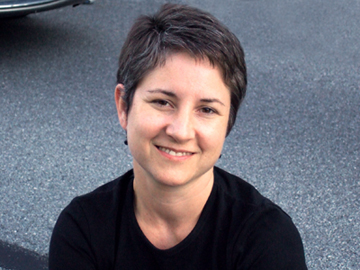 As I discerned my call to
 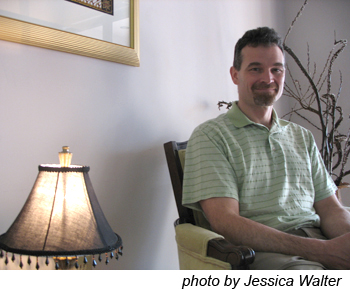 going to be a handicap. In the end, as we talked, prayed, and discerned, God gave all involved a sense that this could and would work for his glory, that we’d both learn and be stretched in healthy ways, if we were willing to walk forward in faith.