(posted January 14) God and Money: Tools for Faithful Personal Finance (Session 1 of 3) – Young Adults (ages 17–25), join us for an evening of teaching, food, and practical tools and financial advice on Saturday, January 24, from 5-8 pm at Indonesian Light Church (1701 McKean St, Philadelphia, PA 19145). Register your group at MosaicMennonites.org/FormationEvent. Refer to this flyer for more details and the other sessions (2 & 3).
Indonesian Light Church
Intercultural Workshop Nourishes Intercultural Exchange and Community
by Sam Charles
Nutrition plays a vital role in human existence, providing the essential vitamins and energy needed for the body’s proper functioning. Acknowledging the importance of nutrition in sustaining human life, God created the necessary resources for sustenance before the creation of humankind.
This idea is affirmed by the teachings of Jesus Christ, who said, “People do not live by bread alone, but by every word that comes out of the mouth of God” (Matthew 4:4, NLT). Beyond its nutritional value, food serves as a catalyst for social and intercultural bonds. The way food is prepared, served, and shared—whether on the floor or at a table —represents cultural practices that reflect the traditions and customs of different communities.
For example, Haitian and Jamaican cuisines bear notable similarities, but differ considerably from those of other populations. Food can act as both a unifier and a point of distinction between groups. Family meals, national celebrations, and religious feasts are all instrumental in passing down cultural values from one generation to the next. Food thus plays a role in both celebrating cultural diversity and encouraging cross-cultural interaction.
Sharing a meal with individuals from different cultural backgrounds is a dynamic medium for fostering communal bonds, cultivating friendship, and facilitating intercultural exchange. Such shared meals encourage the acceptance of diverse identities and practices, highlighting the importance of mutual respect and understanding.
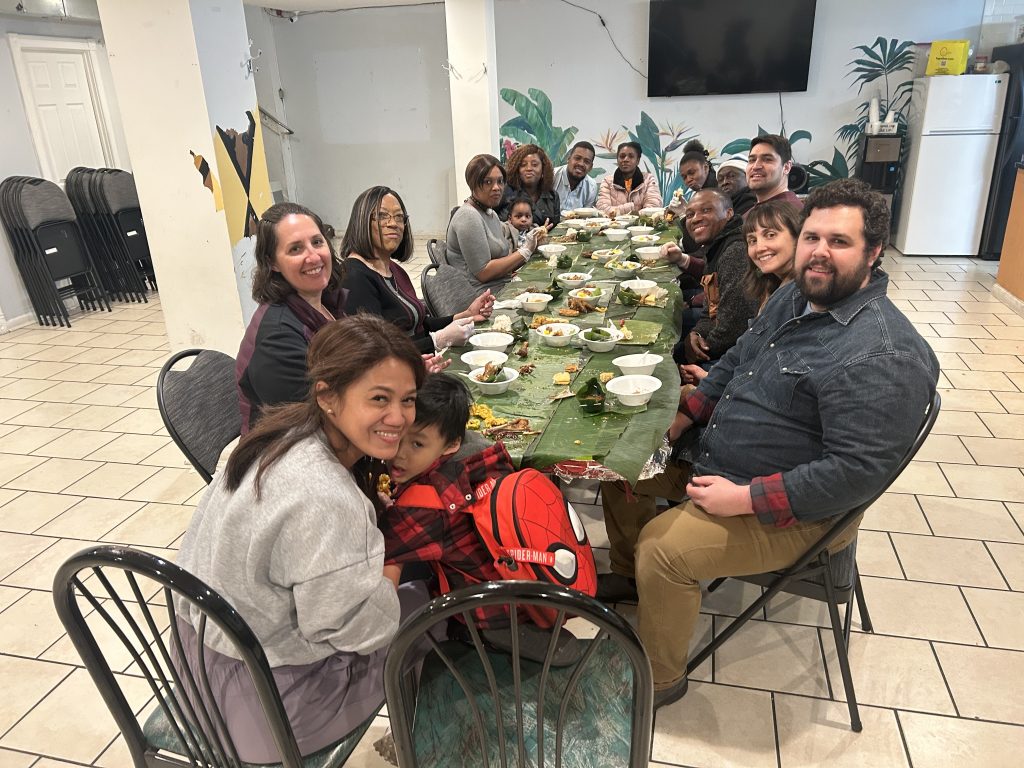
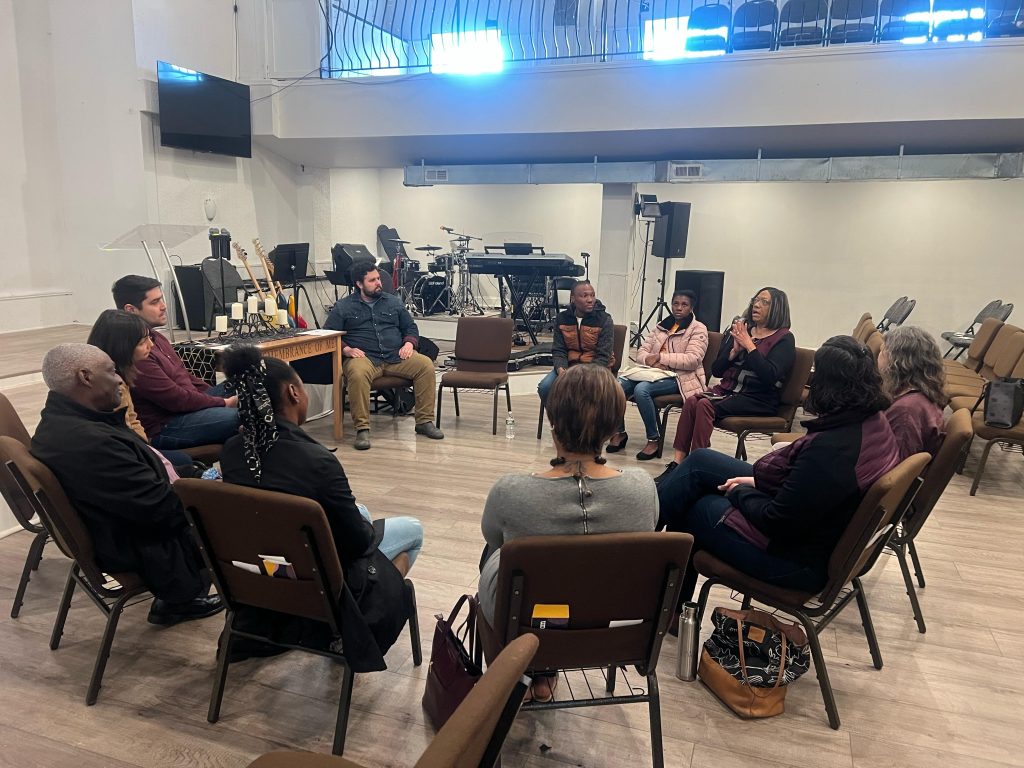
On Saturday, March 22, members of Indonesian Light Church (Philadelphia, PA) and the Haitian congregation Bethel Worship and Teaching Center (Levittown, PA) collaborated to offer food as part of an extraordinary intercultural encounter. The event melded elements of Indonesian, Haitian, and American cultures, fostering a rich exchange of ideas and practices.
The workshop discussions centered on the dynamics of power and seeking understanding of differing perspectives. The event culminated in a shared meal, fostering a sense of communal harmony, understanding, and lack of judgement among participants from diverse cultures.
The event provided a valuable opportunity for Americans, Haitians, and Indonesians to engage in meaningful dialogue and mutual learning. The event also served to promote the principles of love, as exemplified by Jesus, and to embrace our neighbors, thereby achieving the unity in diversity articulated by Paul in Galatians 3:28, NIV, “There is neither Jew nor Greek, slave nor free, male nor female, for you are all one in Christ Jesus.”
Sam Charles
Sam Charles is the pastor of Bethel Worship and Teaching Center in Levittown, PA and a member of Mosaic’s Intercultural Committee.
Mosaic values two-way communication and encourages our constituents to respond with feedback, questions, or encouragement. To share your thoughts or send a message to the author(s), contact us at communication@mosaicmennonites.org.
Mosaic Mennonite Conference Support for the Indonesian Church Amid Immigration Uncertainty
by Hendy Matahelemual
In critical moments of history, faith communities often become a refuge for those who feel threatened and marginalized. This was also the case the day after Donald Trump’s victory announcement as President of the United States, when tension and concern swept over the immigrant community, including the Indonesian church members in South Philadelphia. Trump’s statements during his campaign about mass deportations created real anxiety within this vulnerable community.

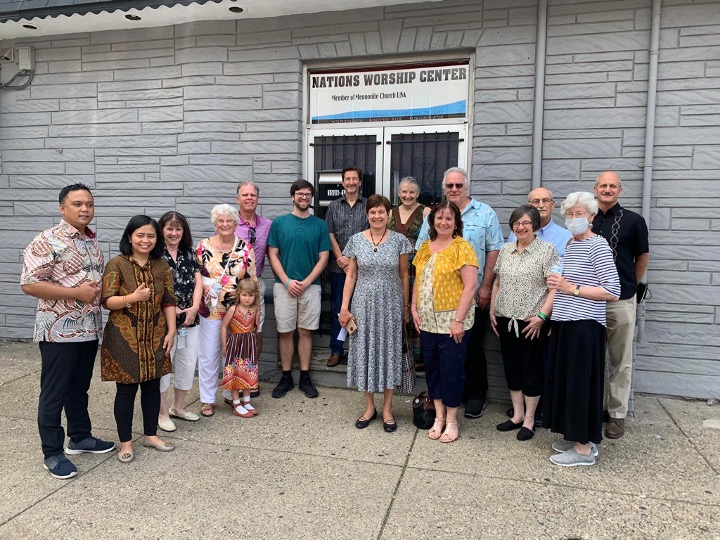
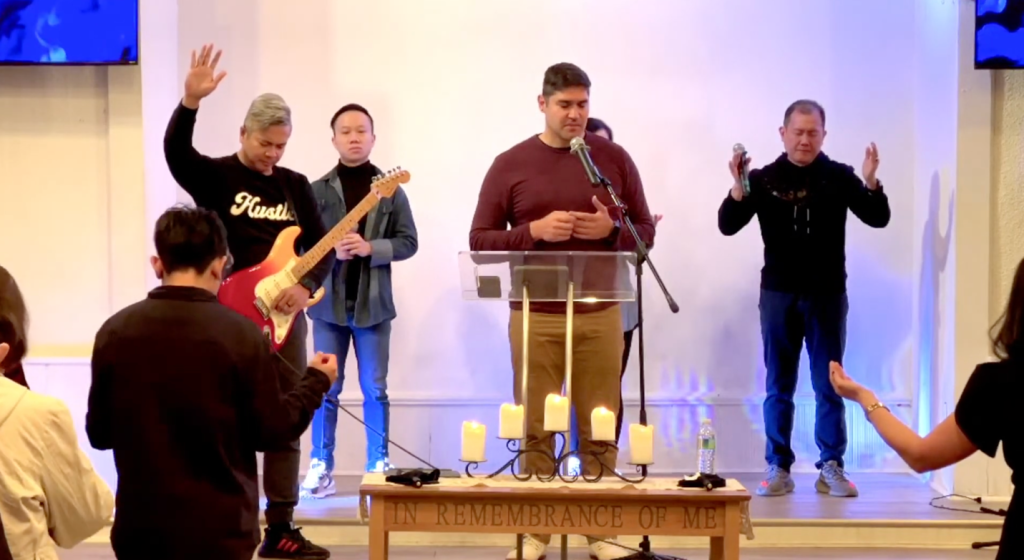
Amid this situation, Mosaic Mennonite Conference demonstrated its commitment to the principles of love, justice, and solidarity through Pastor Danilo Sanchez’s visit to three Indonesian churches in South Philadelphia: Indonesian Light, Philadelphia Praise Center, and Nations Worship Center. This presence was not just a formality but a tangible symbol of moral, spiritual, and emotional support for the community facing immense pressure.
The Power of Presence: Sanchez Brings a Message of Hope
During his visit, Sanchez delivered a message full of hope and strength, reminding the congregation of the importance of leaning on God during difficult times. He quoted Psalm 46:1-2 NIV, “God is our refuge and strength, an ever-present help in trouble.” This verse served as a foundation to remind the community that, despite the external threats, God remains faithful in protecting and safeguarding his people.
This message was significant both spiritually and psychologically. As fear is real for many community members, having a faith leader present and voicing support brought much-needed reassurance. Sanchez also encouraged the community to stay united, rely on the power of prayer, and stand firm in the face of uncertainty.
Mosaic Conference understands that faith is not just about a relationship with God, but also a relationship with one another. During Sanchez’s visit, the conference reaffirmed its commitment to supporting the Indonesian congregations in South Philadelphia, which are an integral part of the immigrant community. With its Mennonite background, rich in the history of peace and social justice, this support reflects the core values of the Conference: loving one’s neighbor, protecting the vulnerable, and advocating for justice.
In addition to the spiritual message, the Conference provided practical support, such as information about immigrant rights and access to legal assistance if needed. This approach demonstrated how faith can be translated into concrete actions that help individuals and communities persevere in difficult times.

Relying on God and Standing Firm
Faith communities play a crucial role in providing strength and hope, especially in the face of threats, as experienced by these Indonesian churches. In this situation, the congregation is encouraged to remember God’s promise in Isaiah 41:10 NIV, “Do not fear, for I am with you; do not be dismayed, for I am your God.” This message serves as a reminder that God will never abandon his people, even in their darkest moments.
Through Sanchez’s visit and the support of the Conference, the church community in South Philadelphia is reminded that they are not alone. Solidarity, prayer, and love become the main sources of strength to move forward, remain firm, and courageously face whatever may come. In God’s love, they find the strength to continue hoping, staying united, and being a light to the world.

Hendy Matahelemual
Hendy Matahelemual is the Associate Minister for Community Engagement for Mosaic Conference. Hendy Matahelemual was born and grew up in the city of Bandung, Indonesia. Hendy lives in Philadelphia with his wife Marina and their three boys, Judah, Levi and Asher.
Zion Mennonite Church and Indonesian Light Church Worship Together
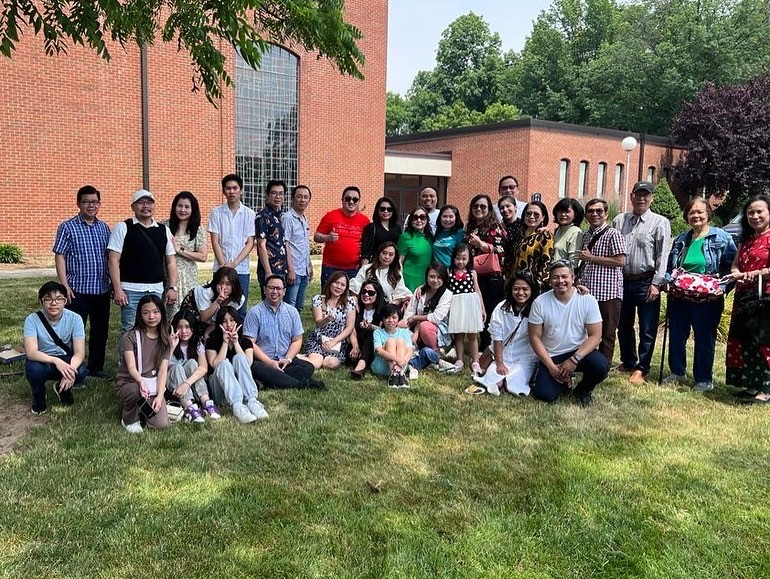
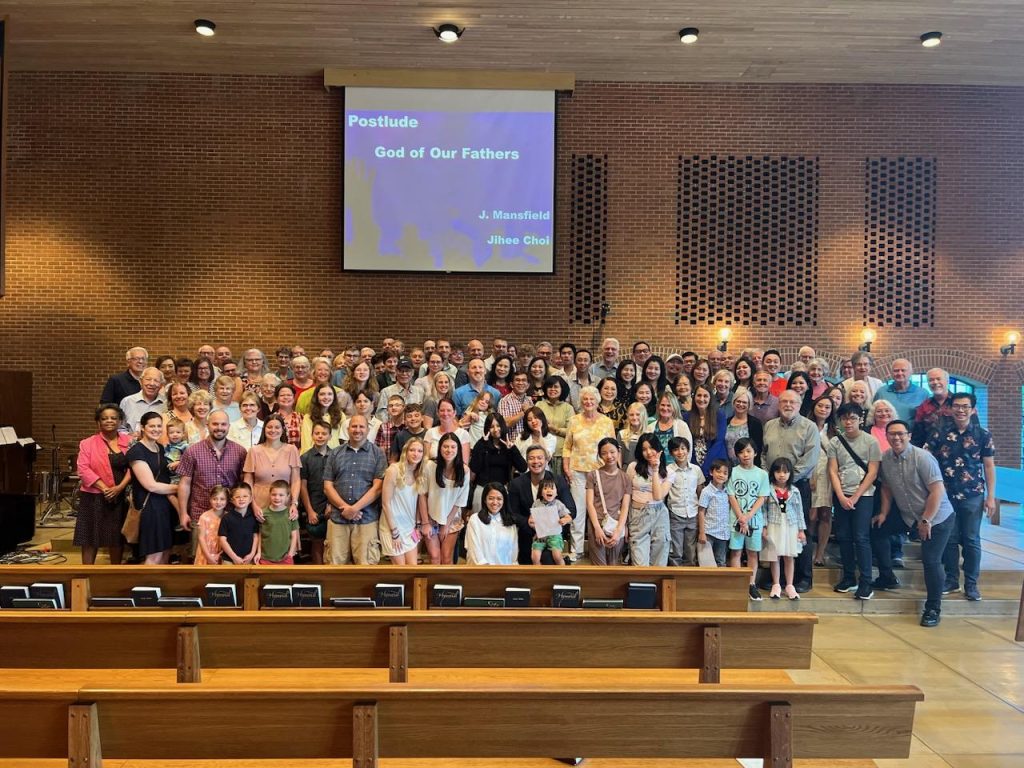
On June 11, Zion Mennonite Church (Souderton, PA) invited Indonesian Light Church (Philadelphia, PA) to join together for worship and communion.

“It’s a natural thing if we’re around people who share the same culture, language, and background,” Pastor Hendy Matahelemual of Indonesian Light Church said at the opening of the joint worship. “But we worship a supernatural God, the One who will unite us to a new spiritual family that enriches us in fraternal love, mutual cooperation to build and complete each other.”
After the worship service, the two churches enjoyed a picnic lunch together.


Just Eat the Food
By Jordan Luther
On Sunday, July 17, my congregation (Zion) chartered a bus from Souderton, PA to worship with our Christian siblings at Philadelphia Praise Center, Nations Worship Center, and Indonesian Light Church in South Philadelphia.
We spent several months planning for this trip. As Pastor Hendy Matahelemual has already shared, this idea was born over lunch in early May. The pastors of our respective congregations met and collaborated on what it would look to have our own Mennonite World Conference where we would worship, fellowship, and share a meal together.
Leading up to our visit, the Zion congregation did our part to prepare for the trip. We dedicated our July worship series to the importance of the global church and our Mosaic relationships. We studied the story of Peter and Cornelius from Acts 10 as our biblical and theological framework before our visit. Below is an excerpt from my sermon on Sunday, July 10.
What does it look like to participate in a global, intercultural church?
The simple answer. It looks a lot like eating different foods.
Eating the local food and graciously accepting hospitality is one of the best things we can do as cultural outsiders. Eating another’s food opens doors to new relationships and for the Spirit of God to shake things up.
If I had to summarize our Bible story from Acts 10 today into one sentence, it would be this: just eat the food.
What does it look like to participate in a global, intercultural church?
JORDAN LUTHER

We too often tell this story from only Peter’s perspective. We easily forget that God is at work in both Cornelius and Peter’s lives. God desires to bring them both together, despite their cultural differences, in a spirit of mutual transformation.
Both Peter and Cornelius are mutually transformed through their meeting. God’s initiative to bring them together gives us a taste—literally—of what it is like to come together as a global, intercultural church.
Their story shows us that the best place to start becoming an intercultural church is to just eat the food.


Perhaps eating new foods is a simple but profound act of surrendering to God’s mission to bring all people together through Jesus Christ our Lord—without having to sacrifice our deep cultural identities. Can it really be this simple?
Yes! Just eat the food.
May we, like Peter and Cornelius, lean into the blurred lines between who is guest and host. May we do so with the confidence that it is God who is setting the table and bringing us together. May we come to the table eager to learn from one another in a spirit of mutual transformation.
God has set the table. We just need to show up… And eat the food.
Just eat the food.

Jordan Luther
Jordan Luther is the former Associate Pastor of Faith Formation at Zion Mennonite Church in Souderton, PA. He is starting Clinical Pastoral Education at St. Luke’s Penn Foundation this fall and attends Wild Church at FernRock Retreat.
Backpacks for the Border
by Javier Marquez, intercultural communication associate, with Emily Ralph Servant

On the night of October 18, 2019, a group of adults and children worked for several hours at the Material Resource Center, a part of Mennonite Central Committee’s ministry in Harleysville, PA. The objective of the project was to put together kits of basic supplies that will be delivered to migrants who crossed the border from Mexico. Members of Franconia Conference contributed the helping hands and gave resources to make the project a reality: 370 kits were packed that night, and the rest of the $20,000 donated by the conference (via churches, individuals and a matching grant) will be sent to MCC Central States to purchase additional supplies.
The kits consisted of a set of useful products such as towels, notebooks, pens, water, and other basic necessities for people who have recently been released from migrant detention camps. Although simple, these kits represent a direct and tangible way to contribute to the needs of immigrants who enter the United States looking for a new home.
The work on the 19th was an example of solidarity and mutual help. Thanks to 20 volunteers from three southeast Pennsylvania churches (Indonesian Light Church, and Philadelphia Praise Center, Plains Mennonite Church), the kits were efficiently packed in a large collection of green backpacks and were ready in time to be sent from Harleysville to be distributed through MCC Central States.
Each of these churches, in addition to belonging to Franconia Conference, is a community that includes many first- and second-generation immigrants. Although these immigrants come from different places on the map, such as Indonesia and Mexico, they each have left behind what is familiar to embark on a trip, marked by difficulties and uncertainty. In understanding and solidarity, they gathered to fill backpacks as people who are aware of the pain and joy of migration.
The children were encouraged to share which countries they were from and they diligently helped for the almost-two-hours that the work took. After the backpacks were filled, the workers gathered together to join in a prayer led by Pastor Hendy Stevan Matahelemual of Indonesian Light Center. They prayed specifically for those who would receive the kit and in general for each person who undertakes the trip and who seeks a place that guarantees their rights and, even, saves their lives.
At Home, Far from Home
By Jennifer Svetlik, Salford congregation
“Even though I am far away from my home, I feel like I am home. I feel welcome and encouraged as I learn from the Franconia Conference culture and work with people from different backgrounds. We have a sense of unity and community here,” says Hendy Stevan Matahelemual, Franconia Conference’s Pastor of Formation and Communication.

Hendy was raised in Bandung, Indonesia, 100 miles south of the capital, Jakarta. He was educated in law and for nearly 10 years he worked in a law office as well as the music entertainment industry. After Hendy found Christ in his community, he was baptized again and made a commitment to dedicate his life to God. In 2008 he started volunteering in his church, Elshaddai Creative Community, in music ministry and leading a cell group. He got married to his wife Marina, got a promotion in his job, and felt ready to settle down.
“My hometown is a nice city up in the mountains with great weather. Ever since I was born I always expected to stay in Bandung,” Hendy describes.
But after the transformation in his spiritual life, Hendy felt that God wanted him to move from his city. He prayed to God to understand this feeling and had a sense that he might be called to move to Jakarta to plant a church with other members of his cell group.
While he was still praying about it, Marina came home one day after her work as a secretary in their church, where she learned from their pastor that an Indonesian pastor in New York City was seeking someone to help do ministry there. “Well let’s go then,” Hendy replied, mostly joking. But later their pastor invited Hendy to seriously consider the idea.
Hendy and Marina accepted this calling, and Hendy resigned from his job working in the entertainment business. But unexpectedly, for two years in a row, his visa to come to the U.S. was rejected. Patiently he worked as a pastor in their church in Bandung until his visa was finally approved.

For over two years Hendy was a pastor at Bethany Church in Queens, also providing counseling and community outreach. Hendy became acquainted with staff and pastors within Franconia Conference and began studies at Eastern Mennonite University toward an MA in Christian Leadership, which he received earlier this year. Hendy received a call to serve as the pastor of Indonesian Light Church in south Philadelphia. So Hendy, his wife Marina and their two children, Judah and Levi, moved once again.
Hendy has also served in his conference role since May and helps to plan worship services for conference-wide events, shares stories through articles and creating videos, and supports the Conference’s social media work. Hendy is part of the new Youth Formation Team, coordinating events that offer training and resources to youth leaders and youth ministers, and he’s also a member of the Faith and Life Committee, which gathers credentialed leaders together quarterly for theological reflection and dialogue.
Additionally, Hendy serves on the conference’s Intercultural Team which provides training and resources for intercultural formation. “Revelation 7:9 provides a vision of what God wants us to be as a church,” Hendy shares. The scripture says, “There was a great multitude that no one could count, from every nation, from all tribes and peoples and languages, standing before the throne and before the Lamb.” Hendy says that this and other scriptures provide encouragement and a biblical base for how the church can grow and learn from each other, as people of different cultures.
“This is complicated work; in a conference that is predominantly white, recognizing that every group has its own dominant culture at work, to redefine norms together so that every culture can have a voice, and that each church’s expression of loving God, loving people, and serving the community is lifted up,” Hendy says.
Hendy has found the mutual transformation of his intercultural work to be a rewarding part of his Conference ministry, as he and colleagues “work together as the family of Christ, even though we come from different backgrounds.”
Hendy is excited to continue to grow in his ministry with Franconia Conference. In his spare time, he enjoys sports, swimming, and going on road trips. Recently, his family drove to MC USA Convention in Kansas City from South Philly—a 17-hour drive!
An Indonesian Food Story
(Baca dalam bahasa Indonesia)
by Hendy Stevan Matehelemual, Indonesian Light Church
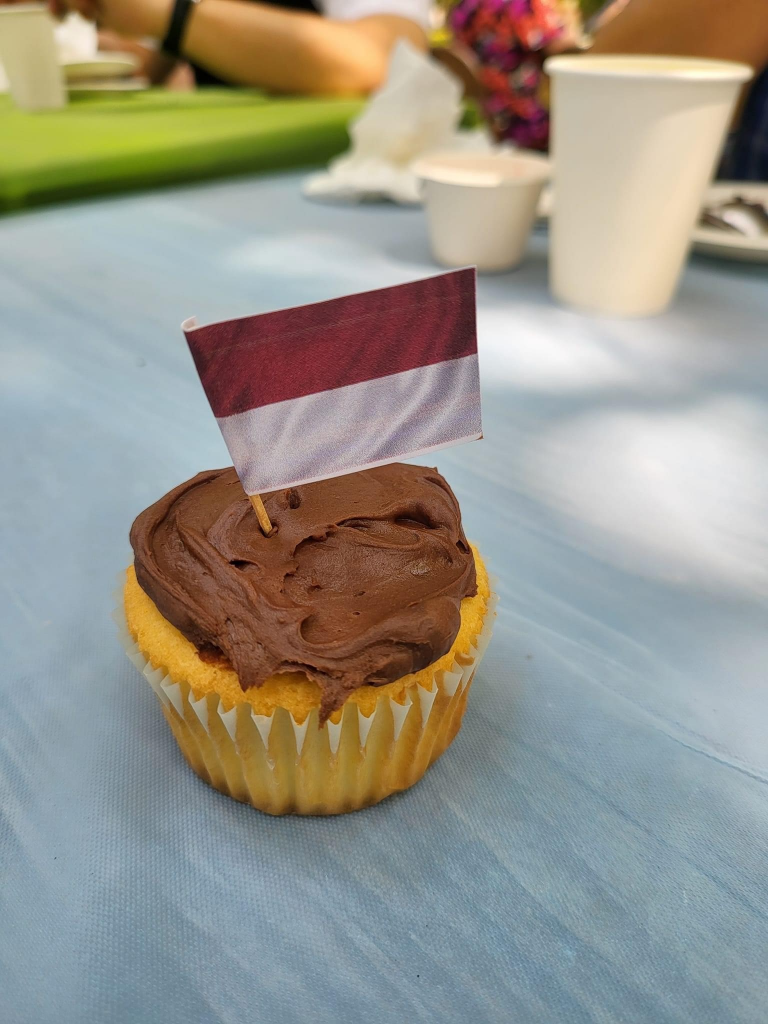
Food is an important element in Indonesian culture. There are more than 300 ethnic groups in Indonesia and each ethnic group has its own unique food. When we talk about Indonesian food, the variations will be plentiful.

The relationship between food and the community in Indonesia is also very close. It would not be over-the-top to say that the culture of the community in Indonesia is very concerned about the food served. In the Christian Batak tribe, for example, if you want to respect someone who has a higher status, you would serve pork at your meeting with them. To serve anything else would be considered an insult.

It’s not just the type of food that matters, however, but also the variety of ways that it can be presented. In Javanese and Sundanese culture, food is very closely related to togetherness, so a tradition called liwetan arises. In liwetan, everyone sits around dishes placed on banana leaves and eats directly from them. The sense of togetherness that arises while eating this delicious food creates a warm and friendly atmosphere.
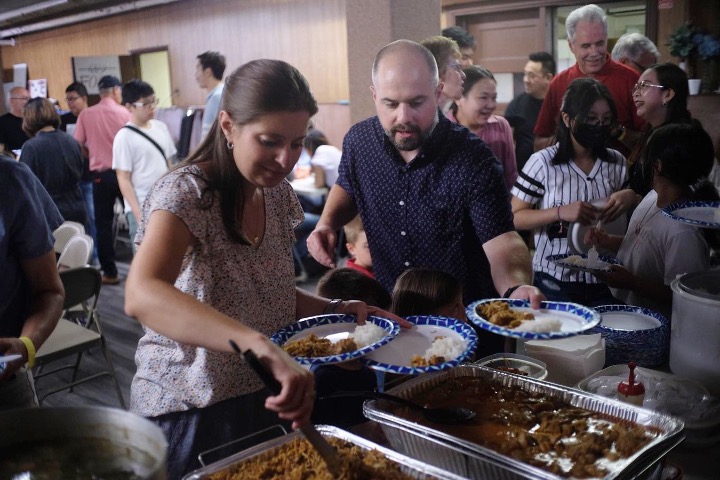
Food is also an essential way to reach out to people and establish relationships. Franconia Conference’s Indonesian congregations in South Philadelphia—Nations Worship Center, Philadelphia Praise Center, and Indonesian Light Church—hold Indonesian food festivals each year. This is done, not only as a fundraiser, but also to open the door of heartfelt hospitality and to share a sense of pride with others, especially those outside the church community.

The menu offered is diverse, ranging from the typical Batak Saksang, the Palembang Pempek, the ethnic Chinese noodles, the Javanese Ketoprak, the Padang Rendang, and the Madura Sate, and many other foods and dessert.

There is a saying in Javanese culture: “mangan or mangan sing penting kumpul,” meaning, “Even though there’s no food, it’s important to gather.” This saying came from a tradition that believes that whenever there’s food, there must be a gathering of people. Therefore, it’s not an overstatement to say that food is always central in the Indonesian culture.

I believe that food is the entrance to the heart and soul; when we share food, we bring a portion of our lives to share with others. Indonesian food is famous for its spices, spiciness, and flavor. Although we are a minority in this country, we Indonesians can contribute greatly to being salt and light in whatever part of the world God places us. We are here to become living bread, as a witness of Jesus to the nations and generations.
When we are sharing food together with other people, we are breaking down each other’s walls (ethnicity, religion, culture) and building bridges where the Holy Spirit can perform His miracles through us.