• Skip to main content
  • Skip to primary sidebar
  • Skip to footer

Mosaic MennonitesMosaic Mennonites

Missional - Intercultural - Formational

  • Home
  • About Us
    • Our History
    • Vision & Mission
    • Staff
    • Boards and Committees
    • Church & Ministry Directory
    • Mennonite Links
  • Media
    • Articles
    • Newsletters
    • Video
    • Audio
    • Bulletin Announcements
  • Resources
    • Conference Documents
    • Missional
    • Intercultural
    • Formational
    • Stewardship
    • Church Safety
    • Leaders’ Resources
    • Request a Speaker
    • Pastoral Openings
    • Job Openings
  • Give
    • Leadership Development Matching Gift
  • Events
    • Pentecost
    • Delegate Assembly
    • Faith & Life
    • Youth Event
    • Women’s Gathering
    • Conference Calendar
  • Mosaic Institute
  • Vibrant Mosaic
  • Contact Us
  • English

Indian Creek Foundation

Jacob’s Wisdom and Ecclesiastes 9:11-18

April 30, 2026 by Cindy Angela

by Jeff Wright

Editor’s Note: A longer version of this reflection was shared at the Conference-Related Ministry Indian Creek Foundation’s Monthly Prayer Fellowship on April 3, 2026 at Blooming Glen (PA) Mennonite.  
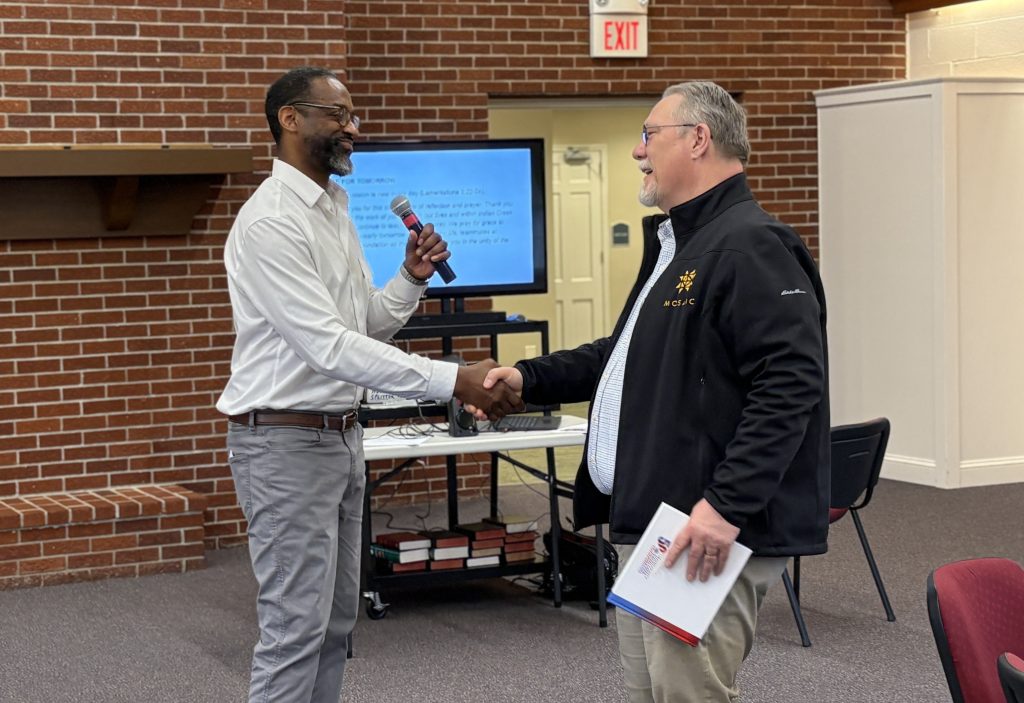
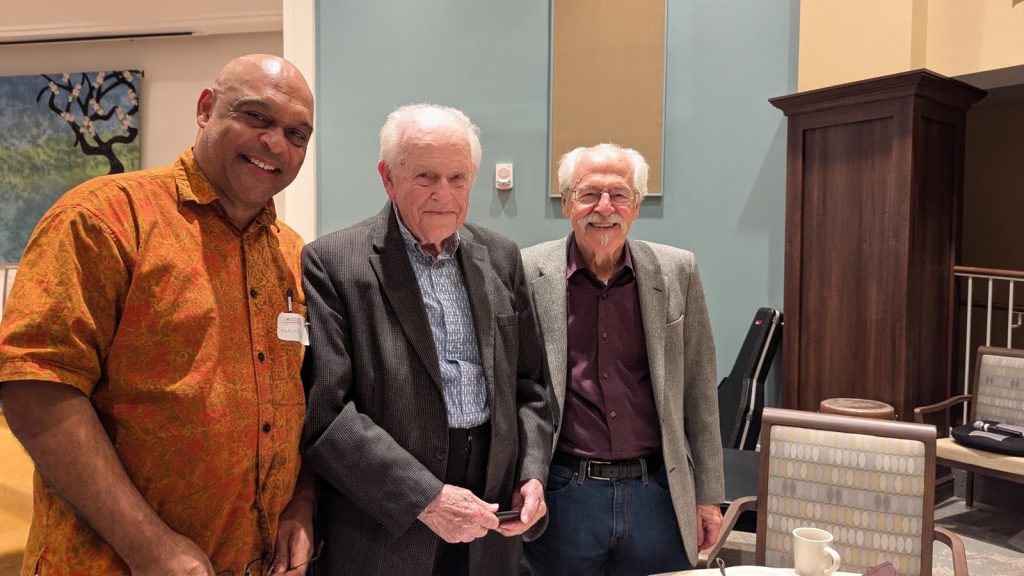
Dr. Tim Barksdale, CEO of Indian Creek Foundation (ICF), and Pastor Jeff Wright at the April ICF prayer fellowship event.

On a rainy night in September 2004, I was in Atlanta at a gathering of Mennonite urban ministry leaders. For 12 years, I had been at the center of a whirlwind of action—developing leaders, teaching Anabaptist theology and urban missiology among immigrant church planters in Los Angeles, organizing incubation efforts for neighborhood ministries of relief and repair, preaching, fundraising, budgeting, and leading a constantly shifting staff team. It was a rich season of kingdom work. But strains were showing. Petty jealousies and passive aggression from those with greater access to resources left me stressed, in conflict, and unable to attend to what mattered most.

That night, I found out that Jacob had been unexpectedly born into our family. My son and his girlfriend had kept the pregnancy a secret. And there I was, away again, leaving my family in crisis – again.

But this was more than an unexpected birth. Jakie had suffered an umbilical cord prolapse, aspirated meconium, and endured perinatal asphyxiation and stroke. The result was severe, lifelong disability.

Things turned dark fast. An ambitious (and unfit) associate pastor publicly suggested that Jake’s birth was proof of how unfit I had been as a father and how Jake’s deficits were God’s judgement on me and my ministry. Jake’s arrival hastened the end of that season of my ministry.

I was broken. I felt ashamed–that I probably was unfit as a father and my ministry was a fraud–and there weren’t a lot of people that knew how to stand with my wife Debbie and me. In that season, I found solace in two places: siting in the NICU holding Jake, and in reading Ecclesiastes.

The book of Ecclesiastes is often called the “black sheep” of the Bible because it refuses to offer easy answers. For those connected to disability—whether through diagnoses like cerebral palsy or experiences of birth injury—the Teacher (Qoheleth) feels less like a philosopher and more like a weary friend who tells the truth. In Ecclesiastes 9:11–18, we find a profound meditation on the randomness of life and the unrecognized value of those the world considers weak.

The passage begins with a jarring observation: “The race is not to the swift, nor the battle to the strong.” This confronts the myth of meritocracy—the belief that effort guarantees outcomes. In the world of disability, that illusion collapses early. When a child experiences brain injury from lack of oxygen, it is not because they or their parents failed. It is what the Teacher calls “time and chance.”

By acknowledging that “evil times fall unexpectedly,” Ecclesiastes offers a strange validation. It removes the burden of “why” and “whose fault.” It loosens the grip of “why” and “whose fault.” The world is not a vending machine where good behavior yields predictable results. This creates space for grace. If success is not proof of virtue, then disability is not proof of failure. It is part of the hebel, the vapor, the mystery of human life.

The Teacher then tells of a poor wise man who saves a city, yet is forgotten. “No one remembered that poor man.”

This is a familiar reality in the disability community. Those whose bodies or communication differ from cultural norms often carry deep wisdom and perspective. Yet their contributions are overlooked because they do not match the world’s definition of strength or speed.

Ecclesiastes makes a radical claim: wisdom is better than might. The poor man’s insight surpasses the king’s power. The tragedy is not his poverty, but a world too blind to remember him.

Few remember Frank Lanterman. A concert organist turned conservative California state senator, he set out in the 1960s to uncover waste in state institutions. Instead, he found thousands of children and adults warehoused without dignity, stimulation, or care. At the time, parents had two options: keep a child at home without support or send them away to an institution, often for life.

Lanterman fought to change that system. He argued that the state had a moral and legal obligation to care for vulnerable citizens within their communities. His work led to the creation of California’s regional center system, making services for people with developmental disabilities a legal entitlement.

In a surprising turn, the bill was signed into law by Ronald Reagan. Through political wisdom and persistence, Lanterman convinced a similarly conservative governor to support an entitlement program in exchange for deinstitutionalization and local control.

Without that unlikely partnership between a “poor wise man” and a “great king,” I do not know what would have become of Jacob, his parents, or our family. Because of that work, Jacob has been able to live at home. His parents have built meaningful vocations in service to others. His brothers have grown up alongside him.

The passage concludes with a sober warning: “Wisdom is better than weapons of war, but one sinner destroys much good.” In medicine, we see how a single moment of oxygen deprivation can alter a lifetime. But in a social context, this “one sinner” is often the person who creates an inaccessible building, an exclusionary policy, or a stigmatizing comment. These small acts of “folly” can dismantle the “good” of a person’s hard-won independence.

And yet, the good endures. Systems like those Lanterman helped create continue to support families like ours, even amid ongoing pressures and threats.

For those connected to disability, Ecclesiastes 9: 11–18 is a call to radical candor. It gives permission to grieve the randomness that reshapes our lives. But it also calls us to remember the forgotten, to honor wisdom where the world does not look. In a world where the swift stumble and the strong fail, the measure of a life is not output or efficiency.

Jake Wright—bedfast, unable to speak, nourished through a feeding tube—demonstrates to his whole community that he is a young man with a soul, beloved by God. He laughs at the sound of singing or his grandpa preaching. This world is better because of both Jacob Gabriel Barriga Wright, and concert organist turned state senator Frank Lanterman. Thanks be to God for their hearts.


The author’s oldest grandson, Jacob Gabriel Barriga Wright, born in Upland, CA. Photo by Celina Wright.

Jeff Wright

Jeff Wright is a Mosaic Conference Leadership Minister. He is also a member of the Missional Priority Team and the official old curmudgeon of the conference staff. When not reading, or cheering for his beloved Los Angeles Dodgers, he is serving as interim pastor at Blooming Glen (PA). He has dreams of batting 9th and playing backup catcher for the Mosaic Conference baseball team.

Mosaic values two-way communication and encourages our constituents to respond with feedback, questions, or encouragement. To contact Jeff Wright, please email jwright@mosaicmennonites.org.
Filed Under: Articles Tagged With: Indian Creek Foundation, Jeff Wright

When Generations Pray Together

January 1, 2026 by Cindy Angela

by Jim McCarty

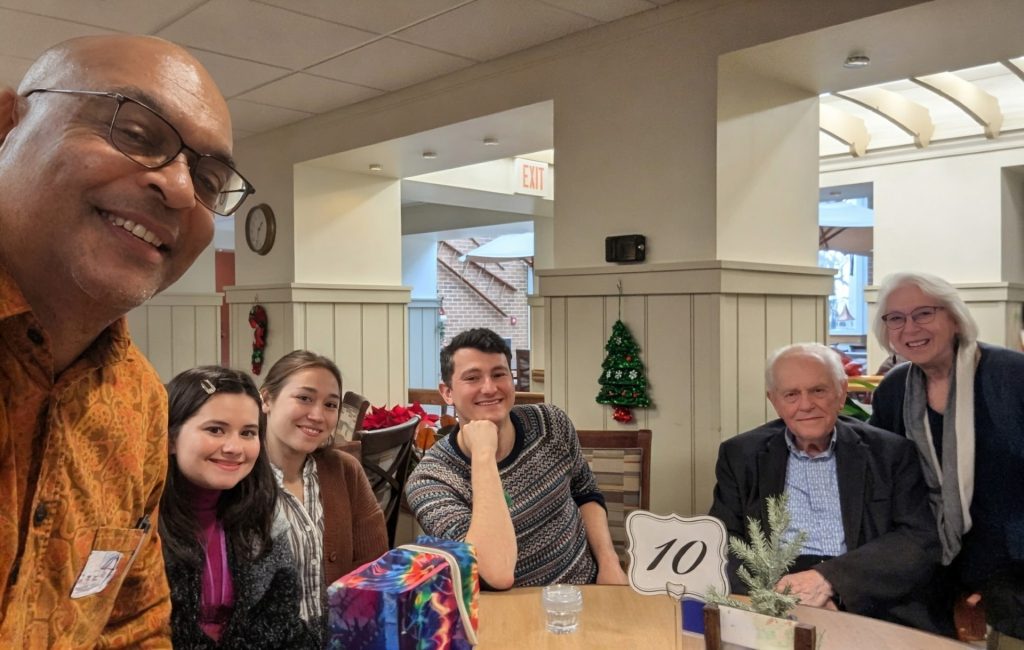
It is beautiful when younger and older people come together for prayer. Mosaic Conference-Related Ministry (CRM) Indian Creek Foundation’s (Souderton, PA) December Prayer Brunch brought together more than 50 pastors, staff, residents, and friends for a morning of worship, storytelling, and purposeful prayer. Held on December 5 at CRM Living Branches Souderton Mennonite Homes, leaders from both organizations, Ed Brubaker, CEO of Living Branches, and Dr. Tim Barksdale, the new CEO of Indian Creek Foundation, joined the group, offering encouragement and gratitude for the prayerful support. 

The brunch reflected the diversity and creativity of the community. Attendees were treated to poetry and rap performed by Indian Creek employees, drumming and vocals by Makinto of CRM Amahoro International (Bombo, Uganda), and thoughtful reflections from historian John L. Ruth on faith, science, and life. A shared meal and time of conversation created space for meaningful connections across generations and roles. 

Young and old leaders gather for prayer for Indian Creek Foundation.

These monthly Prayer Brunches are part of a renewed emphasis on communal prayer at Indian Creek Foundation, an emphasis that reaches back to the organization’s earliest days. Founded more than 50 years ago out of local Mennonite congregations, Indian Creek was built on the conviction that spiritual care mattered as much as housing, vocation, and daily support. Helping individuals with intellectual disabilities find belonging and community was central to the mission from the beginning. 

That foundation continues to shape Indian Creek’s values today. Mennonite principles of compassion, mutual respect, and a Philosophy of Care grounded in relationships remain central to the organization’s work. Indian Creek relies on area churches and people of faith for volunteer involvement, financial support, and especially prayer. 

In September, I sensed it was time to intentionally elevate that prayer support. Retired Executive Director Joe Landis (Salford Mennonite [Harleysville, PA]) helped launch a new series of monthly Prayer Brunches designed to bring together pastors, Indian Creek staff and residents, and community members in a welcoming, church-based setting. 

From left, Makinto, John L. Ruth, and Joe Landis at the Dec. 5. prayer gathering.

The first brunch, held in September at Salford Mennonite, was a small gathering but laid the groundwork for what was to come. In October, the group grew and took on new depth as staff members and guests were invited to share their stories. 

Among them was Carol Menser, who has received support from Indian Creek in various ways since its incorporation in 1975. Menser attended the brunch with friends and shared her story of perseverance and growth, a testimony to what is possible when individuals receive consistent, compassionate support. October’s gathering also introduced Dr. Tim Barksdale to local pastors, creating space for informal connection and relationship-building. 

By November, attendance had grown to around 50 people, including additional staff members and Indian Creek residents. The atmosphere was one of encouragement and gratitude, as participants prayed together and put faces to names. 

“The Prayer Brunch was amazing,” shared Susan Guida, Director of Nursing at Indian Creek. “It was nice to socially engage with everyone in such a meaningful and purposeful way.” 

While faith-based activities have always been part of Indian Creek’s programming, their scale and visibility have shifted over the years. The monthly Prayer Brunches represent a new expression of a long-held tradition that keeps Indian Creek present in the prayers of local congregations while also building new relationships.  

“I sincerely thank Dr. Jim McCarty and Joe Landis, Founder of Indian Creek Foundation and Peaceful Living, for their vision and leadership in organizing this unifying and powerful Prayer Breakfast,” shared Tim Barksdale, CEO of Indian Creek Foundation. “Their commitment to creating deeply meaningful opportunities for individuals supported by Indian Creek Foundation to not only attend local churches, but to stand as ambassadors, offer prayers for this community, and voice their own needs. This ministry reflects the power of inclusion and mutual faith, and it strengthens the entire community.” 

Each gathering includes a devotional offered by a local pastor, followed by focused prayer. The vision for these gatherings is that individuals from Indian Creek will attend as ambassadors, representing their own needs for prayer and their concerns. We are looking for local church support and hosts as we seek God’s direction and purpose for our work. 

Indian Creek Foundation invites pastors, congregations, and community members to join this ongoing rhythm of prayer. The next Prayer Brunch will be held Friday, January 9, 2026, from 9:30–11 a.m. at Souderton Mennonite Homes (207 W. Summit Street, Souderton, PA). Margaret Zook, Director of Collaborative Ministries for Mosaic Mennonite Conference, will be the guest speaker. Please RSVP by January 5. To attend, host a future brunch, or learn more about ministry opportunities, contact Jim McCarty at jmccarty@indcreek.org.  


Jim McCarty

Dr. Jim McCarty serves as Coordinator of Faith Services for Indian Creek Foundation. He is an ordained elder and graduate of Asbury Theological Seminary.

Mosaic values two-way communication and encourages our constituents to respond with feedback, questions, or encouragement. To share your thoughts or send a message to the author(s), contact us at communication@mosaicmennonites.org.   

Filed Under: Articles Tagged With: Indian Creek Foundation, Jim McCarthy, Peaceful Living, Souderton Mennonite Homes

Conference Related Ministries (CRM) Profile: Indian Creek Foundation

February 9, 2021 by Conference Office

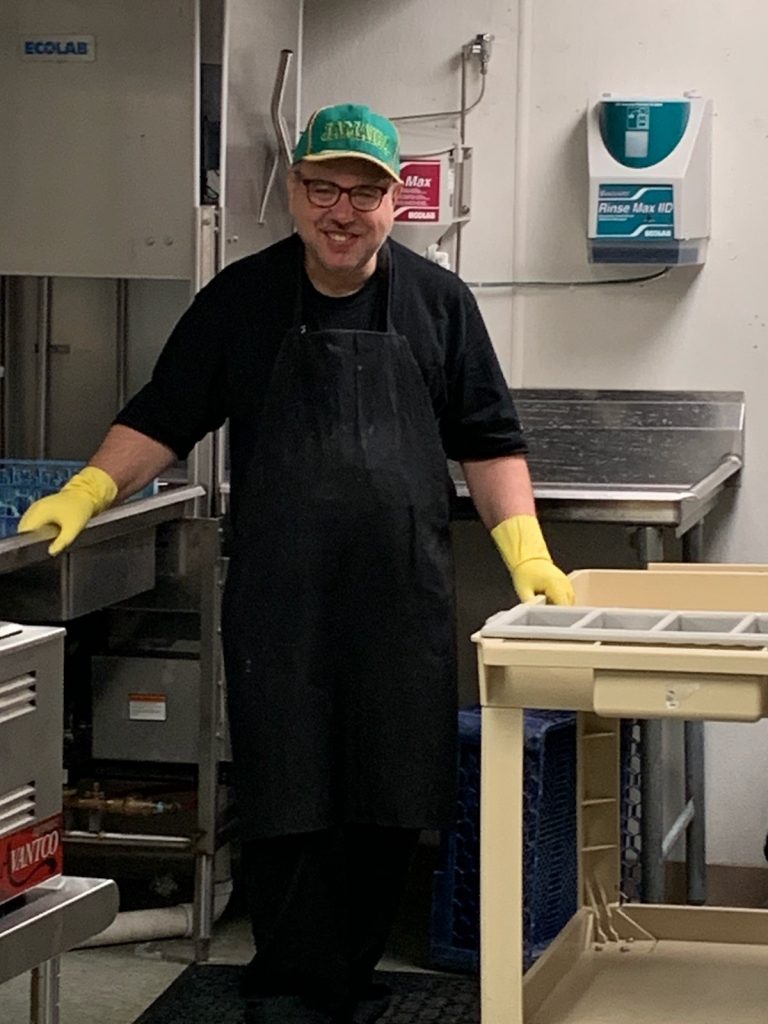
Elliot lives in one of Indian Creek Foundation’s residential homes and works at a local restaurant. Photo provided by Indian Creek Foundation.

For over 45 years, Indian Creek Foundation, a Conference Related Ministry (CRM),  has served Bucks (PA) county and Montgomery (PA) county  children and adults with intellectual and developmental disabilities. Throughout the years, the Foundation has grown into one of the premier service providers in the area.

Although it wasn’t incorporated until 1975, the Foundation’s roots trace back to 1958, when a boy with a developmental disability was born to a local family. It was important to them that their son would have a place to live and work when they were no longer able to care for him, so they turned to the community for help.

At about the same time, the Franconia Mennonite Conference established a committee as part of their mission called “Indian Creek Haven.”  The purpose of this mission was to provide outreach services to people with developmental disabilities who were living in the community.  It was this combination of one family’s search for answers and Franconia Mennonite Conference’s mission that began the development of the organization that today touches more than 1300 lives in Bucks and Montgomery counties.

The connection to Mennonite churches in the area helped Indian Creek Foundation carve out a set of values that serve as guiding principles for the work being performed. Values such as compassion, mutual respect, and meaningful relationships are the building blocks of the Foundation’s Philosophy of Care. This philosophy, which is instilled in each employee, is the essence of what happens at the Foundation each day.

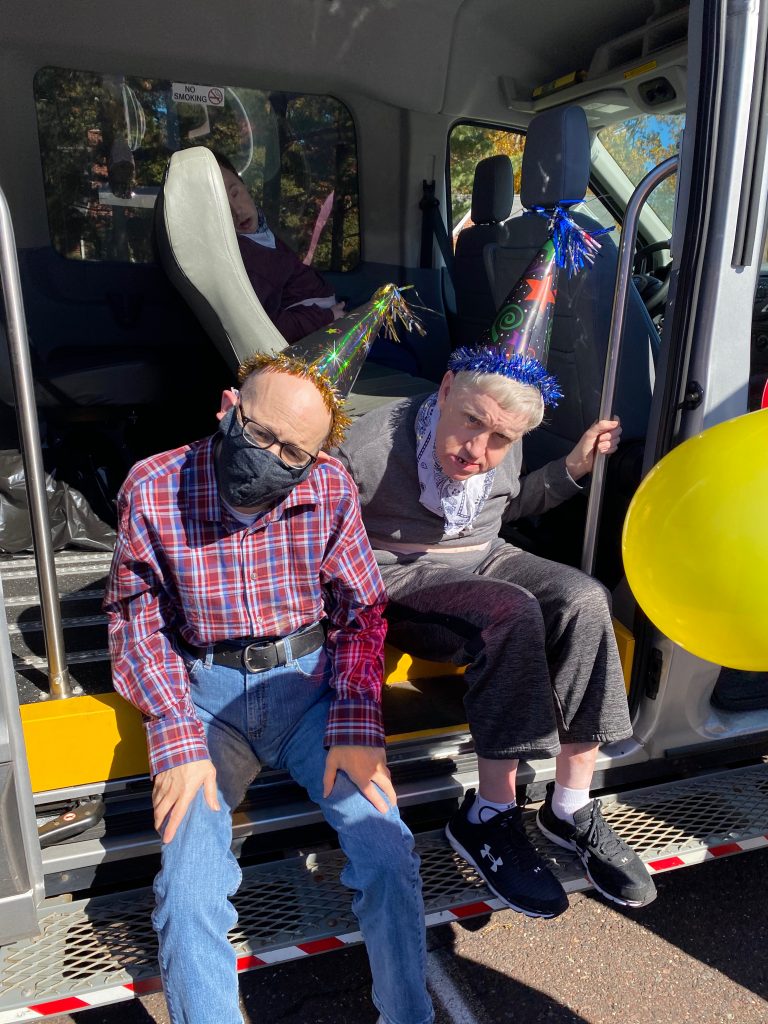
Indian Creek residents celebrated some summer birthdays away from their house. Photo provided by Indian Creek Foundation.

Today, the Foundation continues to be guided by the core values that were developed more than 45 years ago. Though service delivery methods have changed over time, one thing remains true, the Foundation is dedicated to the people it provides services for. With an ever-growing staff, a committed Board of Directors, and the support of the community, the Foundation is poised to impact even more lives. Through our three primary service departments, Residential Services, Day/Vocational Service, and Behavioral Health Services, Indian Creek Foundation remains steadfast in its mission and focused on its future goals.

Although many of our volunteer opportunities have been suspended during the pandemic, we have still been working with local churches, organizations, and individuals to provide support to our 24 residential care homes.  Additionally, our volunteer committee for the upcoming Roll Stroll & Run event is preparing for our 30th annual event on June 19, 2021.  As restrictions hopefully loosen in the coming months, we will resume many of our other volunteer programs as well.  If you’re interested in serving, please contact Brett Wells at bwells@indcreek.org.

For now, we ask that you pray for our individuals and those who provide care for them.  This last year has been a challenging one for all of them.  Many of their routines have been disrupted and visits with family and friends have been limited. 

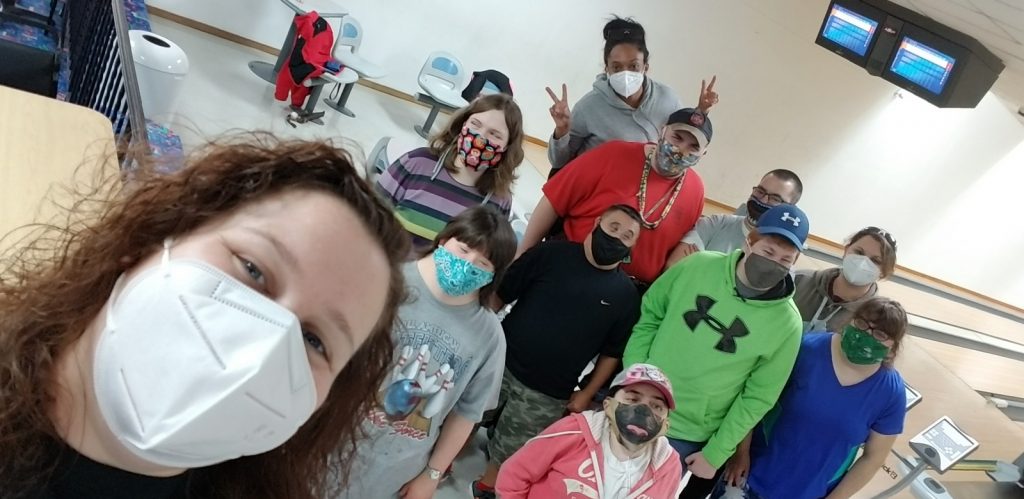
Masked up and ready for some fun. Some of the Indian Creek Day Services consumers enjoyed a day at the bowling alley. Photo provided by Indian Creek Foundation.

Filed Under: Articles Tagged With: Indian Creek Foundation

We are Messengers of Joy

January 29, 2012 by Emily Ralph Servant

by Jennifer Malloy, Indian Creek Foundation, jmalloy@indcreek.org

Faith and Light Pilgrimage
Indian Creek Foundation’s chaplain Pamela Landis with Sharon Weisser and Carol Menser, Spring Mount.

This past summer Indian Creek Foundation’s interfaith chaplain Pamela Landis, as well as Sharon Weisser and Carol Menser, both of the Spring Mount congregation, took part in a Faith and Hope Pilgrimage. Faith and Light Communities encompasses individuals with an intellectual or developmental disability and their family and friends who meet together on a regular basis in a Christian spirit to share friendship, pray together, and celebrate life.

During this four-day event, which was held in St. Louis, Missouri at the National Shrine of Our Lady of the Snows, the group took part in trolley tours of the Shrine and the St. Louis area, participated in ecumenical worship, sang uplifting hymns, and experienced the faith, fellowship, and spirituality of other Faith and Light members from all over the United States.

The theme of this year’s pilgrimage was “We are Messengers of Joy.” As messengers of joy, attendees were asked to be exuberant about their spirituality.

Faith and Light pilgrimages take place every ten years to commemorate the first pilgrimage the organization undertook in 1971. At that time some held a belief that those with disabilities had no place on a religious pilgrimage because they were thought to be incapable of experiencing this kind of activity and there was fear that their presence would disturb others.

Founded in Lourdes, France by two parents who began a journey to find a congregation where they would be accepted with their two sons with disabilities, the Faith and Light organization has grown to include more than 1,500 communities in 80 countries over six continents. The core value of Faith and Light remains the belief that every person, no matter what their ability, is called to be a source of grace and peace for their community.

Indian Creek Foundation’s Faith and Light program has been in existence since 1989. This program seeks to enrich the lives and the often underserved aspect of individuals with intellectual and developmental disabilities—their spirituality. Ecumenical services are presented monthly for individuals interested in exploring this avenue. These inter-faith gatherings provide a chance for clients to gather together, sing hymns, listen to stories, participate in activities, and share in each other’s fellowship. The monthly service is held on the first Friday of every month at the Indian Valley Mennonite Church from 6:30 to 8:30pm.

Founded in 1975, Indian Creek Foundation’s mission is to provide opportunities for people with intellectual and developmental disabilities and to live in and enrich the community throughout their lives. Through four divisions offering residential, vocational, family services, and social work programs, the Foundation continues to grow and meet the changing needs of the surrounding community.

For more information: indcreek.org or (267)203-1500.

Filed Under: News Tagged With: Conference News, formational, Indian Creek Foundation, Jennifer Malloy, pilgrimage

Primary Sidebar

  • Home
  • About Us
    • Our History
    • Vision & Mission
    • Staff
    • Boards and Committees
    • Church & Ministry Directory
    • Mennonite Links
  • Media
    • Articles
    • Newsletters
    • Video
    • Audio
    • Bulletin Announcements
  • Resources
    • Conference Documents
    • Missional
    • Intercultural
    • Formational
    • Stewardship
    • Church Safety
    • Leaders’ Resources
    • Request a Speaker
    • Pastoral Openings
    • Job Openings
  • Give
    • Leadership Development Matching Gift
  • Events
    • Pentecost
    • Delegate Assembly
    • Faith & Life
    • Youth Event
    • Women’s Gathering
    • Conference Calendar
  • Mosaic Institute
  • Vibrant Mosaic
  • Contact Us

Footer

  • Home
  • Contact Us
  • Delegate Assembly
  • Vision & Mission
  • Our History
  • Formational
  • Intercultural
  • Missional
  • Mosaic Institute
  • Give
  • Stewardship
  • Church Safety
  • Leaders’ Resources
  • Articles
  • Bulletin Announcements

Copyright © 2026 Mosaic Mennonite Conference | Privacy Policy | Terms of Use
Aligned with