
by Joe Paparone
Editor’s note: Originally published on November 24, 2025, in Anabaptist World, and reprinted with permission.
I was helping at a drive-through food distribution. Before the line started, the Catholic Sister who coordinated things called all the volunteers together to thank them and pray. As she spoke encouragement, I thought, “It is good that we’re doing this. It’s infuriating that we have to.”
I find this contradiction in every charity and service space, whether it’s the community breakfast where our Homeless Union organizes or in line with people signing up for Thanksgiving meal baskets: “I’m so glad you’re here. Isn’t it outrageous that we have to do this?”
In the United States, we live in the wealthiest nation to ever exist, yet one of the most unequal societies on the planet. The people who maintain and benefit from these wealth disparities go to great lengths to obscure the underlying causes.
The winter holiday season in particular is a space of contradiction. On the one hand, we are inundated with appeals for charity and care for those who suffer under this economic system. At the same time, the engine of commerce shifts into overdrive as firms seek to grow their profits by the end of the year and paint a positive financial picture for their shareholders.
Into this confusing narrative, the National Union of the Homeless seeks to bring clarity through a “Winter Offensive.” Between Thanksgiving and Martin Luther King Day, Homeless Union chapters challenge these distorted narratives and assumptions through public action and political education.
We seek to unveil the truth and level a moral indictment: It is outrageous that anyone should sleep on the street when there is more vacant housing than unhoused people. Any system that creates and maintains such levels of inequality must be abolished.
When in the Homeless Unions we say “Power, Not Pity” and “Homeless, Not Helpless,” we provide a counternarrative: The poor are not objects to be manipulated but subjects of history and agents of change.
We challenge a civic religiosity that would worship a homeless man on Sunday but step over one on Monday. When we interrogate the Gospel stories, we see Jesus, Mary and Joseph as refugees fleeing persecution, who could not afford adequate housing.
Mary’s Magnificat, far from being merely a song of praise and worship, is a revolutionary call for a fundamental transformation of society, sorely needed now as much as in Mary’s day. Inspired by this, the leadership and collective action of the poor dispels surface narratives, and gives life and direction to a movement for dramatic social change.
The Winter Offensive provides clarity, even in the name. We call it an offensive because in our economy, ruled as it is by the ultrawealthy, poor and working-class people are continually on the defensive. The ruling class controls not only the economic and political terrain but the mental terrain as well. Amid millions of poor people scrambling to survive, the misleading narratives promoted during this season represent an attack. Despite the good intentions of many who seek to be caring and compassionate toward their neighbors, the charitable acts promoted in this season, when divorced from action against the root causes of poverty, are a diversion. They are a safety valve for the system, relieving some of the economic pressure the system creates while easing mental pressure by enabling people to feel like they’ve done something.
But this time of year is also when ruling-class narratives are most vulnerable. As more and more people are thrust into the ranks of the poor, the season’s saccharine-sweet, Hallmark-movie narratives will sour and turn to ashes in our mouths.
When we are desperate for hope in confusing and dangerous times, we must follow the leadership of the organized poor, those who have the least to lose from ending the present system and the most to gain from its transformation.
Last year, the first public action of the Albany Homeless Union was on Dec. 21, Homeless Memorial Day. On the longest night of the year, in biting wind and cold, at the front steps of the New York State Capitol Building, we built a memorial to people who’ve died due to poverty. Our leaders, most of whom had never spoken publicly before, shared their stories, struggles, poetry and demands that their rights to housing and healthcare be upheld. We committed to the struggle to end this unjust system.
One leader brought a new chant: “We won’t stop till homelessness drops.”
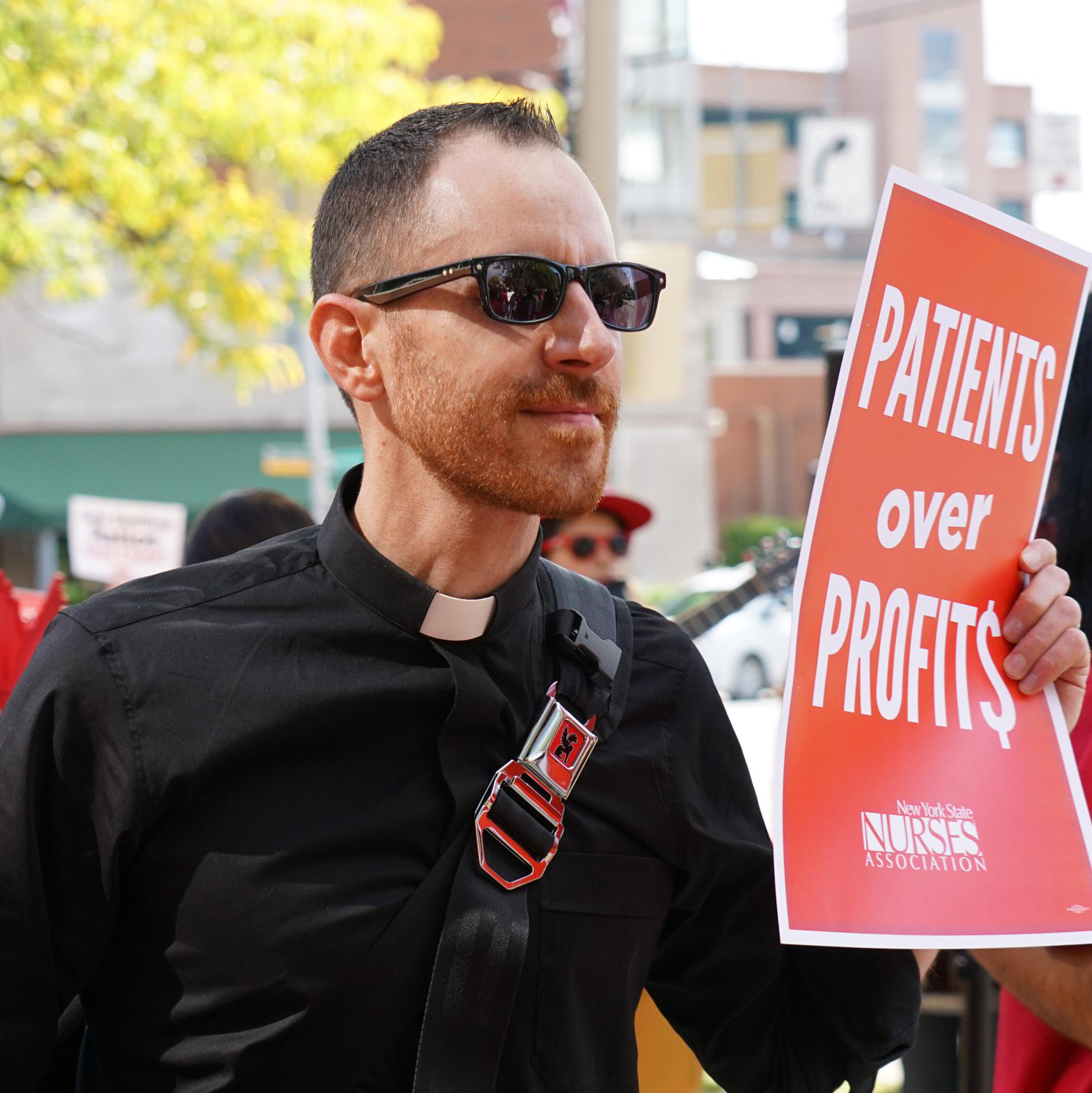
Joe Paparone
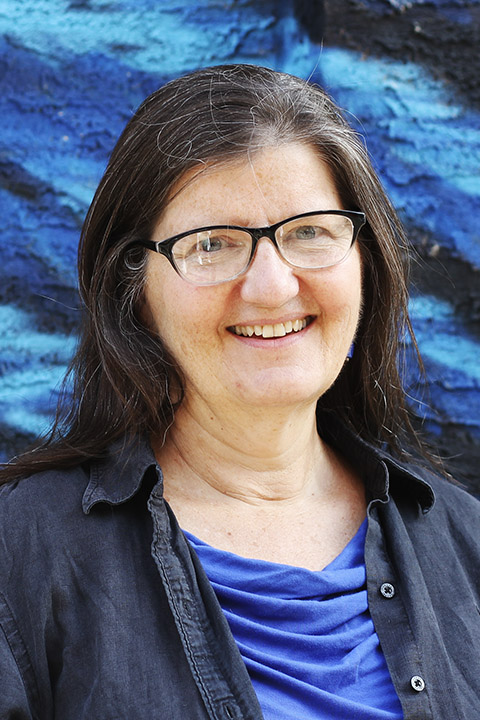
Joe Paparone is an organizer with the Nonviolent Medicaid Army, National Union of the Homeless, and the New York State Poor People’s Campaign. He is a credentialed leader in Mosaic Mennonite Conference and a member of Bethany Mennonite (Bridgewater, VT).
Mosaic values two-way communication and encourages our constituents to respond with feedback, questions, or encouragement. To share your thoughts or send a message to the author(s), contact us at communication@mosaicmennonites.org.



 The Assembly was centered on Psalm 133:1,3b, “How good and pleasant it is when God’s people live together in unity! For there the Lord bestows his blessing, even life forevermore.” The theme was Life Together, as the focus of the Assembly was that while these two conference may have split 170 years ago, they continue to do life together. A large part of the Assembly business this year was to look at whether these conferences would take the next step in their relationship, to look even more intentionally at reconciliation and what it would look like if they were to merge into one conference.
 The weekend began with Friday night worship led by Tami Good of Swamp Mennonite Church, which included a worship team of folks whose first languages were Indonesian, Spanish and English and who came from congregations in South Philadelphia, New Jersey, and Upper Bucks and Montgomery Counties. The opening prayer was given in Indonesian, Spanish, English and even Pennsylvania Dutch. Videos were shown that highlighted Souderton Mennonite Church’s
  The congregations in the Los Angeles area consist of Jemaat Kristen Indonesia Anugerah (JKIA) pastored by Virgo Handoyo, Indonesian Community Christian Fellowship pastored by Makmur Halim, and International Worship Church pastored by Buddy Hannarto. All three have had relationships with Franconia Conference for over a decade. The four congregations’ members are largely from Indonesia and joined with Franconia Conference pastors Aldo Siahaan of Philadelphia Praise Center and Beny Krisbianto of Nations Worship Center to share in a song. To learn more about these congregations check out their
  The joint Franconia and Eastern District Conference Saturday worship was a time of song,
  The core recommendation from the team is that Eastern District and Franconia Conference “enter a formal engagement process for the purposes of healing and reconciliation and with the intention of becoming a single, unified conference by November 2019.” In order to do this, the team recommended the forming of two teams: one to work intentionally at addressing the “spiritual and emotional components of reconciliation,” known as the “Healing and Reconciliation Team”, and the other being the “Identity Development and Structural Implementation Team,” tasked with managing “the process of forming a single unified conference, with particular attention to the structure, staffing, financial, and cultural realities of creating a single conference from the two existing conferences.”
 After a short break, the conferences gathered in separate rooms where their delegates recorded on flip chart paper their largest affirmations and concerns regarding moving forward with the recommendations. Present were David Brubaker and Roxy Allen Kioko, consultants from Eastern Mennonite University who had been hired in 2016 and were working with the Exploring Reconciliation Reference Team. Following this and some open microphone time for questions and answers, the delegates voted. With a 90% affirmation from Franconia Conference and a 99% affirmation from Eastern District Conference, both agreed to move forward with working at reconciliation and exploring more formally what a merged conference will look like.
