
• Skip to main content
  • Skip to primary sidebar
  • Skip to footer

Mosaic MennonitesMosaic Mennonites

Missional - Intercultural - Formational

  • Home
  • About Us
    • Our History
    • Vision & Mission
    • Staff
    • Boards and Committees
    • Church & Ministry Directory
    • Mennonite Links
  • Media
    • Articles
    • Newsletters
    • Video
    • Audio
    • Bulletin Announcements
  • Resources
    • Conference Documents
    • Missional
    • Intercultural
    • Formational
    • Stewardship
    • Church Safety
    • Leaders’ Resources
    • Request a Speaker
    • Pastoral Openings
    • Job Openings
  • Give
  • Events
    • Delegate Assembly
    • Youth Event
    • Conference Calendar
  • Mosaic Institute
  • Vibrant Mosaic
  • Contact Us
  • English
  • Español (Spanish)

Makinto

Do we really need diversity?

October 7, 2026 by Cindy Angela

by Makinto

Editor’s Note: This article first appeared in Leader magazine, Summer 2026, copyright ©MennoMedia. All rights reserved. Used by permission.

While studying at Eastern Mennonite University in 2025, I did an internship with Souderton (PA) Mennonite Church (SMC) as an adjunct worship leader and with Mosaic Mennonite Conference as the worship team coordinator for our annual assembly.

DIVERSITY IN THE CONFERENCE

Traditionally, the worship team meets the day before the assembly and rehearses previously planned music. Most of the musicians represent traditional white churches in Mosaic’s heartland.

I chose Nations Worship Center, an Indonesian Mennonite church in Philadelphia, as the base for the worship team. The musicians were from five nations and sang in seven languages. With four rehearsals, we prepared advanced arrangements and even an original song I wrote around the conference theme “Be my witnesses.”

This worship team reflected the true ethnic diversity of the conference and was a witness of what Jesus’ kingdom looks and sounds like: “a great multitude that no one could count, from every nation, from all tribes and peoples and languages, standing before the throne and before the Lamb” (Revelation 7:9 NRSVue).

In contexts like that, diversity is called for and needs to be manifested, not just in the representation of different cultures, but in participation and direction. Diversity is not just the presence of minority groups that the majority group can present as a token of inclusion. Instead, active participation of all groups is needed, sharing power as a sign of equity and mutual accountability.

But is diversity always called for? Is immediate integration always a good thing?

DIVERSITY IN THE CONGREGATION

I ask this question within a US Mennonite context, and it connects to my second internship assignment. I brought new worship styles to SMC, such as African songs, drumming, movement, and drum processions. The congregation, although initially challenged, was receptive and excited about those worship expressions. Some Mennonite congregations are indeed ready to grow in their embrace of culturally different worship expressions, especially when those cultures are represented in their congregation.

SMC is proactively reaching out to African refugees and asylum seekers in their community, and the church is trying its best to welcome them into all aspects of congregational life. However, this process is not without challenges and can be wrought with cultural misunderstandings.

UNDERSTANDING POWER DYNAMICS

I witnessed a Sunday school class with both traditional Mennonites and BIPOC (Black, Indigenous, People of Color) participants. White people dominated the conversation, while the mostly African attendants contributed very little.

In most African cultures, people don’t speak until called upon and respond with a story rather than with two-word responses or matter-of-fact solutions. In The Wolf Shall Dwell with the Lamb, Eric H. F. Law discusses low- and high-power distance cultures. People from the Global South belong to high-power distance cultures, where authority is not questioned and inequality is accepted as normal reality.

On the other hand, white North Americans, belonging to low-power distance cultures, question authority, assume power dynamics can be changed, and don’t readily acknowledge their positions of power. Even when a white congregation is open to embracing other cultures, the power dynamics are hard to reconcile. Tensions and even failure of the process can result from these cultural misunderstandings.

SMC’s pastor Ken Burkholder was open to suggestions about streamlining the integration process. We started a Sunday school class to encourage the BIPOC participants to express themselves freely within a familiar and culturally safe space and build an identity that they could then offer to the congregation. These meetings were fruitful. People shared their valuable perspectives on biblical passages and confided their often-painful stories to one another. “

I worked with the pastoral staff to enhance their understandings of African cultural specificities. Pastors and staff need to understand the history, cultural particularities, and colonial traumas of the specific countries from which immigrants come, as there are no “Africans” but rather Congolese, Angolans, Burundians, Sudanese—all who have distinct cultures and traditions. The Democratic Republic of Congo has over three hundred ethnic groups. Ethiopians, Congolese and Nigerians, just to name a few, have significant cultural differences. In most African cultures, the pastor has a godlike status and is not criticized, while in white culture the pastor is considered a friend and buddy.

Aiming for integration and diversity in the church is a messy affair. It takes hard work to achieve a power equation that assures free and balanced relationships.

DIVERSITY BUILT ON RIGHT RELATIONSHIPS

The same challenges exist in the wider American and Canadian church. Diverse churches and conferences are often majority-white groups with a few BIPOC elements sprinkled throughout. The power dynamics are solidly established on the white side. That’s why diversity is often not a desired condition from the minority perspective. Diversity often means that the white majority is in charge and may allow the BIPOC members to occasionally manifest their difference in a controlled manner. The principle of diversity is emphasized without forging healthy relationships.

True diversity is difficult to achieve in a majority white context. However, in a diverse community, the church should reflect its social context in its leadership. SMC recently took a step in the right direction in electing its first African member to the church board.

On the conference and denominational levels, we indeed should strive for diversity, as our communities are increasingly multicultural. We must come together and learn from each other’s cultures and worship expressions.

As a person of African heritage, I enjoy loud, rhythmic praise with a full worship band; nevertheless, I can partake and enjoy calm hymn singing with traditional Mennonite congregations. Leading the worship at the Mosaic assembly, I chose hymns, African songs, contemporary worship music, and gospel songs in many languages. We gathered as one, to the glory of God.

My internship at SMC ended on a high note with the added chorus “Tupe amani,” sung in Swahili, translated from the Latin “Dona nobis pacem“. The One we worship gives us peace and unifies us into a kingdom of joy, justice, and compassion for our neighbor—the perfect basis for diversity in equity, expressed in the love of Jesus!
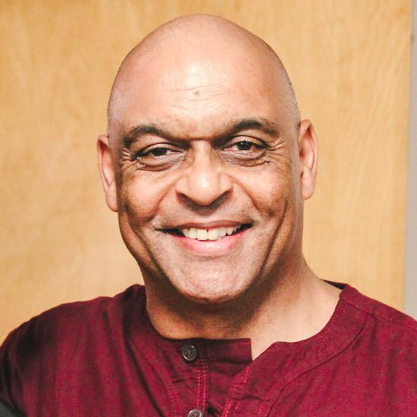

Makinto

Makinto is the Associate Pastor of Worship and Mission with Los Angeles (CA) Faith Chapel and co-director of Amahoro International (AMI), a Mosaic Conference-Related Ministry promoting peace and development in East Africa.

Mosaic values two-way communication and encourages our constituents to respond with feedback, questions, or encouragement. To share your thoughts or send a message to the author(s), contact us at communication@mosaicmennonites.org.   

Filed Under: Articles Tagged With: Amahoto, Los Angeles Faith Chapel, Makinto

My Calling to Pastoral Ministry

January 8, 2025 by Cindy Angela

By Makinto

Growing up as an atheist in a staunchly secular German family, nothing prepared me nor foreshadowed my call to ministry, other than the will and plan of God in his infinite mercy and wisdom. Although I was surrounded by churches, the primary purpose of a church, in the eyes of my father, was to host organ concerts or be the objects of admiration for historical facts and architectural beauty. Although a protestant church offered rehearsal space to my first teen jazz band, the first time I heard the gospel was at age 16, on a European bicycle tour, when I was accosted by a barely older teen at a fountain in Rotterdam, Netherlands who explained Jesus to me in two minutes. 

Curiously, many of the songs I wrote in my early professional music career, even before coming to Christ, talked about mercy, love, a higher power or even God. It was as if my spirit longed to have a relationship with a creator I didn’t know. God also endowed me with a personality that seeks balance and reconciliation and is interested in other people’s well-being, thus foreshadowing pastoral characteristics. 

 As a professional musician and performer, I was keenly aware that music had the power to bring people together and create an atmosphere of unity, albeit temporarily. I even experienced the redeeming and healing power of music: one night in Paris at an after-hours jazz bar, I performed an original song describing the power and glory of God (this was 10 years prior to giving my life to the Lord Jesus). A distinguished elderly lady in the audience was healed from a chronic condition, which she testified about tearfully the following night, attributing it to listening to my song the previous evening. Although I lacked a personal relationship with God at the time, I nevertheless got a glimpse of God’s power and care for his people.   

Being a critical and analytical person, I researched every mayor religion to understand their core values and teachings: I read the Quran, the Bhagavat Ghita, Confucian Analects, and the Bible. All these writings talked about love as the central element of God’s transforming power and character. Fast forward to 1999 at Day Spring Church, a Bible-believing, Holy Spirit-filled charismatic church in New York City. I was increasingly convinced that the real, living God teaching, expressing, and modeling true love was the one who sacrificed himself on the cross for the people he loved. On a trip to Burkina Faso in May 2000, I gave my life to the Lord Jesus Christ. 

My wife Mukarabe and I promptly immersed ourselves in praise, prophetic, and intercessory ministry and were ordained into ministry by Dayspring Church in NYC in 2003. That same year, prompted by the Holy Spirit, we left the East Coast and journeyed 11 months in a travel trailer across the continental United States. God taught us valuable lessons concerning faith, prophetic ministry, provision, healing, and obedience. We became the praise team for a church in Mississippi for three months, opened a soup kitchen, held revival and reconciliation services, and praised Him on campgrounds, city parks, and churches of many denominations in what we called “A family traveling for Jesus.”  

In 2005 God led us to Los Angeles (California) Faith Chapel, an urban church in LA mostly attended by Nigerians and African Americans, affiliated at the time with PSMC (Pacific Southwest Mennonite Conference). Pastor Chuwang Pam invited me to be part of his pastoral staff as Associate Pastor of Worship and Men’s ministry, true to the central mission of the church found in 2 Timothy 2:2.  

Since then, God has allowed me to serve three churches as Pastor of Worship and Musical director, teach and preach the word, gain a certificate in Anabaptist studies from Hesston College, and be a credentialed minister in the process of ordination at Mosaic Conference.  

My pastoral role extends also to our mission in East Africa. Amahoro International, our nonprofit organization and Conference-Related Ministry (CRM) of Mosaic Conference, operates a refugee development center in Uganda. I have come to realize that God has equipped me for service in unorthodox pastoral, missional, and counseling positions that don’t always fit traditional church settings. The same is true for Joyful Music & Arts, the music school I founded in 2009 in California. Many students call me their pastor, and some of them do not attend or are not declared Christians.  

This is not to say that I won’t at some point respond to a pastoral calling in a local church or plant one, here in the US or in Africa. But I have learned to follow the Holy Spirit’s leading, and He has often led me towards unorthodox ministry according to His will. His thoughts are indeed higher than our thoughts, and his plans higher than ours. Despite my own shortcomings, I have learned to trust and wait on God’s leading. 


Makinto

Pastor Makinto is director of Amahoro International, a mission organization promoting peace and development in East Africa, a Conference-Related Ministry. He has toured the world for 30 years as an international musical performer. 

Filed Under: Articles, Call to Ministry Stories Tagged With: Call to Ministry, Call to Ministry Story, Makinto

Let’s Dance!

December 12, 2024 by Cindy Angela

by Makinto

Editor’s Note: A version of this article first appeared in the Summer 2024 issue of Leader magazine, and has been reprinted with permission.  


Some time ago, my wife asked me, “Why is there such a resistance in American churches to dancing?” The Bible references dancing as a valid and vital expression of praise (Psalm 149:3). King David danced wildly before God as an expression of joyful thanksgiving (2 Samuel 6:14). 

My wife is from Burundi. Throughout Africa, a primary expression of praise is dancing, where moving to the beat of rhythmic music is an essential component of life and, naturally, one of the most immediate expressions of praise. 

We thought about a ministry invitation to a Pennsylvania Mennonite church last year. As I taught one of my original praise songs to the choir, I encouraged them to gently swing from left to right, also inviting them to clap their hands to the rhythm of the song. It caused a stir in the congregation—some indignant, some amused, many interested, and a few very excited to experience a new form of worship expression. 

Movement and dance can take many different forms in churches, according to their traditions. The expressive spectrum ranges from singing without any movement to choreographed ballet-styled dances, or improvised individual dancing including stomping, twirling, running, foot stomping, and jumping. There are liturgical dances, solo or in groups, expressive and choreographed worship dances narrating stories, and free individual dancing prompted by the Holy Spirit. According to the theological tradition of a church and its ethnicity, dancing is either forbidden, tolerated, orchestrated, or highly encouraged. 

WHY DO WE WORSHIP? 

Praising and worshiping God is not just a biblically prescribed activity (Psalm 150:6), modeled by our spiritual forebears who witnessed God opening the Red Sea, who partook in God’s victories, and danced wildly in thanksgiving processions. We worship God because we feel a personal and communal connection with God, acknowledging that God is simultaneously God Supreme, Lord of an eternal and unlimited kingdom, and Jesus Christ Emmanuel, God incarnate, who died and rose from the grave to invite us to a personal and vibrant relationship with himself. As we give ourselves to God in spirit and truth, our personal and collective worship becomes a sincere expression of our adoration for a mighty, living, and loving God. 

HOW IMPORTANT IS DIVERSITY IN WORSHIP? 

I have been invited to minister in several churches that were declared by the inviting pastors as diverse. Often, they were white churches with a few Black, Latino, or Asian folks sprinkled throughout the congregation. The worship was still monocultural, occasionally with Spanish subtitles, or crowned by the lone “Siyahamba” sung to a rigid beat. 

Isn’t it important to have a diverse worship program in the church, according to our understanding of the church as a multicultural, multinational body? 

As a person of mixed ethnicity, I am by nature diverse, but I am also sensitive to authenticity. I enjoy a rousing African American church service with pulsing rhythms, shouting, handclapping, a big choir, and a band. I equally enjoy an a capella, congregation-driven, four-part harmony Mennonite hymn sing or a two-hour African praise service with drums and joyful dancing. Worship needs to be authentic, a true expression of the people gathering in the church, expressing their identity as a group. As a church reaches out to other ethnic communities and finds harmony in a kaleidoscopic congregational mix, that church community can express that diversity, pulling members of every community into the active worship preparation and execution. Mosaic Mennonite Conference honors the cultural diversity of its congregations by including various worship styles and languages at all its conference-wide gatherings. 

Culturally or generationally diverse worship expressions need to be authentic, respectful, and inclusive, not just in the choice of songs or liturgical order, but in the preparation and participation of all diverse members. 

I once met a group of young men donning blue mohawk hairdos at a worship symposium. Responding to my curiosity, they told their story: 

We are worship leaders of a midsize church of about 800 members in Sacramento, and our senior pastor is 85 years old. In his office hangs a sign: “I respect and love you more than myself.” He lives it out every day and has groomed us through his sacrificial love. The pastor and his peers cherish hymns. Loving us youngsters, he has given us complete freedom to plan and execute the music for all three identical Sunday morning worship services. We love modern rock and praise songs, and he loves hymns, so we play both hymns and rock in worship. After a time of adjustment, our older generation began to love rock worship, and our younger folks are crazy about the hymns. 

What a great example of an integrated and generationally diverse worship expression. 

SHOULD WE ALL DANCE IN CHURCH? 

This question reminds me of Paul’s teaching about speaking in tongues in the church (1 Corinthians 14). It opens with the beautiful phrase “Let love be your highest goal!” and ends, “Be eager to prophesy, and don’t forbid speaking in tongues. But be sure that everything is done properly and in order.” Stretching the text a bit by replacing the word prophesy with worship and speaking in tongues with dancing, we get a sense of God’s message: Worship is an expression of love. God invites us to worship in harmony with each other and to refrain from disallowing diverse worship expressions, provided they don’t hinder others from worshiping God. 

Worship should always be authentic. We don’t need to start dancing exuberantly in church if we don’t feel like it, and we don’t need to sing songs in languages we don’t understand in the name of diversity. But when it reflects the heart of the congregation, different cultural expressions should be embraced into our worship, to the glory of God. A church with several ethnic groups may include a variety of worship expressions as it seeks to encourage deeper relationships between its diverse members and ultimately show the beauty and variety of different worship styles, foreshadowing transcultural worship in heaven when a great multitude from every nation and tribe, people and language, in the presence of all the angels and the elders, will worship God and sing: “Victory belongs to our God who sits on the throne, and to the Lamb” (Revelation 7:10). 

So, let’s dance? 

Reprinted from Leader, Summer 2024 Vol. 21 No. 4 © 2024 MennoMedia, Inc, Harrisonburg, VA. All rights reserved. Used with permission. 


Makinto

Pastor Makinto is director of Amahoro International, a mission organization promoting peace and development in East Africa, a Conference-Related Ministry. He has toured the world for 30 years as an international musical performer. 

Filed Under: Articles Tagged With: Amahoro International, LA Faith Chapel, Makinto

Primary Sidebar

  • Home
  • About Us
    • Our History
    • Vision & Mission
    • Staff
    • Boards and Committees
    • Church & Ministry Directory
    • Mennonite Links
  • Media
    • Articles
    • Newsletters
    • Video
    • Audio
    • Bulletin Announcements
  • Resources
    • Conference Documents
    • Missional
    • Intercultural
    • Formational
    • Stewardship
    • Church Safety
    • Leaders’ Resources
    • Request a Speaker
    • Pastoral Openings
    • Job Openings
  • Give
  • Events
    • Delegate Assembly
    • Youth Event
    • Conference Calendar
  • Mosaic Institute
  • Vibrant Mosaic
  • Contact Us

Footer

  • Home
  • Contact Us
  • Delegate Assembly
  • Vision & Mission
  • Our History
  • Formational
  • Intercultural
  • Missional
  • Mosaic Institute
  • Give
  • Stewardship
  • Church Safety
  • Leaders’ Resources
  • Articles
  • Bulletin Announcements

Copyright © 2026 Mosaic Mennonite Conference | Privacy Policy | Terms of Use
Aligned with