• Skip to main content
  • Skip to primary sidebar
  • Skip to footer

Mosaic MennonitesMosaic Mennonites

Missional - Intercultural - Formational

  • Home
  • About Us
    • Our History
    • Vision & Mission
    • Staff
    • Boards and Committees
    • Church & Ministry Directory
    • Mennonite Links
  • Media
    • Articles
    • Newsletters
    • Video
    • Audio
    • Bulletin Announcements
  • Resources
    • Conference Documents
    • Missional
    • Intercultural
    • Formational
    • Stewardship
    • Church Safety
    • Leaders’ Resources
    • Request a Speaker
    • Pastoral Openings
    • Job Openings
  • Give
  • Events
    • Delegate Assembly
    • Youth Event
    • Conference Calendar
  • Mosaic Institute
  • Vibrant Mosaic
  • Contact Us
  • English
  • Español (Spanish)

Josh Meyer

The Rich Young Ruler speaks

May 28, 2026 by Cindy Angela

by Josh Meyer

Editor’s Note: This reflection was originally published in Anabaptist World on April 28, 2026 and is reprinted with permission.  

People say I walked away sad. That’s true. But what they don’t say is that I also walked away haunted.

I can still see his face when I asked the question. I had rehearsed it, of course. Everyone does when they’re young and earnest and afraid of missing something essential. What must I do to inherit eternal life? It sounded clean when I practiced it. Respectable. Almost admirable.

He didn’t answer the way I expected. He didn’t flatter me, or scold me, or debate theology. He asked me why I called him good. Then he named the commandments, one by one, like stones placed carefully on the ground.

I remember feeling relieved. These I have kept, I said. And it was true. I wasn’t lying. I had lived carefully. Intentionally. My life was ordered, my faith sincere.

That’s when he looked at me.

The look was not sharp. It was not suspicious or disappointed. It was steady. Knowing. Almost tender. As if he could see not only the man standing before him but the boy I had been, the man I was becoming, the weight I carried without naming it.

The look undid me.

He loved me. I know that now. At the time, I didn’t have language for it. I only knew that something in his gaze felt like an invitation and a reckoning at the same time.

A rich young man asked: “Good Teacher, what must I do to inherit eternal life?”
Jesus said: “You lack one thing. Sell what you own and give the money to the poor, and you will have treasure in heaven. Then come, follow me.”

When he heard this, he was shocked and went away grieving, for he had many possessions.

Mark 10: 17, 21-22.

“You lack one thing,” he said.

Just one thing? I remember thinking that was manageable. One thing I could adjust. One habit to refine. One prayer to add.

“Go,” he said. “Sell what you own. Give to the poor. Then come, follow me.”

He said it simply, not as a threat or as a test, but as if he were naming the obvious next step.

I wish I could tell you I hesitated for a long time. That I wrestled with it. That I prayed and discerned and agonized right there on the road. But the truth is, my body answered before my spirit could catch up.

I felt the weight in my chest, the tightening in my throat, the inventory running through my mind — land, livestock, workers who depended on me, responsibilities I had inherited and assumed without ever questioning whether they were mine to carry.

My hands were full. I didn’t know how to open them without dropping everything. So I turned away.

Yes, I was sad. But sadness wasn’t the worst of it. The worst was that I knew he was right. He had named the thing I couldn’t name for myself.

In the years since, people have told my story for me. They’ve used it as a warning, a lesson, a neat illustration about wealth and discipleship. I don’t blame them. Stories like mine are easier when they end quickly.

But real lives don’t.

I went back to my fields, my house, my obligations. Everything was exactly where I left it. And yet nothing was the same. The barns felt heavier. The table quieter. The prayers harder to finish.

I continued keeping the commandments, but they no longer felt sufficient — like obedience that never quite crossed the threshold into freedom.

I began to notice things I hadn’t noticed before. The laborers who avoided my eyes. The hunger that didn’t come from lack of food. The way generosity felt exhilarating and terrifying all at once.

I started small. Quietly. Anonymous gifts. Canceled debts. A field sold here. A purse lightened there. More than I ever thought I would give away.

Less than he asked.

People praised my generosity. They said I was wise, faithful, balanced. But I knew the difference. There is a kind of giving that costs you comfort and another that costs you control.

I reread the commandments often now. Not to reassure myself but to remember the God who gave them. The God who brought slaves out of Egypt with empty hands and taught them how to receive manna, one day at a time.

Sometimes, late at night, I wonder what my life would have been if I had said yes that day. What roads I would have walked. What stories I would have heard. What I would have learned by following instead of managing.

Other times, I wonder whether he knew I would walk away. I wonder whether the invitation itself was already grace. I wonder whether love can be real even when it is refused.

I still pray. Not as confidently as I once did, but more honestly.

And sometimes I imagine him walking my road again. Not to shame me. Not to repeat the demand. Just to look at me the way he did before.

If that day comes, I pray my hands will be lighter. And my heart, finally, full.
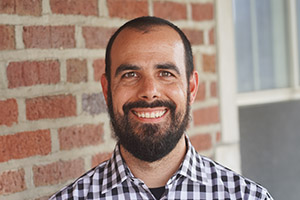

Josh Meyer

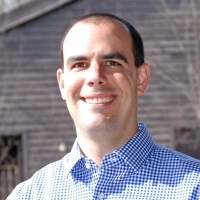
Joshua Meyer is a Leadership Minister with Mosaic Mennonite Conference. He also serves as a Financial Consultant with Everence and as an adjunct professor at Eastern University.

Mosaic values two-way communication and encourages our constituents to respond with feedback, questions, or encouragement. To contact Josh Meyer, please email jmeyer@mosaicmennonites.org.
Filed Under: Articles, Blog Tagged With: Josh Meyer

Anabaptism at 501: Rooted, resilient, ready for what’s next

January 1, 2026 by Cindy Angela

by Josh Meyer

Editor’s Note: Originally published on Dec. 22, 2025, in Anabaptist World and reprinted with permission.  

We’ve celebrated 500 years. That’s no small thing. But anniversaries are never just about what’s behind us. They’re also about what’s ahead. 

Anabaptism at 501 and beyond must be more than a historic label. It must be a living, breathing way of following Jesus. 

So, what do I think the future holds for our tradition? What do I hope it holds? 

I see both danger and promise. I’ll name three tensions I believe the church must navigate with wisdom and courage, plus three hopes I pray will take deeper root. 

Tension No. 1: Nostalgia vs. imagination

There is a temptation in anniversary years to romanticize the past. We tell the stories of Michael Sattler and the Schleitheim Confession, and rightly so. But we sometimes forget that those stories were forged in risk, innovation and improvisation. 

Anabaptists didn’t start out with a clear road map. They started with conviction, community and costly trust in Jesus. We honor them not by copying their methods but by joining their spirit, rooted and responsive, unafraid to follow Jesus into new terrain. 

In a rapidly changing world, nostalgia will not sustain us. Imagination will. What will church look like when it’s no longer centered around buildings, bulletins or Sunday mornings? What will discipleship look like in a digital, disembodied age? 

The Anabaptism that flourishes in the next 500 years will not depend on how well we preserve our traditions but on how faithfully we follow Jesus, even when it means letting go of the ways we’ve always done things. 

Tension No. 2: Isolation vs. interdependence 

Historically, we’ve drawn boundaries to preserve faithfulness. And there’s wisdom in that. But in a global church increasingly connected and postdenominational, we risk becoming siloed, even self-righteous, if we define ourselves only by what we are not. 

Our tradition has deep gifts — peace witness, mutual aid, community discernment, nonconformity, simplicity — but they are meant to bless the broader body of Christ, not stay locked in our theological cupboards. 

I believe the future of Anabaptism will be ecumenical and intercultural, or it will shrink into irrelevance. I’m seeing this already in younger leaders who are less concerned about denominational lines and more focused on lived discipleship. They want to learn from a Benedictine monk and a Mennonite farmer. They want to plant churches that look like the Kingdom, not like 1980s White rural America. 

That means partnerships, mutual learning and a posture of humility. It also means cross-cultural leadership, translation of our core convictions into new languages and trust that the Spirit is not only behind us but ahead of us. 

Tension No. 3: Burnout vs. hope 

I’ve seen it in my peers — pastors weary from polarization, exhausted from culture wars, unsure how to lead congregations that span five generations and 10 worldviews. Some are quitting; others are staying, but struggling. 

The future of Anabaptism cannot rest on hero pastors or perfect programs. It must be carried by a community of hope, one where leadership is shared, where vulnerability is honored and where the Spirit breathes new life. 

This is a time for reimagining how we care for leaders and communities. It’s time to embrace spiritual formation not as an optional add-on but as the heart of our life together: sabbath rhythms and shared meals, spaces to grieve and to question, opportunities to learn and to practice our faith, invitations to play and to pray together. These are not distractions from the mission. They are the mission. 

A burned-out church will not bear good news. But a hopeful church — even a small one — can. 

Hope No. 1: A church that looks like the neighborhood 

My prayer is that Anabaptist congregations would look more and more like the communities they’re rooted in. Not just demographically, but in language, practice and relational depth. 

That will mean letting go of uniformity. It will mean embracing bilingual worship, lay-led expressions of church and a willingness to be uncomfortable. It will mean investing in leaders who weren’t formed in our systems. It may mean giving up control. 

But it will also mean that our churches feel less like enclaves and more like households of hospitality — sacred spaces where immigrants, refugees, seekers and skeptics find belonging and where Jesus is encountered in shared life, not just shared doctrine. 

Hope No. 2: An economy of enough 

We need a renewal of economic imagination. In a world addicted to accumulation and defined by scarcity, the early Anabaptists embodied a radical form of mutual aid. 

I see glimpses of this today: churches paying off medical debt, co-housing experiments, alternative retirement models, congregational sharing funds and people using donor-advised funds for joyful, intentional generosity. 

What if we became known not just for rejecting violence but for rejecting greed? What if we lived “enoughness” in such compelling ways that our neighbors began asking questions? 

We cannot preach peace while bowing to capitalism. We cannot talk about community while ignoring inequality. Anabaptism must remain a spiritual movement and embrace its potential as an economic movement as well — rooted in justice, generosity and joyful resistance. 

Hope No. 3: A church awake to the presence of Christ 

Finally, I hope we stay awake. Awake to the presence of the Risen Christ among us: in scripture, in creation, in the breaking of bread and the breaking of bodies. 

I hope we keep listening for the Spirit: in silence, in song, in shared discernment.  

I hope we recover a sacramental imagination: for communion and baptism, yes, but also for compost bins and conflict transformation, for parenting and protest, for financial planning and footwashing. 

Anabaptism at its best has always been about lived faith and embodied discipleship. Not just right belief, but right practice. Not just Sunday worship, but Monday courage. 

That is what the world needs now. And that, I believe, is what Christ is calling us toward: a church rooted in love, resilient in hope and ready for whatever comes next. 


Josh Meyer

Joshua Meyer is a Leadership Minister with Mosaic Mennonite Conference. He also serves as a Financial Consultant with Everence and as an adjunct professor at Eastern University.

Mosaic values two-way communication and encourages our constituents to respond with feedback, questions, or encouragement. To contact Josh Meyer, please email jmeyer@mosaicmennonites.org.
Filed Under: Articles Tagged With: Anabaptism, Josh Meyer

The Heart of Worship

November 21, 2024 by Cindy Angela

by Josh Meyer

I was recently asked to define worship in exactly six words. After a bit of thought, I offered the following answer, “Seeing God accurately and responding appropriately.” Anytime we get an accurate glimpse of who God is and are moved to respond, that’s worship. My friend, music director, and worship theologian Helen Eastburn puts it this way, “Worship is drawing near to God as God draws near to us.”

Another definition, offered by my former seminary professor, suggests that “the inner essence of worship is to know God truly and then respond by valuing God, treasuring God, prizing God, enjoying God, being satisfied with God above all earthly things. And then that deep, restful, joyful satisfaction in God overflows in demonstrable acts of praise from the lips and demonstrable acts of love in serving others for the sake of Christ.”   

I love how this definition emphasizes that: 

  • Worship begins with God  
  • Worship leads to deep, restful, joyful satisfaction in God  
  • Worship leads to praise from our lips  
  • Worship leads to acts of love in serving others  

Particularly in a consumeristic culture that trains us to evaluate experiences based on their enjoyment or benefit to us, I’ve found it helpful to be reminded that worship is not primarily about us. 

  • Exalting God is not about what we get out of it; it’s about choosing to praise and trust God regardless of our circumstances because we have faith that God is good. 
  • Worship is about giving God glory, not seeking to receive something for ourselves. We’ve already received – which is why we worship. Worship is a response. We’ve received the good news of Jesus Christ, the suffering, sacrificial love of a Father who sends the Son, and who sends the Spirit, so that we might be saved…in this life and in the age to come.
  • Worship is always, ultimately about God. 

A few years ago, I read a short post by pastor reflecting on the nature of worship.   

For the last three years I have had the immense privilege of serving in Honolulu. Yes, that Honolulu, in Hawaii. The one where the sun shines most every day, the temperature is always perfect, and the ocean is just a short walk away. What’s ironic about this is that I was born and raised in Anchorage. Yes, that Anchorage, in Alaska. While 7-year-olds here in Honolulu were learning the importance of sun safety and SPF, I was learning (the hard way) why not to lick the school flagpole in the middle of winter. Sometimes I feel like my life is one big contrast.  

Perhaps that is why I love the picture of worship in Leviticus 9:23-24. “When the people saw it (the Glory of God), they shouted for joy and fell facedown.” The people of Israel saw the glory of God and their appropriate response was to shout with joy AND fall facedown to the ground. It seems like the ultimate dichotomy, exuberance and contriteness, celebration and reverence.  

What an amazing visualization of this response to who God is, the worshipper bowing face to the ground but alight with a radiant smile! This paradox is our appropriate response to God. It’s not one or the other. It’s not even a balance between the two. It is both sides in all their fullness, together becoming our answer to the question of how we will respond to a glimpse of who God is.  


May we do that together as a people of faith across Mosaic Conference.  

May we see God accurately and respond appropriately.  

May we draw near to God as God draws near to us. 

May we bow in reverence and celebrate with joy.  


Josh Meyer

Josh Meyer is a Leadership Minister for Mosaic Conference.

Filed Under: Articles, Blog Tagged With: Josh Meyer, staff blog

To Shoot or to Sing 

February 8, 2024 by Cindy Angela

by Josh Meyer

1 Give thanks to the Lord, for he is good; his love endures forever… 
8 Let [us] give thanks to the Lord for his unfailing love and his wonderful deeds for humankind, 
9 for he satisfies the thirsty and fills the hungry with good things. 

Psalm 107:1, 8-9, NIV

The word הֹד֣ו (hō-ḏū) in the Hebrew Bible is fascinating. It means “to give thanks,” but it also means “to shoot.” We read in the Psalms: “I will give thanks to the Lord because of his righteousness; I will sing the praises of the name of the Lord Most High” (Ps. 7:17).  But the same word, הֹד֣ו, is also used in Jeremiah 50:14: “Take up your positions around Babylon, all you who draw the bow. Shoot at her! Spare no arrows…”   

To shoot or to sing…   

Both meanings of הֹד֣ו come from the same root word for “hand.” You can use your hands to draw a bow, or you can use your hands to lift in gratitude.   

Built into this one Hebrew word is the tension we all feel in life. Sometimes it’s easy to give thanks: life is going well, circumstances are manageable, we feel God’s blessings. Other times it’s much more difficult: we are tempted instead to “shoot” arrows – arrows of anger, cynicism, sarcasm, bitterness, judgement.      

To shoot or to sing… 

Tradition tells us that the psalm 107 was written by David after being wrongfully accused of conspiracy against King Saul, which would surely result in David’s death. He pleads to God: “…save and deliver me from all who pursue me, or they will tear me apart like a lion and rip me to pieces with no one to rescue me.” (7:1). It was a dark and potentially deadly situation for David. He had every right to spare no arrows.  

Yet, in the final verse he chooses to lift his hands in song. “I will give thanks to the Lord because of his righteousness and will sing praise to the name of the Lord Most High.” In reflecting on this psalm, Charles Spurgeon writes: “What a blessing would it be if we could turn even the most disastrous event into a theme for song, and so turn the tables upon our great enemy.” 

And that’s just it, isn’t it? Giving thanks is actually the more effective “weapon.” It’s easier to reach for an arrow than a song, but it always misses the mark. The bow never satisfies.   

But we turn the tables when we choose to give thanks to Jesus, the One who on the cross took every arrow humanity could shoot, then rose from the dead to begin the restoration of all things – from death to life; from darkness to light; from shooting to singing… 

This week, may you turn the tables by giving thanks.   

May you choose singing over shooting, giving thanks over slinging arrows.   

May you put down your bow and lift up your hands.     


Josh Meyer

Josh Meyer is a Leadership Minister for Mosaic Conference.

Filed Under: Articles, Blog Tagged With: Josh Meyer

Inspiring Books on Spiritual Reading and Commitment 

September 28, 2023 by Conference Office

“What an astonishing thing a book is,” writes Carl Sagan, who captures my love and appreciation for books quite well. “It’s a flat object made from a tree with flexible parts on which are imprinted lots of funny dark squiggles. But one glance at it and you’re inside the mind of another person, maybe somebody dead for thousands of years. Across the millennia, an author is speaking clearly and silently inside your head, directly to you. Writing is perhaps the greatest of human inventions, binding together people who never knew each other, citizens of distant epochs. Books break the shackles of time. A book is proof that humans are capable of working magic.”   

Here are two of the magic-working, shackle-breaking, people-binding books that I’ve been reading lately: 

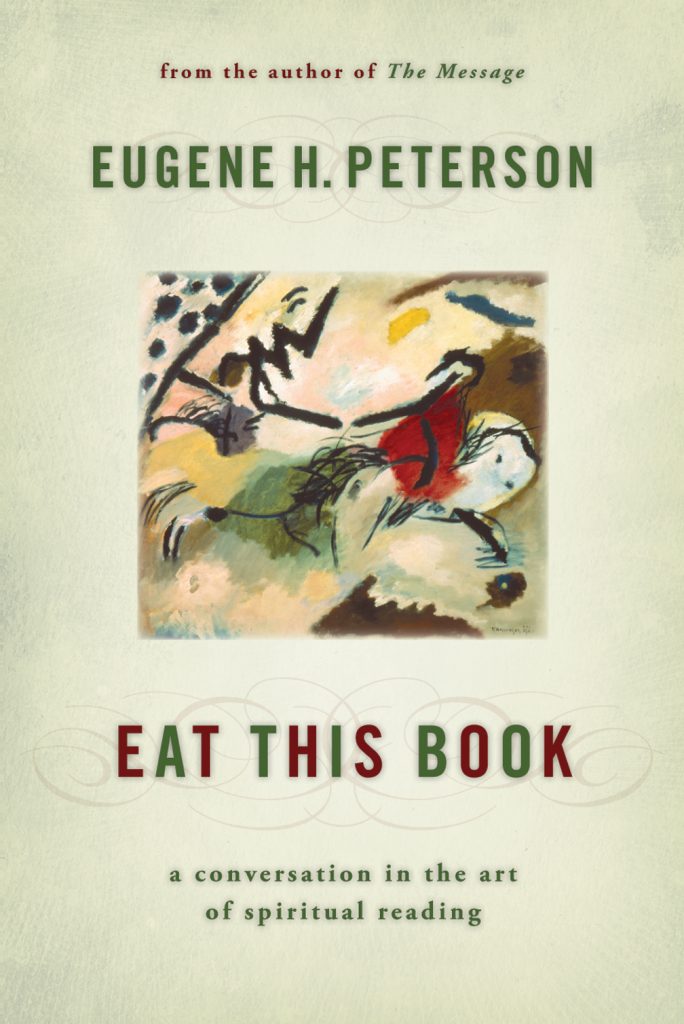
Eugene Peterson’s Eat This Book: A Conversation in the Art of Spiritual Reading  

I recently read this as part of the Mosaic Institute class I’m teaching called “Formed By Scripture.” In this rich and beautifully written book, Peterson argues that the way we read the Bible is as important as that we read it. Do we read the Bible for information about God and salvation, for principles and “truths” that we can use to live better? Or do we read it in order to listen to God and respond in prayer and obedience?   

In typical Peterson-style, Eat This Book is written with warmth and wisdom, offering readers greatly needed, down-to-earth counsel on reading the Scriptures on their own terms, as God’s revelation. He discusses the nature of language, the practice of lectio divina, the role of translations, and how to engage in the formative, life-changing art of spiritual reading.   

This book is the fruit of decades of reading, pondering, conversing about, praying over, and living the biblical story. If you are going to read a book about how to read “The Book,” it’s hard to do better than this one. 

David Brooks’s The Second Mountain: The Quest for a Moral Life  

Every so often you meet people who radiate joy, who seem to know why they were put on this earth, who glow with a kind of inner light. Life, for these people, has often followed what we might think of as a two-mountain shape.   

They get out of school, start a career, and begin climbing the mountain they thought they were meant to climb. Their goals on this first mountain are the ones our culture endorses: to be a success, to make your mark, to experience personal happiness. But when they get to the top of that mountain, something happens. They look around and find the view…unsatisfying. They realize, “This wasn’t my mountain after all.” There’s a different, better mountain out there for them to pursue. And so, they embark on a new journey.   

On the second mountain, life moves from self-centered to other-centered. They want the things that are truly worth wanting, not the things other people tell them to want. They embrace a life of interdependence, not independence. They surrender to a life of commitment, this time to the things with lasting value.   

In The Second Mountain, Brooks explores the four commitments that define a life of meaning and purpose: (1) to a spouse and family, (2) to a vocation, (3) to a faith, and (4) to a community. He argues that our personal fulfillment depends on how well we choose and execute these commitments.  

I resonated with the book’s central premise and found its discussion on the four commitments that make a meaningful life to be thought-provoking and reflection-generating. This is a book worth pondering.  

Filed Under: Articles Tagged With: Book Review, Josh Meyer

Reflections From the Holy Land 

August 10, 2023 by Cindy Angela

“How was the trip, Josh?  What were some of your major take-aways from Israel?” 

I’ve struggled to answer this question since returning home from a recent learning tour with about 35 folks from Franconia (PA) Mennonite Church.  We traveled together not merely as tourists, but rather as seekers of God on a spiritual pilgrimage.

Unpacking and processing the lessons from our journey will take a lifetime, but one key takeaway was a reminder of all the ways the Gospel is good news especially for “outsiders.”  At nearly every site we visited, I was confronted with this core biblical truth:  The Good News is more inclusive1 than we might think.

We visited Bethlehem and went to the Shepherds’ Field, where angels announced that the birth of Jesus would be “good news of great joy for all people.”  It was not just for a select few; not just for insiders; not just for those who believe all the right things.

We visited Capernaum, standing on the very shore’s edge where Jesus called his first disciples. The Bible describes them as “unschooled and ordinary.”  Later he calls tax collectors and zealots — traitors and terrorists — to be his followers.  These are the people he calls to follow him?  Yes, because the Good News is more inclusive than we might think.

We visited Magdala and were brought to tears as we considered the courage, sacrifice, and faith of Jesus’ female disciples – righteous women of God who played such a crucial role in Christ’s ministry: followers, students, disciples, patrons, evangelists. 

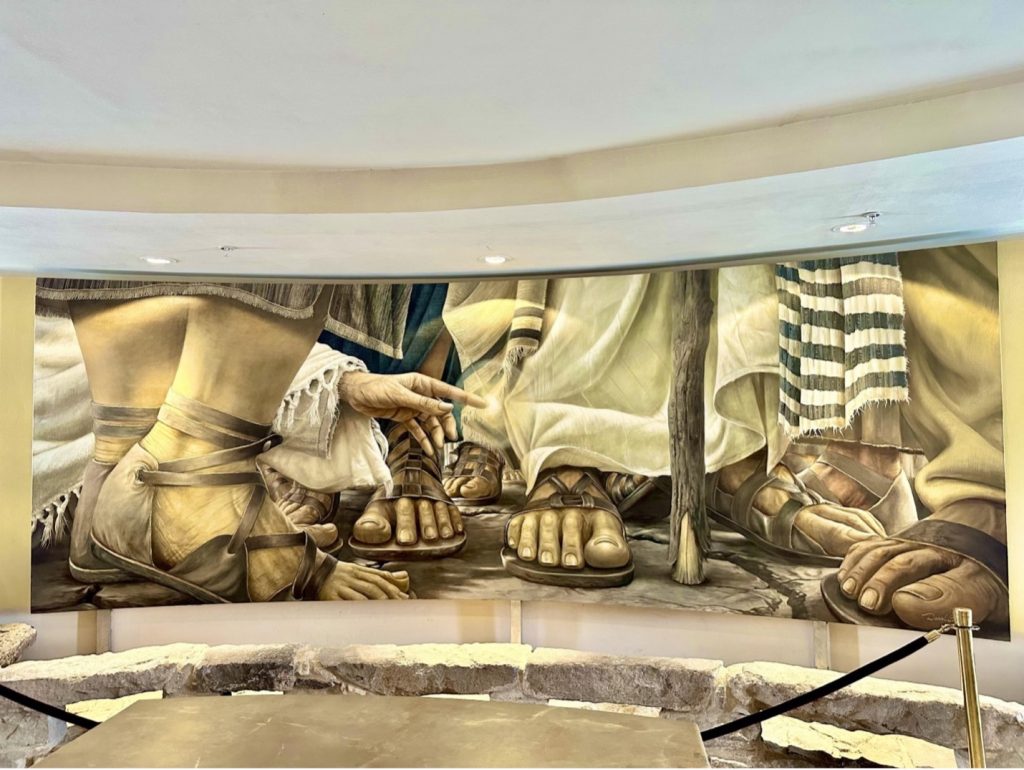
We stood in the Upper Room, where Jesus got down on his hands and knees and washed the feet of those who would betray him. I find this nearly incomprehensible.  Yet that is what he did. 

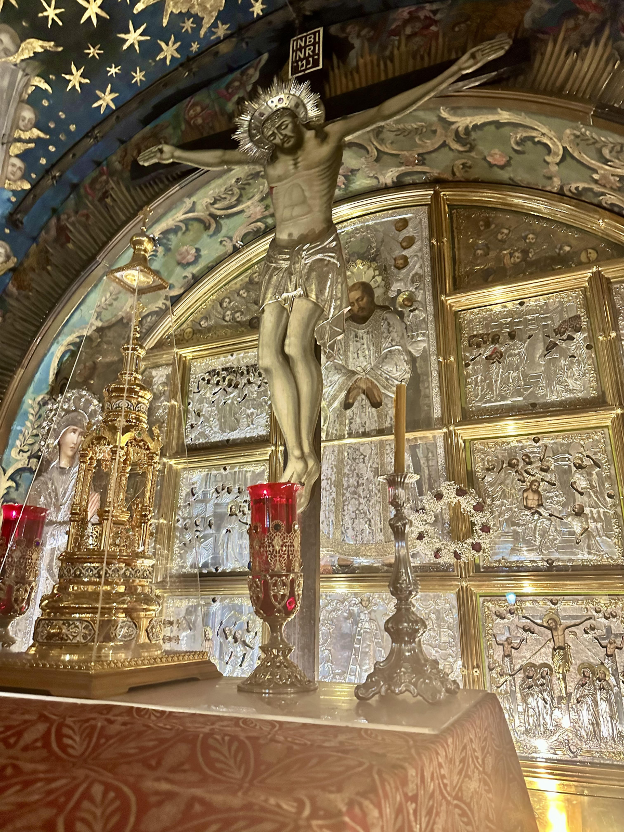
We visited the place where Jesus was crucified, touching with our hands the rock in which his cross was set, and we remembered how as he was being put to death, he prayed for his crucifiers: “Father, forgive them, for they don’t know what they’re doing.”

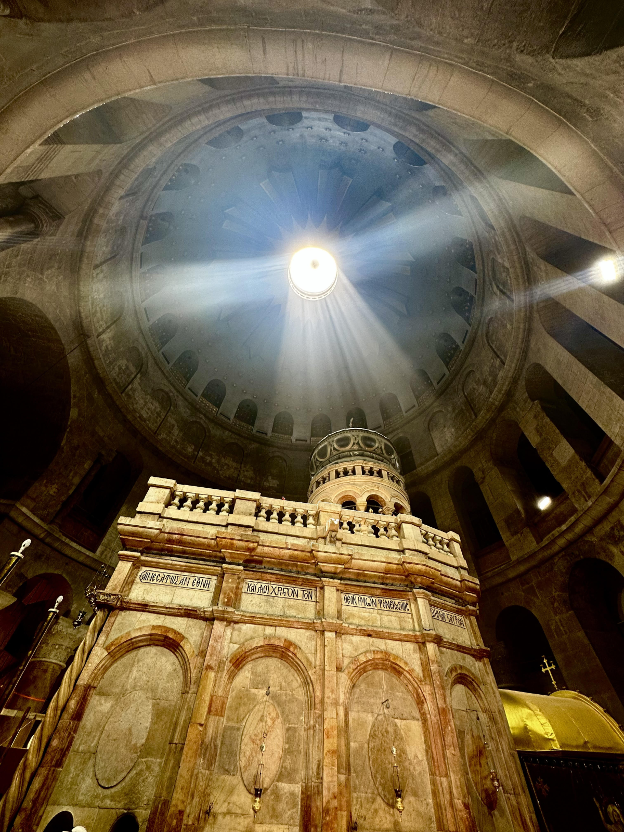
And then we went to the empty tomb, where Jesus defeated death and sin and shame, so that everything can be reconciled to God through him.  All things.  All people.  No exceptions.  The Good News is more inclusive than we might think.

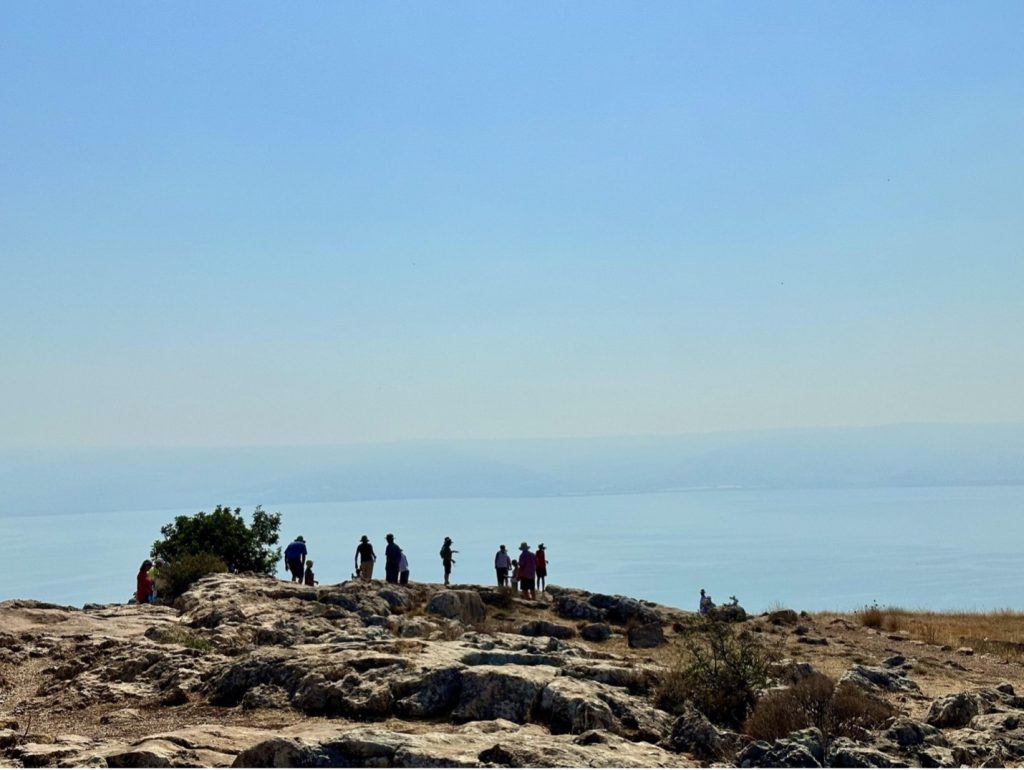
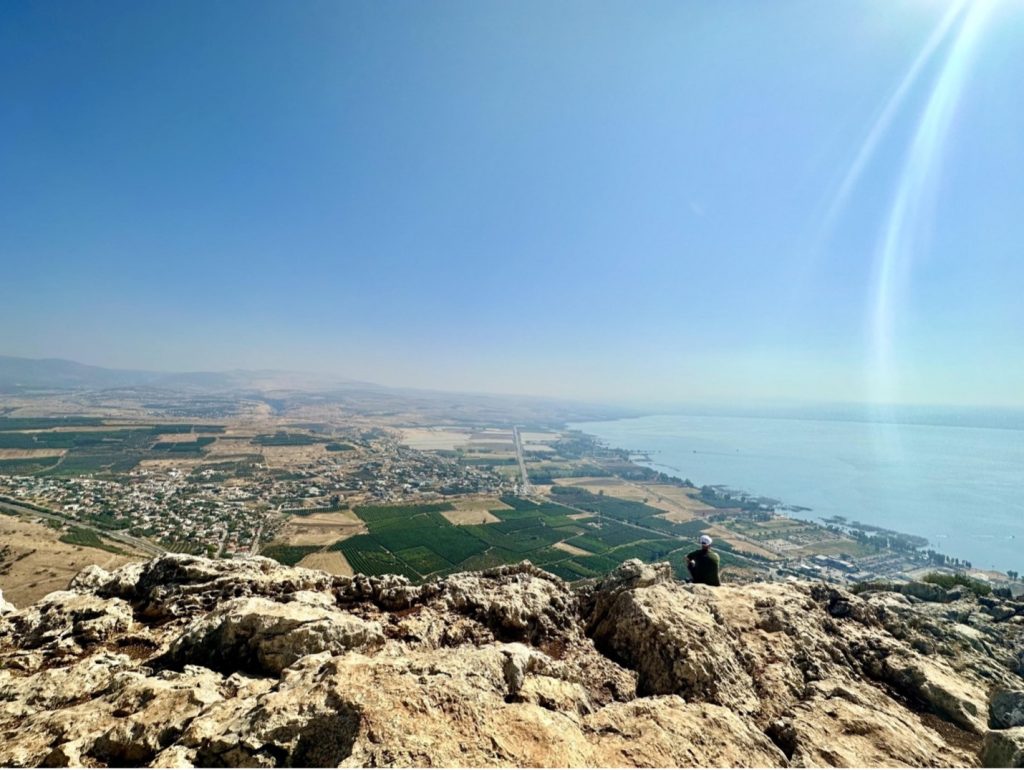
We climbed to the top of Mount Arbel, where Jesus met the disciples after the resurrection and gave them the Great Commission.  From that vantage point, atop the mountain overlooking the towns and villages and horizon, one gets a vivid sense of what’s in mind when he says, “Go and make disciples of all nations”: that is, as far as the eye can see.

The list goes on. If I took anything away from our trip to the Holy Land, from my study of Scripture, from following Jesus throughout my life, it’s this.  The Good News of the Gospel is more inclusive than we might think.

And as followers of Christ, our invitation – our mission — is to receive, embody, and extend this Good News to our community and to the world.

May it be so … and may it begin with you.


1 I’m using the word “inclusive” here in its most basic sense: expansive, all-encompassing, comprehensive in scope.

Filed Under: Articles, Blog Tagged With: Josh Meyer

Prayer as Surrender

March 22, 2023 by Conference Office

by Josh Meyer 

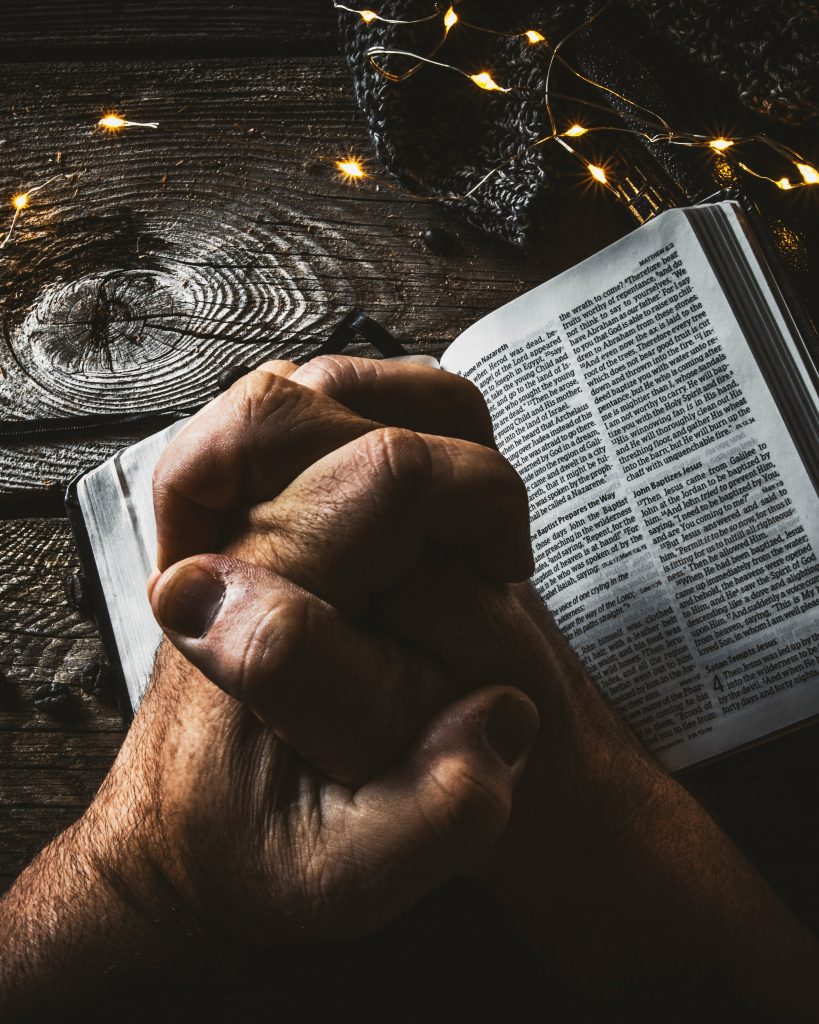
Franconia Mennonite Church recently engaged in a month-long series on prayer. We spent four weeks considering the purpose, posture, power, and practice of prayer. It was a rich and meaningful time, marked by biblical teaching and practical application. I was reminded once again that prayer is much more than bringing to God my list of wants, desires, and needs. It is a radical act of worship that reminds me who I am, who God is, and what life is all about.   

In short, prayer is surrender. 

Prayer is a radical act of worship that reminds me who I am, who God is, and what life is all about.   

[1] Prayer is surrender to the reality that there is someone more ultimate than you.

It’s natural for each of us to shrink our field of hopes, dreams, and daily concerns down to the small turf of our personal wants, needs, and feelings. Prayer is surrender to the worldview of the first four words of the Bible, “In the beginning, God…,” and as such, it reminds us of our rightful place. 

[2] Prayer is surrender to the reality that you need help. 

Prayer means humbly confessing that we are not autonomous, self-sufficient beings. We were not designed to live independent, detached lives. Prayer reminds us that we cannot be what we were made to be or do what we have been called to do without the personal, gracious, and continuous intervention of the One who made us. 

[3] Prayer is surrender to the reality that there is wisdom greater than yours. 

Prayer confronts us with the fact that we are not as smart as we tend to think we are. There is so much we don’t know or understand. Prayer reminds us that life is not found in our limited understanding, but in surrendering our lives to the care of the One whose understanding spans from before origin to beyond destiny and includes everything in between. 

[4] Prayer is surrender of your right to live as you choose. 

Prayer is bowing our knee to the reality that there is a limit to our personal freedom. This chafes against the rugged individualism of our culture. Yet Scripture reminds us that while “it is for freedom that Christ has set [us] free,” we are not to use our freedom primarily to indulge our own desires; instead, we’re called to use our freedom to serve others in love (Gal 5:1, 13-14). Prayer reminds us to consider not only our own interests, but also the interests of others (Phil 2:4). 

[5] Prayer is surrender of your hopes to God’s grace. 

Prayer is remembering that there is no hope in life and death that does not result from the grace of God. In prayer, we give up our hope in the self and place our hope in Christ.   

May you experience the Presence of Christ in a particularly deep and meaningful way as you surrender yourself in prayer.   


Josh Meyer

Josh Meyer is a Conference Leadership Minister and the pastor of Discipling and Preaching at Franconia Mennonite Church.

Filed Under: Articles, Blog Tagged With: Josh Meyer

A Pilgrimage to Biblical Greece

June 9, 2022 by Conference Office

In March, I co-led a group from my church, Franconia (PA) Mennonite Church, on a learning tour to Greece.  It was an incredibly meaningful experience, traveling with sisters and brothers in Christ on a spiritual pilgrimage to one of the world’s richest regions of biblical history.   

Why did we go? 

From the outset, the goals for this trip were to (1) increase learning, (2) deepen discipleship, and (3) strengthen relationships.  We were privileged to travel with Dr. Derek Cooper as our guide.  Dr. Cooper is an expert in biblical history and the lands of the Bible.  He provided remarkable insight and helped our group “put the text in context” in truly profound ways.   

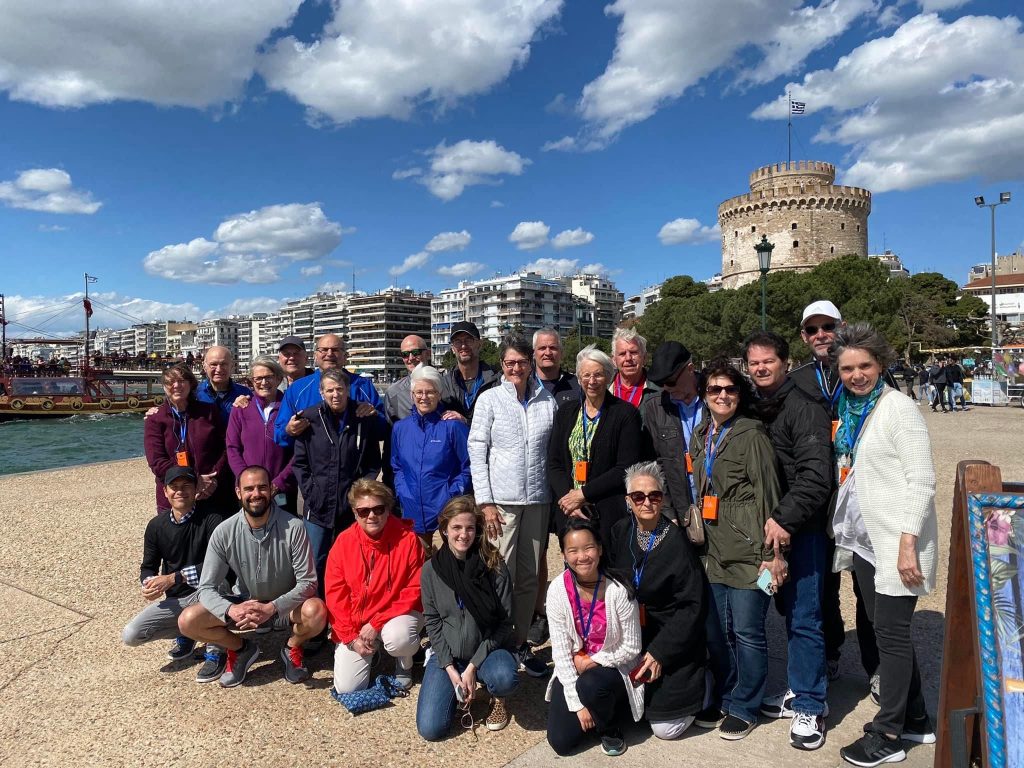
The group from Franconia (PA) Mennonite in Thessaloniki, Greece. Photo provided by Josh Meyer.

However, more than simply learning new and interesting information, we were also committed to this being a formational experience as well.  It wasn’t just about information; it was about encounter – encountering God deeply.  Through times of corporate worship, individual and group devotions, and regular opportunities for reflection, we were blessed with a deep spiritual experience.   

The 25 group members bonded relationally in ways that were life-giving and just plain fun.  There is a connection that’s established between those who travel together, particularly cross-culturally.  I’m grateful for the strengthened relationships that this trip produced. 

What did we do? 

We spent the first part of our journey in and around Athens: visiting the Acropolis, the ancient Agora, the Parthenon, the Herodian Theater, Mars Hill, Aristotle’s Lyceum, and Corinth, among other sites.  We then made our way north for the second half of the trip, visiting Delphi, the incredible cliff-side monasteries of Meteora, Berea, Thessaloniki, and Philippi.   

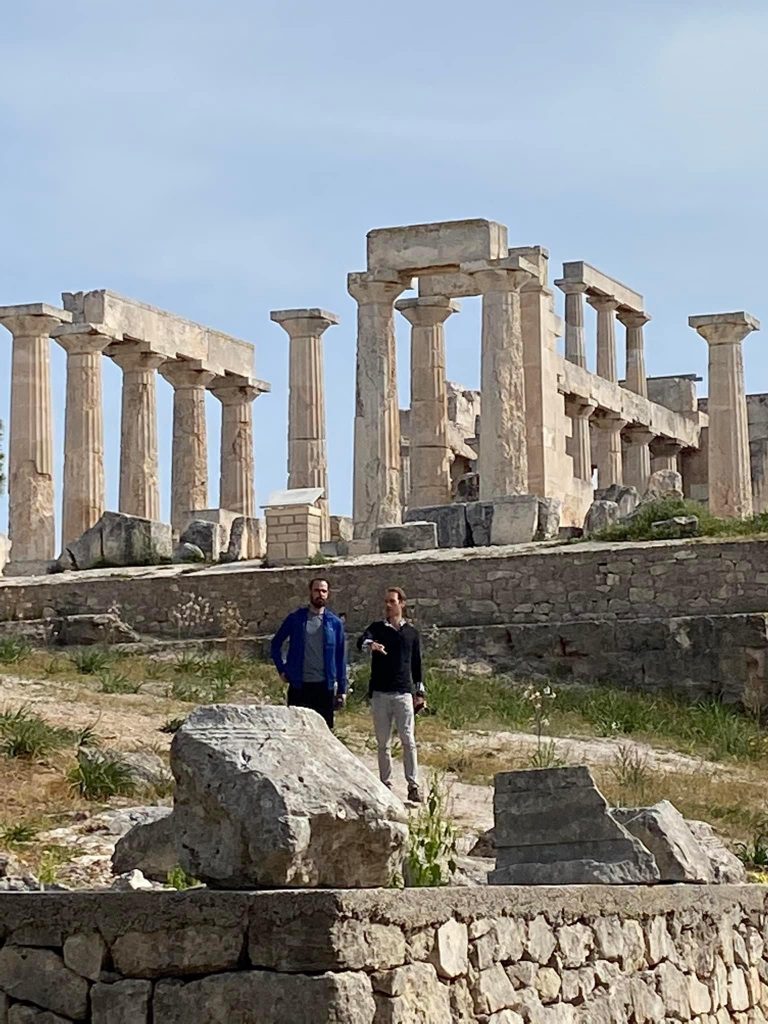
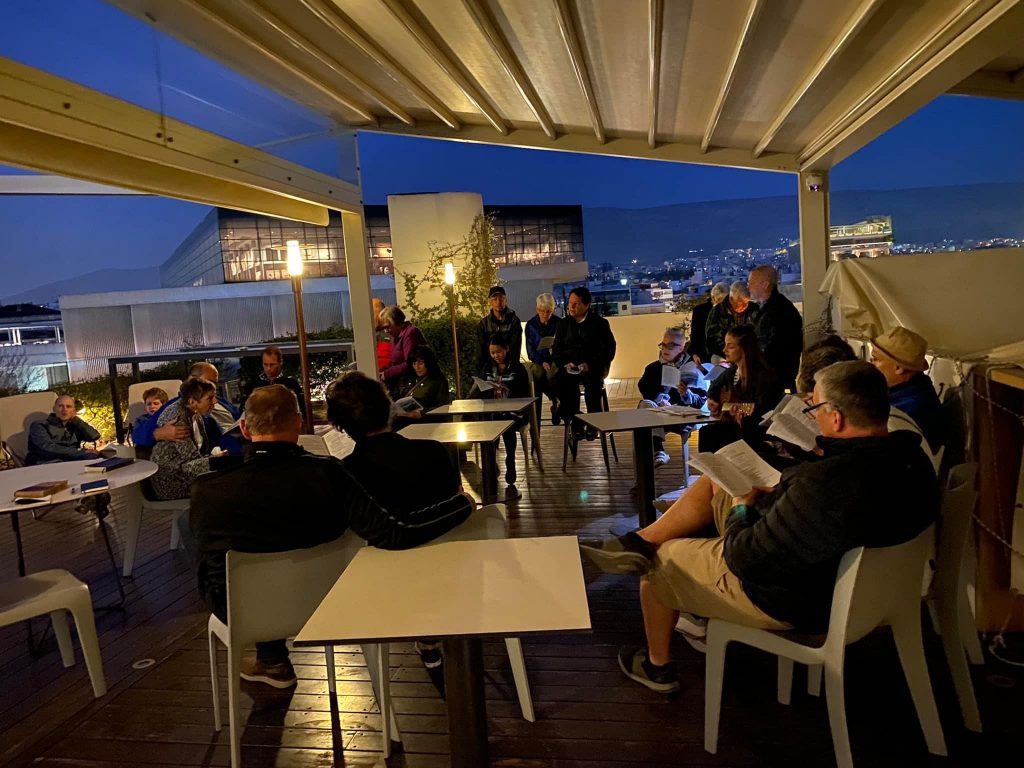
In addition to this formal itinerary, we also created space for unplanned activities: rooftop worship sessions, taking a speedboat to Aegina Island, renting four-wheelers, swimming in the Aegean Sea, running in the Olympic stadium, hiking Mount Parnassus, eating amazing Greek food, and enjoying gelato most every night. 

You can find a summary (with photos & brief commentary) of each day of the trip through the links at the bottom of this post. 

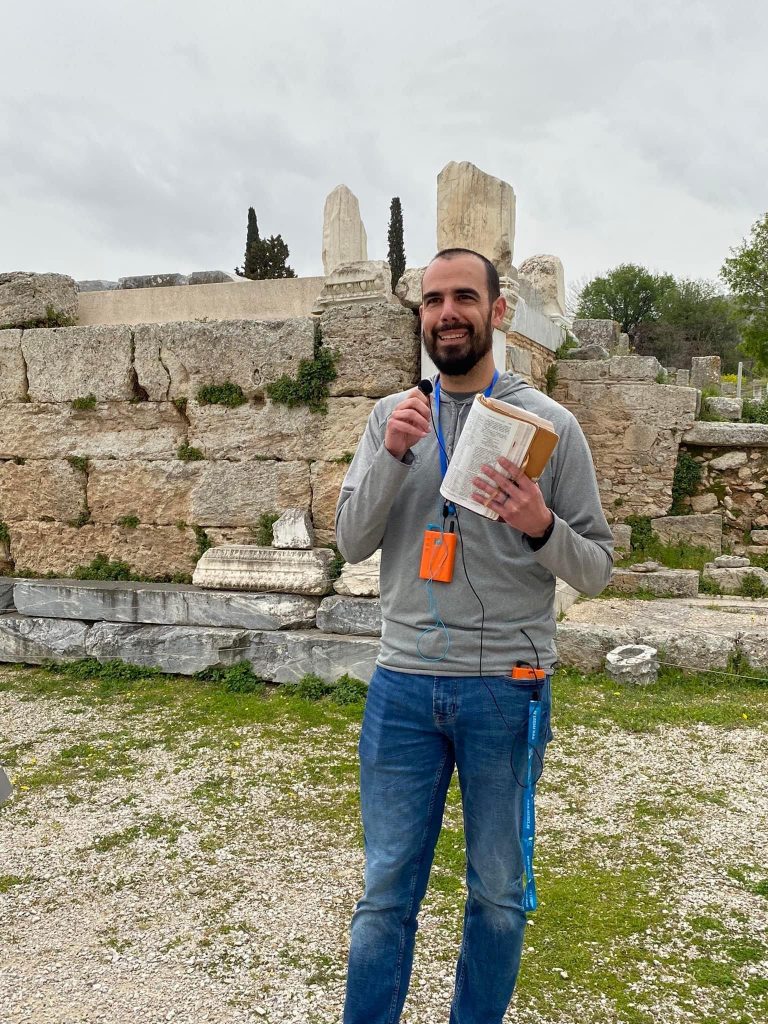
Josh Meyer in Corinth, Greece, on the exact spot where the Apostle Paul stood (Acts 18). Photo provided by Josh Meyer.

How did it impact me? 

There’s an ancient story about a rabbi with a young son who loved spending time in nature.  The boy spent hours upon hours playing in the woods and being in creation.  Finally, the rabbi asked his son why he insisted on spending so much time outside.  The boy said, “That’s where I connect with God.  I connect with God most deeply when I’m out there.”   

The rabbi replied, “Well son, you don’t need to go out there to connect with God.  God is the same out there as God is at home and in school and in the synagogue.  You don’t need to go somewhere else to experience God; you can experience God anywhere, everywhere.  God’s not different out there.” 

“Yes,” the boy replied, “…but I am.  I’m different when I’m out there.  Something changes within me that opens me up and allows me to experience God in different and deeper ways when I’m in that physical space.” 

For me, that captures why an experience like traveling to Biblical Greece was so meaningful and led to such deep discipleship.  Being “out there” – in the actual physical spaces where the Apostle Paul lived, worked, served, and proclaimed the Good News of Jesus – helped open me up to connecting with God in different and deeper ways.  For that, I am humbled and grateful.

Is there a better backdrop for a theological discussion? (Aegina Saronic Island, Greece) Photo provided by Josh Meyer.

Κύριε Ιησού Χριστέ, Υιέ του Θεού, ελέησόν με τον αμαρτωλό.


A summary of each day of our trip with photos: 
Day 1 | Day 2 | Day 3 | Day 4 | Day 5 | Day 6 | Day 7 | Day 8 | Day 9 | Day 10

Rooftop worship one evening in Greece. Photo provided by Josh Meyer.

Filed Under: Articles, Blog Tagged With: Franconia Mennonite Church, Greece, Josh Meyer

  • Go to page 1
  • Go to page 2
  • Go to page 3
  • Interim pages omitted …
  • Go to page 5
  • Go to Next Page »

Primary Sidebar

  • Home
  • About Us
    • Our History
    • Vision & Mission
    • Staff
    • Boards and Committees
    • Church & Ministry Directory
    • Mennonite Links
  • Media
    • Articles
    • Newsletters
    • Video
    • Audio
    • Bulletin Announcements
  • Resources
    • Conference Documents
    • Missional
    • Intercultural
    • Formational
    • Stewardship
    • Church Safety
    • Leaders’ Resources
    • Request a Speaker
    • Pastoral Openings
    • Job Openings
  • Give
  • Events
    • Delegate Assembly
    • Youth Event
    • Conference Calendar
  • Mosaic Institute
  • Vibrant Mosaic
  • Contact Us

Footer

  • Home
  • Contact Us
  • Delegate Assembly
  • Vision & Mission
  • Our History
  • Formational
  • Intercultural
  • Missional
  • Mosaic Institute
  • Give
  • Stewardship
  • Church Safety
  • Leaders’ Resources
  • Articles
  • Bulletin Announcements

Copyright © 2026 Mosaic Mennonite Conference | Privacy Policy | Terms of Use
Aligned with