
by Rachel Mateti
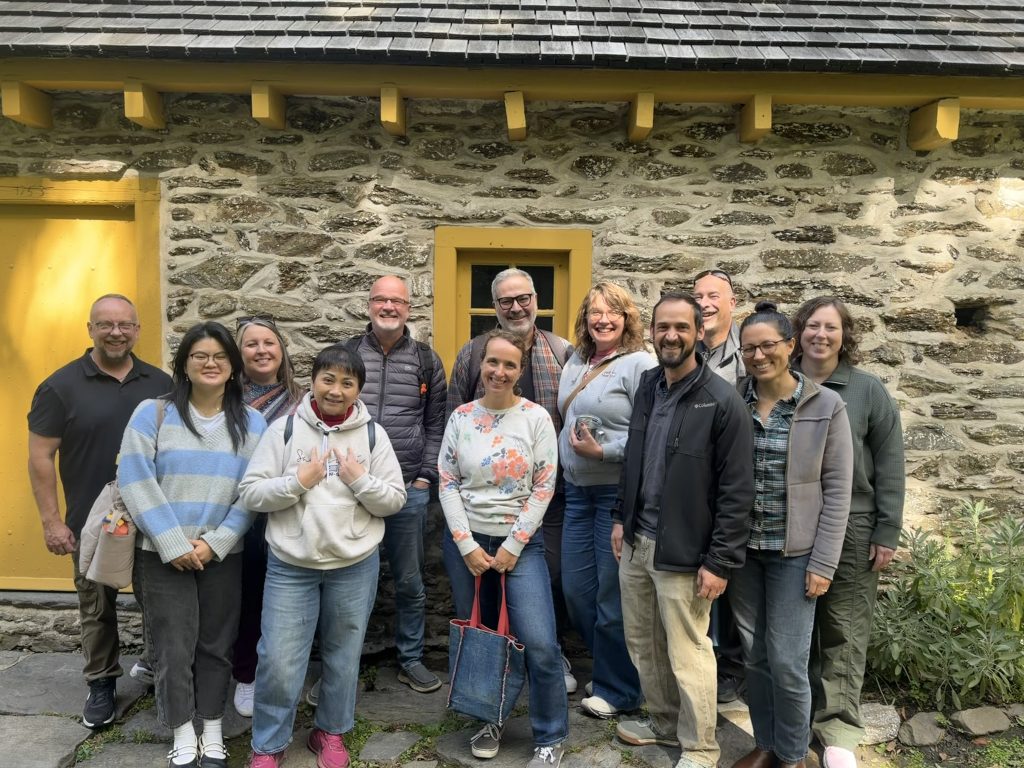
Back row l to r: Stephen Kriss, Rose Bender Cook, Steve Jones, Gino and Jill Curcuruto, Mark Boorse, Karen Bennett
Front row: Graciella Odelia, Vina Krisnadi, Rachel Mateti, Dan and Karisa Barlow
I am an Ethno Menno. That’s my version of “heritage Mennonite,” “cradle Mennonite,” “corn-fed Mennonite,” and the like. It’s my joking description of those of us whose ancestors have been Mennonite for generations. And as an Ethno Menno, I confess that I’ve held some unhelpful assumptions about myself and Mennonites in general. I also thought I knew most of what there was to know about Mennonites and our history.
Thankfully, taking the Mosaic Institute’s Introduction to Mosaic Conference class this fall challenged many of those assumptions, and I was surprised to learn so many new things. For instance, I was surprised to discover that many Dutch Mennonites were leaders in industry and involved in politics, and that a handful knew the famous painter Rembrandt well enough to have their portraits painted by him. I had assumed that most Mennonites stayed cloistered away from society and avoided political involvement. I also learned that the Hutterites trace their origins to the same regions as my ancestors, making us practically cousins! And while I might be able to trace 22 generations of Mennonite ancestors, people in the Indonesian Mennonite church can trace their heritage back to 1854, which is 17 generations. They are Ethno Mennos, too!
A deeper assumption I didn’t realize I carried was that being an Ethno Menno meant my story is at the center of the conversation. Through reading, listening to others in my class, and meeting with several local leaders, I began to realize that my history, family background, and heritage are just one part of what it means to be Mennonite in Mosaic Conference. I am one flower in a bouquet of many.
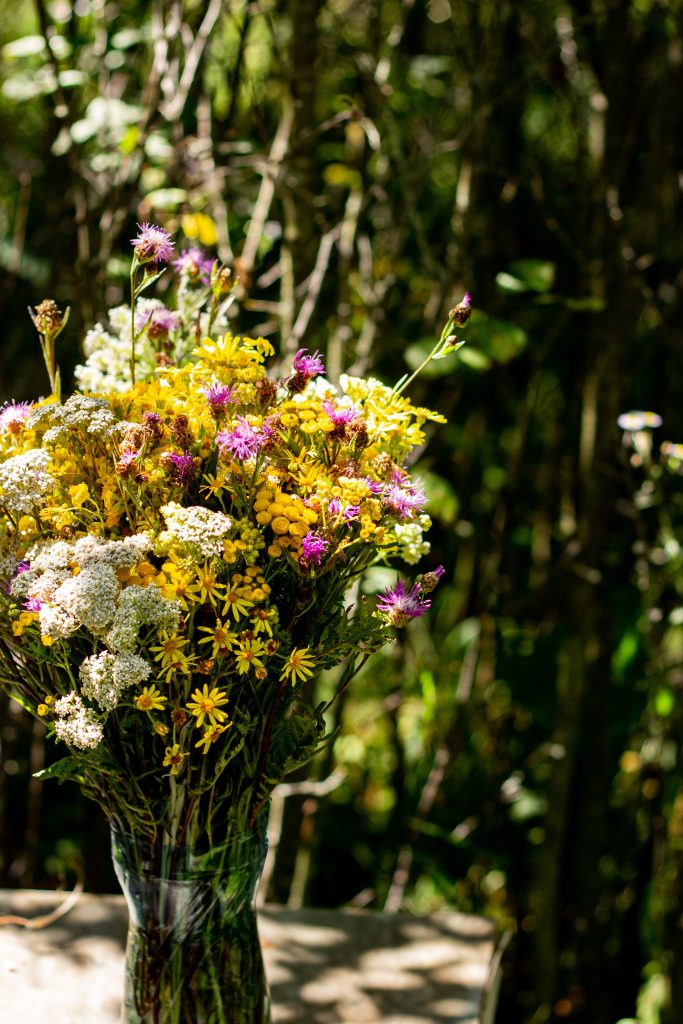
It fills me with gratitude to realize that being part of Mosaic means being one of many people working together to bring God’s shalom to our communities and our world. I am one of many joyful participants in the dance.
What I’m taking away from the Introduction to Mosaic Conference class is a feeling of coming home. Initially, I attributed that feeling to recognizing familiar threads in the history of Anabaptism and gaining a deeper appreciation for that heritage. I think, however, it might deeper than that.
Perhaps I’m coming home to an expression of God’s family that more fully reflects God’s intentions for humanity: a family where every culture, language, and background is represented, and where Swiss Germans are one of many in the mix.
Rachel Mateti
Rachel Mateti is the Children and Youth Minister at Plains Mennonite (Hatfield, PA). She is married with three kids and lives in Telford, PA. She enjoys reading when she finds the time and recently picked up running as a hobby.
Mosaic values two-way communication and encourages our constituents to respond with feedback, questions, or encouragement. To share your thoughts or send a message to the author(s), contact us at communication@mosaicmennonites.org.
The opinions expressed in articles posted on Mosaic’s website are those of the author and may not reflect the official policy of Mosaic Conference. Mosaic is a large conference, crossing ethnicities, geographies, generations, theologies, and politics. Each person can only speak for themselves; no one can represent “the conference.” May God give us the grace to hear what the Spirit is speaking to us through people with whom we disagree and the humility and courage to love one another even when those disagreements can’t be bridged.