• Skip to main content
  • Skip to primary sidebar
  • Skip to footer

Mosaic MennonitesMosaic Mennonites

Missional - Intercultural - Formational

  • Home
  • About Us
    • Our History
    • Vision & Mission
    • Staff
    • Boards and Committees
    • Church & Ministry Directory
    • Mennonite Links
  • Media
    • Articles
    • Newsletters
    • Video
    • Audio
    • Bulletin Announcements
  • Resources
    • Conference Documents
    • Missional
    • Intercultural
    • Formational
    • Stewardship
    • Church Safety
    • Leaders’ Resources
    • Request a Speaker
    • Pastoral Openings
    • Job Openings
  • Give
  • Events
    • Delegate Assembly
    • Youth Event
    • Conference Calendar
  • Mosaic Institute
  • Vibrant Mosaic
  • Contact Us
  • English
  • Español (Spanish)
  • Indonesia (Indonesian)

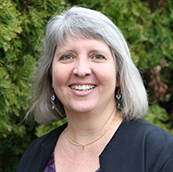
Marta Castillo

Learning from Being Uncomfortable

September 10, 2026 by Cindy Angela

by Marta Castillo, Associate Executive Minister

“Mosaic seeks to hold together both gracious hospitality and high expectations, creating space where people are welcomed but also challenged to grow in faith.”

— A Mosaic Identity: Clarifying Our Center (Mosaic’s “Centering Document) 

Gracious hospitality, high expectations, creating space, and growing in faith all require a willingness to be uncomfortable. This is my story of what I have learned from discomfort.

The author reading on a boat as a child in Kalimantan.

When I was a child, I lived in Kalimantan, Indonesia. I was orang kulit putih (a white-skinned person) and stood out with my rambut kuning (blond hair). I was easily identified as bule (foreigner). I learned to adapt to fit in, and make myself as small and unobtrusive as possible. It was always uncomfortable, but I made friends, enjoyed life there, and tried to be as Indonesian as I could.

From Indonesian villages, I attended three different North American Christian boarding schools. It was hard to be separated from my parents (although my brother was with me), and to adapt to different styles of discipline and Christian theology. Again, I adapted. I learned about North American culture, made friends, and followed the rules of the dorm parents and schools.

The author with her mom Dorothy Beidler and her dad, Luke Beidler, driving the boat.

When I returned to the United States (a place my parents called home), I expected to fit in. Instead, I often felt uncomfortable. Although I spoke the language, I didn’t understand the culture or know the songs, movies, and stories my peers had grown up with. When I tried to share my story, it was too weird for others to connect with and understand. So I stopped telling it and continued trying to escape notice and fit in.

Over the years, discomfort has made me adaptable. I learned to pay attention to situational clues, figure out the rules so I wouldn’t make mistakes, and wait to speak until I had built rapport and trust. In each new setting, including college, voluntary service, and eventually Norristown, Pennsylvania, I learned to present myself in ways that would help me fit in and be accepted.

The thirty years in Norristown were the first time I settled and became comfortable. I became a member, and then pastor, of Nueva Vida Norristown New Life. We bought a house, collected stuff, raised children, and built deep relationships. I learned the Spanish language and culture and was welcomed into the Spanish-speaking community. I walked the streets of Norristown, prayed, and learned to know the people, schools, churches, and community.

A Sister Care Group (from left: Maria Hart, Sandy Drescher Lehman, Lisa Quinones, Marta Castillo, Angelia Susanto, and Leticia Cortes)

During that time, an uncomfortable anti-racism training helped me identify myself as a white person. I began to understand that my ability to adapt and be interculturally aware could be a gift to myself and others. It didn’t have to be a way of hiding or making myself small and inconsequential.

I share my story because in my ten years of ministry with Mosaic, I have often felt uncomfortable. I have been an unknown entity showing up simply as myself to be present in congregations, in relationships with pastors and leaders, in meetings, and in changing leadership roles. I have felt uncomfortable listening, caring, and conversing with people who are different from me culturally and theologically, people who might be excited, angry, or confused. I have felt uncomfortable with the responsibility of leadership.

The discomfort has helped me to be more honest with God, with myself, and with others. It has helped me to grow and be mutually transformed by my Mosaic siblings.

The author preaching.
At the ordination of Melky Tirtasaputra.

In Mosaic Mennonite Conference, we will all feel discomfort at one time or another. We are too diverse to feel comfortable in every situation, conversation, meeting, and relationship. I believe the spaces that make us uncomfortable can teach us to hold ambiguity more loosely.

We can feel accepted by a group even when we feel different and set apart. We can be enough for the ministry at hand while still seeking to learn and grow in competence. We can make space for grace for ourselves and others even when we are anxious and uncertain. We can step into the space God has created for us by offering our presence without overflowing into or taking the space of others.

May God bless us with a willingness to be uncomfortable, that we might be obedient to God’s invitation to extend gracious hospitality, meet high expectations, and grow in our capacity to create space for the work of the Holy Spirit and our siblings. In Jesus’ name we pray, Amen.


Mosaic values two-way communication and encourages our constituents to respond with feedback, questions, or encouragement. To contact Marta Castillo, please email mcastillo@mosaicmennonites.org.
Filed Under: Articles Tagged With: Marta Castillo

Sacred Listening – Interpreters Ministry Group

June 4, 2026 by Cindy Angela

by Marta Castillo

On May 2, 2026, sixteen Mosaic interpreters from eight congregations1 and representing seven languages2 gathered with the team from The Kaleidoscope Institute, led Eric Law, for a two-hour Sacred Listening training session. The gathering laid the foundation for an ongoing interpreters’ support community across Mosaic.

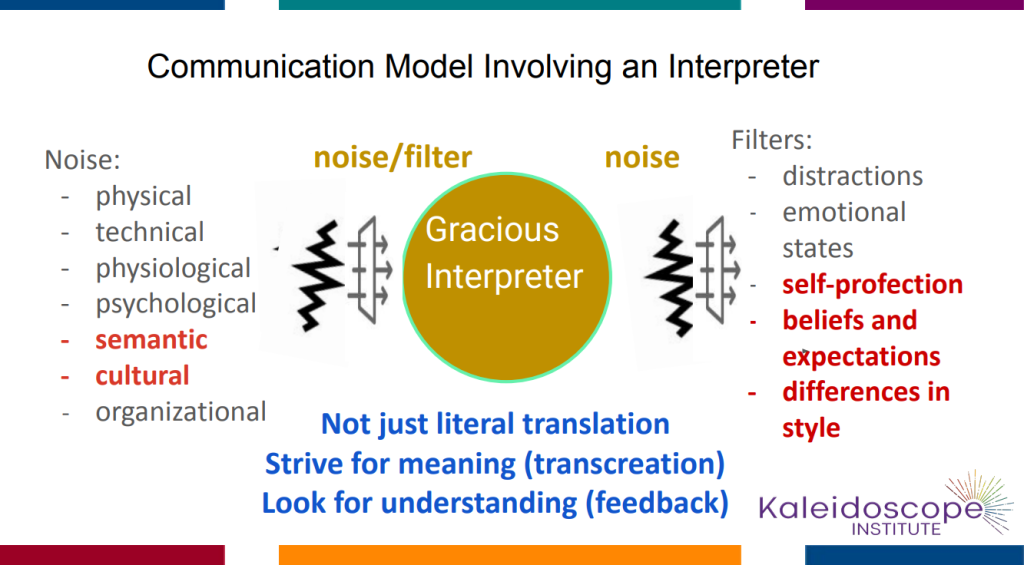
Slides from the Gathering

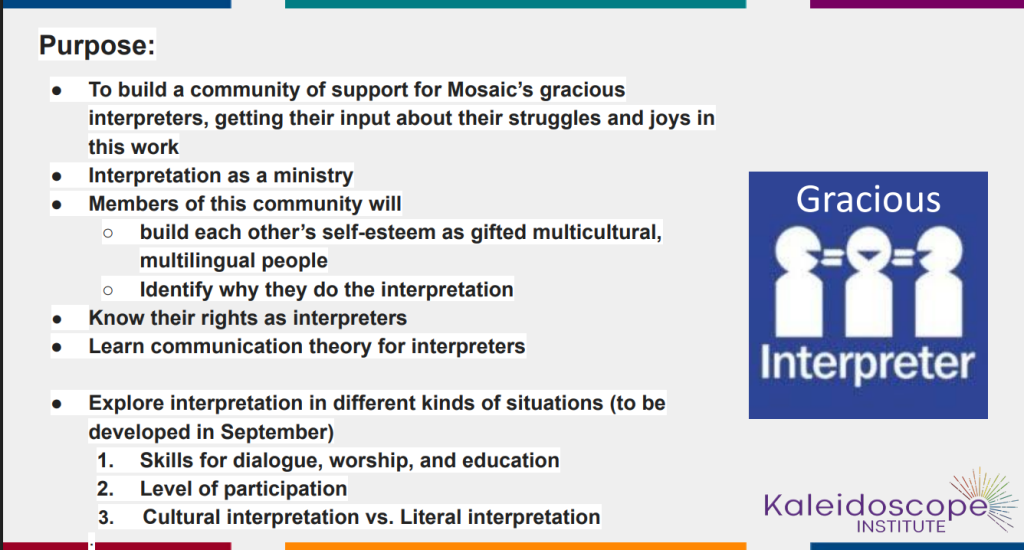
The purpose of this new group is to build a community of support for Mosaic’s gracious interpreters and to hear directly about the struggles and joys they experience in this work. We seek to name interpretation as a ministry and explore interpretation across different settings.

The community will focus on building one another’s confidence as gifted intercultural leaders, identifying shared best practices, understanding interpreters’ rights, and exploring the calling for this work.

All Mosaic interpreters will be invited to participate in quarterly gatherings. An additional training with Kaleidoscope Institute is planned for September 2026. If you are an interpreter, or know an interpreter in your congregation or ministry who would like to participate, please contact Marta Castillo.


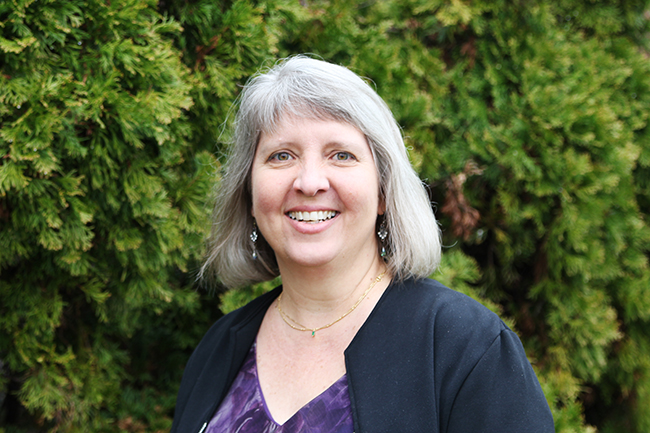
Marta Castillo

Marta Castillo is the Associate Executive Minister for Mosaic Conference.

Mosaic values two-way communication and encourages our constituents to respond with feedback, questions, or encouragement. To contact Marta Castillo, please email mcastillo@mosaicmennonites.org.
  1. Whitehall (PA) Mennonite, Nueva Vida Norristown (PA) New Life, Encuentro de Renovación (Miami, FL), Lakeview Mennonite (Susquehanna, PA), Indonesian Light Church (Philadelphia, PA), Philadelphia Praise Center, Souderton (PA) Mennonite, Resplandece Mennonite (Pembroke Pines, FL and hybrid) ↩︎
  2. Spanish, Indonesian, Cantonese, Creole, Karen, Lingala, French  ↩︎

Filed Under: Articles Tagged With: Interpreter Group, Kaleidoscope Institute, Marta Castillo, Sacred Listening

Mosaic Groups Growing Together

June 4, 2026 by Cindy Angela

by Marta Castillo

Across Mosaic, groups continue to gather regularly for community, relationship building, and leadership development. As part of Mosaic’s strategic plan, these gatherings help strengthen shared identity while creating space for mutual transformation and support.

Existing groups already meeting include (this list is incomplete):

  • Lansdale-area youth leaders gathering monthly, led by Brooke Martin
  • Florida-area pastors gathering quarterly in English-Spanish hybrid meetings (in person and on Zoom) for prayer, fellowship, and equipping, coordinated by Marta Castillo
  • Multi-staff pastors gathering quarterly, led by Stephen Kriss
  • Indonesian pastors gathering quarterly, led by Hendy Matahelemuhal
  • ⁠Inclusive pastors gathering quarterly, led by Joe Paparone
  • Female leaders gathering annually, coordinated by Marta Castillo
  • ⁠Interpreters gathering quarterly, coordinated by Marta Castillo
  • Chaplains gathering quarterly, coordinated by Tim Weaver
  • Spiritual directors gathering quarterly, coordinated by Marilyn Bender

Mosaic hopes to encourage even more groups to form around shared identities, interests, and callings. Future possibilities could include prayer groups, scripture study groups, men’s groups, women’s groups, and more.

What Mosaic groups are you already part of? What new groups could begin this year?


Marta Castillo

Marta Castillo is the Associate Executive Minister for Mosaic Conference.

Mosaic values two-way communication and encourages our constituents to respond with feedback, questions, or encouragement. To contact Marta Castillo, please email mcastillo@mosaicmennonites.org.
Filed Under: Articles Tagged With: Marta Castillo

Let’s talk about the diversity of Mosaic!

February 19, 2026 by Cindy Angela

by Marta Castillo

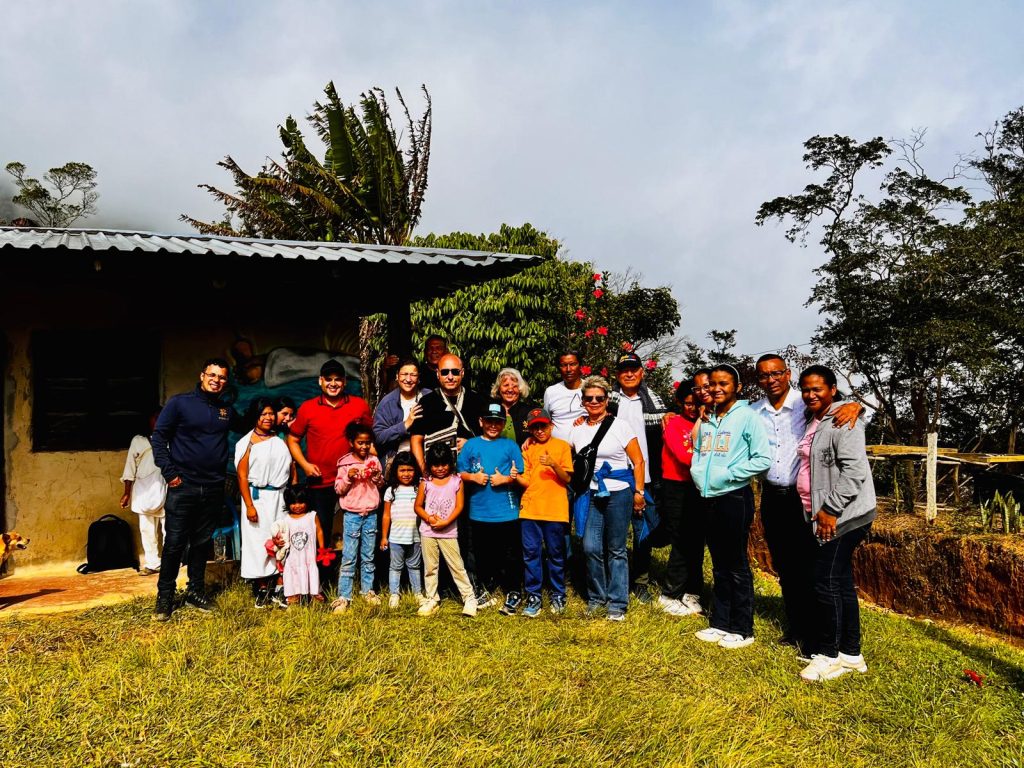
As I return from a trip to visit Mosaic-aligned churches in Colombia who spent time together learning from the Mosaic Priorities Guides and experiencing the diversity within their own group, I am amazed at who we are—and who we are becoming together. For Mosaic Conference, those questions are never simple. We are a gathering of congregations shaped by different histories, cultures, convictions, and practices, yet held together by a shared commitment to follow Jesus at the center of our life together.

The group of Colombian leaders gathered in February for relationship building and equipping.
Marco Güete, Julio Castillo, and the author reflect with a group of Colombian pastors on lessons in the Mosaic Priorities Guide.
The first Priority Guide lesson reflects on Mosaic’s mission and mission.

Diversity is not new to Mosaic, but it is something we must continually name, tend, and learn how to hold. When we come together as a conference—whether in worship, equipping spaces, or shared decision-making—we are reminded that unity does not mean sameness. It means choosing to remain in relationship even when our assumptions, comfort zones, and convictions differ.

“Just as a tile mosaic is comprised of many pieces that are different shapes, colors, and textures, so Mosaic Conference includes people from a variety of races, ethnicities, cultures, identities, language-groups, educational and economic backgrounds, geographies, political perspectives, faith journeys, and life experiences. We acknowledge the presence of these differences and the discomfort we often feel when we look around and see unfamiliar faces, perceptions, and experiences looking back at us.”

A Mosaic Identity: Clarifying our Center

These differences are not merely theoretical. They show up in everyday congregational life—in the choices we make, the practices we hold dear, and the convictions we carry. Often, they surface in small, ordinary moments that reveal just how wide the mosaic truly is.

For example, even something as familiar as community engagement can look very different from one congregation to another. What one church understands as a missional opportunity, another may approach with caution or concern.

Differences emerge around dancing. Some of us in Mosaic are comfortable dancing at weddings, for exercise, or as an expression of worship. Others of us believe dancing is inappropriate because it could lead to sexual sins.

Then there’s drinking alcohol. Some believe that all alcohol consumption is wrong, while others enjoy a beer or a glass of wine with dinner or at social gatherings.

Baptism also presents differences. Should it be through sprinkling, pouring, or immersion? Do candidates need a preparation class, and if so, what should it include?

And communion. Is the table for members only? For all who follow Jesus as Lord? For anyone seeking Christ? Should children receive grapes and crackers? Should communion be solemn with confession or joyful in anticipation of Christ’s return?

Membership raises questions, too. Can only members lead worship or anyone who is committed and involved? Do we keep a meticulous membership list? Can regular attenders consider themselves members? What about those who seldom attend but claim belonging?

Worship styles vary widely. Do we worship in more than one language? What instruments do we use? Do we value jubilation or meditation in song? Are musicians live or recorded? Is worship charismatic, with tongues and altar calls, or quiet and contemplative? Some of our congregations regularly anoint for healing. Others never include an altar call because it may feel like pressure.

We also differ in how we talk about creation care, peace, and justice. How do we address Israel and Gaza? Do we preach about the last days and Christ’s return? Is politics openly discussed or intentionally avoided?

Evangelism also takes different forms. Some give out tracts or hold outdoor services. Others focus on small groups, deep friendships, and long-term presence. Some distribute food or care for the unsheltered as an expression of witness. In the Colombian indigenous community, Mosaic leaders are prohibited from openly sharing the gospel in a community that has no words in their language for love.

Pastoral roles vary, too. Are pastors fully supported or bi-vocational? Does authority lie with the pastor, elders, or church council? Do pastors drive nice cars or junkers? How strongly do we embrace the priesthood of all believers?

We differ, too, in our views on gender and giftedness. Do we affirm the gifts of all genders or primarily men? How do we express love and welcome? Through inclusivity and affirmation, through clear and kind limits, or through calling people to holy living?

Our approaches to children also vary. Do we have strict child protection policies or a more relaxed system? Are children embraced in worship or do they leave for children’s church? Are we attentive to sensory needs and food allergies, or is that a non-issue?

There are many more differences across Mosaic congregations. Many of us might not choose to attend a church that practices differently than our own. And yet, the question before us is not whether we are comfortable with all these differences, but whether we are willing to remain connected through them.

What holds us together is not uniformity, but a shared center, Jesus. When we gather across languages, cultures, and convictions, we are practicing the difficult and holy work of staying at the table with one another. As we move into a new year, may we continue to trust that Christ is present at the center of our mosaic, shaping us not into identical pieces, but into a faithful and beautiful whole.

“We believe that discerning God’s presence in our differences will lead to mutual transformation, forming us together into the image of Jesus. This vibrant Mosaic is God-breathed, a witness to the reconciling love of Jesus in our broken and beautiful world.” 

A Mosaic Identity: Clarifying our Center

Marta Castillo

Marta Castillo is the Associate Executive Minister for Mosaic Conference.

Mosaic values two-way communication and encourages our constituents to respond with feedback, questions, or encouragement. To contact Marta Castillo, please email mcastillo@mosaicmennonites.org.
Filed Under: Articles Tagged With: Marta Castillo

The Courage to Faithfully Dissent

October 16, 2025 by Cindy Angela

by Marta Castillo

Have you ever had a phrase or word leap out at you—from Scripture, a sermon, a conversation, or a song—and the Holy Spirit keeps you stuck on it, pondering its meaning? 

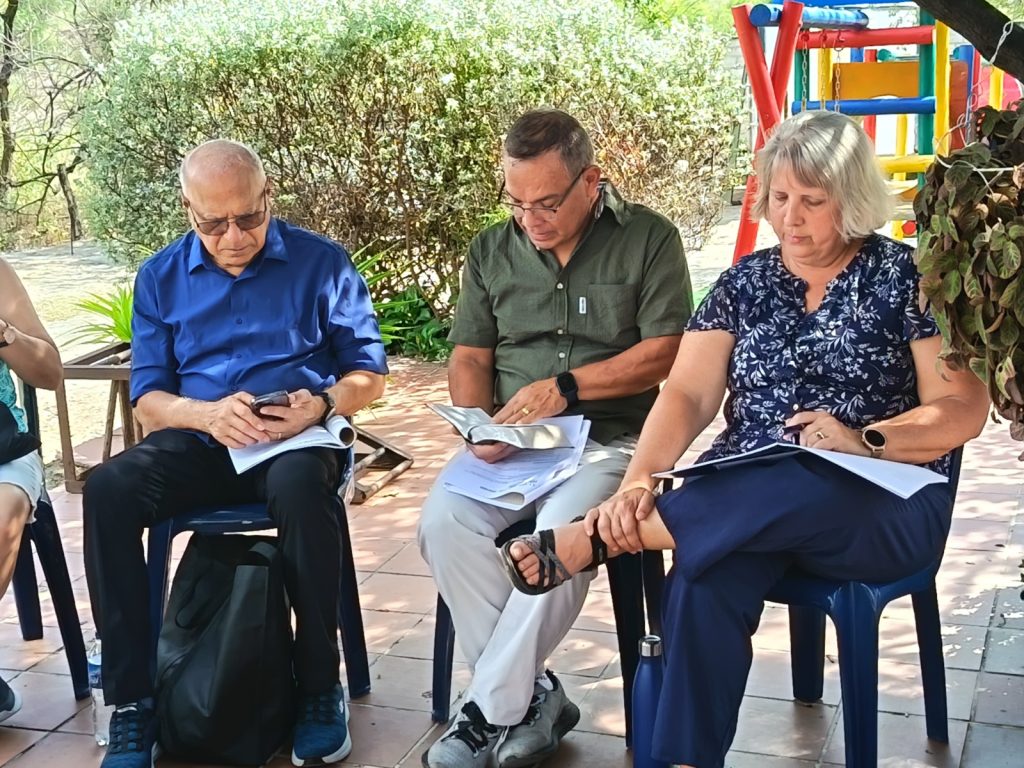
One such moment came for me when I heard the phrase “faithful dissent.” I remember exactly where I was: in a hard, brave, and sacred space as the Giving and Receiving Counsel listening committee heard Beth Yoder share her 30+ year journey of how God had worked in her life leading her to what she described as an act of “faithful dissent” from the conference’s understanding that pastors should not officiate same-sex weddings. 

As part of my role in Mosaic Mennonite Conference, I participate in Giving and Receiving Counsel, a process of discernment for credentialed leaders alleged to be acting at variance with the Confession of Faith in a Mennonite Perspective.  

The power of this process lies in the discernment and conversations—between the Leadership Member and credentialed leader and with the Review Committee (made of selected members from our credentialing and ministerial committees). The recommendation on how to proceed with the leader’s credentials should come from a careful time of listening, conferring, and prayer. 

We went through the whole process with Beth. We listened to her story of growth as a pastor and a parent. We heard about the young man in her congregation who asked her to officiate his wedding to his partner, and how Beth did not make that decision lightly. She entered into careful discernment with trusted friends, colleagues, and family. She counted the cost: the risk of losing her credentials, the opinions others would form, the pain and alienation she would feel in the presence of the conference community. Still, her faith called her to dissent.  

Faithful dissent is the act of remaining loyal and steadfast even when your convictions are at variance from those that are commonly, officially, or historically held. 

It is not new. An example of faithful dissent is found in Acts 10, Peter receives a vision from God and chooses to visit Cornelius, a Gentile, despite Jewish law. When Peter sees how the Holy Spirit falls on the whole household, he proclaims that God does not have favorites. When he is criticized for his actions in Jerusalem, he tells his story. When the believers hear it, they have no further objections and praise God, saying, “So then, even to Gentiles God has granted repentance that leads to life.” (Acts 11:18) 

I am not asking you to agree or disagree with my sister Beth’s act of what she’s named as “faithful dissent.” I know that may be your first instinct upon reading this article.

I am asking you to look at a Jesus who faithfully dissented by healing people on the Sabbath, eating with sinners, teaching and talking with women, scolding the religious leaders, and laying down his life rather than claiming earthly power.   

Writing this article has made me ask myself, where do I need to faithfully dissent? Where do I need to choose faithfulness to God over faithfulness to church or religious institutions? As polarization deepens in the church and world, faithful dissent will become a necessary act of obedience to live like Jesus.  

So, I leave you with this: 

Where do we need to choose a different path than one that was previously, commonly, or officially held, even if it may cost us something?

How can our communities help us discern what is faithful versus what may be rebellion or reaction? May God’s Spirit teach us, help us, and guide us! 


Marta Castillo

Marta Castillo is the Associate Executive Minister for Mosaic Conference.

Mosaic values two-way communication and encourages our constituents to respond with feedback, questions, or encouragement. To contact Marta Castillo, please email mcastillo@mosaicmennonites.org.
Filed Under: Articles Tagged With: Marta Castillo

The Centering Document as a Pathway toward Deeper Shared Life

September 25, 2025 by Cindy Angela

By Marta Castillo 

Dear Mosaic Siblings, 

It has been a privilege to serve as a Mosaic Conference staff person for nine years, walking alongside congregations and credentialed pastors. What a joy it is to visit our churches and organizations, to learn from all of you, and celebrate the diversity!  

The depth, beauty, pain, and complexity of our Mosaic community is profound. If I close my eyes, I can see the multitude of believers from Revelation—each of you —worshipping before the throne. It is a gift to have a balcony view of this sacred community. 

You may have read the Centering Document for the first time last week. A group of us in the conference has been engaging with this work for over two years, praying, dreaming, editing, and discerning together. We weren’t aiming to write a new statement or develop policy, but rather to name a centered space of what God is calling us to do and be together. 

Marta Castillo took a photo of this mosaic tile tabletop in Puerto Rico.

As the document states, “Our community’s identity is as much about our posture towards one another and the way we act together as it is about what we believe together.” I’m grateful that the board has affirmed this clarifying identity document, and I’m hopeful about how this posture of high expectations and gracious hospitality will be owned and put into practice in each of Mosaic’s congregations and ministries. 

When I think of a local church—your church, or one like yours—I see a unique gathering of people who have chosen to be community together. Not because we are all the same, but because we care deeply for one another. Our churches, groups, and organizations are shaped by the needs, passions, gifts, and care of their members. In the times when we don’t agree, we continue to show up, week after week, to love and serve each other through the messiness of being church. It is our love for God and our love for our siblings in Christ that shapes how we act together just as much as our shared beliefs. 

As people within the conference respond to this invitation to “center ourselves on being community together that honors and values our differences as we partner to live, love, and become like Jesus in our broken and beautiful world,” we must remain open. Open to hearing words of disappointments, pain, challenge, curiosity, hope, compassion, and joy. Like any document, this one can be critiqued, word-smithed, and questioned. Even after all the edits, there’s always more it could say, or ways it could be clearer. 

It can also be read from a posture of someone who loves their community, seeks its flourishing, and seeks to find connections. It can be read with a vision for how it might take root in real practices. May our love for God, for our neighbors, and our enemies, guide us as we continue to center ourselves on Jesus and strive to be holy together. 


Marta Castillo

Marta Castillo is the Associate Executive Minister for Mosaic Conference.

Mosaic values two-way communication and encourages our constituents to respond with feedback, questions, or encouragement. To contact Marta Castillo, please email mcastillo@mosaicmennonites.org.
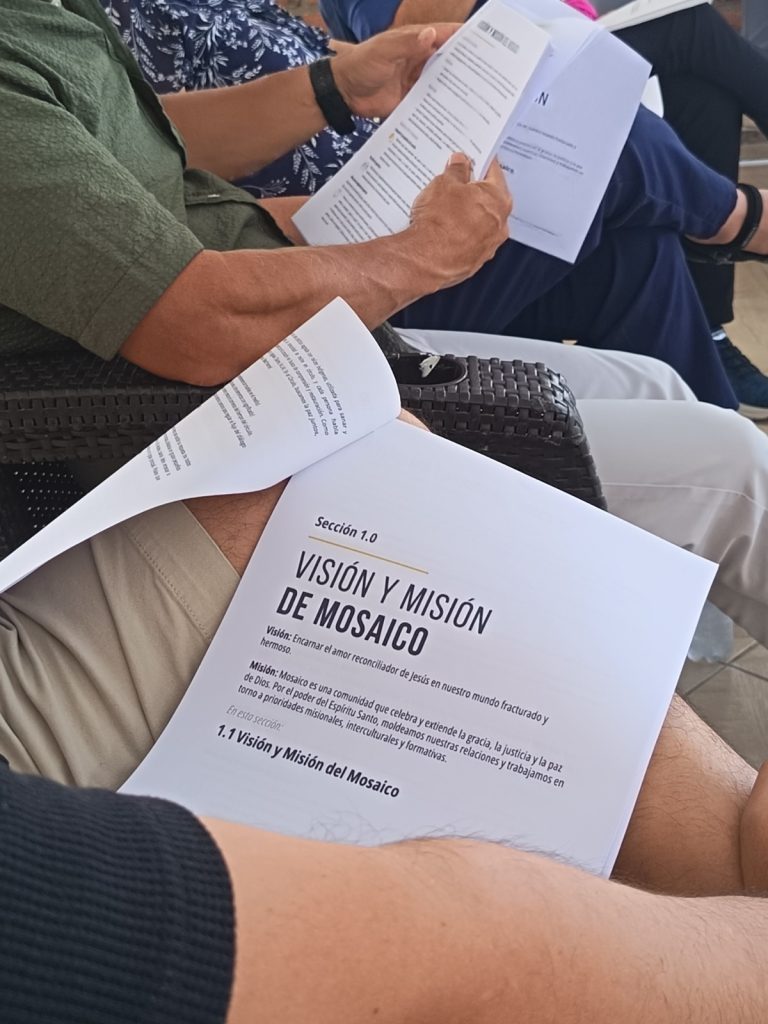
Filed Under: Articles Tagged With: Assembly 2025, Marta Castillo

Centering on Jesus in a World of Change

August 14, 2025 by Cindy Angela

by Marta Castillo

In a scattered, distracted, and diverse world, we value being centered. A centered person is focused, balanced, and grounded–mentally, emotionally, and spiritually. As we center ourselves, we connect with an essential, internal, and authentic self in the present moment. We do this through spending time with God in prayer, silence, reading Scriptures, Sabbath rest, and in community. Centering helps us find peace in chaos by quieting our minds and making space for grace. 

For the thirty years that I attended Nueva Vida Norristown (PA) New Life–a culturally, theologically, and economically diverse body of believers–we survived and thrived because we centered ourselves on God’s vision for us: to worship the Lord in unity; to experience the transforming and gifting power of the Holy Spirit; and to proclaim the gospel of reconciliation through Jesus Christ in word and deed. We had so many differences, but we centered ourselves on God and on our relationships with one another to be a witness and a community. 

In June, the Mosaic Mennonite Conference Leadership Ministers met with Mark Baker, the author of Centered-Set Church. Our conversation focused on the challenges and opportunities of maintaining a centered approach within a conference composed of diverse congregations with varied identities and beliefs. We reflected on Mosaic’s experience accompanying these congregations and the importance of creating a centered vision that can hold us together while offering grace and manageability. 

 Mosaic’s vision and mission–and our three priorities of missional, formational and intercultural transformation–are part of the center that we can continue to develop. We discussed centered-set concepts in Mennonite theology including from the Anabaptist Essentials: Jesus as the center of our faith; community as the center of our life; and reconciliation as the center of our work. 

The group explored how different congregations and ministries define their center. Some long for clear boundaries and others desire a more centered approach. We acknowledged tensions between maintaining unity and making space for diverse beliefs. We affirmed the need for grace margins, for discernment, and for time and trust to work with differences. We asked: How do we balance necessary boundaries with room for interpretation and transformation? How do we approach future dialogue and collaboration? 

Mosaic Mennonite Conference is a young organization, shaped by old and new elements, navigating rapid change —experiencing both loss and growth in relationships and membership, while facing upheaval in the world around us. Let’s continue the conversation on what center we need to have to live into our vision together to “embody the reconciling love of Jesus in our broken and beautiful world.” 

Listen to Dr. Mark Baker (part one and part two) to learn more about Centered-Set Church.   


Marta Castillo

Marta Castillo is the Associate Executive Minister for Mosaic Conference.

Mosaic values two-way communication and encourages our constituents to respond with feedback, questions, or encouragement. To contact Marta Castillo, please email mcastillo@mosaicmennonites.org.

Filed Under: Articles Tagged With: Centered-Set Church, Mark Baker, Marta Castillo

Associate Executive Minister Marta Castillo Receives Reflective Leadership Grant

October 3, 2024 by Cindy Angela

Mosaic Mennonite Conference’s Associate Executive Minister Marta (Beidler) Castillo has received a $15,000 Reflective Leadership Grant from Leadership Education at Duke Divinity School. The grant will support a time of reflecting on how to grow relational capacity and adapt leadership accountability amid conference-wide growth of geographical locations, intercultural diversity, and congregational transitions. 

In 2024, 50 Christian leaders from a variety of faith-based organizations across the U.S. were selected for these grants, which support an opportunity for structured reflection for leaders of Christian organizations that are advancing their mission amid today’s rapidly changing context. The leadership education initiative is based in Durham, NC and funded by the Lilly Endowment, Inc.   

“The Reflective Leadership Grant at Leadership Education at Duke Divinity recognizes and supports the faithful, innovative work of lay and ordained Christian leaders who find themselves at a pivotal moment in their ministry,” says Mycal Brickhouse, a director of program and grants at Leadership Education.  

“Using Harvard professor Ron Heifetz’s language, we want to help leaders experience “balcony time,” which allows them to move from the dance floor to the balcony to gain a broader picture of the work, organization, community and trends. We want to encourage grantees to continue to develop their leadership capacities in ways specific to their context and we look forward to learning alongside them and their communities.”

As the daughter of Franconia Conference-rooted mission workers, Castillo has been shaped by four of the linguistic cultures in the Conference, growing up in both Vietnam and Indonesia. Marta has attended Nueva Vida Norristown (PA) New Life for over 30 years and served on the pastoral team from 2007-2017. Marta served five years on the Franconia Conference Board, two of those as Assistant Moderator, and has been employed by the Conference since 2016, beginning as a Leadership Minister. She graduated from Eastern Mennonite University with a major in Elementary Education and has a Certificate of Christian Ministry from Eastern Mennonite Seminary and a Master of Arts from Kairos University.  

In December, Castillo and her husband Julio will move from their home in Norristown, PA to Miami, FL to provide care for Julio’s mother. She will continue to work with Mosaic as a Leadership Minister and as Associate Executive Minister, expanding Mosaic Conference’s staff presence in Florida. 

In January through March, Castillo will have two days per week of “balcony time” for active reflection, coaching, personal retreat, and opportunities to listen for God’s calling within her role at Mosaic Conference and for God’s Spirit leading the Conference in this current stage of development and growth.  

Through the Reflective Leadership program, she will have opportunities to connect in person and virtually with other grant recipients and share reflections and ideas.  

Filed Under: Articles Tagged With: Marta Castillo

  • Go to page 1
  • Go to page 2
  • Go to page 3
  • Interim pages omitted …
  • Go to page 8
  • Go to Next Page »

Primary Sidebar

  • Home
  • About Us
    • Our History
    • Vision & Mission
    • Staff
    • Boards and Committees
    • Church & Ministry Directory
    • Mennonite Links
  • Media
    • Articles
    • Newsletters
    • Video
    • Audio
    • Bulletin Announcements
  • Resources
    • Conference Documents
    • Missional
    • Intercultural
    • Formational
    • Stewardship
    • Church Safety
    • Leaders’ Resources
    • Request a Speaker
    • Pastoral Openings
    • Job Openings
  • Give
  • Events
    • Delegate Assembly
    • Youth Event
    • Conference Calendar
  • Mosaic Institute
  • Vibrant Mosaic
  • Contact Us

Footer

  • Home
  • Contact Us
  • Delegate Assembly
  • Vision & Mission
  • Our History
  • Formational
  • Intercultural
  • Missional
  • Mosaic Institute
  • Give
  • Stewardship
  • Church Safety
  • Leaders’ Resources
  • Articles
  • Bulletin Announcements

Copyright © 2026 Mosaic Mennonite Conference | Privacy Policy | Terms of Use
Aligned with