
by Mark D. Baker
I sat in a circle of inmates in the county jail. That is not unusual. I have led a jail Bible study weekly for over fifteen years. Recently, however, I started doing a second study in Spanish. It is in the pod of federal prisoners in the Cumberland County Jail (Maine). Most of the men gathered around me were ICE detainees. I could have repeated the study I had just done in another pod, but these men’s situations and concerns were so different. I had prayed that morning for an idea that would connect with and comfort them.
We began reading Hebrews 4:14-16. After making a comment that priests in the Old Testament served as the people’s representatives before God, I underscored that in Jesus, the Son of God, we have a priest who as a human has suffered as we have. I said, “Let’s list some ways Jesus suffered.”
Aware that some of the men sitting beside me had fled violence in Venezuela and Central America, I began with the observation that as a boy Jesus’s family had lived as refugees in another country—fleeing the threat of violence. Different men stated other things Jesus suffered: hunger, betrayal, false charges, seeing others suffer. Without getting into details of why I think “construction worker” is a better translation of “tektōn” than “carpenter,” I simply stated that Jesus was a construction worker and I asked them what difficult working situations he may have suffered. I listed a few other things he suffered: shame of being from a town with a poor reputation, living under an oppressive political power, and persecution by a judgmental religious system.
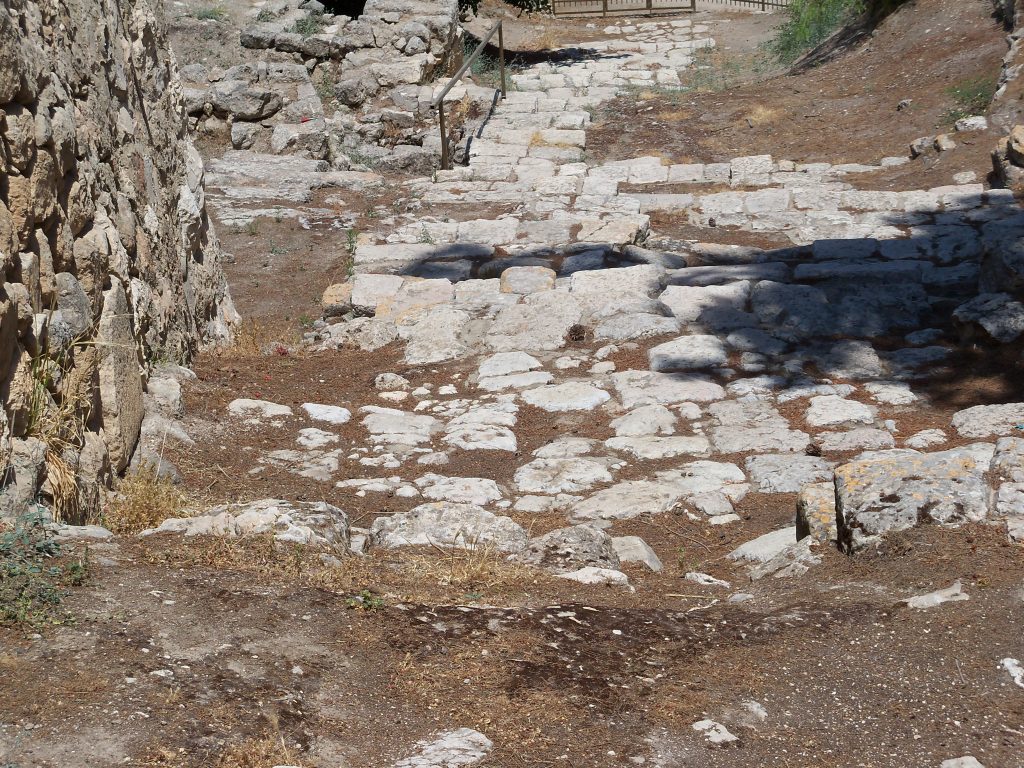
I then told them of my experience seeing the remains of Caiaphas the High Priest’s house in Jerusalem—including walking through the basement that had served as a jail. I showed them a picture I took outside Caiaphas’ house, and said, “While we stood beside this old pathway, our guide said, ‘These steps are from the first century. This is the path from the Kidron Valley.’ I immediately thought, ‘Jesus walked on these stones.’ Then, standing there looking down the steps I imagined guards leading Jesus up this lane after his arrest in the Garden of Gethsemane.” I looked at the men and said, “God in the flesh, as a human, has, like you, been seized by guards, taken to jail, stood before a judge.” God knows what you have experienced.
Spanish has two different words for “know.” Saber is to know information. Conocer is to know through experience. I saber about China, but I conocer Honduras—I lived there. Looking in their eyes I said, God does not just sabe about your suffering, Dios conoce what you have experienced.
I invited them to name ways they were suffering—just stating a word or saying more if they desired. Then, as we entered into a time of prayer, I suggested they imagine Jesus at God the Father’s right hand—and pray with the full confidence that God conoce their situation. After a time of silent prayer, I prayed for them, said amen and proclaimed to them: “God is with you and God conoce what you are experiencing.”
Each week now I leave in sadness. From what I read in the news I can offer these men little hope that they will be released. In fact I fear they will face worse conditions at an ICE detention facility before they are deported. Yet, as I did this past week, I proclaim to them from Romans 8 what I do know is true for them and us—nothing can separate us from the love of God.

Mark D. Baker
Mark Baker is Professor Emeritus of Mission and Theology, Fresno Pacific Biblical Seminary (formerly Mennonite Brethren Biblical Seminary). He now lives in Portland, Maine. He previously was a missionary in Honduras for ten years. He has written a number of books in English and Spanish, including, Centered-Set Church: Discipleship and Community Without Judgmentalism and Ministering in Honor-Shame Cultures: Biblical Foundations and Practical Essentials.
Mosaic values two-way communication and encourages our constituents to respond with feedback, questions, or encouragement. To share your thoughts or send a message to the author(s), contact us at communication@mosaicmennonites.org.