
by Makinto
Editor’s Note: This article first appeared in Leader magazine, Summer 2026, copyright ©MennoMedia. All rights reserved. Used by permission.
While studying at Eastern Mennonite University in 2025, I did an internship with Souderton (PA) Mennonite Church (SMC) as an adjunct worship leader and with Mosaic Mennonite Conference as the worship team coordinator for our annual assembly.
DIVERSITY IN THE CONFERENCE
Traditionally, the worship team meets the day before the assembly and rehearses previously planned music. Most of the musicians represent traditional white churches in Mosaic’s heartland.
I chose Nations Worship Center, an Indonesian Mennonite church in Philadelphia, as the base for the worship team. The musicians were from five nations and sang in seven languages. With four rehearsals, we prepared advanced arrangements and even an original song I wrote around the conference theme “Be my witnesses.”
This worship team reflected the true ethnic diversity of the conference and was a witness of what Jesus’ kingdom looks and sounds like: “a great multitude that no one could count, from every nation, from all tribes and peoples and languages, standing before the throne and before the Lamb” (Revelation 7:9 NRSVue).
In contexts like that, diversity is called for and needs to be manifested, not just in the representation of different cultures, but in participation and direction. Diversity is not just the presence of minority groups that the majority group can present as a token of inclusion. Instead, active participation of all groups is needed, sharing power as a sign of equity and mutual accountability.
But is diversity always called for? Is immediate integration always a good thing?
DIVERSITY IN THE CONGREGATION
I ask this question within a US Mennonite context, and it connects to my second internship assignment. I brought new worship styles to SMC, such as African songs, drumming, movement, and drum processions. The congregation, although initially challenged, was receptive and excited about those worship expressions. Some Mennonite congregations are indeed ready to grow in their embrace of culturally different worship expressions, especially when those cultures are represented in their congregation.
SMC is proactively reaching out to African refugees and asylum seekers in their community, and the church is trying its best to welcome them into all aspects of congregational life. However, this process is not without challenges and can be wrought with cultural misunderstandings.
UNDERSTANDING POWER DYNAMICS
I witnessed a Sunday school class with both traditional Mennonites and BIPOC (Black, Indigenous, People of Color) participants. White people dominated the conversation, while the mostly African attendants contributed very little.
In most African cultures, people don’t speak until called upon and respond with a story rather than with two-word responses or matter-of-fact solutions. In The Wolf Shall Dwell with the Lamb, Eric H. F. Law discusses low- and high-power distance cultures. People from the Global South belong to high-power distance cultures, where authority is not questioned and inequality is accepted as normal reality.
On the other hand, white North Americans, belonging to low-power distance cultures, question authority, assume power dynamics can be changed, and don’t readily acknowledge their positions of power. Even when a white congregation is open to embracing other cultures, the power dynamics are hard to reconcile. Tensions and even failure of the process can result from these cultural misunderstandings.
SMC’s pastor Ken Burkholder was open to suggestions about streamlining the integration process. We started a Sunday school class to encourage the BIPOC participants to express themselves freely within a familiar and culturally safe space and build an identity that they could then offer to the congregation. These meetings were fruitful. People shared their valuable perspectives on biblical passages and confided their often-painful stories to one another. “
I worked with the pastoral staff to enhance their understandings of African cultural specificities. Pastors and staff need to understand the history, cultural particularities, and colonial traumas of the specific countries from which immigrants come, as there are no “Africans” but rather Congolese, Angolans, Burundians, Sudanese—all who have distinct cultures and traditions. The Democratic Republic of Congo has over three hundred ethnic groups. Ethiopians, Congolese and Nigerians, just to name a few, have significant cultural differences. In most African cultures, the pastor has a godlike status and is not criticized, while in white culture the pastor is considered a friend and buddy.
Aiming for integration and diversity in the church is a messy affair. It takes hard work to achieve a power equation that assures free and balanced relationships.
DIVERSITY BUILT ON RIGHT RELATIONSHIPS
The same challenges exist in the wider American and Canadian church. Diverse churches and conferences are often majority-white groups with a few BIPOC elements sprinkled throughout. The power dynamics are solidly established on the white side. That’s why diversity is often not a desired condition from the minority perspective. Diversity often means that the white majority is in charge and may allow the BIPOC members to occasionally manifest their difference in a controlled manner. The principle of diversity is emphasized without forging healthy relationships.
True diversity is difficult to achieve in a majority white context. However, in a diverse community, the church should reflect its social context in its leadership. SMC recently took a step in the right direction in electing its first African member to the church board.
On the conference and denominational levels, we indeed should strive for diversity, as our communities are increasingly multicultural. We must come together and learn from each other’s cultures and worship expressions.
As a person of African heritage, I enjoy loud, rhythmic praise with a full worship band; nevertheless, I can partake and enjoy calm hymn singing with traditional Mennonite congregations. Leading the worship at the Mosaic assembly, I chose hymns, African songs, contemporary worship music, and gospel songs in many languages. We gathered as one, to the glory of God.
My internship at SMC ended on a high note with the added chorus “Tupe amani,” sung in Swahili, translated from the Latin Dona nobis pacem. The One we worship gives us peace and unifies us into a kingdom of joy, justice, and compassion for our neighbor—the perfect basis for diversity in equity, expressed in the love of Jesus!
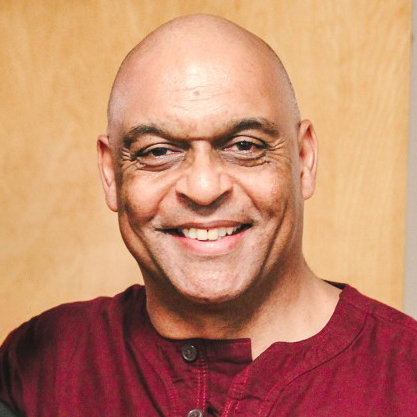
Makinto
Makinto is the Associate Pastor of Worship and Mission with Los Angeles (CA) Faith Chapel and co-director of Amahoro International (AMI), a Mosaic Conference-Related Ministry promoting peace and development in East Africa.
Mosaic values two-way communication and encourages our constituents to respond with feedback, questions, or encouragement. To share your thoughts or send a message to the author(s), contact us at communication@mosaicmennonites.org.
The opinions expressed in articles posted on Mosaic’s website are those of the author and may not reflect the official policy of Mosaic Conference. Mosaic is a large conference, crossing ethnicities, geographies, generations, theologies, and politics. Each person can only speak for themselves; no one can represent “the conference.” May God give us the grace to hear what the Spirit is speaking to us through people with whom we disagree and the humility and courage to love one another even when those disagreements can’t be bridged.