
After years of pandemic-related postponements, Mosaic Mennonite Conference Board member Maati Yvonne was eager to finally join a learning tour to Ghana with Mennonite Mission Network this spring. Sent to represent Mosaic Conference, she was joined by African American Mennonite leaders from LMC and Mennonite Church USA. Leaders gathering from various groups enriched the trip tremendously, and Maati especially enjoyed getting to know people new to her, such as Pastor Felix Rocha of Evangelical Garifuna Church in New Orleans.
“I had been waiting so many years to go on this trip, and I was going to soak up every single minute,” Maati said.
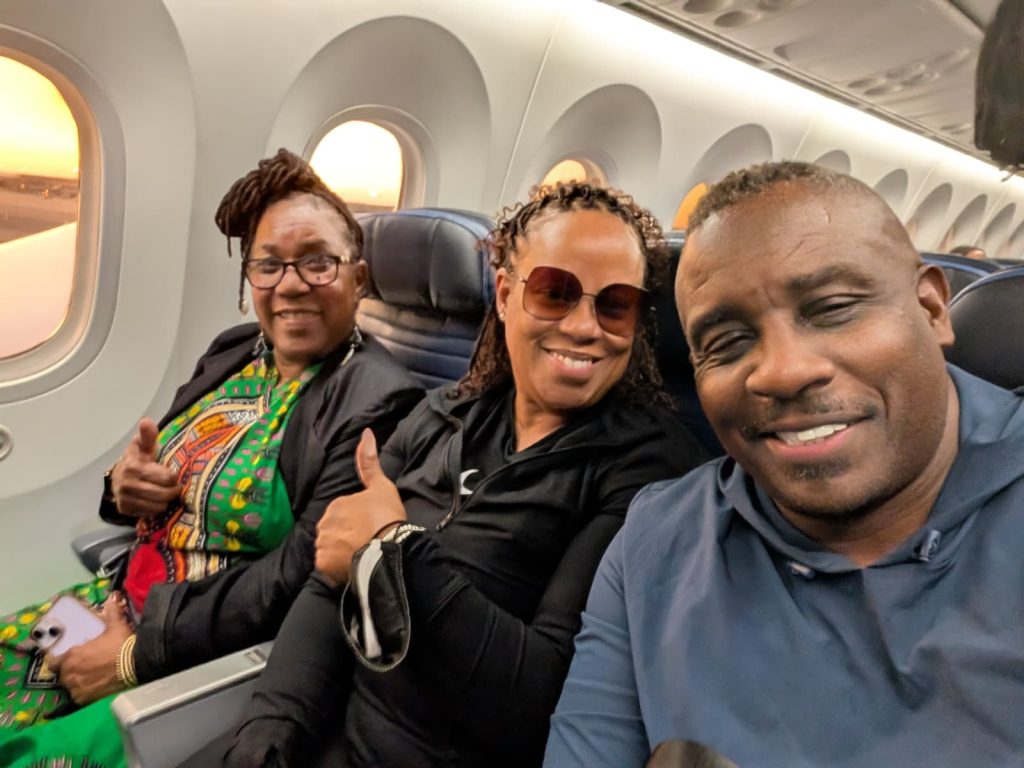
From the beginning of the journey, relationships were central. Even before leaving Philadelphia, she connected with fellow travelers Wil and Jae LaVeist (Wil is Senior Executive for Advancement of Mennonite Mission Network), sharing conversations during the long flight across the Atlantic.
While Maati came to the trip interested in connecting with other peacebuilders in Ghana, the opportunities for encounter that were presented offered new insights about local churches, seminaries, and expressions of Christian faith.
One unexpected moment came while standing alone on a balcony beneath a bright full moon.
“It was the same moon we see at home,” she reflected. “People all around the world are looking at the same moon, and we can all relate to the same God no matter where we are.”
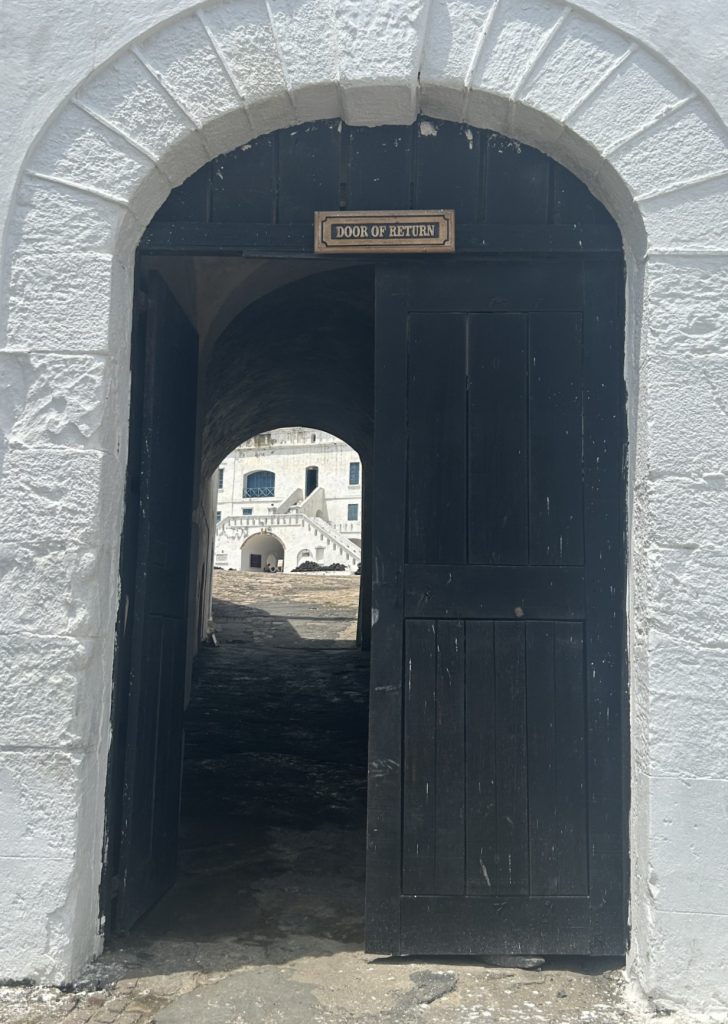
The tour also included visits to sites connected to the transatlantic slave trade. For Maati, walking through the slave castle was overwhelming.
“As I stood in the dungeon at Cape Coast Castle, I tried to imagine the darkness,” Maati reflected. “I tried to imagine the smell, the cries, the fear. I could not fully imagine it in my mind, and felt in my spirit I had to flee that space. After catching my breath, this spoken piece came to me:
Imagine
Imagine being deprived of sunlight and fresh air.
Imagine living in darkness, in despair, with the constant fear of rape, violence, and death.
Imagine being torn from your mother, your father, your language, your name.
Yes, this is what our ancestors endured.
Young people, you do not know the full story— the strength, the losses, the sacrifices, the courage.
A people stripped of their homeland, their future, their identity.
Washed in the stench of slavery, how could their minds ever be free?
Yet they survived.
But the chains did not end when the ships stopped sailing.
For somebody told a lie.
As Dr. Martin Luther King Jr. said, “Somebody told a lie one day.”
A lie that Black was ugly. A lie that Black was less than. A lie that Black was something to fear.
And our children inherited those lies.
What can they hope for? What can they dream of? What can they live for if all they see are reflections of a story that was never true?
This land which we call America were built with the blood, the sweat, the flesh, and the tears
of our ancestors for more than four hundred years.
Yet too many of our children walk without purpose, quick to hate, quick to fight, slow to see their own worth.
So we must build them up.
Fill them with pride. Teach them their history. Tell them the stories of resilience and strength, of wisdom and power, of people who endured and still rose.
Teach them that they are descendants of survivors, dreamers, builders, and believers.
The moment is ours.
The time is now.
It is our duty to walk in freedom, to live lives of service, to lift those in need, and to share the Gospel— not only in our words, but in our understanding, our actions, and our deeds.
For freedom is not merely given.
Freedom must be remembered. Freedom must be claimed. Freedom must be lived.
And we are the living testimony of those who survived.”
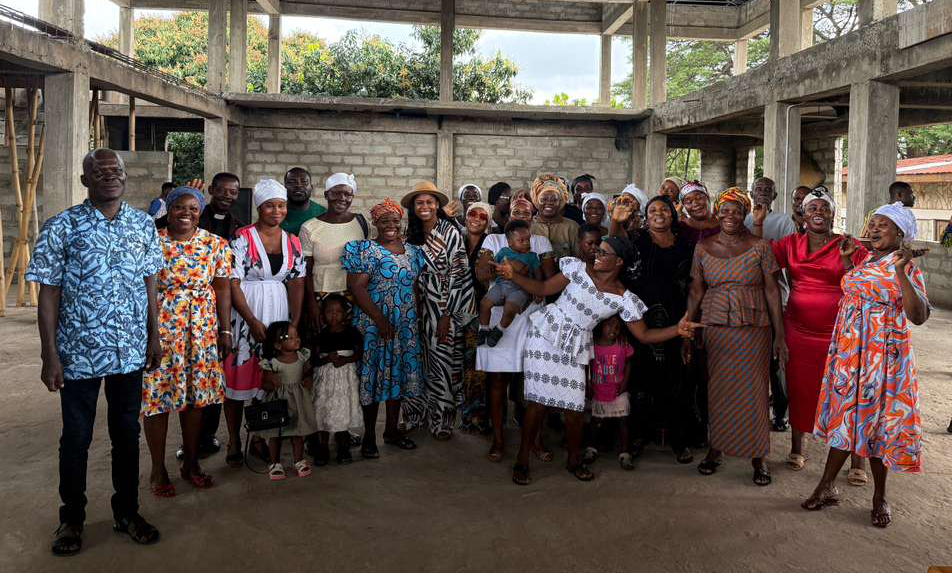
Throughout the trip, Maati was impressed by the vitality of the African Independent Churches. She observed congregations that were well-resourced, deeply committed to discipleship, and able to sustain ministry without relying on Western support. She noted vibrant Sunday school programs, ministries for new mothers, testimonies shared by both adults and children, and generous and lively community celebrations that surrounded events such as a baby dedication.
The experience also sparked reflection on Mosaic’s commitment to becoming an intercultural conference.
“As we are growing as Mosaic, we have to be intentional about checking ourselves,” Maati said. “Are we assimilationists, multicultural, or are we truly intercultural? We have made many strides forward, and we also still need to examine ourselves.”
Inspired by the churches she worshipped with in Ghana, Maati hopes Mosaic will continue creating space for congregations to express their unique cultural traditions while also finding opportunities to worship, learn, and celebrate together.
“What I want for Mosaic is to allow every congregation to express who they are and how they worship,” she said. “How do we truly celebrate each other?”
Maati returned home inspired by the hospitality, fellowship, and discipleship she witnessed in Ghana. Her hope is that Mosaic congregations will continue learning from one another and from the global church as they seek to follow Christ together.
“We need to get tighter and more serious about making disciples,” she said. “And take the Ghanian churches’ example for how to fellowship, witness, and make disciples—for the good of others and the glory of Christ.”
Mosaic values two-way communication and encourages our constituents to respond with feedback, questions, or encouragement. To share your thoughts or send a message to the author(s), contact us at communication@mosaicmennonites.org.
The opinions expressed in articles posted on Mosaic’s website are those of the author and may not reflect the official policy of Mosaic Conference. Mosaic is a large conference, crossing ethnicities, geographies, generations, theologies, and politics. Each person can only speak for themselves; no one can represent “the conference.” May God give us the grace to hear what the Spirit is speaking to us through people with whom we disagree and the humility and courage to love one another even when those disagreements can’t be bridged.