
Editor’s Note: Reprinted with permission from Mosaic Conference-Related Ministry Amahoro International.
Following last year’s three-day visit of Musumba (Pastor) Makinto at Ntale Mennonite Church, Uganda, Mosaic Conference-Related Ministry Amahoro International (AMI) and Mennonite Church Uganda under the leadership of Bishop Simon Okoth Onyango organized a two-day conference on July 18-19, 2026, with the theme: Peacebuilding in troubled times: Living in the security of God’s kingdom.
The morning of July 18 greeted us with long-awaited rain, very heavy at times, to the point that only four of the 15 member congregations were able to brave the weather and send a delegation. The smaller number gathered did not diminish in the warm, welcoming, and spiritually-edifying atmosphere that reigned during the day-long conference on Saturday and the Sunday morning worship.
The congregation in the open church building (no windows or doors) worshipped in the rhythm of the falling rain on the metal roof. The stomping feet of the youth worship team dancing in Congolese formation and singing familiar African praise songs, with their contagious smiles and movements, drew the congregation into joyful worship. The two loudspeakers, running exclusively on solar power, could barely last throughout the four-hour service.
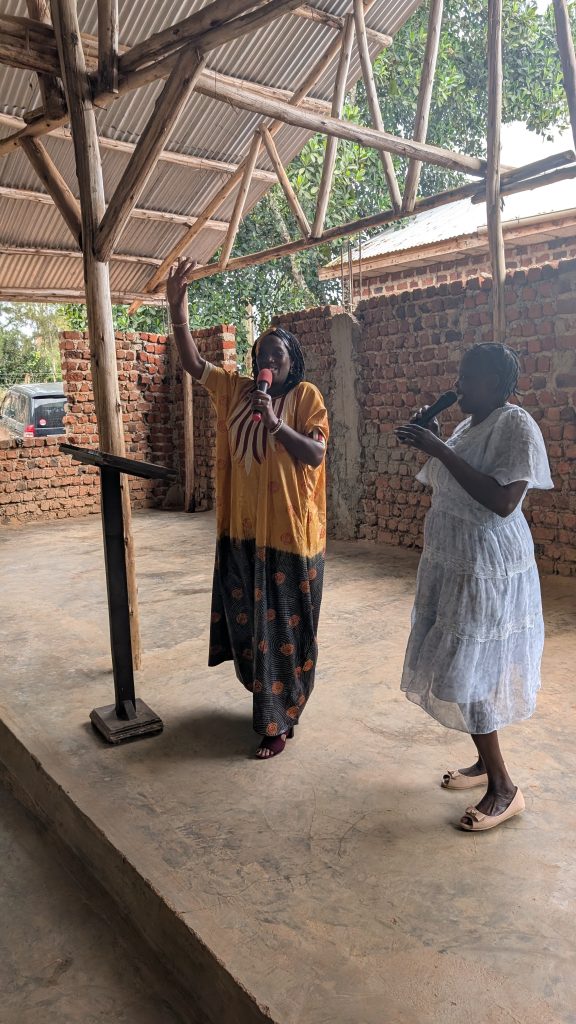
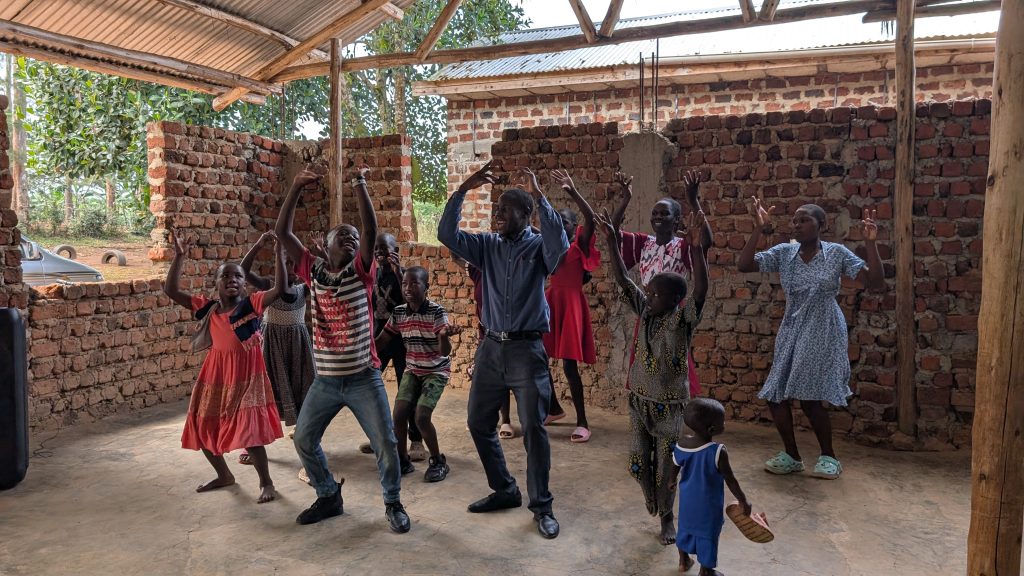
Nevertheless, the joy of praising the Lord through song and dance radiated throughout the building, and as the rain slowly subsided, the Amahoro team taught, preached and testified on the conference theme. Musumba Makinto preached on Matthew 7 and 2 Chronicles 18 about the persecution and reward of peacemakers in conflict situations; Mukarabe Makinto gave her testimony of a refugee finding her calling through the legacy of her late father, a champion of girls’ education; and Emery expanded on five biblical principles for godly living.
Clairia spent creative time with the children and youth, studying bible verses, leading singing, and most importantly, counseling teenage girls and listening to their heartbreaking stories. Her workshop with these girls was very impactful; the simple act of sharing stories of abuse, lack of education, and family brokenness illuminated the dire situation of young girls in Africa. It showed the girls participating that their situation is not isolated but a societal pattern.
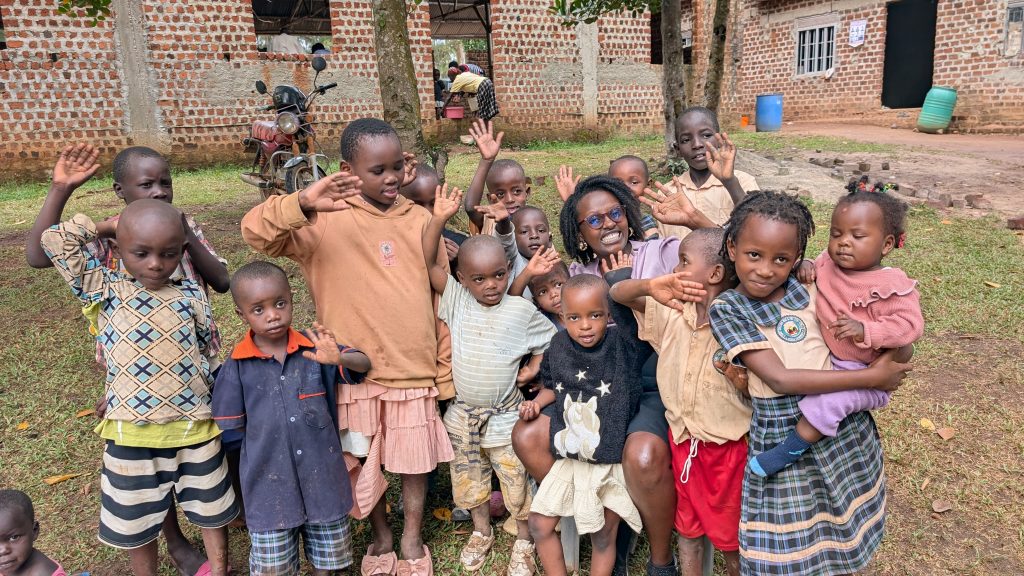
Finally, the whole congregation, including the children and youth, participated in the final workshop with Musumba Makinto: learning three-part harmony on a well-known African praise song: Mwamba Mwamba, which became the beloved “special number” for the Sunday morning service.
Pastor Simon Okoth Onyango is Bishop of Mennonite Church Uganda (MCU), member of Mennonite World Conference (MWC). Through his advocacy, MCU is well represented within MWC, as his recent trip to MWC leadership conference in Accra, Ghana demonstrated. Onyango and Makinto agree that the relationship between Mennonite Church Uganda and Amahoro International is important to establish stronger ties with Mosaic Mennonite Conference and other Mennonite agencies in the U.S. AMI has been active in Uganda since 2016 as a development agency working with refugees and young people to foster a culture of self-sustainability and African leadership of integrity. With good relationships both in the U.S. and in East Africa, AMI could serve as an important link between partners in both worlds.
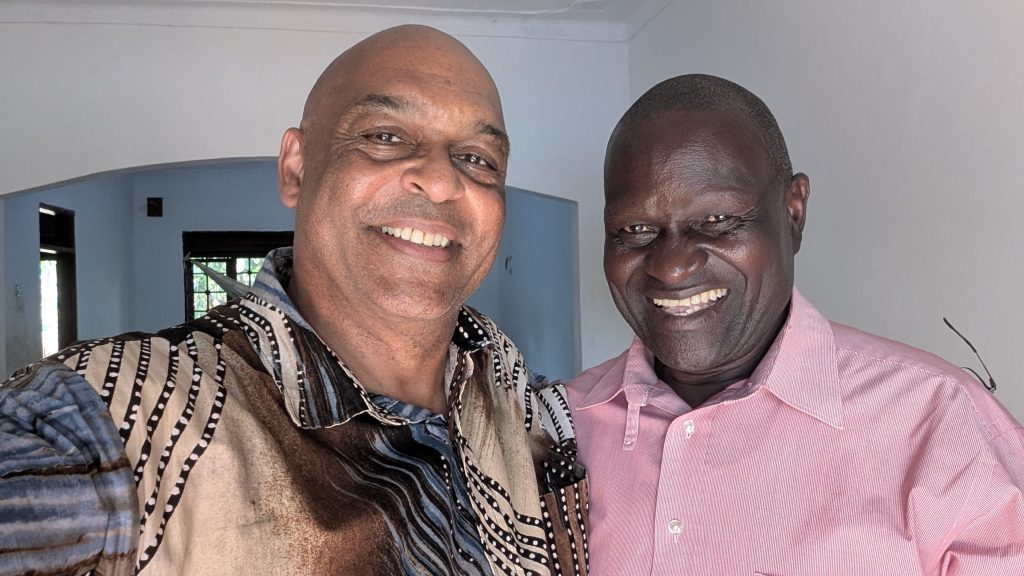
The two-day conference ended with a traditional lunch at the bishop’s residence: karo, chapati, cabbage, beef and chicken stew, and a prayer for peace in the world’s conflict areas and for journey-mercies for the Amahoro team traveling back to Bombo.
Mosaic values two-way communication and encourages our constituents to respond with feedback, questions, or encouragement. To share your thoughts or send a message to the author(s), contact us at communication@mosaicmennonites.org.
The opinions expressed in articles posted on Mosaic’s website are those of the author and may not reflect the official policy of Mosaic Conference. Mosaic is a large conference, crossing ethnicities, geographies, generations, theologies, and politics. Each person can only speak for themselves; no one can represent “the conference.” May God give us the grace to hear what the Spirit is speaking to us through people with whom we disagree and the humility and courage to love one another even when those disagreements can’t be bridged.