John L. Ruth, Salford
johnroma@aol.com
 For Peaceful Living’s founder Joe Landis, growing up in southeastern Pennsylvania’s oldest Mennonite community has been to know what a family singing circle felt like. At home the sensation focused in table fellowship and story-telling. At church there was the sacrament of singing together in a folk harmony. He joined this harmony singing as a child, hardly noticing how he had
learned to do so. “We thought anybody could sing like that,†he reflected.
Both home and church singing settings nurtured a powerful, yet sometimes taken for granted, sensation of being included. Even the voices of those, like Joe’s father’s seemingly ancient greatuncle Jonas L. Alderfer whose learning disability kept him from learning how to sing the right notes, were folded into the haunting sound, not of performance but community. “Joney†and his peers were there at the table and in the hymns. Only with such taken for granted completeness did the sacraments of table and church fellowship feel valid. Only with those hoarse voices did the harmony sound fully like home.
Hymns endear us to each other. Old ones connect us with souls who sang them before we were born and those who will sing them when our own voices fail. Hymns connect us with moments in the unfolding of our own individual and communal faith stories. New words, tapping deep wells, enrich old truths and surprise us with their gift of insight. Both singer and hearer are blessed in reprising foundational thoughts of supplication or praise in a medium that lends to our ordinary minds the superior gifts of poet and composer. We make great hymns our personal property. We lift our hearts corporately reminding each other that we belong to God together.
Not only persons familiar with traditional acappella congregational singing can be touched by its sense of family as the four-part sound creates an air of community. Often, even persons unfamiliar with the experience respond to its warmth. Joe thought this experience ought to be shared but wondered how.
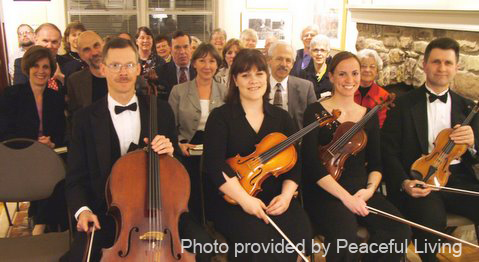
Joe and a friend took sometime imagining what it would be like to hear humble meetinghouse strains profoundly ennobled by the string section of a major orchestra. While realizing that it was beyond anyone’s means, they knew the music would be nice. With the sense of family our hymns produce, Joe invited friends to bring those encircling harmonies, on a chamber rather than symphonic scale, into an album. In April and June 2005 Stan Yoder, an instrumental music teacher and performer, led a string quartet to accompany an ensemble of mostly nonprofessional singers who have sung since childhood in local congregations. The album, Spring Hymn Sing, was released last year.
The seventeen hymns and spiritual songs can all be found in Hymnal: A Worship Book (1992), the collection currently in use at many Mennonite and Brethren congregations. The album includes a cavalcade of Isaac Watts, Count von Zinzendorf, Beethoven, African-American spirituals, Brian Wren, and the list goes on. With such teeming memories and a God who, the Psalmist reminds us, “setteth the solitary in families,†how can we keep from singing?
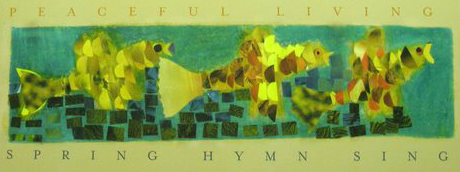 Story behind the cover art: Cover art for “Spring Hymn Sing†was created by Ramin Dabiri of Wynnewood, PA. Ramin is a participant in Peaceful Livings’ Creative Gifts Community Mentoring Program. He has a cognitive disability due to a birth defect. Ramin enjoys the ability to express himself through art. He also enojoys music and is fluent in three languages including Turkish, Persian, and English.

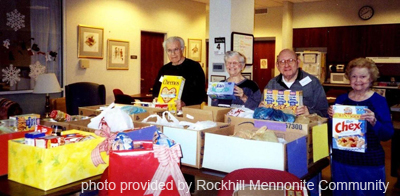
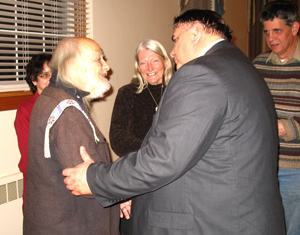 A columnist in the Allentown Morning-Call suggested that Mennonites (along with Quakers, Buddhists and Unitarians) might be able to solve the problems of the world when he heard about our congregation’s efforts. It’s definitely true that the “Shelter for Life†initiative has begun to transform our church at Deep Run East. Through “Shelter for Lifeâ€, we decided to build a house for an elderly couple who had lost their home to Hurricane Katrina. The house is being built in Pennsylvania in sections and will be taken to Louisiana by truck. There was a good buzz of excitement as the builders were trying to read the difficult blueprints.And we had questions. Would the truck drivers be able to navigate the small bridge that needed to be crossed to get to the building site? With some photos and calculations by an engineer from our congregation the good news was that they would not need to unload the tractor trailer on one side of the bridge and reload it on the other.As part of our building and connecting efforts we invited Gulf States Mennonite Conference leader Steve Cheramie-Risingsun to speak during a weekend event at Deep Run East. Steve is a Native American of the Chinamache tribe and a Mennonite pastor. He ministers with two Native American Mennonite congregations that are four hours apart, one in Alabama and the otherin Louisiana. He is a great storyteller and humble servant of God. Steve, his grown children, his mother and siblings also lost all their material possessions to Hurricane Katrina but he does not talk about his own hardships. His priority is to help others.
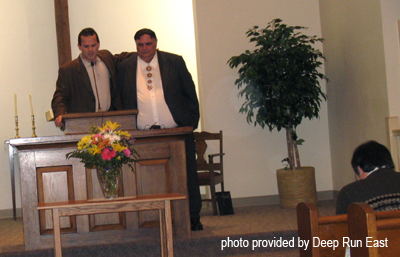 There was an overwhelming response from the congregation and community along with gracious articles in the Allentown Morning-Call. During Saturday evening donations were collected from congregational members, the personal contacts from the congregation’s “Shelter for Life†committee with local businesses, and broader community response and as a result the house is now paid for, around $53,000!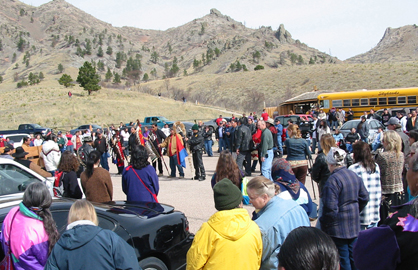
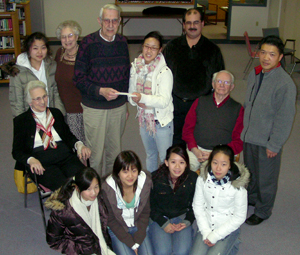 Elizabeth Stover and her husband Preston who live at Dock Woods Community were out walking on the path in the woods connected to the retirement community. Coming toward them was a young man with his small playful child hanging on to his legs. Insoo Lee introduced himself and said he was the youth pastor of a nearby Korean church. Elizabeth invited Insoo’s family to her home for dinner and to speak with the prayer group that she leads at Dock Community.
  “What do you want to be when you grow up?†For generations, adults have asked children this familiar question and I never had a very good answer. For awhile, my quick response was “teacher†because at eight years old I liked to play “school†with my younger sister. But as I grew, I realized I really didn’t know.