
by Calenthia S. Dowdy, PhD
Editor’s Note: This reflection is based off a sermon that Dr. Dowdy preached at Philadelphia (PA) Praise Center in September.
Humans don’t simply want love and community; we yearn deeply for love and connection. The human longing for meaningful relationship runs deep. It is shaped by images we carry in our hearts and mind which shape our hopes for radical love, acceptance, and embrace. This longing is a large part of what makes us human.
If this is true, why do relationships end? Why do churches continue to split, families fracture, friendships end, and marriages break up? This question occupies my thinking every day as we exist in the never-ending shake-up that is our church body. People leave. Churches depart. Whole countries walk away.
I imagine a design lab focused on what it takes, and looks like, to practice active love in community with others when I wholeheartedly disagree with some of them. What does it look like to remain in active love and relationship with people and organizations that don’t fully align with me? When do I know if I should stay, or if I should go?
Parker Palmer wrote an insightful essay many years ago that offers a way into these questions. The essay, Staying at the Table: A Spirituality of Community, was required reading when I was teaching first-year college students. Four hundred students were newly entering university life, meeting professors, friends, and roommates who did not all believe exactly what they had been taught to believe. Yes, even though we all professed to be Christian, we did not all think, believe, or behave alike.
In Staying at the Table, Palmer writes that the first image of community is found in Genesis: the Garden. In the garden, we are presented with a scene of harmonious, organic unity; humans, animals, vegetation, and mineral life all living in oneness with the Creator. It was an ecology of grace. “They were naked and unashamed.” The humans were able to let down their barriers, be their true selves, and be fully accepted.
It is the dream of love and embrace: to be vulnerable and without shame in relationship with others. The Garden is a pre-sin era existing outside the realm of human time.
Palmer’s second image of community is found in Revelation: the New Jerusalem. It is the city of God, cleansed and made holy by God’s grace, where “every tear will be wiped away.” There will be no more sorrow, pain, strife, or struggle but only solace and joy. It is a secure city where everyone’s needs are met. The New Jerusalem is a post-sin era, also existing outside the realm of human time.
Both these images, the Garden and the New Jerusalem, resonate deeply within the human soul and draw us toward the dream of community. They profoundly shape what we believe community should look like.
But our experiences right now, in human time, don’t look much like the Garden or the New Jerusalem.
We become disillusioned after the honeymoon period of community ends, and humans reveal their flawed selves. Barriers go up as we protect ourselves from the inevitable pain of community. Palmer suggests that, in this period of disillusionment, we may choose to stay in the community but disengage, withdrawing our hopes and dreams and settling for a lukewarm community. Others will choose to leave the community altogether.
It is here that Palmer offers a third image of community, found in the Gospels. It is the image of the Table.
The Last Supper is a culmination point for Jesus. He has been pouring his life into these people for three years, bringing them together in friendship, family, and hospitality. Now, at the table, Jesus breaks bread with them. And as he breaks bread, he says, “One of you will betray me.” He tells Peter that he will deny him three times. The disciples argue over who among them is the greatest.
These are some of the very things that make community difficult: disagreement, betrayal, denial, and power struggles.
And what does Jesus do amid the messiness around the table?
He continues to break bread and pass the cup. He stays at the table.
He keeps doing good.
Community happens when we stay at the table, working through harm and disagreement, learning how to be together even when it is difficult. It happens when we commit to keep showing up, to keep listening, to keep loving, and to keep doing good.
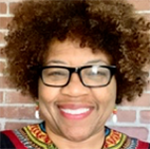
Dr. Calenthia Dowdy
Calenthia S Dowdy, PhD is the Director of Collaborative Ministries with Mosaic Conference. She attends Ambler (PA) Mennonite, serves as trustee board president of the Metropolitan Christian Council of Philadelphia, and is active in Philadelphia faith communities.
Mosaic values two-way communication and encourages our constituents to respond with feedback, questions, or encouragement. To contact Dr. Calenthia Dowdy, please email cdowdy@mosaicmennonites.org.
The opinions expressed in articles posted on Mosaic’s website are those of the author and may not reflect the official policy of Mosaic Conference. Mosaic is a large conference, crossing ethnicities, geographies, generations, theologies, and politics. Each person can only speak for themselves; no one can represent “the conference.” May God give us the grace to hear what the Spirit is speaking to us through people with whom we disagree and the humility and courage to love one another even when those disagreements can’t be bridged.