
by Meredith Ehst
Editor’s Note: This article was adapted from a chapel presentation in fall 2025 at Conference-Related Ministry Dock Mennonite Academy, published in the Spring 2026 Lamplighter magazine, and republished with permission.
What Do We Mean by “Story”?
When you hear the word story, what comes to mind? Maybe a favorite movie or book. Maybe Instagram or Snapchat stories, those glimpses of life that disappear after 24 hours. But have you ever stopped to wonder why we call those “stories”? Most of the time, they’re just snapshots. A sunset. A lunch pic. A quick clip of friends hanging out. So what actually makes something a story?
I think we tell stories because deep down we want to connect. Stories are how we make sense of our lives. They help us show who we are, and they help us understand others. When you post a short story online, you’re saying, “Here’s what my world looks like right now.” When you watch someone else’s, you get a glimpse into theirs. But do we ever slow down enough to really listen, not just scroll?
When we do, stories can change us. They build empathy. They invite vulnerability. They remind us that God is working in every part of our lives.
A Community Built on Story
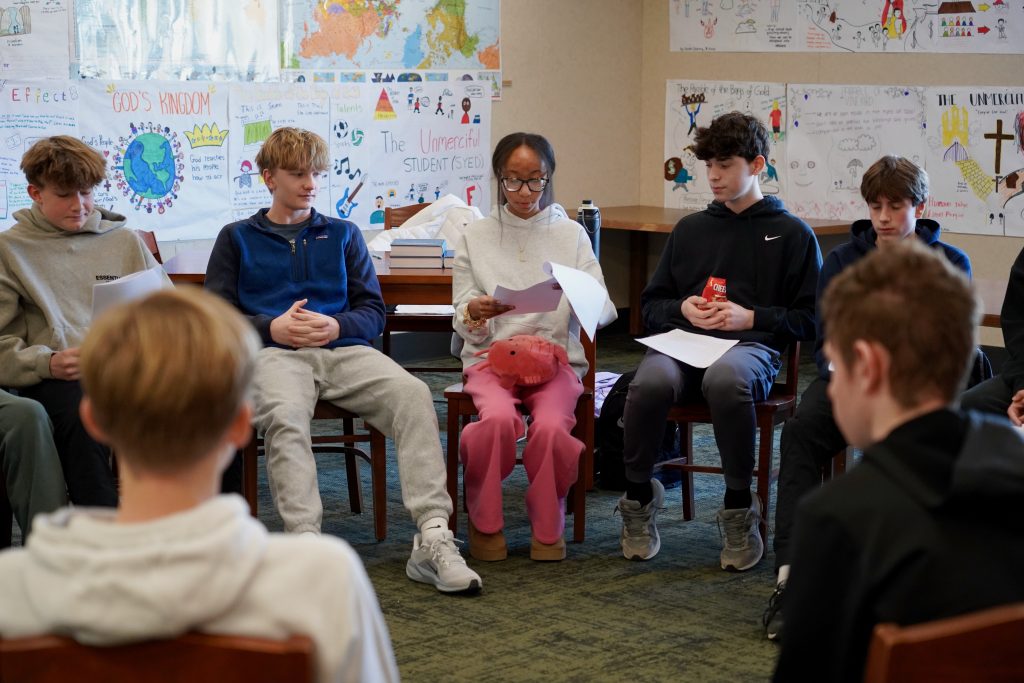
That’s one of the things I love about Dock. Students are encouraged to share their stories in chapel, class discussions, hallway conversations, and in senior speeches. Teachers share pieces of their lives in many of these spaces as well. The community holds space for both the everyday moments and the deeper stories that help us grow.
But not every story is meant for everyone. There’s the version we post publicly, and then there’s the deeper story, the one we share with our people, our village. The people who see not just the highlight reel but the behind-the-scenes moments. Not everyone gets every part of our story, and that’s okay. What matters is that we have people we trust, and that we listen when others share their stories.
Dock itself began with a story: a story of faith, education, and community that traces back to our school’s namesake, Christopher Dock. At a time when many teachers led with punishment and fear, he chose encouragement. He prayed for his students by name. He believed they were capable of growth. That story has been passed down through generations, shaping this school and shaping me as an educator.
The Stories Jesus Told
Long before Christopher Dock, Jesus understood the power of story. He did not teach through long lectures or rulebooks. He told parables, stories about farmers, seeds, lost coins, and neighbors. Jesus could have simply said, “Be kind.” Instead, He told the story of the Good Samaritan and let compassion grow in people’s hearts. His stories required listening. They required curiosity, patience, and reflection.
That kind of listening is hard for us today. We are used to fast answers and quick scrolls. But listening to someone’s story, really listening, is a spiritual discipline. It slows us down. It opens our hearts.
My Own Story
I had to learn that myself. In high school, I was figuring out who I was and what I believed, some days confidently, other days not at all. One part of my story I did not choose was taking Faith Walk class. When your parent is the campus pastor, there are some things you get a say in and some things you do not. At the time, I was not sure I wanted to open up or dig into what I really believed.
Faith Walk became a turning point. It taught me to reflect. To journal. To listen. To recognize that my faith story was unfolding, and that was okay. Hearing others share their journeys reminded me that everyone’s faith looks different, and that is part of what makes a community rich.

The Story We Are Writing
Listening is a spiritual discipline. It slows us down and opens our hearts. So here’s my challenge: take time to really listen to someone’s story this week. Not the short version. The deeper one. It might change how you see them. It might even change you.
If you could post a story that does not disappear after 24 hours, one that truly shows who you are, what would it be? And whose story might you need to stop and listen to?

Meredith Ehst
Meredith (Frankenfield) Ehst is a member of Salford (PA) Mennonite, a member of the Dock Mennonite Academy board, parent of current Dock students, and a Dock alum (’99).
Mosaic values two-way communication and encourages our constituents to respond with feedback, questions, or encouragement. To share your thoughts or send a message to the author(s), contact us at communication@mosaicmennonites.org.
The opinions expressed in articles posted on Mosaic’s website are those of the author and may not reflect the official policy of Mosaic Conference. Mosaic is a large conference, crossing ethnicities, geographies, generations, theologies, and politics. Each person can only speak for themselves; no one can represent “the conference.” May God give us the grace to hear what the Spirit is speaking to us through people with whom we disagree and the humility and courage to love one another even when those disagreements can’t be bridged.